Watts
The Best Favero Power Meters, Ranked
Favero's whole range claims the same accuracy figure, so the choice is cleats, battery generation and how many legs you want measured. Here is how to decode an Assioma name, and which one to buy.
The short answer
Quick picks
| # | Product | Best for | Score | Price |
|---|---|---|---|---|
| 1 | 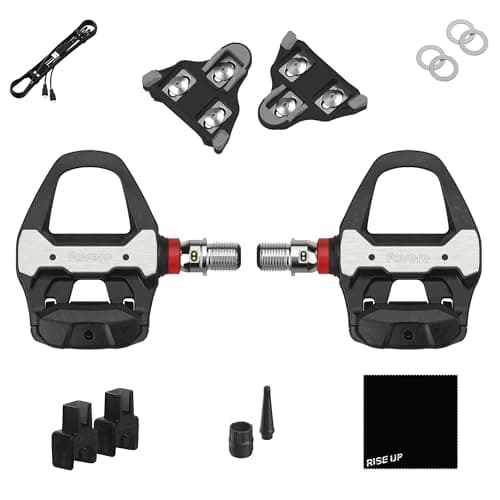 Favero Assioma Pro RS-2 For the Shimano-shod rider who wants the complete Favero: dual-sensing ±1% power, a native SPD-SL body and 160 hours a charge, which is the longest runtime in the class. | Best Favero power meter overall | 9.29.2 out of 10 | $804.99 · View on Amazon #ad We may earn a commission · Price as of November 22, 2026 |
| 2 | 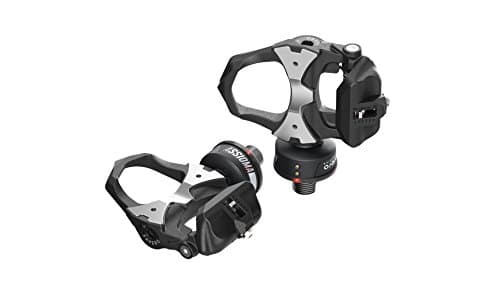 Favero Assioma Duo For the rider who wants both legs measured without Pro-generation money: the longest-serving dual-sided pedal meter on the market, still at ±1%, on Look Keo cleats. | Best value dual-sided Favero | 9.09.0 out of 10 | $531.10 · View on Amazon #ad We may earn a commission · Price as of November 22, 2026 |
| 3 | 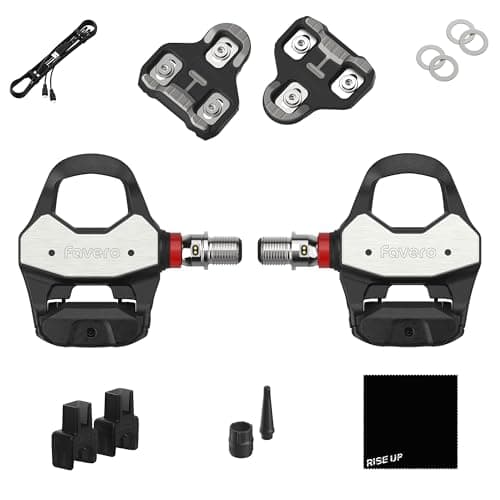 Favero Assioma Pro RL-2 For the Look Keo rider who wants the current Favero rather than the old one: the Pro RS-2's electronics and 160-hour battery with a Keo-compatible body. | Best Favero for Look Keo riders who want the Pro platform | 9.19.1 out of 10 | $809.99 · View on Amazon #ad We may earn a commission · Price as of November 22, 2026 |
| 4 | 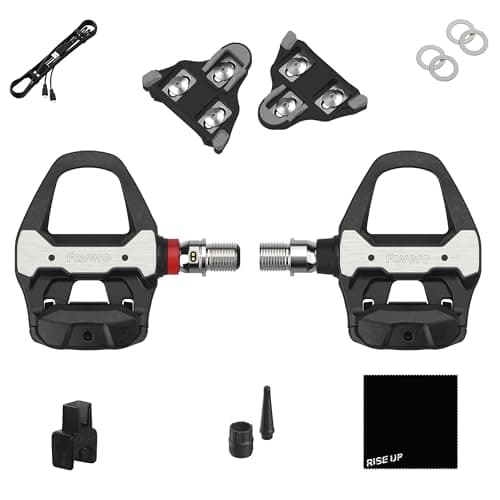 Favero Assioma Pro RS-1 For the Shimano rider who wants the current Favero now and the second leg later: the Pro platform's accuracy and runtime, with the only genuine single-to-dual upgrade path in the market. | Best Favero if you want to start single and upgrade later | 8.68.6 out of 10 | $494.99 · View on Amazon #ad We may earn a commission · Price as of November 22, 2026 |
| 5 | 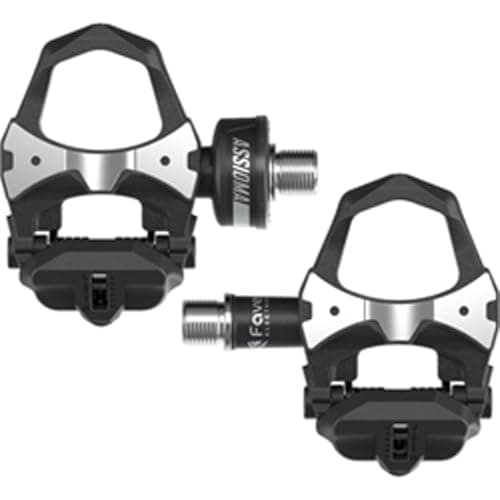 Favero Assioma Uno The budget pick: the least expensive Favero, at the same ±1% claim as the rest of the range, measuring one leg and doubling it. | Budget pick: the cheapest Favero power meter | 8.58.5 out of 10 | |
| 6 | 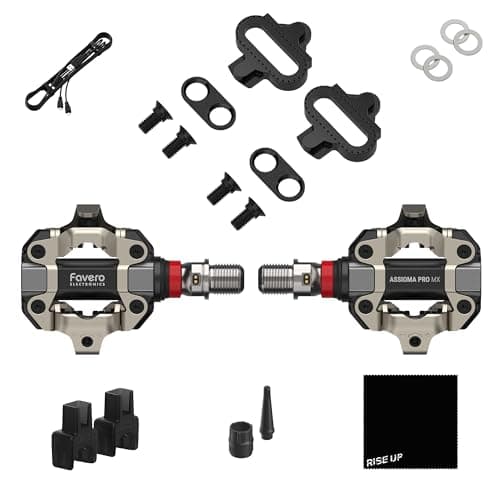 Favero Assioma Pro MX-2 For the gravel or mountain rider who wants measured watts in the shoes they already ride in: dual-sided ±1% power on a two-bolt SPD cleat, built heavy on purpose. | Best Favero for SPD and off-road shoes | 8.98.9 out of 10 | $799.99 · View on Amazon #ad We may earn a commission · Price as of November 22, 2026 |
Favero is unusual among power meter makers: there is one measurement system across the entire range, and everything published about accuracy is the same number. So this is not a page about which Favero is more accurate. It is a page about which cleats you wear, how long you want between charges, and whether you want one leg measured or two.
How to read an Assioma model name
"Pro" is the generation. The original Assioma family (Uno, Duo) is built on a Look Keo-compatible body. The Assioma Pro family is the current platform: native cleat bodies, a lower 10.5 mm stack, lighter pedals and a battery Favero quotes at up to 160 hours with a 15-minute fast charge.
The two letters are the cleat system. RS is Shimano SPD-SL, RL is Look Keo, MX is two-bolt Shimano SPD for off-road shoes. On the Pro range these are native bodies, not adapters.
The trailing number is how many legs are measured. A -1 is single-sensing (left leg, doubled). A -2 is dual-sensing, with each pedal measuring independently. On the older family the same split is Uno and Duo.
So a Pro RS-2 is a current-generation, Shimano-cleat, dual-sensing Assioma; a Pro MX-1 is a current-generation, SPD-cleat, single-sensing one. The ±1% IAV claim does not change anywhere in the range.
How we ranked them
Accuracy cannot separate these, so the ranking runs on battery and generation (the Pro range's 160-hour claim is a genuine quality-of-life difference), then data depth (dual-sensing against doubled), then stack height and weight, which are the two figures a bike fit cares about, then what it costs for the capability. Cleat system is deliberately not a ranking factor: whichever letters match your shoes is the right answer. Every figure here is Favero's own published specification, and how we review explains the method.
| Model | Generation | Cleats | Sensing | Battery | Stack |
|---|---|---|---|---|---|
| Assioma Pro RS-2 | Pro | Shimano SPD-SL (native) | Dual-sensing | Up to 160 h | 10.5 mm |
| Assioma Pro RL-2 | Pro | Look Keo compatible | Dual-sensing | Up to 160 h | 10.5 mm |
| Assioma Pro RS-1 | Pro | Shimano SPD-SL (native) | Single-sensing | Up to 160 h | 10.5 mm |
| Assioma Pro MX-2 | Pro | Shimano SPD (two-bolt) | Dual-sided | Pro platform | 11.2 mm |
| Assioma Duo | Original | Look Keo compatible | Dual-sided | Rechargeable | Not published as Pro |
| Assioma Uno | Original | Look Keo compatible | Single-sided | Rechargeable | Not published as Pro |
The upgrade path nobody else offers properly
This is the single best reason to buy Favero rather than a competitor, and it is easy to miss. Both the Uno and the Pro RS-1 can be converted to dual measurement by adding the second sensing pedal — Favero sells the RS-UP upgrade pedal for the Pro range — rather than replacing the power meter you already own.
Practically, that means you do not have to resolve the single-versus-dual argument before you buy anything. Start single-sided, ride on it for a season, and if you find yourself wishing you could see your balance, buy the other pedal. The honest caveat is arithmetic: upgrading later costs more in total than buying dual up front, so this is insurance against indecision rather than a saving. Single vs dual-sided power meters is the full argument.
What 160 hours actually changes
Battery runtime sounds like a spec-sheet detail until you live with a power meter. At 160 hours, a rider doing six hours a week charges these pedals roughly four times a year. At the 40-to-90-hour figures more common in the class, it is monthly. Favero also quotes a 15-minute fast charge worth a meaningful chunk of riding, which turns a forgotten charge from a canceled session into a cup of coffee.
The counter-argument is real and we will state it: a sealed rechargeable pack has a finite life, where a coin-cell meter can be revived anywhere in the world for the price of a battery. If you tour or travel with the bike, Garmin's coin-cell Rally models are a legitimate reason to buy a different brand, and how long do power meter batteries last compares the two approaches.
Where Favero is the wrong answer
Three cases, said plainly. If your budget stops below the Uno, no Favero fits and power meters under $200is the band where the answer becomes a crankset. If you want a convertible pedal body so one set of pedals can change cleat systems later, Garmin's universal spindle does that and Favero's Pro bodies do not — Garmin Rally alternatives works through the trade from the other side. And if you want power measured at the crank rather than the pedal, the crank roundup is the right page.
The verdict
Buy the Assioma Pro RS-2 if your shoes are Shimano and you want the complete current Favero. Buy the Pro RL-2 if your shoes are Look Keo and you want the same thing. Buy the Assioma Duo if dual-sided measurement matters but Pro-generation money does not make sense — it reads to the same ±1% and it is the best-understood pedal meter in the sport. Buy the Pro RS-1 if you want to start with one leg and keep the door open. Buy the Assioma Uno if you want the cheapest honest Favero, which is the budget pick here. And buy the Pro MX-2 if your shoes are two-bolt SPD, because none of the others will fit them.
Comparing across brands?
See every power meter pedal we rankTwo neighbors worth reading before you commit: the best dual-sided power meters puts the Pro RS-2 and the Duo against the rest of the market, and power meter pedals under $500 is the band the Uno and the Pro RS-1 both sit inside.
The full reviews
Every pick, in detail
#1 · Best Favero power meter overall
Favero Assioma Pro RS-2
9.29.2 out of 10#ad We may earn a commission · Price as of November 22, 2026
For the Shimano-shod rider who wants the complete Favero: dual-sensing ±1% power, a native SPD-SL body and 160 hours a charge, which is the longest runtime in the class.
- Type
- Pedal-based, dual-sensing
- Cleat system
- Shimano SPD-SL, native
- Claimed accuracy
- ±1% (IAV Power System)
- Battery
- Up to 160 hours, 15-minute fast charge
- Weight / stack
- 124.8 g per pedal, 10.5 mm stack
- Connectivity
- ANT+, Bluetooth
What we'd praise
- 160 hours a charge, the longest claimed runtime of any rechargeable power meter we rank
- True dual-sensing with Favero's ±1% IAV claim, so left/right balance is measured not inferred
- A native Shimano SPD-SL body — no adapter, no third-party pedal body to source
- 10.5 mm stack and 124.8 g per pedal, the lowest and lightest figures in Favero's range
- A 15-minute fast charge, so a forgotten pedal is a coffee rather than a canceled ride
What we'd flag
- Among the most expensive Faveros here, and dual-sensing is a want more often than a need
- Sealed rechargeable pack — no coin-cell fallback on a tour
- SPD-SL only, so Look Keo riders need the RL version instead of a body kit
- Pedal-based meters add stack height that a bike fit should account for
- Priced close to Garmin's dual-sensing Rally, which has a convertible pedal body
The Pro RS-2 is the top of the Assioma range and the clearest expression of what Favero is good at. Two numbers do the work: ±1% from the IAV Power System, which measures the actual angular velocity through the pedal stroke rather than assuming it is constant, and up to 160 hours from a charge. That runtime is roughly double what the competing rechargeable pedal meters claim.
The Pro generation also fixed the thing people used to complain about. Earlier Assiomas were built on a Look Keo-compatible body, and Shimano riders had to either change cleats or source a third-party body. The Pro RS bodies are native SPD-SL, with a 10.5 mm stack and 124.8 g per pedal. Our Shimano pedal roundup covers that market specifically.
The honest counterpoint: dual-sensing costs real money, and most riders act on their total watts rather than their balance figure. The Pro RS review has the detail, and Assioma Duo vs Pro RS is the generation-to-generation comparison.
#2 · Best value dual-sided Favero
Favero Assioma Duo
9.09.0 out of 10#ad We may earn a commission · Price as of November 22, 2026
For the rider who wants both legs measured without Pro-generation money: the longest-serving dual-sided pedal meter on the market, still at ±1%, on Look Keo cleats.
- Type
- Dual-sided power meter pedals
- Claimed accuracy
- ±1%
- Cleat system
- Look Keo compatible
- Power
- Rechargeable, magnetic charging
- Connectivity
- Bluetooth and ANT+
- Install time
- Minutes, with a pedal wrench
What we'd praise
- Dual-sided ±1% measurement for meaningfully less than the Pro RS-2
- The longest service record of any pedal meter we rank — years of firmware and real-world use
- Magnetic charging contacts, so there is no port to corrode or cover to lose
- Look Keo compatible, and Keo cleats are cheap and stocked everywhere
- Installs with a pedal wrench in minutes and transfers between bikes just as fast
What we'd flag
- The older platform: shorter claimed runtime than the 160-hour Pro generation
- Look Keo compatible rather than native Shimano, which matters if your shoes are SPD-SL
- Taller stack and heavier than the Pro bodies
- No fast-charge claim on the scale of the Pro range
- Being superseded, so new firmware attention will go to the Pro line first
The Assioma Duo is the pedal meter that made Favero's reputation, and the reason it is still worth buying is that nothing about its measurement has been outgrown. It is dual-sided, it claims ±1%, and it has been in the hands of enough riders for long enough that its behavior is genuinely known rather than promised.
What the Pro generation adds over it is runtime, lower stack, lighter pedals and native cleat bodies. What the Duo keeps is a price that makes dual-sided measurement reachable. If your shoes are already Look Keo, the gap narrows further, because the Duo needs no adapter at all. The Assioma Duo review covers living with it.
Two comparisons worth having open: Assioma Duo vs Uno is the single-versus-dual decision inside the older platform, and Favero Assioma vs Garmin Rally is the cross-brand one.
#3 · Best Favero for Look Keo riders who want the Pro platform
Favero Assioma Pro RL-2
9.19.1 out of 10#ad We may earn a commission · Price as of November 22, 2026
For the Look Keo rider who wants the current Favero rather than the old one: the Pro RS-2's electronics and 160-hour battery with a Keo-compatible body.
- Type
- Pedal-based, dual-sensing
- Cleat system
- Look Keo compatible
- Claimed accuracy
- ±1% (IAV Power System)
- Weight
- 130 g per pedal (Favero)
- Stack / Q-factor
- 10.5 mm / +53 mm
- Battery
- Sealed rechargeable, up to 160 h
What we'd praise
- The Pro platform's 160-hour battery and ±1% IAV claim, on a Look Keo cleat
- 10.5 mm stack, matching the Pro RS-2 and lower than the original Assioma
- Dual-sensing, so left/right balance is measured on each side independently
- Keeps you on the cheapest and most widely stocked road cleat
- Published 130 g per pedal and a +53 mm Q-factor, so a fitter has real numbers to work with
What we'd flag
- The most expensive Favero on this page, marginally above the RS-2
- Look Keo compatible, not Look's own pedal — cleat feel differs slightly from a real Keo
- Sealed battery, with no coin-cell escape route
- No conversion path to a Shimano body; that is a different product
- Dual-sensing again: more data than most riders will use
The Pro RL-2 is the Pro RS-2 for riders whose cleats are Look Keo. Same IAV ±1% claim, same sealed rechargeable pack quoted at up to 160 hours, same 10.5 mm stack — and Favero publishes 130 g per pedal and a +53 mm Q-factor, which is the kind of number a bike fitter can actually use.
The reason to take it over the much cheaper Assioma Duo is runtime and stack height rather than accuracy; both claim ±1%. The reason to take the Duo instead is the price. That is the whole decision, and it is a closer call than the model numbers suggest. Assioma Duo vs Pro RS lays the two generations side by side.
If you are not sure which cleat system you are on, check the bottom of your shoe: three bolts in a triangle is road (Keo or SPD-SL), two bolts is SPD, and our cleats guide has the pictures.
#4 · Best Favero if you want to start single and upgrade later
Favero Assioma Pro RS-1
8.68.6 out of 10#ad We may earn a commission · Price as of November 22, 2026
For the Shimano rider who wants the current Favero now and the second leg later: the Pro platform's accuracy and runtime, with the only genuine single-to-dual upgrade path in the market.
- Cleat system
- Shimano SPD-SL, native
- Sided
- Single-sensing (left, doubled)
- Claimed accuracy
- ±1% (IAV Power System)
- Battery
- Sealed rechargeable, up to 160 h
- Upgrade path
- Add a right sensor pedal (RS-UP) later
- Connectivity
- ANT+, Bluetooth
What we'd praise
- A real upgrade path — add the right sensing pedal later instead of rebuying the set
- Native Shimano SPD-SL body on the current Pro platform
- The same 160-hour battery and ±1% IAV claim as the dual-sensing models
- Substantially cheaper than the RS-2 while measuring to the same tolerance on the left leg
- No bottom bracket, crank length or drivetrain compatibility to check at all
What we'd flag
- Single-sensing, so your total is your left leg doubled and balance data is unavailable
- Buying the upgrade pedal later costs more in total than buying the RS-2 up front
- Sealed rechargeable battery, like the rest of the Pro range
- The right pedal is a dummy you are still carrying around
- SPD-SL only — Look Keo riders need a different model, not a body kit
The Pro RS-1 is the most interesting product in the Assioma range, because of one feature nobody else matches properly: you can buy the second sensing pedal later. Favero sells an RS-UP upgrade pedal, so a single-sensing meter becomes a dual-sensing one without replacing anything you already own.
That changes the shape of the decision. Everywhere else, single-sided is a cheaper product you commit to; here it is a stage. If you are not sure whether you will ever care about left/right balance, this is the way to find out without paying for it twice — with the caveat, stated plainly, that buying the upgrade later costs more in total than buying the RS-2 up front.
Everything else is Pro-platform: native SPD-SL, 10.5 mm stack class, ±1% IAV and up to 160 hours. The single-sided roundup covers the doubling trade-off, and power meter pedals under $500 is the band this sits inside.
#5 · Budget pick: the cheapest Favero power meter
Favero Assioma Uno
8.58.5 out of 10The budget pick: the least expensive Favero, at the same ±1% claim as the rest of the range, measuring one leg and doubling it.
- Type
- Pedal-based, single-sided
- Claimed accuracy
- ±1%
- Fitting
- Pedal wrench, five minutes
- Cleat system
- Look Keo compatible
- Upgrade path
- Add the second pedal for dual-sided
- Connectivity
- ANT+, Bluetooth
What we'd praise
- The cheapest way into Favero's ±1% measurement, by a clear margin
- Upgradeable to dual-sided by adding the second pedal later
- Five-minute install with a pedal wrench and nothing else
- The most proven pedal meter platform in the sport at any price
- Look Keo compatible, so cleats are cheap and everywhere
What we'd flag
- Single-sided: left leg doubled, no balance data
- The older platform, so runtime and stack height both trail the Pro range
- Look Keo compatible rather than native Shimano
- Being superseded by the Pro line, which will get the firmware attention
- Still a real amount of money for a sensor measuring one leg
The Uno is the budget pick here and the page we most often send first-time power meter buyers to. It is the single-sided version of the Assioma Duo: same ±1% claim, same five-minute pedal-wrench install, same Look Keo-compatible body, one sensing pedal instead of two.
It also shares the Duo's upgrade path, so the second pedal can be added later. For a rider whose honest situation is "I want measured watts outdoors and I am not sure I will ever look at my balance," this is the right amount of power meter. The budget power meter roundup puts it against the cheaper cranksets, which is the real competition at this price.
If you are deciding whether you need any of this at all, are power meters worth it and smart trainer vs power meter are the two pages that answer it honestly — a smart trainer already measures your indoor watts to a published tolerance.
#6 · Best Favero for SPD and off-road shoes
Favero Assioma Pro MX-2
8.98.9 out of 10#ad We may earn a commission · Price as of November 22, 2026
For the gravel or mountain rider who wants measured watts in the shoes they already ride in: dual-sided ±1% power on a two-bolt SPD cleat, built heavy on purpose.
- Cleat system
- Shimano SPD (two-bolt)
- Type
- Pedal-based, dual-sided
- Claimed accuracy
- ±1% (IAV Power System)
- Weight
- 199 g per pedal with sensor
- Stack height
- 11.2 mm
- Q-factor
- 54 mm
What we'd praise
- Dual-sided ±1% power on a two-bolt SPD cleat, which very few meters offer at all
- The right answer for gravel, mountain and commuting shoes you already own
- Double-sided entry, so you can clip in either way in the dark or on a climb
- Published 11.2 mm stack and 54 mm Q-factor for fit work
- Pro-platform electronics and the same IAV measurement as the road models
What we'd flag
- 199 g per pedal is heavy — this is a meter built to survive, not to be light
- Priced level with the road dual-sensing models despite the off-road use case
- SPD only; road shoes will not fit it
- Mud and rock strikes are a real hazard that road pedals never face
- If you only ride road, the RS-2 is the better pedal for the same money
The Pro MX-2 covers the case the road range cannot. If your shoes are two-bolt SPD — which covers most gravel, mountain and commuting shoes — a road pedal meter is simply the wrong shape, and the MX bodies are Favero's answer. It is dual-sided, it claims the same ±1% IAV figure, and Favero publishes 199 g per pedal, an 11.2 mm stack and a 54 mm Q-factor.
The weight is the honest cost and it is deliberate: an off-road pedal takes rock strikes and mud that a road pedal never sees, so the housing is built accordingly. If you ride gravel seriously, our gravel power meter roundup puts it against the crank-based options, and the mountain bike page does the same off-road.
The Pro MX review has the detail, and Pro MX-1 vs MX-2 is the single-versus-dual decision inside the MX line.
Good questions
Frequently asked questions
Which Favero power meter should I buy?
The Assioma Pro RS-2 is the best Favero power meter overall: dual-sensing, plus or minus 1% claimed accuracy from Favero's IAV Power System, a native Shimano SPD-SL body, a 10.5 mm stack and up to 160 hours a charge. If you want to spend less, the Assioma Uno is the cheapest Favero and reads to the same plus or minus 1% on the leg it measures, while the Assioma Duo gives you both legs for meaningfully less than the Pro generation. Look Keo riders want the Pro RL-2 or the Duo; SPD riders want the Pro MX-2.
What is the difference between Assioma and Assioma Pro?
Generation. The original Assioma family - Uno and Duo - uses a Look Keo-compatible pedal body. The Assioma Pro family is the current platform, with native cleat bodies (RS for Shimano SPD-SL, RL for Look Keo, MX for two-bolt SPD), a lower 10.5 mm stack height, lighter pedals and a battery Favero quotes at up to 160 hours with a 15-minute fast charge. The plus or minus 1% accuracy claim is identical across both families.
Can you upgrade a Favero Assioma from single to dual-sided?
Yes, and it is the main reason to buy Favero. Both the original Uno and the Pro RS-1 can be converted to dual measurement by adding the second sensing pedal - Favero sells the RS-UP upgrade pedal for the Pro range - rather than replacing the meter you own. The honest caveat is that upgrading later costs more in total than buying the dual-sensing version up front, so treat it as insurance against indecision rather than as a saving.
Do Favero Assioma pedals fit Shimano cleats?
The Pro RS models do, natively - the RS body takes Shimano SPD-SL cleats with no adapter. The original Assioma Uno and Duo are built on a Look Keo-compatible body, so Shimano riders have historically had to change cleats or source a third-party pedal body. If your shoes are set up for SPD-SL and you want a Favero, the Pro RS-1 or Pro RS-2 is the model to buy.
How accurate are Favero Assioma power meters?
Favero publishes plus or minus 1% for every Assioma, including the Pro range, and attributes it to its IAV Power System, which measures the real angular velocity through each pedal stroke rather than assuming a constant one. That figure is the manufacturer's own claim rather than an independent test result. On the single-sided models, the plus or minus 1% applies to the leg being measured; your total is that figure doubled, so it is also affected by any left-right imbalance you have.
Favero Assioma or Garmin Rally?
Both claim plus or minus 1%, both are pedal-based and both transfer between bikes in minutes. Favero wins on battery runtime, with up to 160 hours on the Pro range against Garmin's 90 hours. Garmin wins on flexibility, because the Rally's universal spindle lets one set of pedals be converted between Shimano, Look Keo and SPD bodies, and because its coin-cell models need no charging at all. Our Favero Assioma vs Garmin Rally comparison works through it in detail.
How we sourced this
- Favero — Assioma Pro RS specifications
- Favero — Assioma Pro RL specifications
- Favero — Assioma Pro MX specifications
- Favero — Assioma Duo specifications
- Favero — Assioma Uno specifications
- Favero — Assioma FAQ (upgrade pedals, IAV Power System)
- road.cc — Favero Assioma Pro RS-2 power meter pedals review
- BikeRadar — Favero Assioma Pro RS review
Keep going