Power Meters
The Best Crank Power Meters, Ranked
The cheapest honest route to real watts. Crank power meters compared on the figures their makers actually publish — and flagged clearly where they publish nothing.
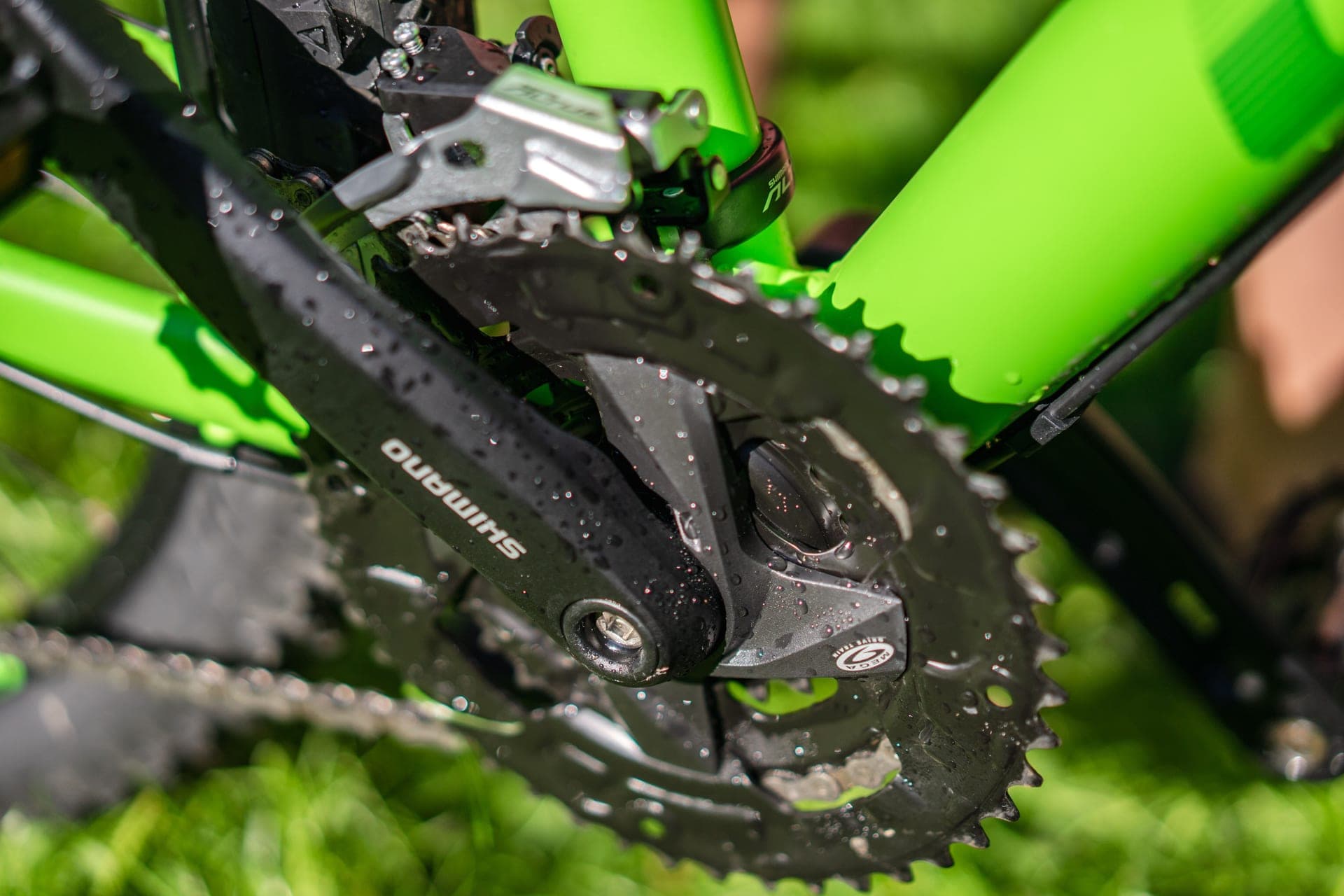
The short answer
Quick picks
| # | Product | Best for | Score | Price |
|---|---|---|---|---|
| 1 | 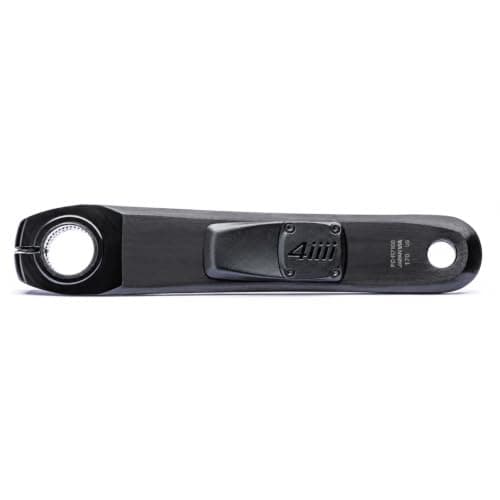 4iiii Precision 3+ The best-value serious power meter on the market: a genuine ±1% claim, an 800-hour battery and 9 g of added weight, as long as single-sided works for you. | Best crank power meter overall | 8.48.4 out of 10 | $437.49 · View on Amazon #ad We may earn a commission · Price as of October 21, 2026 |
| 2 | 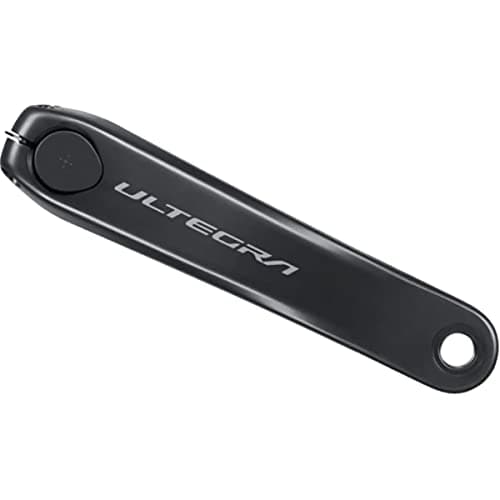 Shimano Ultegra FC-R8100-P True dual-sided measurement from the company that built your drivetrain — the cleanest integration available, at the highest price on this page. | Best dual-sided crank power meter | 7.07.0 out of 10 | $899.00 · View on Amazon #ad We may earn a commission · Price as of October 21, 2026 |
| 3 | 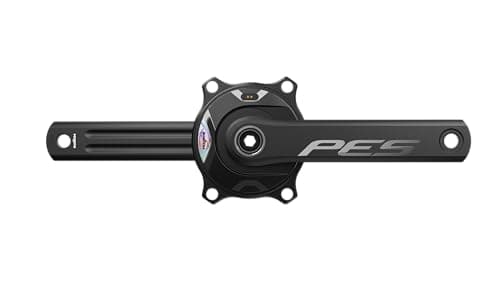 Magene PES P505 A properly specified complete crankset at a mid-tier price — the pick if you would rather buy one box than match a crank arm to your bike. | Best complete crankset for the money | 7.47.4 out of 10 | $299.99 · View on Amazon #ad We may earn a commission · Price as of October 21, 2026 |
| 4 | 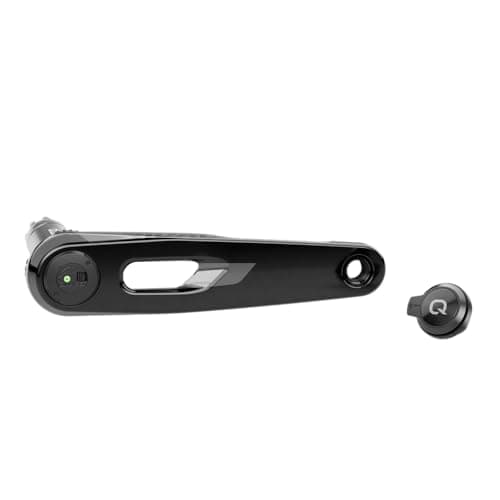 SRAM Rival Power Meter Spindle The obvious pick if your bike is already SRAM DUB — a matched left arm and spindle, with the same accuracy caveat we apply to any unpublished tolerance. | Best for SRAM AXS drivetrains | 7.17.1 out of 10 | $195.00 · View on Amazon #ad We may earn a commission · Price as of October 21, 2026 |
| 5 | 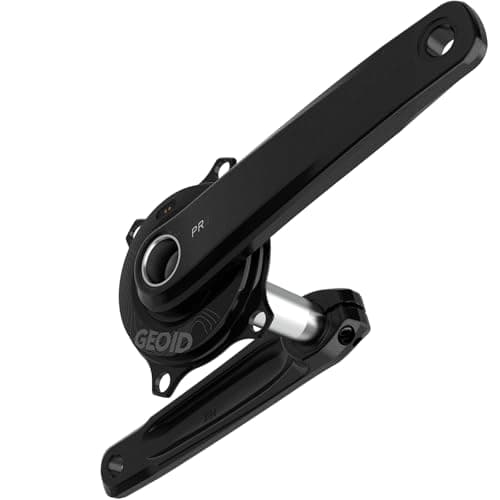 GEOID PM500 Power Meter Crankset The cheapest crank-based power there is — worth it if the alternative is no power meter at all, and not worth it if you need a number you can defend. | Cheapest way into crank power | 6.96.9 out of 10 |
Crank-based power meters are the value end of a category that is otherwise dominated by pedals, and for a lot of riders they are the smarter buy. They sit inside the drivetrain rather than hanging off it, they weigh almost nothing, they cannot be damaged in a pedal strike, and the cheapest of them costs a fraction of a set of power pedals. What they give up is portability: once a crank power meter is on a bike, it stays on that bike.
This roundup ranks the crank options worth buying and separates them by the thing that actually decides which one fits your bike — where the measurement lives.
Three shapes, and why the difference matters
Crank arm. A small pod bonded to the inside of the non-drive-side arm, or an arm supplied with one already fitted. Cheapest, lightest, easiest to install — and inherently single-sided, because there is nothing measuring the right leg. The 4iiii Precision 3+ is the benchmark.
Spindle.SRAM's approach: the strain gauges live in the axle that runs through the bottom bracket, sold as a left arm and spindle assembly. Tidy, drivetrain-matched, and again single-sided in this form.
Complete crankset. The whole crank assembly, with measurement built in. This is where dual-sided units live, because both arms can be instrumented. It is the most expensive route and the one with the most compatibility homework — you are replacing a structural part of your drivetrain, so bottom bracket standard, chainring size and crank length all have to line up.
| Power meter | Shape | Sided | Claimed accuracy | Battery | Best for |
|---|---|---|---|---|---|
| 4iiii Precision 3+ | Crank arm pod | Left only | ±1% | Up to 800 h, CR2032 | Overall |
| Shimano Ultegra R8100-P | Complete crank arms | Dual | Not published accessibly | Rechargeable | Shimano 12-speed |
| Magene PES P505 | Complete crankset | Left, with balance data | ±1.5% (P515: ±1%) | Magnetic charge | Complete crankset value |
| SRAM Rival spindle | Arm and spindle | Left only | Not published accessibly | Rechargeable | SRAM DUB bikes |
| GEOID PM500 | Complete crankset | Left only | ±1.5% | ~300 h rechargeable | Cheapest way in |
How we ranked them, and what we refuse to do
We pulled each manufacturer's own published material and recorded only what they actually state. 4iiii publishes a full specification table — ±1% accuracy, three strain gauges, up to 800 hours on a CR2032, a 0-4,000 W power range, a 30-170 rpm cadence range, IPX7, 9 g, a 5.5 mm profile and a three-year warranty. Magene publishes the same depth for the PES P505. Shimano and SRAM both render their specification tables client-side, and we could not load an accuracy tolerance for either from a citable page.
Where a figure is not published, we say so and score accuracy down. We do not repeat numbers from forums or from memory and present them as manufacturer claims. That policy costs those two products a point or two here, and we would rather that than mislead you — the reasoning is on our how we reviewpage. Prices come live from Amazon and change constantly, so you will see today's figure or "Check price", never a stale one.
Single-sided is not the compromise people think
Four of the five meters here measure one leg and double the result. That sounds worse than it is. Most riders have a left/right imbalance of a few percent, and — this is the important part — it is fairly stable. If your left leg produces 48% of your power today, it will produce roughly 48% next month. A single-sided meter therefore reads consistently low or high by a consistent amount, which is invisible to a training plan built on that same meter.
Where it breaks down is comparison. Comparing your single-sided number with a friend's dual-sided one, or with a smart trainer that measures at the hub, will show discrepancies that have nothing to do with fitness. And if you are rehabilitating a single-leg injury, the balance number is the whole point of buying the thing. We cover the full argument in single vs dual-sided.
Fit is where crank power meters go wrong
This is the single most common way people waste money in this category, and it is entirely avoidable. Before you order anything on this page, write down three things: your crank manufacturer and model, your crank arm length(stamped on the inside of the arm, usually 170, 172.5 or 175 mm), and your bottom bracket standard.
A bonded crank-arm unit must be the correct arm for your crankset. A spindle unit must match your bottom-bracket interface — SRAM's is DUB, and it will not fit a Shimano bottom bracket. A complete crankset must match your bottom bracket and your chainring needs; Magene, to their credit, state explicitly that the P505 is not compatible with BB386 and works with T47 frames only via external bottom brackets. Crank length matters to your bike fit as well as your fitting: the SRAM arm listed here is 165 mm, which will feel different if you currently ride 172.5 mm.
Crank or pedals?
This is the real decision, and it comes down to one question: do you want the power meter on this bike, or on whichever bike you are riding? Cranks win on price, weight, durability and the fact that nothing is exposed to a pedal strike. Pedals win on portability — a pedal wrench and five minutes moves them to the winter bike, the travel bike or the new frame.
If you own one bike and expect to for a while, buy a crank meter and put the savings into the rest of the setup. If you own several, or you replace bikes often, pedals will cost you less overall. Our best power meters roundup ranks the whole field across both shapes, and if you are still weighing whether you need a power meter at all when you already own a trainer, smart trainer vs power meter settles that first.
Is a crank meter the right format at all?
Worth asking before you order a crankset-specific part. Power meter pedals vs cranks lays the trade out: cranks are cheaper, run for hundreds of hours on a coin cell and leave your pedal choice alone, while pedals fit any bike and move between them. If your drivetrain is Shimano, our best power meters for Shimano bikes page covers which crank arms have to match what; if it is a gravel build, our best power meters for gravel bikes covers the SPD cleat problem that pushes a lot of gravel riders toward cranks in the first place.
If your bike is SRAM AXS specifically, best power meters for SRAM bikes works through the DUB fitment rules and the three in-family formats side by side.
Two things worth checking before you order. Most crank meters on this page read one leg and double it, so read the best single-sided power meters to see how they compare against the single-sided pedals. And if your deciding factor is never having to charge anything, how long power meter batteries last sets the published coin-cell and rechargeable figures side by side.
The full reviews
Every pick, in detail
#1 · Best crank power meter overall
4iiii Precision 3+
8.48.4 out of 10#ad We may earn a commission · Price as of October 21, 2026
The best-value serious power meter on the market: a genuine ±1% claim, an 800-hour battery and 9 g of added weight, as long as single-sided works for you.
- Type
- Non-drive-side crank arm
- Claimed accuracy
- ±1%
- Battery
- CR2032, up to 800 hours claimed
- Weight added
- 9 g
- Power range
- 0 - 4,000 W
- Connectivity
- ANT+ and Bluetooth Smart
What we'd praise
- ±1% claimed accuracy matches the pedal-based flagships at a fraction of the price
- 4iiii states it uses three strain gauges to measure the forces in the stroke, rather than one
- Up to 800 hours from a single CR2032 coin cell — years of riding between battery changes
- Adds only 9 g and sits 5.5 mm proud, so it clears frames that reject bulkier units
- IPX7 rated, 30-170 rpm cadence range and a three-year warranty
What we'd flag
- Left-side only: it measures one leg and doubles it, so there is no true left/right balance
- Sold as a specific crank arm, so it must match your exact crank model and length
- The dual-sided Pro version costs substantially more and drops to 550 hours of battery life
- Coin-cell door is the one part people damage — it needs care rather than force
The Precision 3+ is a small pod bonded to the inside of a non-drive-side crank arm, and 4iiii's published specification is the reason it dominates this category. They claim ±1% accuracy — the same figure Favero and Garmin claim for their dual-sided pedals — and state that the unit uses three strain gauges to capture the forces through the stroke rather than a single gauge measuring bending. They also publish up to 800 hours of battery life from a CR2032, a 0-4,000 W power range, a 30-170 rpm cadence range, IPX7 water resistance and a three-year warranty.
The compromise is structural, not electronic: it is on one crank arm, so it measures your left leg and doubles the number. For most riders that is fine, because the imbalance is small and consistent and training tracks change over time rather than absolute truth. We work through exactly when it is not fine in single vs dual-sided power meters. Note also that this is a specific crank arm — order the wrong model or length and it will not fit your bike.
#2 · Best dual-sided crank power meter
Shimano Ultegra FC-R8100-P
7.07.0 out of 10#ad We may earn a commission · Price as of October 21, 2026
True dual-sided measurement from the company that built your drivetrain — the cleanest integration available, at the highest price on this page.
- Type
- Dual-sided crank arms
- Group level
- Ultegra R8100, 12-speed
- Crank length
- 175 mm as listed
- Balance data
- True left/right
- Fit
- Shimano 12-speed road drivetrains
- Published tolerance
- Not verifiable in an accessible spec sheet
What we'd praise
- Genuine dual-sided measurement — each leg measured independently, not estimated from the other
- Made by the company that made your drivetrain, so fit and chainline are not a question you have to research
- Integrates cleanly with Shimano's own ecosystem and semi-wireless Di2 setups
- Crankset-level build quality rather than a pod bonded to an existing arm
What we'd flag
- Shimano's public spec pages are script-rendered and we could not verify a published accuracy tolerance, so we score accuracy conservatively
- By far the most expensive option here, and it replaces a crankset you already own
- Locked to Shimano 12-speed road drivetrains — no use on a SRAM or older Shimano bike
- Listed at a single crank length, so check the arm length matches your fit before ordering
If your bike is a modern Shimano 12-speed road build and you want dual-sided data without changing anything else about the drivetrain, this is the obvious answer. Both arms measure, so left/right balance is measured rather than assumed, and there is no compatibility research to do — Shimano built the crank, the chainrings, the bottom bracket standard and the shifting around each other.
We are going to be straight about one thing. Shimano's product-information pages render their specification tables through scripts, and we could not load a published accuracy tolerance from a source we could cite. Rather than repeat a number from a forum, we have scored accuracy conservatively and said why. Everything else about this unit is verifiable and good. If dual-sided is what you are after and Shimano is not, the pedal-based options give you the same data and move between bikes.
#3 · Best complete crankset for the money
Magene PES P505
7.47.4 out of 10#ad We may earn a commission · Price as of October 21, 2026
A properly specified complete crankset at a mid-tier price — the pick if you would rather buy one box than match a crank arm to your bike.
- Type
- Complete crankset with integrated meter
- Claimed accuracy
- ±1.5% (P505 base); ±1% for the P515 spider
- Weight
- 650 g average
- Power range
- 0 - 2,500 W
- Data
- Power, cadence, L/R balance, pedaling smoothness
- Connectivity
- ANT+ and Bluetooth, IPX7
What we'd praise
- Ships as a complete crankset, so there is no crank-arm model matching to get wrong
- Magene publishes a full specification sheet — accuracy, power range, cadence range, Q-factor and temperature range
- Crank lengths from 165 mm to 175 mm, so you can order to your existing fit
- Magnetic charging rather than a coin cell, with automatic, backpedal and manual calibration options
- Reports pedaling smoothness and left/right balance alongside power and cadence
What we'd flag
- ±1.5% on the base P505 is wider than the ±1% the 4iiii and the pedal flagships claim
- 24 mm spindle limits bottom-bracket compatibility — Magene states BB386 is not compatible and T47 frames only with external bottom brackets
- Swapping a whole crankset is a bigger job than bonding a pod to an arm
- Less third-party verification of the accuracy claim than the established brands have
Magene is one of the few value brands that publishes a real specification sheet, and it makes this an easy product to evaluate honestly. For the PES P505 base unit they state ±1.5% power accuracy, a 650 g average weight, a 0-2,500 W power range, a 20-200 rpm cadence range, a 147 mm Q-factor, IPX7 water resistance and ANT+ plus Bluetooth connectivity. The higher-spec P515 spider is where the ±1% claim and the 380-hour battery figure come from.
Buying a complete crankset rather than a single arm removes the most common ordering mistake in this category. What it introduces instead is a bottom-bracket question: the P505 uses a 24 mm steel spindle, which suits Shimano bottom brackets directly, and Magene states plainly that BB386 is not compatible and that T47 frames work only with external bottom brackets. Check your frame before you order. If a crankset swap sounds like more than you want to take on, our power-meter pedals guidecovers the option you fit with one wrench — including Magene's own P715, which claims a tighter ±1% and measures both legs, at a higher price. Our Magene P715 review covers that trade in full.
#4 · Best for SRAM AXS drivetrains
SRAM Rival Power Meter Spindle
7.17.1 out of 10#ad We may earn a commission · Price as of October 21, 2026
The obvious pick if your bike is already SRAM DUB — a matched left arm and spindle, with the same accuracy caveat we apply to any unpublished tolerance.
- Type
- Left crank arm with power meter spindle
- Interface
- DUB spindle
- Crank length
- 165 mm as listed
- Measurement
- Single-sided, doubled
- Fit
- SRAM DUB cranksets
- Published tolerance
- Not verifiable in an accessible spec sheet
What we'd praise
- The tidiest way to add power to an existing SRAM DUB drivetrain — you replace one arm, not the whole crankset
- Cheapest route to a branded, drivetrain-matched power meter here
- No bonded pod hanging off the arm, so nothing to catch on a frame or a bag
- Keeps you inside the SRAM AXS ecosystem for firmware and app support
What we'd flag
- SRAM's model pages render their specifications through scripts and we could not verify a published accuracy tolerance to cite
- Single-sided, so left/right balance is estimated rather than measured
- DUB-only: no use on a Shimano or non-DUB bottom bracket without a wider rebuild
- Listed at 165 mm, which is shorter than most riders run — check the length carefully
SRAM's approach puts the measurement in the spindle rather than in a pod on the arm, which is neat: you buy a left crank arm with the power-measuring spindle attached, remove your existing left arm, and fit this one. On a bike that already runs a SRAM DUB crankset it is about as low-friction as a power-meter installation gets, and it keeps you inside one ecosystem for firmware and app support.
The same caveat applies as with the Shimano unit: SRAM's model pages build their specification tables client-side and we could not pull a published accuracy figure we would be willing to quote. We have scored accuracy conservatively rather than repeat a number we cannot source — our how we reviewpage explains the policy. Note also that this listing is a 165 mm arm, which is shorter than most riders run; crank length affects your fit, so check it against the arm currently on your bike.
#5 · Cheapest way into crank power
GEOID PM500 Power Meter Crankset
6.96.9 out of 10The cheapest crank-based power there is — worth it if the alternative is no power meter at all, and not worth it if you need a number you can defend.
- Type
- Crankset with integrated meter
- Claimed accuracy
- ±1.5% (manufacturer)
- Battery
- Rechargeable, around 300 hours claimed
- Weight
- Around 680 g
- Chainring standard
- 110 BCD
- Connectivity
- Bluetooth and ANT+
What we'd praise
- The lowest price at which a crank-based power number exists at all
- A complete crankset, so there is no crank-arm matching exercise
- Rechargeable rather than coin-cell, with a long claimed run time
- 110 BCD chainring standard is the common one, so replacement rings are easy to find
What we'd flag
- ±1.5% claim comes with no third-party verification we can cite
- Direct-mount crankset must match your bottom bracket standard — check before ordering
- Very little long-term reliability record next to 4iiii, Shimano or SRAM
- Heaviest unit here at around 680 g
There is a real case for this tier and it is worth stating clearly: a power meter with a wider tolerance is enormously more useful than no power meter. Training is driven by repeatability, and a unit that reads consistently is a unit you can build zones on, execute intervals with and track fitness through — even if the absolute number is a couple of percent off. Our accuracy guide makes that argument properly.
The case against is equally real. GEOID claims ±1.5% and there is no independent verification of that claim that we can point to, and there is no meaningful track record for durability. If your numbers need to stand up next to a friend's, a coach's plan or a race, spend up. If the choice is between this and riding blind, this is the better choice. The rest of the budget tier is ranked in best budget power meters.
Good questions
Frequently asked questions
Are crank power meters as accurate as pedal power meters?
The best of them claim the same tolerance. 4iiii publishes ±1% for the Precision 3+, which matches the figure Favero and Garmin claim for their pedals. The meaningful difference is usually single-sided versus dual-sided measurement rather than the underlying accuracy of the strain gauges.
Will a crank power meter fit my bike?
Only if it matches your specific setup. A bonded crank-arm unit must be the right arm for your crankset and length. A spindle unit must match your bottom-bracket interface, such as SRAM DUB. A complete crankset must match your bottom bracket standard and chainring requirements. Check all three before ordering.
Is a single-sided power meter good enough for training?
For most riders, yes. Left/right imbalance is usually small and stable, so a single-sided meter reads consistently and your zones, intervals and fitness trend all hold together. It falls short when you need true balance data, such as during injury rehabilitation, or when comparing your numbers against another device.
How long do crank power meter batteries last?
It varies widely by design. 4iiii publishes up to 800 hours from a single CR2032 coin cell on the Precision 3+, which is years of riding for most people. Rechargeable units such as the Magene and GEOID cranksets quote figures in the hundreds of hours and need a charging routine instead.
Do I need a power meter if I already have a smart trainer?
Only if you ride outdoors. Your trainer already measures power accurately indoors, so a power meter earns its place the moment you want the same measurement on the road — for consistent zones across indoor and outdoor rides, for racing, or for pacing climbs.
Why do some manufacturers not publish an accuracy figure?
Usually they do publish one, but on pages that build their specification tables through scripts rather than in plain text, which makes the figure impossible to cite reliably. Where we could not load a published tolerance from a citable source, we say so on the page and score accuracy conservatively rather than repeat an unverified number.
How we sourced this
Keep going
Read these next
- ComparisonPower Meter Pedals vs Cranks
- Power MetersThe Best Power Meters for Shimano Bikes
- Power MetersThe Best Power Meters for Gravel Bikes
- Power MetersSingle vs Dual-Sided Power Meters
- Power MetersThe Best Power Meter Pedals
- Power MetersThe Best Budget Power Meters
- ReviewMagene P715 Review
- Power MetersHow to Calibrate a Power Meter