Power Meter Review
Magene P715 Review: Dual-Sided Watts for Less, Pods and All
Magene's pedal meter claims the same ±1% as the flagships, more than doubles the Assioma Duo's battery figure, and costs less than anything else that measures both legs. Here is what it gives up to get there, and who should actually buy it.
The short answer
Quick picks
| # | Product | Best for | Score | Price |
|---|---|---|---|---|
| 1 | 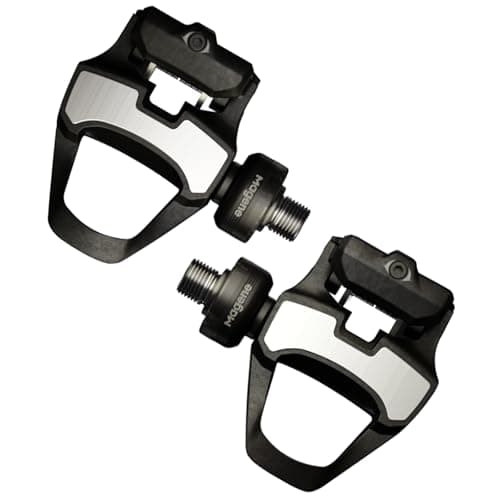 Magene P715 S The cheapest honest route to dual-sided power on Shimano cleats. What you give up is pod-free styling and a thick independent testing record, not the number itself. | The pick: dual-sided power on Shimano SPD-SL for the least money | 8.48.4 out of 10 | $499.99 · View on Amazon #ad We may earn a commission · Price as of September 24, 2026 |
| 2 | 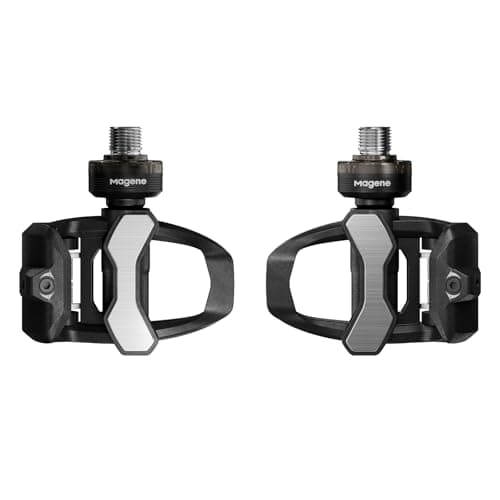 Magene P715 K Buy it because your shoes are on Keo and you want the cheapest dual-sided number. If the extra outlay is comfortable, the Assioma Duo is the safer bet on this cleat system. | The same pedal for riders whose shoes are already on Look Keo cleats | 8.38.3 out of 10 | $499.99 · View on Amazon #ad We may earn a commission · Price as of September 24, 2026 |
| 3 | 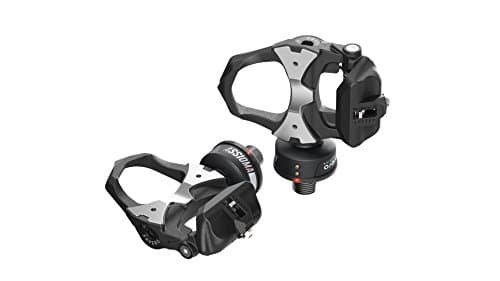 Favero Assioma Duo The safe answer on Keo cleats. You pay a premium over the Magene for a much longer record of independent testing, and you give up battery life to get it. | The established Keo rival: fewer hours per charge, far more public record | 8.88.8 out of 10 | $539.99 · View on Amazon #ad We may earn a commission · Price as of September 24, 2026 |
| 4 | 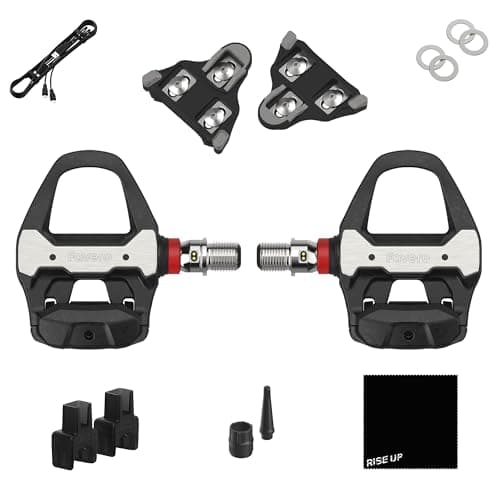 Favero Assioma Pro RS-2 The better pedal in almost every measurable way, at a price that puts it in a different conversation. Worth the step up if the budget stretches; not a reason to call the Magene a bad buy. | Step up: the pod-free SPD-SL pedal the P715 is trying to be | 9.09.0 out of 10 | $819.99 · View on Amazon #ad We may earn a commission · Price as of September 24, 2026 |
| 5 | 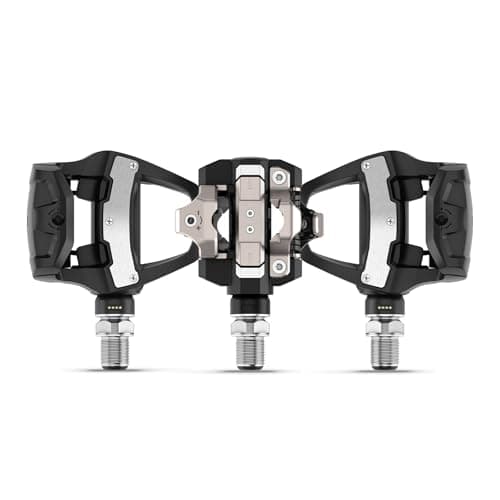 Garmin Rally RS210 An excellent pedal with an ecosystem argument rather than a spec-sheet one. If you do not own a Garmin Edge, most of what you are paying for does not reach you. | If a Garmin Edge is already the center of your training | 8.78.7 out of 10 | $899.99 · View on Amazon $1,199.99Save 25% #ad We may earn a commission · Price as of September 24, 2026 |
| 6 | 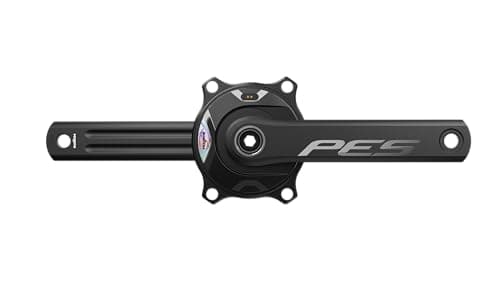 Magene PES P505 The right Magene if the watts only ever need to come from one bike and the budget is the binding constraint. Buy the pedals if the meter has to travel. | Cheaper Magene watts, if the meter can stay on one bike | 7.47.4 out of 10 | $299.99 · View on Amazon #ad We may earn a commission · Price as of September 24, 2026 |
Dual-sided power pedals have had a price floor for years. If you wanted a meter in each pedal, measuring each leg independently rather than doubling one of them, you paid for the privilege — and the cheapest honest way in was a Favero Assioma Duo. The Magene P715, launched in mid-2025, is the first credible attempt to put that floor lower.
It is a dual-sided pedal meter claiming ±1%, in a Shimano SPD-SL version (the P715 S) and a Look Keo version (the P715 K), with a rechargeable battery Magene rates at 120 hours. That battery figure is more than double what Favero publishes for the Assioma Duo and a third more than Garmin's stated 90 hours on the current Rally 210. On paper it undercuts everything and loses to nothing.
On the bike, the picture is more interesting than that, and the sticking point is not the number the pedals report. It is the pods they report it from, and how thin the independent testing record still is by the standards of this category.
We have not ridden a set on our own bikes for this review. Every specification below comes from Magene's own product page or a US retailer listing, and every accuracy finding is attributed to the reviewer who measured it. Our how we review page explains why we work that way rather than pretending to a test lab we do not have.
What the P715 actually is
A pair of clipless road pedals with a strain gauge and a battery in each one, so both legs are measured rather than one leg being measured and doubled. Magene publishes ±1% accuracy across a 0-2,500 W power range and a 20-240 rpm cadence range, with active temperature compensation, an IPX7 water rating and an operating range of -20 to 50 °C.
The two versions differ only at the cleat. The P715 Ktakes Look Keo cleats, weighs 157 g a pedal and has an 11 mm stack. The P715 Stakes Shimano SPD-SL cleats, weighs 159 g and stacks 13 mm. Both share a 55 mm Q-factor. There is no off-road SPD version — Magene lists K and S only, so if you want power in a mountain bike pedal this is not the product, and our Assioma Pro MX review covers the pedal that is.
Charging is magnetic, using a cable that clips onto contacts on each pod, and Magene quotes about three hours from a 140 mAh cell. Data goes out over ANT+ and Bluetooth, though Magene's specification lists a single Bluetooth connection at a time alongside unlimited ANT+ connections — worth knowing if you routinely pair a phone and a head unit at once. Beyond power and cadence it reports left/right balance, torque effectiveness, pedaling smoothness, power phase and riding position, with the full set surfacing on Garmin head units and a subset elsewhere. It does not report Platform Center Offset, which the5krunner flagged as a gap against the Favero and Garmin competition.
| P715 S | P715 K | Assioma Duo | Assioma Pro RS-2 | Rally RS210 | |
|---|---|---|---|---|---|
| Sensing | Dual | Dual | Dual | Dual | Dual |
| Claimed accuracy | ±1% | ±1% | ±1% | ±1% | ±1% |
| Cleat system | Shimano SPD-SL | Look Keo | Look Keo | Shimano SPD-SL | Shimano SPD-SL |
| Weight | 159 g per pedal | 157 g per pedal | 151.5 g per pedal | 124.8 g per pedal | 312 g the pair |
| Stack height | 13 mm | 11 mm | 10.5 mm | 10.5 mm | Not verified here |
| Q-factor | 55 mm | 55 mm | +54 mm | +53 mm | Not verified here |
| Stated battery | Up to 120 h | Up to 120 h | 50+ h | Up to 160 h | Up to 90 h |
| Electronics | Pods on spindle | Pods on spindle | Pods on spindle | Sealed in spindle | Sealed in spindle |
| Body swap to another cleat | No | No | No | Yes (Keo or SPD body) | Yes (Keo or SPD body) |
| Cleats included | No | No | Yes | Yes | Yes |
| Water rating | IPX7 | IPX7 | IP67 | IP67 | IPX7 |
The pods are the design decision that defines it
Every reviewer lands on the same visual point, so it is worth being plain about it. The P715 carries its battery and electronics in housings that sit on the spindle between the crank arm and the pedal body — the same arrangement the Favero Assioma Uno and Duo have always used, and the one Favero specifically engineered out of its Pro range by sealing everything inside the axle. GPLama named the external pod design as one of the reasons the P715 is a harder sell than it looks.
In practice the pods do two things. They set the Q-factor, which at 55 mm is a couple of millimeters wider than Favero's current pedals — a difference most riders will not feel but some will want to compensate for at the saddle. And they create a clearance question with your shoe. The5krunner noted the P715's pod diameter is smaller than the ones that used to cause shoe rubbing, which is a real improvement, but a pod is still a pod.
The thing they do not do is make the measurement worse. Pods are an aesthetic and packaging compromise, not an accuracy one. If the look does not bother you, this is the cheapest complaint on the list to live with.
Accuracy: what four independent testers actually found
This is where an honest review has to resist tidying things up, because the published findings do not all agree.
GPLama reviewed the SPD-SL version in April 2026 and concluded that it delivers solid, within-spec power data and performs well as a pedal, with good battery life and durability. His reservations were about the external pods, the limited feature set and the price relative to stronger alternatives — not the numbers.
Cyclists Hub tested a Keo pair indoors against a Wahoo Kickr v5 and measured the pedals consistently low: 2.8% below on an interval session, 2.1% on a free ride and 2.5% on a race, with maximum-power readings 4.8% to 6.2% below the trainer, and cadence over-reported by 1.3% to 1.7%. They were careful to say a third power source would be needed to confirm which device is the one that is off. Their weighted overall score was 4.6 out of 5, and they called the P715 a worthy and more affordable contender.
the5krunnerpublished a first-look review in July 2025 with seven comparison rides. Against a 4iiii crank arm he saw about a 5% overall difference, which he called more than he would expect; against Magene's own P505 crankset the gap was around 4%, which he called too much; and against a pair of Kickr trainers the pedals sat, in his words, nicely in the middle of the watt range. His verdict was conditional: a winner only if the accuracy and stats hold up.
Cycle Tech Reviewpublished a preview covering the specification, the gyroscope-assisted power calculation and Magene's claim of one-million-cycle durability testing, but did not publish comparative accuracy data.
Read together, the picture is not alarming, but it is not settled either. The most recent and most systematic testing — GPLama's, nine months after the first-look reviews and presumably on more mature firmware — found the pedals within spec. The offsets other reviewers measured were consistent rather than drifting, and a consistent offset is far less damaging to training than a wandering one: your zones are set from a test done on the same meter, so a stable bias largely cancels out. What it does break is comparing your numbers to a friend's, or to a trainer you also ride. If that matters to you, pick one device as your reference and calibrate properly before every session that counts.
Battery life is the spec that genuinely wins
Magene states 120 hours per charge. That is a real advantage and the easiest one to verify from published figures: Favero publishes 50-plus hours for the Assioma Duo, Garmin publishes up to 90 for the Rally 210. Only the Assioma Pro RS beats it, at up to 160 hours since Favero's February 2026 firmware update — and that pedal costs considerably more.
In practical terms, 120 hours is most of a winter of indoor training before you think about a charger. Charging is magnetic and takes around three hours from empty, which means the sensible routine is to charge both pedals overnight once a season rather than to worry about it. There is no coin cell to buy, no battery door to cross-thread and no compartment to flood.
Fitting, the app and what is in the box
The pedals thread into standard cranks and fit with an 8 mm hex wrench. Magene advertises a one-minute installation; the5krunner put the real job at two to three minutes, which is about right for anything you have to torque properly. Crank length is set in the Magene Utility app or on the head unit, and it matters — get it wrong and every watt is wrong by the same proportion. The app handles firmware updates and both automatic and manual calibration, and Cyclists Hub described the automatic zero-offset behavior as set-and-forget. The5krunner was less enthusiastic, saying the app is not as clean as Favero's but works.
Cleats are not included. Magene lists the box as two pedals, two crank washers, a charging cable and a quick start guide, and Power Meter City states plainly that the manufacturer does not supply cleats. Both Favero and Garmin do. Budget accordingly, because a set of cleats is a meaningful fraction of the gap between the Magene and the competition, and Cyclists Hub found clipping in harder with the third-party cleats they used.
Two more figures worth knowing, both from Power Meter City's US listing rather than Magene's own page: a 264 lb rider weight limit and a two-year warranty. Magene does not publish a crank-thickness limit the way Favero does, so if you run unusual cranks or have ever needed a pedal washer to clear a crank arm, ask before you order.
Where it sits against the alternatives
Against the Assioma Duo, the Magene wins on price and battery life and loses on weight and record. Both carry pods; both claim ±1%. The Duo has been compared publicly against more reference meters than almost any power meter on the market, and that track record is what the price difference buys.
Against the Assioma Pro RS-2, the Magene wins on price and nothing else. The Favero is lighter by a wide margin, pod-free, sealed, longer-running, supplied with cleats, and its body swaps to another cleat system. It is also in a different price bracket. The5krunner noted in his verdict that Favero had matched the P715's launch price, which removed the price advantage that was the Magene's whole argument — so check both live prices in the table above rather than trusting any published figure, including this paragraph.
Against the Garmin Rally RS210, the Magene wins on price and battery and loses on weight, build and ecosystem integration. The Rally's convertible bodies are its real structural advantage: one spindle covers SPD-SL, Keo and off-road SPD. The P715 covers two road cleat systems and asks you to choose at checkout. Our Assioma vs Rally comparison covers that rivalry in full.
And against Magene's own PES P505 crankset, the pedals win on portability and on the tolerance Magene publishes, while the crankset wins on price. That is the same fork the whole category runs on, and our power meter pedal roundup and crank power meter roundup take the two sides of it.
Who should buy it
Buy the P715 if dual-sided measurement matters to you and the Assioma Duo is out of budget, if you ride SPD-SL and do not want to pay Pro RS or Rally money to keep your cleats, or if long battery life between charges is the thing you actually care about. Those are good reasons, and the pedals answer all three.
Skip it if the pods will bother you every time you look down, if you need a pedal that also goes off-road, if you want the longest possible record of independent verification behind the number, or if you would be comparing your watts directly against a training partner's and cannot tolerate an unresolved offset. And if you do not own a smart trainer yet, buy the trainer first — it measures power indoors on its own, which makes a pedal meter the second purchase rather than the first. Our smart trainer vs power meter guide walks through that order properly.
Still comparing?
See every power meter rankedThe full reviews
Every pick, in detail
#1 · The pick: dual-sided power on Shimano SPD-SL for the least money
Magene P715 S
8.48.4 out of 10#ad We may earn a commission · Price as of September 24, 2026
The cheapest honest route to dual-sided power on Shimano cleats. What you give up is pod-free styling and a thick independent testing record, not the number itself.
- Type
- Pedal-based, dual-sided
- Claimed accuracy
- ±1%, over 0-2,500 W and 20-240 rpm
- Cleat system
- Shimano SPD-SL (cleats not supplied)
- Weight
- 159 g per pedal, 318 g the pair (Magene)
- Stack / Q-factor
- 13 mm / 55 mm
- Battery
- 140 mAh rechargeable, up to 120 h, magnetic charge in about 3 h
- Connectivity
- ANT+ and Bluetooth
- Water rating
- IPX7, operating range -20 to 50 °C
What we'd praise
- Dual-sided measurement at a price the rest of the dual-sided pedal field does not match
- Magene states 120 hours per charge, against Garmin's stated 90 for the Rally 210 and Favero's 50-plus for the Assioma Duo
- GPLama, who tested a set for his April 2026 review, judged the power data solid and within spec, with good battery life and durability
- The full advanced metric set — left/right balance, torque effectiveness, pedaling smoothness, power phase — on a head unit that supports it
- Magnetic charging, so there is no coin cell to source and no threaded battery door to seize
- Fits with an 8 mm hex wrench; the5krunner put the job at two to three minutes
What we'd flag
- The battery and electronics still sit in external pods on the spindle, the design Favero moved away from on its Pro range
- Independent accuracy findings do not all agree: Cyclists Hub measured it roughly 2.5% below a Wahoo Kickr v5 indoors, and the5krunner's first look saw 4-5% gaps against a 4iiii crank arm and a Magene P505
- No cleats in the box — Magene lists two pedals, two crank washers, a charging cable and a quick start guide, and Power Meter City states the same
- Magene's own specification lists one Bluetooth connection at a time, against the three Favero allows on the Pro range
- No Platform Center Offset, which both the Favero Pro RS and the Garmin Rally report
- Magene publishes no crank-thickness limit the way Favero does, so unusual cranks are a question you have to ask before you order
The S is the Shimano SPD-SL version, and for most road riders in the US it is the one to buy, because SPD-SL is what most road shoes are already set up for. Magene publishes 159 g per pedal, a 13 mm stack and a 55 mm Q-factor, with the same ±1% claim, the same 120-hour battery and the same IPX7 rating as the Keo version.
What you are actually buying is dual-sided measurement at a price that normally buys single-sided. Every other dual-sided pedal on this page costs more, and two of them cost a lot more. The honest caveats are the pods and the paper trail: the electronics hang off the spindle in housings that Favero has spent two product generations removing, and the number of people who have independently tested a set is still small enough to count.
#2 · The same pedal for riders whose shoes are already on Look Keo cleats
Magene P715 K
8.38.3 out of 10#ad We may earn a commission · Price as of September 24, 2026
Buy it because your shoes are on Keo and you want the cheapest dual-sided number. If the extra outlay is comfortable, the Assioma Duo is the safer bet on this cleat system.
- Type
- Pedal-based, dual-sided
- Claimed accuracy
- ±1%
- Cleat system
- Look Keo compatible (cleats not supplied)
- Weight
- 157 g per pedal, 314 g the pair (Magene)
- Stack / Q-factor
- 11 mm / 55 mm
- Battery
- Rechargeable, up to 120 h, magnetic charging
- Connectivity
- ANT+ and Bluetooth, IPX7
What we'd praise
- A 2 mm lower stack than the SPD-SL version and 2 g lighter per pedal, by Magene's published figures
- Cyclists Hub weighed the Keo pair at 312 g without cleats, close to Magene's published 314 g
- Identical electronics, battery figure and accuracy claim to the S — the only difference is the cleat interface
- Lets you keep Keo shoes rather than re-cleating a wardrobe to chase a cheaper meter
What we'd flag
- Competes directly with the Favero Assioma Duo, which has years more public scrutiny behind the same ±1% claim
- Favero's Duo is lighter on paper at 151.5 g per pedal, so the P715 K wins on price and battery, not on weight
- Same external pods as the S, and the same single simultaneous Bluetooth connection
- No cleats included, so budget for a set of Keo-pattern cleats on top
The K is the Look Keo version, and the specification differences are small enough to be rounding: 157 g a pedal rather than 159, an 11 mm stack rather than 13, and the same 55 mm Q-factor. Cyclists Hub weighed their Keo pair at 312 g without cleats, which lines up with what Magene publishes.
The awkward part is who it is up against. On Keo cleats, the Favero Assioma Duois the pedal this site has recommended by default for years, and it claims the same ±1% from a design a great many more people have tested. The P715 K's argument is the price and the battery figure. If those matter more to you than the length of the public record, it is a reasonable trade — just make it with your eyes open.
#3 · The established Keo rival: fewer hours per charge, far more public record
Favero Assioma Duo
8.88.8 out of 10#ad We may earn a commission · Price as of September 24, 2026
The safe answer on Keo cleats. You pay a premium over the Magene for a much longer record of independent testing, and you give up battery life to get it.
- Type
- Pedal-based, dual-sensing
- Claimed accuracy
- ±1%
- Cleat system
- Look Keo compatible
- Weight
- 151.5 g per pedal (Favero)
- Stack / Q-factor
- 10.5 mm / +54 mm
- Battery
- Rechargeable, 50+ h per charge
What we'd praise
- The same ±1% dual-sensing claim, from the design the whole category has been measured against for years
- Lighter than either P715 on the makers' own published figures, and a lower stack height
- Favero's IAV system uses a gyroscope to track how fast the crank is really turning through each revolution
- The pedal our power-meter pedal roundup still names as the default choice on Keo cleats
What we'd flag
- 50-plus hours per charge is less than half Magene's stated 120, and the Pro-range firmware update that raised Favero's figure to 160 does not apply to the Duo
- It carries pods of its own — this is not the pod-free Favero
- Look Keo only, with no body swap, so changing cleat systems means changing power meter
- Costs more on Amazon than the P715 did when we checked, which is the whole reason the Magene exists
No honest P715 review can leave the Assioma Duo off the page, because it is the pedal the Magene was designed to undercut. Same claimed accuracy, same dual-sensing approach, same rechargeable battery, same wrench-only fitting — and a reputation built over years of public comparison data rather than months.
The two lines where the Magene genuinely leads are price and battery life. The two where the Favero leads are weight and the sheer volume of independent testing behind the number. If you want the reasoning in full, our Assioma Duo vs Uno guide covers where the second sensor earns its money in the first place.
#4 · Step up: the pod-free SPD-SL pedal the P715 is trying to be
Favero Assioma Pro RS-2
9.09.0 out of 10#ad We may earn a commission · Price as of September 24, 2026
The better pedal in almost every measurable way, at a price that puts it in a different conversation. Worth the step up if the budget stretches; not a reason to call the Magene a bad buy.
- Type
- Pedal-based, dual-sensing
- Claimed accuracy
- ±1% (IAV Power System), 0-3,000 W
- Cleat system
- Shimano SPD-SL (compatible cleats supplied)
- Weight
- 124.8 g per pedal (Favero)
- Stack / Q-factor
- 10.5 mm / +53 mm
- Battery
- Sealed rechargeable, up to 160 h since firmware 7.11
- Water rating
- IP67
What we'd praise
- No pods at all: battery, electronics and strain gauges live inside a sealed IP67 spindle
- The lightest pedal on this page by a wide margin, and road.cc's scales matched Favero's published figure
- Up to 160 hours per charge since Favero's February 2026 firmware update, more than Magene's stated 120
- The pedal body is a separate part, so an SPD-SL body can be swapped for Keo or SPD later
- Three simultaneous Bluetooth connections, against the single connection Magene specifies
- Cleats are in the box, which the Magene's are not
What we'd flag
- Costs substantially more than the P715, which is the entire argument against it here
- The battery is sealed inside the spindle, so there is no cell for you to replace when it eventually wears
- Charging needs Favero's proprietary magnetic connectors; lose them and the pedals stop being rechargeable
- Not compatible with pedal extenders, crank shorteners or cranks thicker than 15 mm at the thread
- Over Bluetooth it sends power, cadence and balance only — advanced metrics need ANT+ or Favero's app
If the pods are what bother you about the P715, this is the pedal that fixed them. Favero moved the electronics and battery inside a sealed spindle, dropped the weight to 124.8 g a pedal, and then pushed the stated battery life to 160 hours with a firmware update in February 2026. It takes SPD-SL cleats, and it includes them.
It is also a considerably more expensive pedal, and that matters more than any spec line here. Our Assioma Pro RS reviewmakes its case in full. If your budget lands closer to the Magene, do not read the Favero's existence as a reason to skip the P715 — read it as what you would get for the extra money.
#5 · If a Garmin Edge is already the center of your training
Garmin Rally RS210
8.78.7 out of 10$1,199.99Save 25%
#ad We may earn a commission · Price as of September 24, 2026
An excellent pedal with an ecosystem argument rather than a spec-sheet one. If you do not own a Garmin Edge, most of what you are paying for does not reach you.
- Type
- Pedal-based, dual-sensing
- Claimed accuracy
- ±1%
- Cleat system
- Shimano SPD-SL (RS body)
- Weight
- 312 g the pair
- Battery
- Sealed rechargeable, up to 90 h
- Water rating
- IPX7
What we'd praise
- A universal spindle that swaps between SPD-SL, Keo and SPD bodies — the only pedal here that goes off-road
- Pedal IQ tells you when a manual calibration is actually needed, on a recent Garmin Edge
- Cycling Dynamics metrics surface natively on Garmin head units rather than through a third-party app
- Lighter the pair than either P715 on published figures, and sealed rather than podded
What we'd flag
- The most expensive way on this page to buy a claimed ±1%
- Stated 90 hours per charge is less than Magene's 120 and well short of Favero's 160
- Pedal IQ alerts are locked to Garmin's own head units
- Nothing it measures is unavailable elsewhere for less — you are buying the ecosystem
The Rally RS210 is the pedal the P715 undercuts hardest. Both are dual-sensing SPD-SL pedals claiming ±1%; the Garmin is sealed and rechargeable rather than podded, lighter the pair, and it swaps bodies between road and off-road cleats. It also states 90 hours of battery against Magene's 120.
What actually justifies the gap is ownership. Pedal IQ calibration prompts and native Cycling Dynamics are genuinely useful if an Edge is already on your bars, and close to irrelevant if it is not. Our Garmin Rally RS210 review covers the current 210 and 110 generation in detail.
#6 · Cheaper Magene watts, if the meter can stay on one bike
Magene PES P505
7.47.4 out of 10#ad We may earn a commission · Price as of September 24, 2026
The right Magene if the watts only ever need to come from one bike and the budget is the binding constraint. Buy the pedals if the meter has to travel.
- Type
- Complete crankset with integrated meter
- Claimed accuracy
- ±1.5% (P505 base); ±1% for the P515 spider
- Weight
- 650 g average
- Power range
- 0 - 2,500 W
- Data
- Power, cadence, L/R balance, pedaling smoothness
- Connectivity
- ANT+ and Bluetooth, IPX7
What we'd praise
- The cheapest way into Magene's power measurement by a clear margin
- Ships as a complete crankset, so there is no crank-arm model matching to get wrong
- Magnetic charging and a far longer battery figure than any pedal here, since a crankset has room for a bigger cell
- Magene publishes a full specification sheet — accuracy, power range, cadence range, Q-factor and temperature range
What we'd flag
- ±1.5% on the base P505 is wider than the ±1% every pedal on this page claims
- Bolts to one bike: moving it between frames is a workshop job, not a wrench-and-go
- 24 mm spindle limits bottom-bracket compatibility — Magene states BB386 is not compatible and T47 frames only with external bottom brackets
- Less third-party verification behind the accuracy claim than the established pedal brands have
Magene's crankset is worth knowing about because it answers a different question with the same brand's electronics. It costs less than the P715, it publishes a wider tolerance on the base unit, and it never leaves the bike you fit it to.
That last point is the real fork. Pedals are the enthusiast's default because they move between bikes in minutes; a crankset does not. Our crank power meter roundup ranks the whole field, including the bottom-bracket compatibility trap this one carries.
Good questions
Frequently asked questions
Is the Magene P715 accurate?
Magene claims ±1%. GPLama, who reviewed the SPD-SL version in April 2026, found the power data solid and within spec. Cyclists Hub measured a Keo pair about 2.5% below a Wahoo Kickr v5 indoors across three sessions, with cadence over-reported by 1.3% to 1.7%, and noted a third power source would be needed to say which device is off. The5krunner's July 2025 first look saw larger gaps — around 5% against a 4iiii crank arm and 4% against a Magene P505 crankset. No reviewer reported the readings drifting over time.
What is the difference between the Magene P715 S and the P715 K?
Only the cleat system and the small dimensional changes that follow from it. The P715 S takes Shimano SPD-SL cleats, weighs 159 g per pedal and has a 13 mm stack height. The P715 K takes Look Keo cleats, weighs 157 g and has an 11 mm stack. Both share a 55 mm Q-factor, the same ±1% claim, the same 120-hour battery figure and the same IPX7 rating.
How long does the Magene P715 battery last?
Magene states up to 120 hours of riding per charge from a 140 mAh rechargeable cell in each pedal, recharged through a magnetic connector in about three hours. For comparison, Favero publishes 50-plus hours for the Assioma Duo and Garmin publishes up to 90 hours for the Rally 210. Only Favero's Assioma Pro RS beats it, at up to 160 hours since its February 2026 firmware update.
Does the Magene P715 come with cleats?
No. Magene lists the box contents as two power meter pedals, two crank washers, a charging cable and a quick start guide, and the US retailer Power Meter City states that the manufacturer does not include cleats. Favero and Garmin both supply cleats with their pedals, so factor a set into the comparison.
Magene P715 or Favero Assioma Duo?
The Magene costs less and states more than double the battery life. The Favero is lighter on paper at 151.5 g per pedal against 157 g, and has years more public comparison data behind the same ±1% claim. Both use external pods and both are dual-sided on Look Keo cleats. Buy the Magene if price or battery life decides it; buy the Favero if you want the longest independent record.
Is there an SPD (mountain bike) version of the Magene P715?
No. Magene lists only the P715 K for Look Keo and the P715 S for Shimano SPD-SL, both road cleat systems. If you need power in a two-sided off-road pedal, the Favero Assioma Pro MX and Garmin's Rally XC bodies are the options that exist.
Does the Magene P715 work with Zwift and a smart trainer?
Yes. It broadcasts over ANT+ and Bluetooth, so you can pair it as your power source in Zwift while the trainer handles resistance. One thing to plan for: Magene's specification lists a single simultaneous Bluetooth connection alongside unlimited ANT+ connections, so if you want the pedals on a phone and a head unit at the same time, use an ANT+ stick for one of them.
What data does the Magene P715 report besides power?
Cadence, left/right balance, torque effectiveness, pedaling smoothness, power phase and riding position. The full advanced set surfaces on Garmin head units; other brands support a subset. It does not report Platform Center Offset, which the Favero Assioma Pro RS and the Garmin Rally both do.
What is the rider weight limit and warranty on the Magene P715?
The US retailer Power Meter City lists a 264 lb rider weight limit and a two-year warranty. Magene's own product page does not publish either figure, and it also publishes no crank-thickness limit, so if you run unusual cranks it is worth asking before ordering.
How we sourced this
- Magene P715 pedal-based power meter product page (manufacturer)
- Magene PES P505 base power meter specifications (manufacturer)
- Magene P715 SPD-SL pedal power meter review (GPLama)
- Magene P715 review: a worthy power meter? (Cyclists Hub)
- Magene P715S power meter pedals first look review (the5krunner)
- Magene P715 dual-sided power meter pedals preview (Cycle Tech Review)
- Magene P715 road power meter pedals, US retailer listing (Power Meter City)
- Favero Assioma DUO specifications (manufacturer)
- Favero Assioma PRO RS product page (manufacturer)
- Garmin Rally RS210 product page (manufacturer)
Keep going
Read these next
- Power MetersThe Best Power Meter Pedals
- ReviewFavero Assioma Duo Review
- ReviewFavero Assioma Pro RS Review
- ReviewGarmin Rally RS210 Review
- Power MetersThe Best Budget Power Meters
- Power MetersThe Best Crank Power Meters
- Power MetersSingle vs Dual-Sided Power Meters
- Power MetersHow to Calibrate a Power Meter