Power Meter Review
Favero Assioma Pro RS Review: The Assioma Without the Pods
Favero moved the battery and electronics inside a sealed spindle, switched to Shimano SPD-SL cleats and then more than doubled the battery life with a firmware update. Here is what that means for an upgrading rider, and which version to buy.
The short answer
Quick picks
| # | Product | Best for | Score | Price |
|---|---|---|---|---|
| 1 | 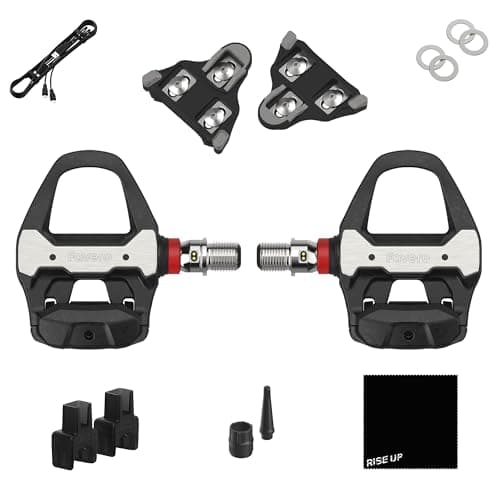 Favero Assioma Pro RS-2 The road power pedal to buy if you ride Shimano SPD-SL: lighter, longer-running and cheaper than the Garmin it competes with, and it gives up very little to get there. | The pick: dual-sensing SPD-SL power at the lowest published weight | 9.19.1 out of 10 | $819.99 · View on Amazon #ad We may earn a commission · Price as of September 22, 2026 |
| 2 | 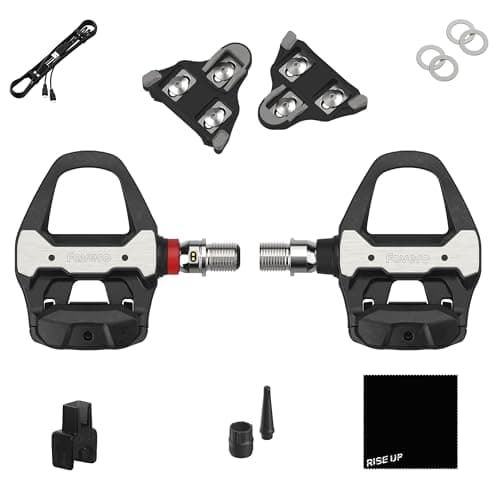 Favero Assioma Pro RS-1 The right Pro RS for riders who want a trustworthy training number and will never act on a balance figure. Buy it as a final answer, not as a step toward an RS-2. | Best value: single-sensing, same pedal, same spindle | 8.78.7 out of 10 | $494.99 · View on Amazon #ad We may earn a commission · Price as of September 22, 2026 |
| 3 | 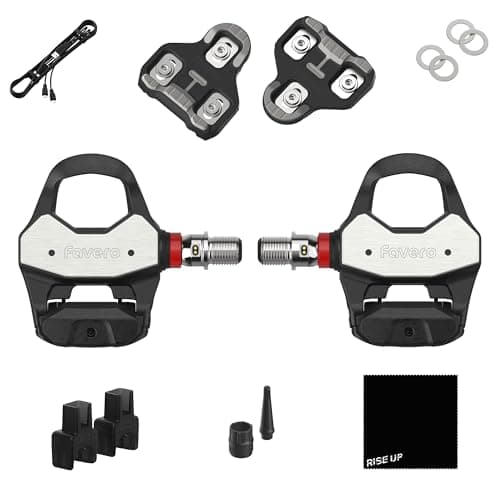 Favero Assioma Pro RL-2 The Pro RS for Look Keo shoes. Choose it because your cleats are Keo, not for any difference in what it measures. | Best if your shoes are set up for Look Keo cleats | 9.09.0 out of 10 | $819.99 · View on Amazon #ad We may earn a commission · Price as of September 22, 2026 |
| 4 | 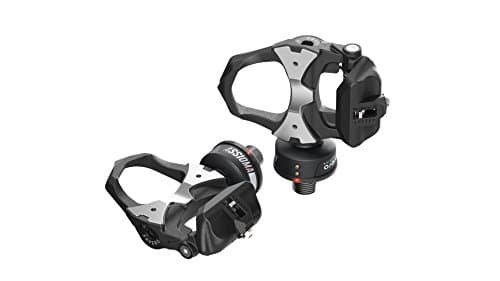 Favero Assioma Duo Still the cheaper way to buy a trustworthy dual-sided watt on Keo cleats. The Pro RS is better made; the Duo is not less accurate. | Cheaper alternative: the older dual-sided Assioma, on Keo cleats | 8.98.9 out of 10 | $539.99 · View on Amazon #ad We may earn a commission · Price as of September 22, 2026 |
| 5 | 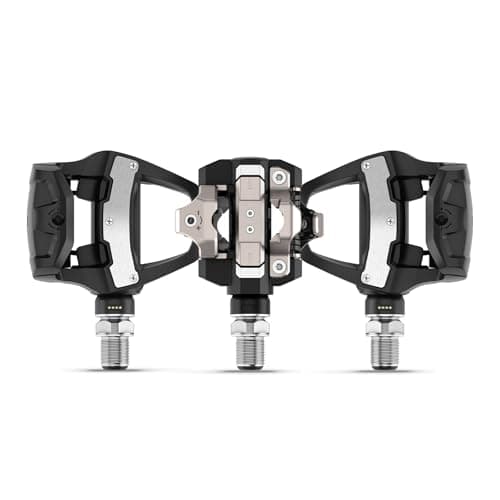 Garmin Rally RS210 An excellent pedal that no longer has a spec-sheet advantage over the Pro RS. Buy it for the Garmin ecosystem, not the numbers. | The SPD-SL rival: pay more for the Garmin ecosystem | 8.88.8 out of 10 | $899.99 · View on Amazon $1,199.99Save 25% #ad We may earn a commission · Price as of September 22, 2026 |
For most of a decade, the Favero Assioma was the power meter pedal other pedals were measured against, and its road versions had one obvious flaw you could see from across the room: the pods. The Duo, Uno and Duo-Shi all carry their battery and electronics in a small housing on the spindle, between the pedal and the crank. They worked, they were not pretty, and some riders found their shoes caught them.
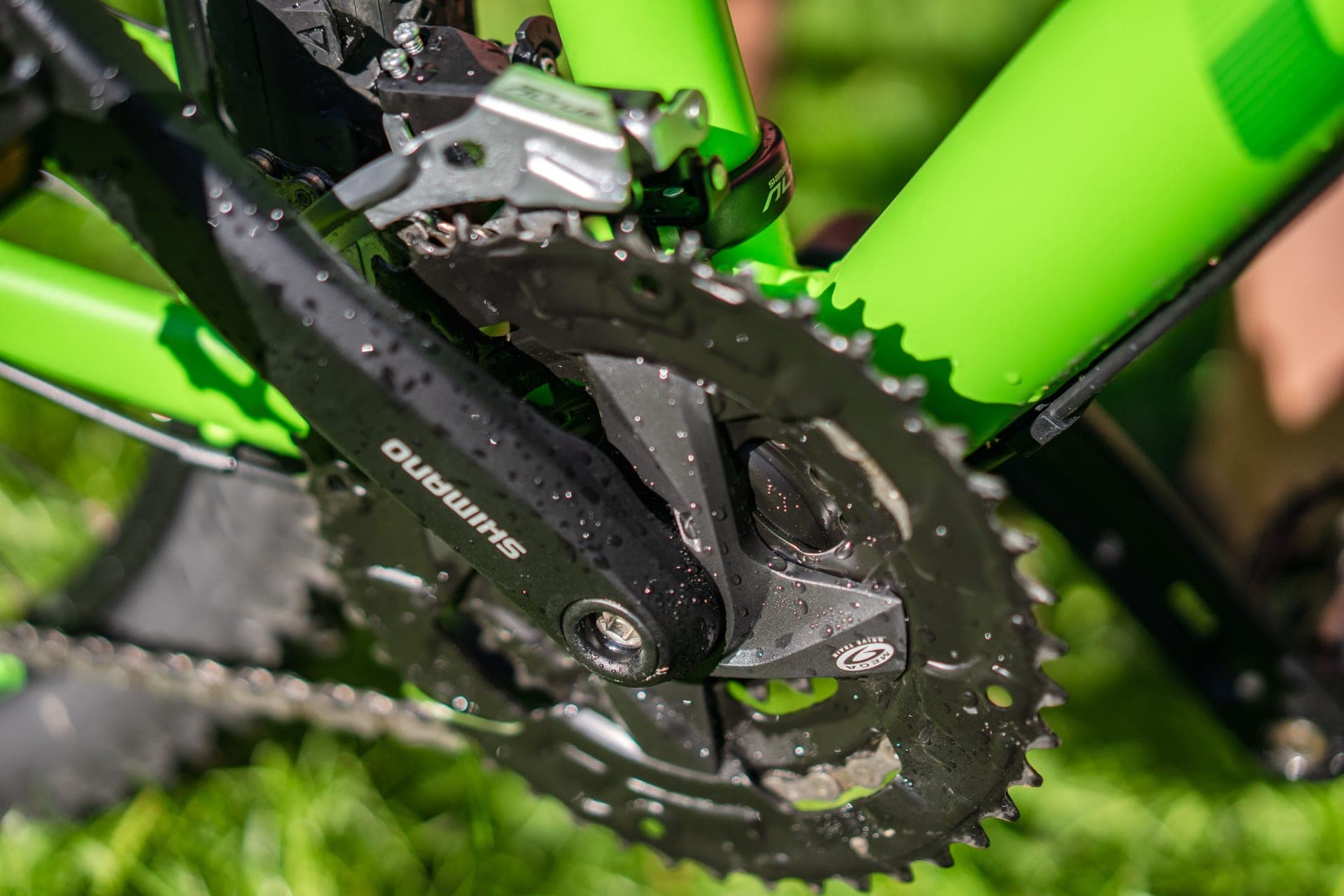
The Assioma Pro RS removes them. It uses the sealed spindle Favero introduced on the off-road Pro MX in 2024: strain gauges, electronics and rechargeable battery all inside the axle, with the pedal body as a separate part that fits onto it. On the road version, that body takes Shimano SPD-SL cleats. Favero announced it in June 2025. In February 2026 a firmware update raised its stated battery life from 60 hours to up to 160, which changed how it stacks up against Garmin's Rally more than any hardware change could have.
We have not ridden a set on our own bikes for this review. The accuracy picture below is compiled from four independent reviewers who did, and every specification comes from Favero's product page, technical sheet and user manual. Our how we review page explains why we work that way.
What actually changed from the Assioma Duo
The pods are gone. This is the headline and it is more than cosmetic. On the Duo, the battery and radio sit in a pod on the spindle, between the crank arm and the pedal body. On the Pro RS, Favero calls it a "split approach": the spindle is sealed and self-contained, and the pedal body is independent of it. Charging happens through pins on the spindle using a magnetic connector, and there is no port, door or pod for water to find.
The cleat changed. The Duo and Uno use the Look Keo pattern, and Favero's previous route to Shimano cleats, the Duo-Shi, is a power spindle that goes into Shimano pedal bodies you supply yourself. The Pro RS is a complete SPD-SL pedal, with Favero's compatible cleats in the box and Shimano's own SM-SH10, SM-SH11 and SM-SH12 cleats listed as compatible in the manual. For the large share of road riders already on Shimano, it is the simplest route yet to an Assioma.
It got lighter. Favero publishes 124.8 g per pedal for the Pro RS against 151.5 g for the Duo, and road.cc's test pair weighed 247 g. Stack height is the same 10.5 mm on both, and the Q-factor narrows by a millimeter to +53 mm.
The data grew slightly. The Pro RS adds Platform Center Offset, which reports where on the pedal your force lands. What did not change: dual-sensing on the RS-2, single-sensing on the RS-1, ±1% claimed accuracy, IP67 and IAV.
| Pro RS-2 | Pro RS-1 | Pro RL-2 | Assioma Duo | Garmin Rally RS210 | |
|---|---|---|---|---|---|
| Sensing | Dual | Single (left, doubled) | Dual | Dual | Dual |
| Claimed accuracy | ±1% | ±1% | ±1% | ±1% | ±1% |
| Cleat system | Shimano SPD-SL | Shimano SPD-SL | Look Keo | Look Keo | Shimano SPD-SL |
| Weight | 124.8 g per pedal | 124.8 g (sensor pedal) | 130 g per pedal | 151.5 g per pedal | 312 g the pair |
| Stack height | 10.5 mm | 10.5 mm | 10.5 mm | 10.5 mm | Not verified here |
| Q-factor | +53 mm | +53 mm | +53 mm | +54 mm | Not verified here |
| Battery | Up to 160 h | Up to 160 h | Up to 160 h | 50+ h | Up to 90 h |
| Electronics | Sealed in spindle | Sealed in spindle | Sealed in spindle | Pod on spindle | Sealed in spindle |
| Body swap to another cleat | Yes (Keo or SPD body) | Yes (Keo or SPD body) | Yes (SPD-SL or SPD body) | No | Yes (Keo or SPD body) |
| Water rating | IP67 | IP67 | IP67 | IP67 | IPX7 |
The battery: 60 hours at launch, 160 now
When the Pro RS launched, its weak spot was battery life. Favero's own technical sheet and manual still say "at least 60 hours", and both BikeRadar and road.cc reviewed it on that basis. Against a Garmin Rally 210 quoting 90 hours, it was the one line on the spec sheet where Favero lost.
Then, on February 14, 2026, Favero released firmware 7.11 for the Pro pedals with a single headline change: battery life extension. Favero now states up to 160 hours per charge for the Pro RS, and DC Rainmaker reported that the update applies to the Pro RS and Pro MX but not to the Duo, Duo-Shi or Uno, which use different spindles. He also measured Bluetooth signal strength before and after and found it essentially unchanged, which matters because one easy way to stretch a battery is to weaken the radio.
Three practical notes from Favero's manual. Charging from empty takes around four hours from a standard USB-A charger or power bank, and Favero's product page quotes a 15-minute fast charge for about 15 hours of riding. The recommended charging range is 10 to 45 degrees C, and outside it charging may be blocked, so if the bike lives in an unheated garage, bring the pedals inside to charge. And if the pedals sit unused, Favero suggests charging them at least every three months to protect the battery.
The trade for all that sealing is serviceability. The battery is built into the spindle, so there is no cell for you to replace when it eventually wears. That is true of the Rally 210 as well, and it is the price of never having a battery door leak.
Accuracy, on other people's data
Favero claims ±1% from 0 to 3,000 W, and it claims it with oval chainrings, which is what IAV is for. Every serious pedal meter claims ±1%, so the useful question is whether independent testing turns anything up. Across four reviews, it did not.
DC Rainmaker compared the Pro RS against an Elite Justo 2 indoors and found the two "within a few watts", with the pedals showing a little more wobble in ERG because the trainer smooths its output more. Against a Muov smart bike he saw about a 2-watt difference overall and half a watt on a sprint near 700 W, and after an outdoor ride against a SRAM Force AXS power meter he concluded that the data "looks perfect". BikeRadar ran it against a 4iiii Precision 3+ Pro crankset and a Tacx Neo 3M and reported no dropouts or quirks. the5krunner logged over a hundred rides against a Wahoo Kickr Core, a Kickr Bike Pro, a 4iiii Precision 3+ and a Magene P505, and ended up tentatively using the Pro RS as the reference power source.
road.cc offers the useful counterpoint. Against a Wattbike Atom there was "only a couple of watts in it", but on a seven-hour outdoor ride against SRAM Rival power cranks the pedals read about 5.5% lower overall, a gap that closed to around 1.5% in steady efforts. That is not a fault in either device so much as a reminder that two meters measuring at different points will not agree perfectly. Pick one reference and train to it. Our guide to how accurate smart trainers are explains why the numbers drift apart even when everything is working.
What it does in a pain cave
If you already own a smart trainer, a power pedal can look redundant. It is not, for one reason: it is the only measuring device in your setup that also comes outdoors. Your zones, your FTP and your training history then come from one source, whichever bike you are on. That argument is made in full in smart trainer vs power meter.
Indoors, the usual arrangement is to pair the pedals as your power source and let the trainer control resistance. Zwift and most other platforms support that, and our Zwift setup guide walks through the pairing. It is also the cleanest way to run a proper FTP test, because the number you set indoors is the same number you will pace to outside.
The pedals broadcast over ANT+ and up to three Bluetooth connections at once, so a trainer app, a head unit and a phone can all see them. One detail from Favero's technical sheet is worth knowing before you pair anything, though. Over Bluetooth the pedals send power, cadence and left/right balance. The rest (Platform Center Offset, Power Phase, Pedal Smoothness and Torque Effectiveness) needs ANT+ or Favero's own app, and Rider Position is ANT+ only. For Zwift that makes no difference, because Zwift uses power and cadence. It matters if you bought the RS-2 for the advanced metrics and your head unit only speaks Bluetooth.
Before you buy: the fitting checks
Pedal power is the easiest kind to install, but Favero's manual sets out a few limits that are worth checking against your cranks first.
Crank thickness. The plastic end of the spindle, which holds the LED and the antenna, has to stick out at least 1 mm beyond the crank thread for the radio to work. That rules out cranks thicker than 15 mm at the threaded area, and cranks without a through-hole at the pedal eye.
No extenders. Favero says the Pro RS must not be used with pedal extenders, crank shorteners or anything else that alters the crank setup. Its FAQ says extenders are strongly discouraged. If you run extenders for a wider stance, this pedal is out, so check the fine print on any alternative before buying. Favero supplies washers for one legitimate case: if the spindle cap sits closer than 4 mm to the chain or frame.
Tools and setup. Fitting needs a pedal wrench, not a hex key, because the status LED occupies the spindle end, and road.cc named that as one of only two cons. Favero specifies 30 to 40 Nm. Tell your head unit your crank length, because an incorrect value produces incorrect power. A manual calibration is needed at first installation and whenever you move the pedals to another bike, and after that the automatic zero-offset takes over. Our calibration guide covers when a manual zero is worth doing anyway.
Rider weight. Favero's manual gives a maximum cyclist weight of 120 kg, and it says anyone above that uses the pedals at their own risk.
RS-2 or RS-1?
The RS-2 has a sensor in both pedals and reports real left/right balance. The RS-1 measures the left and doubles it. Both claim ±1%, and for tracking fitness the RS-1 is enough, because training follows repeatability and most riders' balance is stable from one ride to the next.
The RS-2 earns its premium in three situations: coming back from a one-sided injury, where watching the asymmetry close is the point; a known, large imbalance; or a coach or fitter who actually works from the balance and pedaling-dynamics data. Outside those, balance is a number you look at once. The catch is the upgrade path. On Favero's own list prices the RS-1 plus the upgrade kit costs noticeably more than the RS-2 bought outright, so decide now rather than planning to upgrade later.
Pro RS, Pro RL or the Duo?
Let your cleats decide. If your shoes carry SPD-SL cleats, buy the RS. If they carry Look Keo, buy the RL or the Duo. There is no measurement difference between the RS and RL. Favero states that all Pro models share the same spindle, so a Keo or SPD mountain-bike body can go on the same sensor, which is how the RS-2/MX sets on Amazon work. If you ride SPD indoors, the Assioma Pro MX is the same spindle in an off-road body.
Between the RL and the Duo, the question is whether the redesign is worth paying for. The RL is lighter, has no pods, runs roughly three times as long per charge and has a replaceable body. The Duo claims the same ±1%, costs less and has the longer track record. If you already own a working Duo, nothing here improves your training. Keep riding it.
Pro RS-2 vs Garmin Rally RS210
These are the two dual-sensing SPD-SL pedals most upgrading riders end up choosing between, and the spec sheet now favors Favero. The Pro RS-2 is lighter (247 g against 312 g the pair), states longer battery life (160 hours against 90), and costs less. Both are sealed, rechargeable and claim ±1%.
Garmin's remaining case is the ecosystem. Pedal IQ prompts you when calibration is worth doing, Cycling Dynamics appear natively on an Edge, and the RS, RK and XC bodies have been part of the Rally system from the start. If a Garmin Edge is the center of your setup, the Rally is still a very good choice. If not, the Favero is the better buy, and our Assioma vs Rally comparison goes through the brand decision in more depth.
Who should buy it
Buy the Pro RS-2 if you ride SPD-SL, want dual-sided power that moves between bikes with a wrench, and would rather not think about a battery for months at a time. It is the strongest all-round road power pedal on sale, and the price makes it hard to argue for the Garmin on anything other than ecosystem grounds.
Skip it if you run pedal extenders or unusually thick cranks, if you ride Keo and already own a Duo, or if you want the cheapest trustworthy watt, which is the Duo or the RS-1. And if you do not own a smart trainer yet, buy the trainer first. Indoors it measures power on its own, and a pedal meter is the second purchase, not the first. Our power meter pedal roundup ranks the whole field by cleat system.
Still comparing?
See every power meter rankedThe full reviews
Every pick, in detail
#1 · The pick: dual-sensing SPD-SL power at the lowest published weight
Favero Assioma Pro RS-2
9.19.1 out of 10#ad We may earn a commission · Price as of September 22, 2026
The road power pedal to buy if you ride Shimano SPD-SL: lighter, longer-running and cheaper than the Garmin it competes with, and it gives up very little to get there.
- Type
- Pedal-based, dual-sensing
- Claimed accuracy
- ±1% (IAV Power System), 0-3,000 W
- Cleat system
- Shimano SPD-SL (compatible cleats supplied)
- Weight
- 124.8 g per pedal (Favero); road.cc weighed the pair at 247 g
- Stack / Q-factor
- 10.5 mm / +53 mm
- Battery
- Sealed rechargeable, up to 160 h since firmware 7.11
- Connectivity
- ANT+, Bluetooth (up to 3 devices)
- Water rating
- IP67
What we'd praise
- The pods are gone: battery, electronics and strain gauges all live inside a sealed spindle
- Favero bills it as the lightest road power pedal on the market, and road.cc's scales matched the published weight
- Up to 160 hours per charge after the February 2026 firmware update, more than the Rally 210's stated 90
- Four independent reviewers compared it against trainers, smart bikes and other power meters, and none flagged an accuracy problem
- Pedal bodies are separate from the spindle, so a worn body is a replaceable part and an MX body turns it into an SPD pedal
- Three simultaneous Bluetooth connections plus ANT+, which covers a trainer app, a head unit and a phone at once
What we'd flag
- The battery is sealed in the spindle, so when it eventually wears there is no cell for you to swap
- Charging needs Favero's proprietary magnetic connectors: lose them and the pedals stop being rechargeable
- Must be fitted with a pedal wrench, because the status LED sits where a hex socket would be
- Not compatible with pedal extenders, crank shorteners or cranks thicker than 15 mm at the thread
- Over Bluetooth you only get power, cadence and balance; the advanced metrics need ANT+ or Favero's app
- Amazon's price sat above Favero's own US list price when we checked in September 2026, so it is worth comparing both
The Pro RS is what the Assioma Duo would look like if Favero started again. The electronics and battery moved out of the pod that hangs off the Duo's spindle and into the spindle itself, which is sealed and rated IP67. The pedal body became a separate part in carbon-fiber-reinforced technopolymer with a wide stainless steel contact surface, and it takes Shimano SPD-SL cleats rather than the Duo's Look Keo pattern.
The measurement did not change. It is still dual-sensing, still ±1% on Favero's IAV system, which uses a gyroscope to track how fast the crank is actually turning through each revolution instead of assuming a constant speed. What changed is everything around it: 124.8 g a pedal, a 10.5 mm stack, a +53 mm Q-factor, and since firmware 7.11 a stated battery life of up to 160 hours. The honest caveat is the one every sealed design shares. There is nothing to service on the electronics side, and nothing you can replace.
#2 · Best value: single-sensing, same pedal, same spindle
Favero Assioma Pro RS-1
8.78.7 out of 10#ad We may earn a commission · Price as of September 22, 2026
The right Pro RS for riders who want a trustworthy training number and will never act on a balance figure. Buy it as a final answer, not as a step toward an RS-2.
- Type
- Pedal-based, single-sensing (left, doubled)
- Claimed accuracy
- ±1% (IAV Power System)
- Cleat system
- Shimano SPD-SL
- Battery
- Sealed rechargeable, up to 160 h
- Upgrade path
- Add a right sensor pedal (RS-UP) later
- Connectivity
- ANT+, Bluetooth
What we'd praise
- The same body, the same stack, the same Q-factor and the same sealed spindle as the RS-2 on the measuring side
- For training by zones, a doubled left leg tracks fitness as reliably as a dual-sided figure
- Only one pedal to charge, and one magnetic connector in the box
- The right-side sensor pedal can be added later without replacing anything
What we'd flag
- No left/right balance, and none of the metrics that depend on reading both legs
- A doubled figure is off by however asymmetric you are that day, not by a fixed amount
- On Favero's own list prices, buying the RS-1 and then the upgrade kit costs noticeably more than buying the RS-2 outright
- Same wrench-only fitting and extender restrictions as the RS-2
The RS-1 has a sensor in the left pedal and a standard pedal on the right, and it doubles the left leg to report total power. Favero still claims ±1%, because that figure describes how well the left pedal measures, not whether your legs are equal.
For most riders that is plenty. Training zones depend on repeatability, and your left-right split is usually stable enough that a doubled number moves with the real one. The trap is the upgrade path. Favero sells the right sensor pedal separately, but on its own list prices the RS-1 plus the upgrade adds up to more than an RS-2 bought on day one. If you think you will want balance data within a season, buy the pair. Our single vs dual-sided power meters guide covers the few situations where the second sensor genuinely earns its cost.
#3 · Best if your shoes are set up for Look Keo cleats
Favero Assioma Pro RL-2
9.09.0 out of 10#ad We may earn a commission · Price as of September 22, 2026
The Pro RS for Look Keo shoes. Choose it because your cleats are Keo, not for any difference in what it measures.
- Type
- Pedal-based, dual-sensing
- Cleat system
- Look Keo compatible
- Claimed accuracy
- ±1% (IAV Power System)
- Weight
- 130 g per pedal (Favero)
- Stack / Q-factor
- 10.5 mm / +53 mm
- Battery
- Sealed rechargeable, up to 160 h
What we'd praise
- The Pro RS spindle and battery in a Look Keo body, for riders who never wanted to change cleats
- Favero states every Pro model shares the same spindle, so the body choice can be changed later
- Favero quotes a 755 mm² contact platform
- Answers the only real complaint in BikeRadar's Pro RS review, which was the lack of a Keo option
What we'd flag
- About 5 g a pedal heavier than the RS, by Favero's own figures
- The newest body in the range, so there is far less independent long-term reporting on it than on the RS
- Costs the same as the RS-2, so choosing Keo saves you nothing
- If you already own an Assioma Duo on Keo cleats, the measurement you would be buying is not new
The RL is the same pro-series spindle wearing a Look Keo body. Favero lists 130 g a pedal, the same 10.5 mm stack and +53 mm Q-factor, the same ±1% claim and the same 160-hour battery figure, and it works with Look cleats or Favero's own, which Favero says grip up to 30% better than comparable alternatives. That grip figure is Favero's claim, and we have not seen it independently tested.
Its reason to exist is simple. BikeRadar scored the Pro RS 4.5 out of 5 and listed exactly one con: no Look Keo body. This is that body. If your shoes carry Keo cleats, this is the version to buy. If they carry SPD-SL, buy the RS. Nothing else separates them.
#4 · Cheaper alternative: the older dual-sided Assioma, on Keo cleats
Favero Assioma Duo
8.98.9 out of 10#ad We may earn a commission · Price as of September 22, 2026
Still the cheaper way to buy a trustworthy dual-sided watt on Keo cleats. The Pro RS is better made; the Duo is not less accurate.
- Type
- Pedal-based, dual-sensing
- Claimed accuracy
- ±1%
- Cleat system
- Look Keo compatible
- Weight
- 151.5 g per pedal (Favero)
- Stack / Q-factor
- 10.5 mm / +54 mm
- Battery
- Rechargeable, 50+ h per charge
What we'd praise
- The same dual-sensing ±1% claim as the Pro RS, from Favero's long-proven earlier design
- Consistently cheaper than the Pro RS-2, which is the whole reason it stays on this page
- Rechargeable, IP67, ANT+ and Bluetooth, and fitted with a pedal wrench in minutes
- The pedal we already name as the default recommendation in our pedal roundup
What we'd flag
- The electronics sit in pods on the spindle, which the Pro design removed
- About 27 g a pedal heavier than the Pro RS by Favero's figures
- 50-plus hours per charge against the Pro RS's stated 160, and the firmware update does not apply to it
- Look Keo only, with no body swap to another cleat system, so changing cleats means a new power meter
We would not write an honest Pro RS review without the Duo on the page. It claims the same ±1% from the same dual-sensing approach, it has years of reputation behind it, and it consistently costs less than the Pro RS-2. Favero still sells it in its own store alongside the Pro range.
What the extra money buys is the redesign: no pods, about 27 g less per pedal, a battery that now runs roughly three times longer between charges, and a body you can swap for another cleat system. None of that makes your watts more correct. If you ride Keo cleats and the pods have never bothered you, the Duo is the buyer-first answer, and our Assioma Duo review covers it in full.
#5 · The SPD-SL rival: pay more for the Garmin ecosystem
Garmin Rally RS210
8.88.8 out of 10$1,199.99Save 25%
#ad We may earn a commission · Price as of September 22, 2026
An excellent pedal that no longer has a spec-sheet advantage over the Pro RS. Buy it for the Garmin ecosystem, not the numbers.
- Type
- Pedal-based, dual-sensing
- Claimed accuracy
- ±1%
- Cleat system
- Shimano SPD-SL (RS body)
- Battery
- Sealed rechargeable, up to 90 h
- Weight
- 312 g the pair
- Water rating
- IPX7
What we'd praise
- Also sealed and rechargeable, with a universal spindle that swaps between SPD-SL, Keo and SPD bodies
- Pedal IQ tells you when a manual calibration is actually needed, on a recent Garmin Edge
- Native Cycling Dynamics on Garmin head units
- The obvious choice if a Garmin Edge is already the center of your training
What we'd flag
- Costs more than the Pro RS-2 for the same claimed ±1% dual-sensing measurement
- Heavier: 312 g the pair against the 247 g road.cc weighed for the Pro RS-2
- Stated battery life of 90 hours is now well short of Favero's 160
- Pedal IQ alerts are locked to Garmin's own head units
The Rally RS210 is the Pro RS's direct competitor: dual-sensing, SPD-SL, sealed and rechargeable, a claimed ±1%. Until Favero's February 2026 firmware update, battery life was the one spec where Garmin led. It no longer does.
Its case now rests on ownership rather than measurement: Pedal IQ calibration prompts, Cycling Dynamics that surface natively on an Edge, and a body system that covers road and off-road cleats. Favero has closed most of that last gap too, now that the Pro RS, RL and MX share one spindle. Our Garmin Rally RS210 review makes the Garmin's argument in full.
Good questions
Frequently asked questions
What is the difference between the Favero Assioma Pro RS and the Assioma Duo?
The measurement claim is the same: dual-sensing, ±1%, IP67. The Pro RS moves the battery and electronics from the Duo's external pods into a sealed spindle, uses Shimano SPD-SL cleats instead of Look Keo, weighs 124.8 g per pedal against the Duo's 151.5 g, can swap its pedal body to another cleat system, and states up to 160 hours per charge against the Duo's 50-plus. The Duo costs less.
How long does the Assioma Pro RS battery last?
Favero now states up to 160 hours per charge. The pedals launched with a claim of at least 60 hours, and firmware 7.11, released on February 14, 2026, extended it. The update applies to the Pro RS and Pro MX, not the Duo or Uno. Favero's manual gives around four hours to charge from empty and a low-battery warning with about eight hours left.
Should I buy the Assioma Pro RS-1 or RS-2?
Buy the RS-2 if you want real left/right balance, are returning from a one-sided injury, or work with a coach who uses pedaling-dynamics data. Otherwise the RS-1 is enough for training by zones. Decide up front: on Favero's own list prices, the RS-1 plus the later upgrade kit costs more than buying the RS-2 outright.
What is the difference between the Assioma Pro RS and Pro RL?
Only the cleat interface. The RS takes Shimano SPD-SL cleats and the RL takes Look Keo. Favero states all Pro models share the same spindle, and lists the same ±1% claim, 10.5 mm stack, +53 mm Q-factor and 160-hour battery for both. The RL is slightly heavier at 130 g per pedal against 124.8 g.
Can I use the Assioma Pro RS with pedal extenders?
No. Favero's manual says the Pro RS must not be used with pedal extenders, crank shorteners or anything else that alters the crank setup. It also requires the spindle end to protrude at least 1 mm beyond the crank thread, which rules out cranks thicker than 15 mm at the threaded area. Favero supplies washers only to create clearance from the chain or frame.
Does the Assioma Pro RS work with Zwift and a smart trainer?
Yes. It broadcasts over ANT+ and Bluetooth, so you can pair the pedals as your power source in Zwift while the trainer controls resistance. Over Bluetooth it sends power, cadence and left/right balance; the advanced metrics need ANT+ or Favero's app. Zwift only uses power and cadence, so nothing is lost there.
Is the Assioma Pro RS better than the Garmin Rally RS210?
On the spec sheet, yes. Both are sealed, rechargeable, dual-sensing SPD-SL pedals claiming ±1%, but the Pro RS-2 is lighter (road.cc weighed 247 g the pair against Garmin's 312 g), states 160 hours of battery against 90, and costs less. The Rally's advantages are Pedal IQ calibration prompts and native Cycling Dynamics on a Garmin Edge.
What cleats does the Assioma Pro RS use?
Shimano SPD-SL. Favero includes its own compatible cleats in the box, and the manual lists Shimano's SM-SH10, SM-SH11 and SM-SH12 cleats as compatible. If your shoes are set up for Look Keo, buy the Pro RL instead.
How we sourced this
- Favero Assioma PRO RS product page (manufacturer)
- Favero Assioma PRO RS-2 technical sheet, art. 773-20-02 (manufacturer)
- Favero Assioma PRO RS user manual (manufacturer document)
- Favero Assioma PRO firmware updates, including 7.11 (manufacturer)
- Favero Assioma frequently asked questions (manufacturer)
- Favero Assioma PRO RL product page (manufacturer)
- Favero Assioma DUO specifications (manufacturer)
- Favero Assioma road range: DUO, UNO and DUO-Shi (manufacturer)
- Favero Assioma Pro RS in-depth review (DC Rainmaker)
- Favero doubles power meter pedal battery life via firmware update (DC Rainmaker)
- Favero Assioma Pro RS-2 review (road.cc)
- Favero Assioma PRO RS review (BikeRadar)
- Favero Assioma PRO RS: everything you need to know (the5krunner)
- Garmin Rally RS210 product page (manufacturer)
Keep going