Head to Head
Favero Assioma vs Garmin Rally
Same accuracy claim, very different philosophies. One is the value benchmark; the other is the only pedal that lets you change your mind about cleats.
The short answer
Quick picks
| # | Product | Best for | Score | Price |
|---|---|---|---|---|
| 1 | 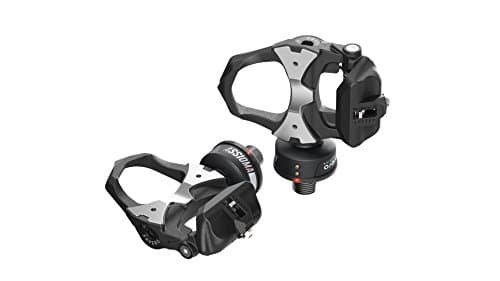 Favero Assioma Duo The dual-sided value benchmark: the same ±1% claim as anything on the market, rechargeable, and cheaper than its closest rival. | Best value dual-sided | 9.49.4 out of 10 | |
| 2 | Garmin Rally RS200 The flexible one: the same ±1% claim, SPD-SL out of the box, and swappable pedal bodies if your shoes change. | Best cleat flexibility and ecosystem | 9.19.1 out of 10 |
These are the two pedal-based power meters an upgrading rider actually chooses between, and the comparison is unusually clean because the headline specification is a tie. Both claim ±1% accuracy. Both measure each leg independently in their dual-sided versions. Both install with a pedal wrench and move between bikes in minutes. So the decision comes down to three practical questions: which cleats you ride, how you feel about batteries, and how much the ecosystem matters.
| Favero Assioma Duo | Garmin Rally RS200 | |
|---|---|---|
| Claimed accuracy | ±1% | ±1% |
| Sensing | Dual, both pedals | Dual, both pedals |
| Cleat system | Look Keo compatible | Shimano SPD-SL |
| Convertible to other cleats | No | Yes, body conversion kits |
| Battery | Rechargeable, ~50 h | Replaceable cells, ~120 h |
| Cycling dynamics metrics | No | Yes |
| Single-sided version | Assioma Uno | Rally RS100 / RK100 |
| Price band | Lower | Higher |
Cleats: the question that decides most purchases
The Assioma is a Look Keo pedal and always will be. If you already ride Keo, this is a non-issue and the value argument runs unopposed. If you ride Shimano SPD-SL, adopting the Assioma means new cleats on every pair of road shoes and re-learning a slightly different float and release feel. That is not a disaster, but it is a real cost and a real annoyance.
The Rally's convertible design is the genuinely unique feature in this category. Because the electronics live in the spindle, Garmin sells body conversion kits that turn an RS (SPD-SL) pedal into an RK (Keo) or an XC (SPD) pedal. For a rider who might buy a gravel bike next year, that is real optionality — you keep the power meter and change the interface.
Batteries: recharge or replace
Favero uses a sealed rechargeable cell in each pedal with a magnetic charging dock, quoting around 50 hours per charge. There is no battery door, nothing to cross-thread, and nothing to buy. The routine is: ride until it warns you, dock overnight, forget again.
Garmin uses replaceable coin cells, quoting around 120 hours per set. Longer life, no charging cable, and the ability to fix a dead pedal on a Saturday morning with a battery from a supermarket. The trade is a battery compartment with a seal and a torque spec that has to be respected — historically the part of pedal power meters people most often get wrong.
Neither approach is better in the abstract. Rechargeable suits riders who like fewer consumables; replaceable suits riders who travel and would rather carry a spare cell than a charger.
Ecosystem and data
Both broadcast standard power over Bluetooth and ANT+, so both work with Zwift, TrainerRoad, Wahoo head units and everything else. If your world is standard, this section changes nothing.
Where Garmin pulls ahead is the extras. Rally pedals report cycling dynamics — seated versus standing time, platform center offset, power phase — which appear automatically on a Garmin Edge or Forerunner. Our honest read is that these metrics are interesting rather than actionable for most riders. Very few people change their training on the basis of platform center offset. If you are working with a fitter or a coach who asks for them, they matter; if not, do not pay for them.
Want the full ranking?
See both against the whole fieldSingle-sided versions
Both platforms have a cheaper single-sided model, and for most riders that is the smarter purchase. The Assioma Uno and the Garmin Rally RS100 and RK100 measure the left leg and double it — which tracks change over a training block just as reliably as a dual-sided meter, because your imbalance is usually small and stable.
Favero's single-sided route has one extra advantage: you can buy the second pedal later and convert the Uno into a Duo. If you are unsure whether you want balance data, starting single-sided and upgrading is the lowest-regret path. Our budget power meter roundup covers that ladder in full.
Which is more reliable?
We do not run long-term durability tests and will not pretend otherwise. What we can say is that both platforms have been on the market long enough to have a public record, both come from manufacturers that honor warranties and ship firmware fixes, and both use sealed spindle electronics that survive weather. The single most common source of trouble on any pedal power meter is installation — under-torqued or over-torqued pedals, and on the Garmin, battery doors. Follow the torque spec and both will be fine.
The verdict
The Assioma Duo is the better buy for most riders. Identical accuracy claim, fewer consumables, less money. Unless something on this page describes you specifically, that is the pedal to get, and the saving is real enough to fund a serious fan or a season of Zwift.
The Garmin Rally is the better buy in three cases: you are committed to SPD-SL, you want the option to move to SPD for off-road riding, or your training life runs through a Garmin head unit and you value that integration. In those cases the premium buys something specific, which is exactly when a premium is worth paying.
If you land on the Garmin, buy the current generation and buy the right body: the Rally RK210 review covers the Look Keo version — sealed rechargeable spindle, up to 90 hours, convertible bodies — and best dual-sided power meters ranks both makers against everything else that measures two legs.
The full reviews
Head to head
#1 · Best value dual-sided
Favero Assioma Duo
9.49.4 out of 10The dual-sided value benchmark: the same ±1% claim as anything on the market, rechargeable, and cheaper than its closest rival.
- Type
- Dual-sided pedal
- Claimed accuracy
- ±1%
- Battery
- Rechargeable, ~50 hours
- Cleat system
- Look Keo compatible
- Charging
- Magnetic dock, both pedals
- Connectivity
- BT, ANT+
What we'd praise
- Costs meaningfully less than the equivalent Rally for the same ±1% claim and true dual-sided data
- Rechargeable pedals — no coin cells to source, no battery doors to cross-thread
- Long, public track record of independent scrutiny behind the accuracy claim
- Simple, sealed design with very few failure points
What we'd flag
- Look Keo cleats only — no factory route to SPD-SL or SPD
- No cycling-dynamics metrics beyond power, cadence and balance
- Slightly bulkier pedal body than a pure racing pedal
The Assioma Duo is the power meter we recommend most often, and the reason is simple: it does the whole job at a price that undercuts the obvious alternative. Both pedals measure independently, so you get real left/right balance rather than a doubled estimate; Favero claims ±1%; and the pedals charge on a magnetic dock instead of eating coin cells.
Its one hard limit is the cleat system. These are Look Keo pedals, and there is no factory path to SPD-SL or SPD. If your shoes and your habits are Shimano, that is a genuine reason to look at the Rally instead. Our Assioma Duo review covers the pedal in isolation.
#2 · Best cleat flexibility and ecosystem
Garmin Rally RS200
9.19.1 out of 10The flexible one: the same ±1% claim, SPD-SL out of the box, and swappable pedal bodies if your shoes change.
- Type
- Dual-sided pedal
- Claimed accuracy
- ±1%
- Battery
- Replaceable cells, ~120 hours
- Cleat system
- Shimano SPD-SL
- Convertible
- Swap to Keo or SPD bodies
- Connectivity
- BT, ANT+
What we'd praise
- The only major platform that lets you change cleat system later without replacing the meter
- SPD-SL out of the box, with SPD off-road bodies available for gravel and mountain use
- Cycling-dynamics metrics and seamless behavior on Garmin head units and watches
- Around 120 hours per set of replaceable cells, with no charging routine
What we'd flag
- Costs meaningfully more than the Assioma Duo for the same ±1% accuracy claim
- Battery doors and coin cells are one more thing to get right, and a known care point
- Cycling dynamics are interesting rather than actionable for most riders
The Rally RS200 is Garmin's dual-sensing pedal in Shimano SPD-SL guise, and its structural advantage over everything else is the convertible body. The spindle carries the electronics; the pedal body carries the cleat interface. Change your mind about cleats — or add a gravel bike — and you buy a body conversion kit rather than a new power meter.
Add the Garmin ecosystem, where the pedals appear instantly on an Edge or a Forerunner with no fiddling, and you can see who this is for. What you pay for it is a real premium over the Assioma Duo for the same accuracy claim. Our Rally RS200 review goes deeper.
One buying note: Garmin's current pedals are the Rally 210 and 110, and Amazon has moved its Rally listings to them, so the RS200 is no longer stocked there. The accuracy claim and the convertible-body argument are unchanged; the new spindle is sealed and rechargeable instead of taking replaceable cells. Our Garmin Rally RS210 review covers what that changes, and the price gap to Favero is if anything wider on the new generation.
Good questions
Frequently asked questions
Is the Favero Assioma as accurate as the Garmin Rally?
On the published specification, yes. Both manufacturers claim ±1% power accuracy for their dual-sided models, and both measure each leg independently. The differences between them are cleat system, battery approach, ecosystem integration and price rather than measurement quality.
Can Garmin Rally pedals change cleat systems?
Yes, and it is the platform's unique feature. The electronics live in the spindle rather than the body, so Garmin sells conversion kits that change an SPD-SL pedal into a Look Keo or SPD one. Favero Assioma pedals are Look Keo compatible and cannot be converted.
Which has better battery life, Assioma or Rally?
The Rally quotes around 120 hours from replaceable coin cells; the Assioma quotes around 50 hours from a sealed rechargeable cell. The Rally lasts longer per set, but the Assioma never needs a battery purchase and has no battery door to seal correctly.
Do I need cycling dynamics data?
Almost certainly not. Metrics such as platform center offset, power phase and seated versus standing time are interesting, but very few riders change their training as a result of them. They matter if a coach or bike fitter has specifically asked for them; otherwise they are not worth a price premium.
Should I buy the single-sided version instead?
For most riders, yes. Single-sided meters measure the left leg and double it, which tracks change over a training block just as well because imbalances are usually small and stable. Favero's Uno has the added advantage that you can buy the second pedal later and convert it to a Duo.
Do both work with Zwift and TrainerRoad?
Yes. Both broadcast standard power and cadence over Bluetooth and ANT+, so Zwift, TrainerRoad, Wahoo and Garmin head units and anything else that reads power will pair with either. Neither requires the manufacturer's own app to function during a ride.
How we sourced this
Keep going