Power Meter Review
Garmin Rally RK210 Review: The Keo Rally, Rechargeable
Garmin's dual-sensing power meter in a Look Keo body. The spindle is the product, the cleat is the decision, and the one thing that makes it worth a premium is that neither is permanent.
The short answer
Quick picks
| # | Product | Best for | Score | Price |
|---|---|---|---|---|
| 1 | 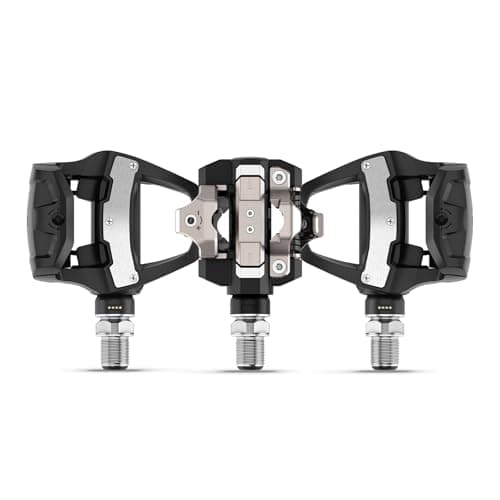 Garmin Rally RK210 The best-engineered Look Keo power meter on sale: sealed, rechargeable, dual-sensing and convertible. Buy it because your shoes already wear Keo cleats and you want the Garmin ecosystem — not because the watts are better. | The subject of this review: dual-sensing power on Look Keo cleats | 8.88.8 out of 10 | $899.99 · View on Amazon $1,199.99Save 25% #ad We may earn a commission · Price as of October 22, 2026 |
| 2 | 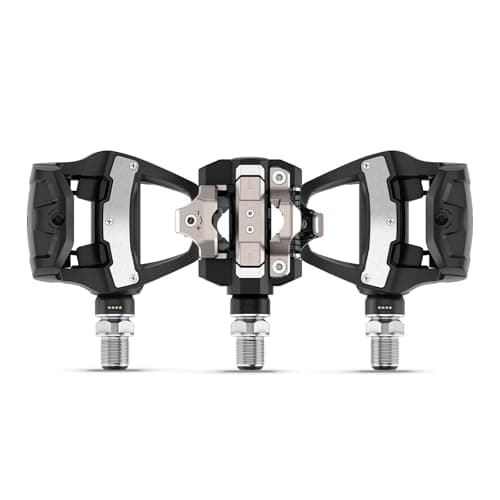 Garmin Rally RS210 The identical power meter with Shimano SPD-SL bodies fitted. If your shoes are SPD-SL, this is the version to buy — not the RK210. | The same meter for Shimano SPD-SL shoes | 8.88.8 out of 10 | $899.99 · View on Amazon $1,199.99Save 25% #ad We may earn a commission · Price as of October 22, 2026 |
| 3 | 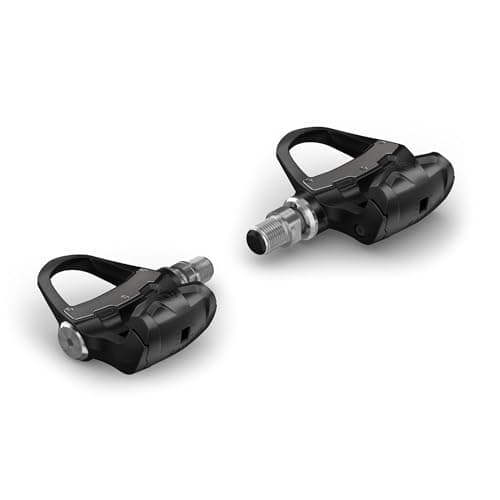 Garmin Rally RK200 The previous-generation Keo Rally. Cheaper and longer-running per battery, with the threaded door that the 210 was redesigned to get rid of. | The outgoing Keo Rally, if the coin cells suit you better | 8.38.3 out of 10 | $649.99 · View on Amazon #ad We may earn a commission · Price as of October 22, 2026 |
| 4 | 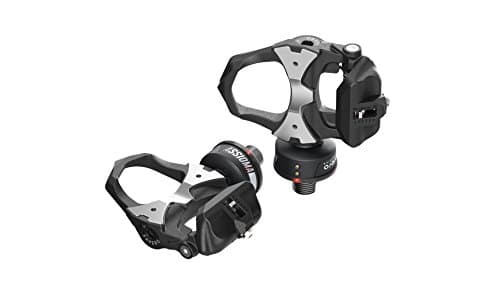 Favero Assioma Duo The reason to think twice about the RK210: both legs measured, the same ±1% claim, the same Keo cleats, for less — if you can live without convertible bodies. | The cheaper dual-sensing pedal on the same cleat system | 9.29.2 out of 10 | |
| 5 | Garmin Rally RS110 The honest downgrade inside Garmin's own range: the same spindle and the same claim on one leg, for less — provided you ride SPD-SL. | The cheaper Rally, if you will not act on balance data | 8.38.3 out of 10 | $599.99 · View on Amazon #ad We may earn a commission · Price as of October 22, 2026 |
A pedal power meter has a specific job in a pain cave, and it is not the obvious one. Your smart trainer already measures power, so a second measuring device looks redundant until you notice what it does that the trainer cannot: it follows you outdoors, onto a second bike and into a race, which makes it the reference everything else gets checked against. The Rally range has done that job for years. The 210 generation is the first real redesign of it.
What the RK210 actually is
Garmin builds one power meter and sells it in three bodies. The 210 spindle carries the strain gauges, the gyroscope, the radios and the battery; the body on the end of it decides your cleat. RS is Shimano SPD-SL, RK is Look Keo, XC is two-bolt Shimano SPD. The RK210 is therefore the Keo version of a pedal whose measurement is identical across all three.
That means the specification sheet you should read is the 210 sheet, not an RK-specific one. Dual sensing, so each pedal measures its own leg. A claimed ±1%. Up to 90 hours of ride time from the sealed rechargeable spindle, with Garmin quoting about 12 hours of riding from a 15-minute charge. IPX7. ANT+ and Bluetooth. The full Advanced Cycling Dynamics set on a compatible Edge. And 312 g for the pair.
| Specification | Figure |
|---|---|
| Sensing | Dual — both pedals measure |
| Claimed accuracy | ±1% |
| Cleat system | Look Keo (RK body) |
| Battery | Sealed rechargeable, up to 90 h |
| Fast charge | 15 min for about 12 h of riding |
| Weight | 312 g the pair |
| Water rating | IPX7 |
| Calibration | Pedal IQ smart calibration prompts |
| Convertible bodies | Yes — RS, RK and XC kits |
| Protocols | ANT+ and Bluetooth |
What changed from the RK200
Three things, and only one of them is a performance claim at all.
The battery is sealed and rechargeable. The RK200 and the Vector pedals before it used replaceable cells behind a threaded, sealed door, and that door was the single most complained-about part of the design — cross-threading, seal wear, water finding its way in. The 210 spindle is closed and charges through a magnetic clip. This is a durability fix, and it is the reason to care about this generation.
The spindle is standardized. Rally was always convertible in principle, because the electronics were in the axle. The 210 series uses one spindle across the RS, RK and XC bodies, so swapping bodies is a 15 mm pedal wrench and a hex key rather than a research project.
Pedal IQ arrived.Garmin's calibration assistant watches temperature change, time since the last calibration and whether the pedals have moved between bikes, then prompts you when a manual zero offset is worth doing. Every power meter needs the occasional offset and almost nobody remembers — our calibration guide exists because of exactly that. The caveat: the alerts want a recent Garmin Edge, so part of this feature is locked to the ecosystem.
What did not change: the ±1% claim, dual sensing, ANT+ and Bluetooth broadcasting, and the cycling-dynamics metrics on a compatible head unit.
RK210 or RS210? The only question that matters
Look at your shoes. If the cleats are Look Keo pattern, buy the RK210. If they are Shimano SPD-SL, buy the RS210. The pedals cost the same, weigh the same and measure the same, so there is no reason to choose the body that does not match your shoes — and new shoes plus cleats is a real cost on top of an already expensive power meter.
One practical note in the RS210's favor: SPD-SL is the more common road standard in the US, so the SPD-SL version turns up in stock and on discount more often. If you are price-watching and genuinely indifferent about cleats — for instance you are buying new shoes anyway — that is a mild argument for going SPD-SL. Our cleat compatibility guide maps the whole field.
The price argument, after May 2026
The standing objection to Rally pedals has always been price: they cost more than a Favero that claims the same accuracy. That got substantially weaker in May 2026, when Garmin cut $400 off the Rally range's list price — a change DC Rainmaker covered at the time, and the reason the figure you see on the listing above may be a long way below the MSRP printed on older reviews.
It did not disappear, though. The Assioma Duo is still the cheaper dual-sensing Keo pedal, and it still has the deeper independent testing record. So the Garmin premium now buys three specific things, and you should decide whether you want all three: convertible bodies, a 90-hour battery with a fast charge, and Pedal IQ plus native Edge integration. If you want none of them, buy the Favero and spend the difference on a decent fan.
What it is like to live with indoors
Two things matter in a pain cave, and neither is on the spec sheet.
The first is that your trainer and your pedals will not agree, and that is correct behavior. A trainer measures at the flywheel, after the chain and cassette have taken their cut; pedals measure where you apply force. The gap is drivetrain loss, usually a couple of percent, with the pedals reading higher. road.cc saw exactly that pattern testing the RS210 against a Quarq crank meter and a Kickr Core. Our power meter accuracy guide explains why chasing agreement between the two is a waste of an evening.
The second is connection hygiene. A dual-sensing pedal pair, a trainer, a heart rate strap and possibly a cadence sensor all competing for Bluetooth channels is how indoor sessions get lost. If you ride on an Apple TV, where channels are scarce, read how to connect a power meter to Zwift before your first session, and ANT+ vs Bluetooth for Zwift if you want the protocol explanation.
Who should buy it
Buy the RK210 if: your shoes wear Look Keo cleats; you want both legs measured; you might change pedal systems in the next few years; or a Garmin Edge is the center of your training and you want Pedal IQ and cycling dynamics working natively.
Buy something else if: your shoes are SPD-SL (buy the RS210); you want the cheapest trustworthy dual-sensing watt (buy the Assioma Duo); you will never look at the balance figure (buy the single-sensing Rally 110 or an Assioma Uno); or you train indoors only and do not own a power meter for any outdoor reason, in which case a better smart trainer is the smarter purchase.
Shopping the whole dual-sided field?
See every dual-sided power meter rankedThe full reviews
Every pick, in detail
#1 · The subject of this review: dual-sensing power on Look Keo cleats
Garmin Rally RK210
8.88.8 out of 10$1,199.99Save 25%
#ad We may earn a commission · Price as of October 22, 2026
The best-engineered Look Keo power meter on sale: sealed, rechargeable, dual-sensing and convertible. Buy it because your shoes already wear Keo cleats and you want the Garmin ecosystem — not because the watts are better.
- Type
- Dual-sensing pedal power meter
- Cleat system
- Look Keo (RK body)
- Claimed accuracy
- ±1%
- Battery
- Sealed rechargeable, up to 90 h
- Fast charge
- 15 minutes for about 12 hours of riding
- Weight
- 312 g the pair
- Water rating
- IPX7
- Convertible
- Universal spindle — RS, RK and XC bodies
What we'd praise
- Both pedals sense, so left/right balance and the cycling-dynamics metrics are measurements rather than assumptions
- Sealed rechargeable spindle replaces the threaded battery door that was the most complained-about part of the Rally and Vector designs
- Garmin quotes up to 90 hours, with 15 minutes on the magnetic clip worth roughly 12 hours of riding
- The power meter is the spindle, so a body kit converts this to Shimano SPD-SL or two-bolt SPD later
- Pedal IQ watches temperature and time since the last calibration and tells you when a zero offset is genuinely needed
- Garmin cut the Rally range's list price by $400 in May 2026, which changed the value argument substantially
What we'd flag
- Still the most expensive way to buy a ±1% claim — the Favero Assioma Duo claims the same from the same dual-sensing principle for less
- There is no performance reason to choose the RK over the RS; if your shoes are SPD-SL you are paying the same for the wrong body
- Pedal IQ's alerts want a recent Garmin Edge, so part of the feature set is locked to the ecosystem
- Heavier than either dual-sensing Favero at 312 g the pair
- Stock on the Keo version is consistently thinner than the SPD-SL version, so the price you see fluctuates more
- Body kits are a separate purchase, which makes the convertibility a future cost as well as a feature
The RK210 is the Rally 210 spindle in a Look Keo body. That sentence is the whole product: Garmin builds one power meter and sells it in three pedal bodies, so the measurement, the battery, the claimed ±1% and Pedal IQ are identical across the RS, RK and XC versions. What you are choosing is the cleat on the bottom of your shoe.
The reason to care is that the choice is reversible. Because the electronics live in the axle, a body kit turns an RK into an RS or an XC. If you have ever sold a working power meter because you changed pedal systems, that is the specific thing this range is asking you to pay a premium for.
The counter-argument is unchanged and still good: the Favero Assioma Duo claims the same ±1%, also measures both legs, also uses Look Keo-pattern cleats, and costs less. Buying the Garmin only makes sense for the convertibility, for Pedal IQ, or because a Garmin Edge is already the center of your training.
#2 · The same meter for Shimano SPD-SL shoes
Garmin Rally RS210
8.88.8 out of 10$1,199.99Save 25%
#ad We may earn a commission · Price as of October 22, 2026
The identical power meter with Shimano SPD-SL bodies fitted. If your shoes are SPD-SL, this is the version to buy — not the RK210.
- Type
- Dual-sensing pedal power meter
- Cleat system
- Shimano SPD-SL (RS body)
- Claimed accuracy
- ±1%
- Battery
- Sealed rechargeable, up to 90 h
- Weight
- 312 g the pair
- Convertible
- Same universal spindle as the RK210
What we'd praise
- Identical internals, identical claims and identical weight — the only difference is the pedal body
- SPD-SL is the more common road standard in the US, so stock and discounting are both better
- Convertible to Keo or two-bolt SPD later with a body kit, exactly like the RK210
- Has the deeper independent testing record of the two, including a measured weight check from road.cc
What we'd flag
- No cheaper than the RK210, so there is no saving in picking the more common standard
- Same price objection against Favero that applies to the whole 210 range
- Same ecosystem lock on Pedal IQ alerts
There is no performance difference between these two pedals at all. The decision is which cleats are already screwed to your shoes. We call this out because the RK and RS carry the same price, so a buyer who picks the wrong body is paying full price for new shoes they did not need.
The RS has the thicker testing record of the two — road.cc put a set on the scales and ran them against a Quarq crank meter and a Kickr Core — and because SPD-SL is more common in the US, it is the version you will more often find in stock and discounted. Our Garmin Rally RS210 review covers it in full.
#3 · The outgoing Keo Rally, if the coin cells suit you better
Garmin Rally RK200
8.38.3 out of 10#ad We may earn a commission · Price as of October 22, 2026
The previous-generation Keo Rally. Cheaper and longer-running per battery, with the threaded door that the 210 was redesigned to get rid of.
- Pedal body
- Look Keo compatible
- Sensing
- Dual — both pedals measure
- Claimed accuracy
- ±1%
- Battery
- Replaceable cells, around 120 hours
- Metrics
- Advanced Cycling Dynamics
- Connectivity
- ANT+ and Bluetooth
What we'd praise
- Longer run time per set of cells than the 210's rechargeable spindle, and a dead battery is fixed anywhere with a coin cell
- The same ±1% claim and the same dual sensing as the RK210
- Usually the cheaper of the two Keo Rallys, which makes it the value pick inside the range
- Also convertible in principle — the Rally has always sold bodies separately
What we'd flag
- The threaded battery door is the design the 210 series exists to delete: cross-threading, seal wear and water ingress are the known failure modes
- No Pedal IQ, so calibration is back to being something you have to remember
- An older generation being run down, so firmware attention and stock will both taper
- Buying a coin-cell pedal in 2026 is choosing the problem Garmin already solved
The RK200 is the pedal the RK210 replaces, and it is not a bad buy — the measurement claim is the same ±1%, the sensing is dual, and replaceable cells give a longer quoted run time than the rechargeable spindle does.
The question is whether you want the battery door. Garmin redesigned the 210 series specifically to remove it, because the threaded, sealed door was where Rally and Vector pedals went wrong in the field. If the saving is large enough that you would rather carry a spare cell than charge a spindle, the 200 is defensible. Our Garmin Rally RK200 review and RS200 vs RK200 cover that generation.
#4 · The cheaper dual-sensing pedal on the same cleat system
Favero Assioma Duo
9.29.2 out of 10The reason to think twice about the RK210: both legs measured, the same ±1% claim, the same Keo cleats, for less — if you can live without convertible bodies.
- Type
- Pedal-based, dual-sided
- Claimed accuracy
- ±1% (IAV Power System)
- Cleat system
- Look Keo compatible, cleats supplied
- Battery
- Sealed rechargeable, about 50 h
- Water rating
- IP67
- Connectivity
- ANT+ and Bluetooth
What we'd praise
- Same cleat system as the RK210 and the same ±1% claim, for less money — this is the direct cross-shop
- The longest independent testing record in the category; it is the pedal other meters get checked against
- Compatible cleats are supplied in the box
- Sealed rechargeable spindles and IP67, so no battery door here either
What we'd flag
- About 50 hours per charge against Garmin's 90, and no fast-charge claim
- External pods on the spindle — the part of the design Favero's own Pro range dropped
- Not convertible: there is no body kit, so the cleat system is permanent
- No Pedal IQ equivalent, and no cycling-dynamics integration with a Garmin Edge
This is the pedal that makes the RK210 a considered purchase rather than an obvious one. It is dual-sensing, Look Keo pattern, publishes the same ±1%claim from Favero's IAV system, supplies its own cleats, and costs less. For a rider who simply wants trustworthy watts on Keo cleats, it is the better value.
What you give up is the thing the Rally charges for: the body kits. Favero does not sell a conversion, so the Assioma's cleat system is the one you keep. And the battery is shorter — roughly 50 hours against 90. If either of those matters to you, the Garmin earns its premium. If neither does, it does not. The full argument is in Favero Assioma vs Garmin Rally.
#5 · The cheaper Rally, if you will not act on balance data
Garmin Rally RS110
8.38.3 out of 10#ad We may earn a commission · Price as of October 22, 2026
The honest downgrade inside Garmin's own range: the same spindle and the same claim on one leg, for less — provided you ride SPD-SL.
- Type
- Single-sensing pedal power meter
- Measures
- Left pedal only, doubled
- Claimed accuracy
- ±1%
- Battery
- Rechargeable, up to 90 h
- Weight
- 320 g the pair
- Cleat system
- Shimano SPD-SL (RS body)
What we'd praise
- Same spindle, same 90-hour battery and same ±1% claim as the 210 range, measuring one leg
- Noticeably cheaper than any dual-sensing Rally
- Upgrading means buying a measuring right-side spindle, not replacing the power meter
- Still gets Pedal IQ and the Garmin ecosystem integration
What we'd flag
- Sold in the Shimano SPD-SL body, so it is not a like-for-like swap for a Keo rider
- No balance figure, and no dynamics metrics that depend on both legs
- Doubling means the total is an estimate whose error moves with your own asymmetry
- Still costs more than some dual-sided pedals from other makers
If the balance number is not something you intend to act on, Garmin sells the same spindle measuring one leg for a good deal less. The 110 keeps the rechargeable battery, the 90-hour claim, Pedal IQ and the ecosystem integration; what it drops is the second sensor.
The catch for a Keo rider is that the 110 is sold in the Shimano SPD-SL body, so it is not a direct alternative to the RK210 without a body kit on top. If single-sided is where your budget lands, best single-sided power meters ranks that field properly — including the Favero Assioma Uno, which is Keo-pattern and upgrades to a Duo later.
Good questions
Frequently asked questions
Is the Garmin Rally RK210 worth it?
It is worth it for three specific reasons: convertible pedal bodies, so changing cleat systems later does not mean selling the power meter; a sealed rechargeable spindle Garmin rates at up to 90 hours with a 15-minute fast charge worth about 12 hours of riding; and native Pedal IQ calibration prompts with full cycling dynamics on a Garmin Edge. If none of those matter to you, the Favero Assioma Duo claims the same plus or minus 1% on the same Look Keo cleat system for less money.
What is the difference between the Garmin Rally RK210 and RS210?
Only the pedal body. The RK210 takes Look Keo cleats and the RS210 takes Shimano SPD-SL. The spindle, the dual sensing, the plus or minus 1% claim, the 90-hour rechargeable battery, Pedal IQ, the IPX7 rating and the 312 g pair weight are identical. They also cost the same, so you should choose whichever matches the cleats already on your shoes.
How accurate is the Garmin Rally RK210?
Garmin claims plus or minus 1%, and because the RK210 is dual-sensing, both legs are measured rather than one leg being doubled. That claim is the same figure Favero publishes for the Assioma Duo and Pro range. Expect your pedals to read slightly higher than a smart trainer, because the trainer measures after the chain and cassette have taken their drivetrain loss.
How long does the Garmin Rally RK210 battery last?
Garmin quotes up to 90 hours of ride time per charge, with a 15-minute charge on the magnetic clip giving about 12 hours of riding. The spindle is sealed, so there is no coin cell and no threaded battery door — which is the main reason to choose the 210 generation over the RK200, where replaceable cells last longer per set but the door itself was the common failure point.
Can you convert a Garmin Rally RK210 to Shimano cleats?
Yes. The power meter is the spindle, so a Garmin body conversion kit changes an RK210 into an RS210 for Shimano SPD-SL or an XC210 for two-bolt Shimano SPD. The kit is a separate purchase, so treat the convertibility as a future cost as well as a feature — but among the pedals we cover, only Garmin's Rally and Favero's Assioma Pro range offer it at all.
Is the Garmin Rally RK210 better than the Favero Assioma Duo?
Better engineered, not better measured. Both are dual-sensing, both claim plus or minus 1%, and both use Look Keo-pattern cleats. The Garmin has the longer battery, the fast charge, Pedal IQ and convertible bodies; the Favero has a lower price, supplied cleats and a deeper independent testing record. For most riders who simply want trustworthy watts, the Favero is the better value.
How we sourced this
- Garmin — Rally 110 and 210 power meter press release (manufacturer)
- Garmin — Rally 110/210 owner's manual specifications (battery, IPX7, temperature)
- DC Rainmaker — Garmin drops Rally power meter pedal MSRP by $400, May 2026
- road.cc — Garmin Rally RS210 review and weight measurement (independent)
- the5krunner — Garmin Rally 210/110 buyer's guide (independent)
- Favero — Assioma Duo specifications (manufacturer, cross-shop)
Keep going
Read these next
- Power MetersGarmin Rally RS210 Review
- Power MetersGarmin Rally RK200 Review
- Power MetersThe Best Dual-Sided Power Meters
- Power MetersFavero Assioma vs Garmin Rally
- Power MetersThe Best Power Meter Pedals
- GuidesPower Meter Pedals and Cleat Compatibility
- GuidesHow Accurate Are Power Meters?
- GuidesHow Long Do Power Meter Batteries Last?