Power Meters
The Best Power Meters, Compared on the Specs
We compiled the published accuracy claims and specs for every power meter worth buying — pedal, crank and spider — then ranked them for the rider adding watts to a setup, not starting from scratch.
The short answer
Quick picks
| # | Product | Best for | Score | Price |
|---|---|---|---|---|
| 1 | 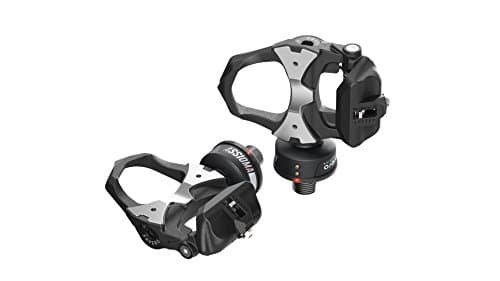 Favero Assioma Duo The power meter we'd point most upgrading riders at — accurate, dual-sided, and it moves between bikes in minutes. | Best overall | 9.39.3 out of 10 | |
| 2 | 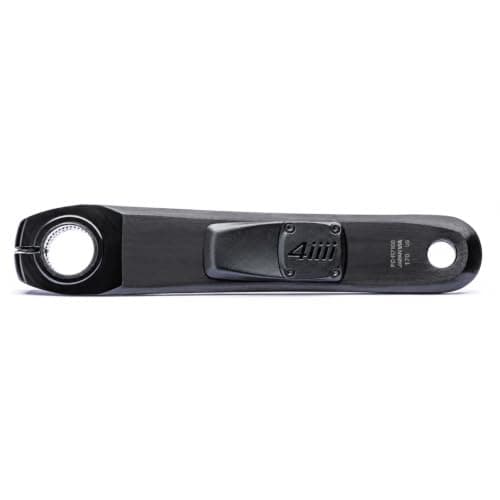 4iiii Precision 3+ The lowest-friction way into power for one bike — claimed ±1% accuracy at the entry price. | Best budget | 8.48.4 out of 10 | $437.49 · View on Amazon #ad We may earn a commission · Price as of October 22, 2026 |
| 3 | 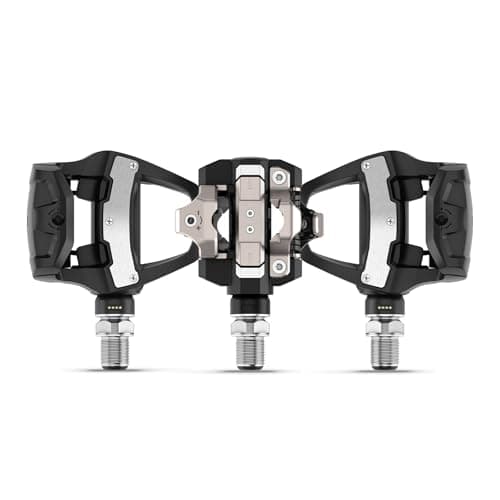 Garmin Rally RS210 The pedal meter for riders who want to pick their cleat system — and change it later. | Best for pedal choice | 8.98.9 out of 10 | $899.99 · View on Amazon $1,199.99Save 25% #ad We may earn a commission · Price as of October 22, 2026 |
| 4 | Quarq DZero The spider pick for riders who want to keep their own pedals and read power at the chainrings. | Best spider | 8.38.3 out of 10 | |
| 5 | 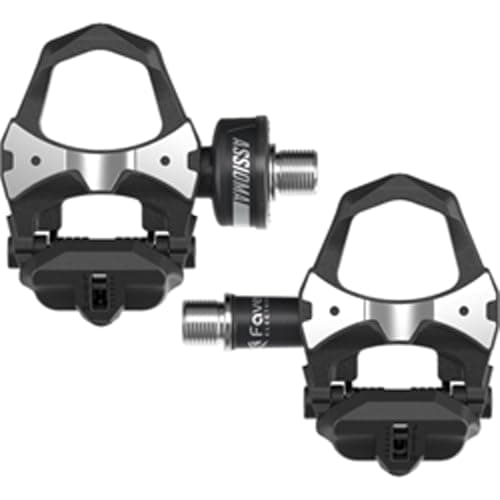 Favero Assioma Uno The Duo's accuracy and portability at a lower price — with a clean path to upgrade later. | Best value single-sided | 8.88.8 out of 10 | $381.22 · View on Amazon #ad We may earn a commission · Price as of October 22, 2026 |
A power meter is the one upgrade that changes how you train rather than how your setup feels. Every pick here reads your actual output in watts so you can pace intervals, set zones and see progress that a heart rate strap only hints at. The question isn't whether to add power — it's where on the bike to measure it. That decision drives everything else: cost, accuracy, and whether the meter can follow you from bike to bike.
Pedal, crank or spider — where the watts get measured
There are three places a power meter lives, and each buys you something different. Pedal-basedmeters put strain gauges in the pedal spindles. They're the easiest to install — a pedal wrench and five minutes — and the only type that moves between bikes freely, which is why they dominate the top of this list and get their own best power meter pedals roundup. The trade is that they tie you to a specific cleat system.
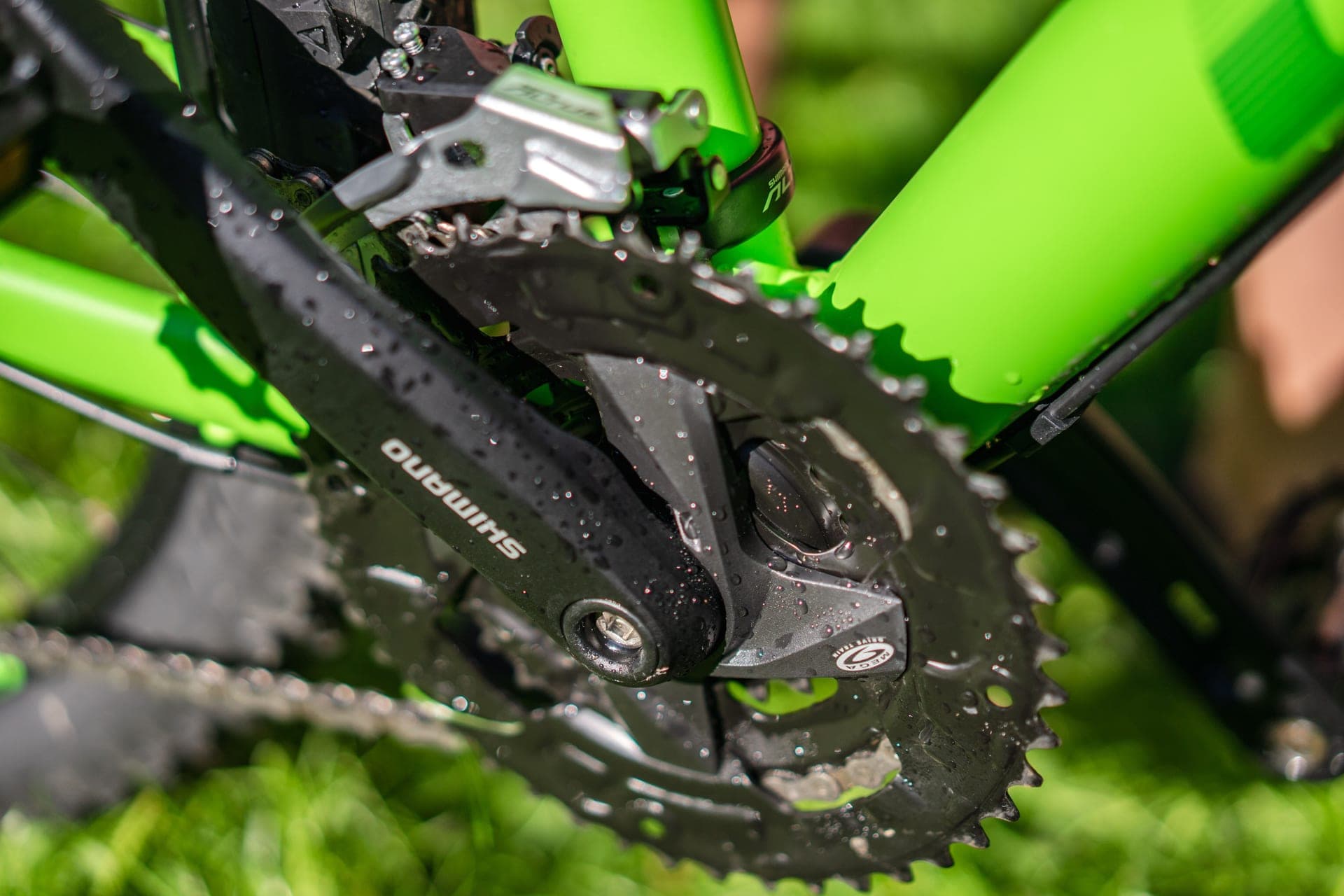
Crank-armmeters, like the 4iiii, bond a gauge to the inside of your left crank. They're the cheapest way in and disappear once fitted, but they read a single leg and stay on the bike they're installed on. Spider-based meters like the Quarq DZero sit between the crank and the chainrings, reading true total power at the source and letting you keep whatever pedals you already ride — at the cost of being bolted to one crankset.
Single-sided vs dual-sided
A dual-sided meter reads each leg independently and reports your true left-right balance. A single-sidedmeter measures one leg — almost always the left — and doubles it to estimate total power. For the majority of riders following a structured plan, single-sided is genuinely enough: the number is repeatable ride to ride, which is what your training zones depend on. Dual-sided earns its premium if you're coming back from an injury, chasing pedaling efficiency, or you simply want the complete picture. The Favero Assioma line lets you sidestep the decision — start single-sided and upgrade to dual later.
How we ranked them
We don't run a test lab, and we say so plainly on our how we reviewpage. What we did instead: pulled the manufacturer spec sheet for every meter, recorded the claimed accuracy figure, the measurement location, battery type and cleat or crank compatibility, then scored each on the things an upgrading rider actually lives with — accuracy, transferability between bikes, depth of data, and value. Favero, 4iiii and Garmin all publish a claimed ±1%; Quarq publishes ±1.5%. Prices pull live from Amazon, so you'll see today's number or "Check price," never a stale figure we typed in months ago.
| Power meter | Type | Sided | Claimed accuracy | Moves between bikes | Best for |
|---|---|---|---|---|---|
| Favero Assioma Duo | Pedal | Dual | ±1% | Yes | Overall |
| 4iiii Precision 3+ | Crank arm | Single (left) | ±1% | No | Budget |
| Garmin Rally RS210 | Pedal | Dual-sensing | ±1% | Yes | Pedal choice |
| Quarq DZero | Spider | Total + estimate | ±1.5% | Limited | Spider |
| Favero Assioma Uno | Pedal | Single (left) | ±1% | Yes | Value |
What actually matters when you're adding power
Accuracyis where the marketing shouts loudest and matters least past a point. The gap between ±1% and ±1.5% is real but small; for anyone not running a formal FTP protocol, repeatability — reading the same watts for the same effort, ride after ride — matters far more than the absolute claimed figure. A meter that's consistently a fraction high is more useful than one that's occasionally dead-on and occasionally not.
Transferabilityis the quiet deciding factor. If you own more than one bike — a trainer bike, a summer road bike, a gravel rig — a pedal meter that unbolts and follows you is worth a premium a crank or spider meter can't match. Data depth (true balance, Cycling Dynamics) is a real reason to spend up for some riders and noise for others. And valueis rarely the flagship — it's the single-sided or crank option that gets you the same claimed accuracy for less.
A power meter also pairs naturally with the rest of the pain cave. If you're still deciding whether to spend here or on resistance, our smart trainer vs power meter guide lays out which upgrade earns its place first — and for many riders the honest answer is both, in that order. Our top pick gets the full treatment in the Assioma Duo review.
On timing: power meters discount less predictably than trainers around Black Friday, and our Black Friday and Cyber Monday deals hub sets out the verified history for both pedal brands — including Garmin's permanent Rally price cut in May 2026 — before you decide whether to wait.
Narrowing it to your bike
Two questions close out most purchases. The first is format: power meter pedals vs cranks settles it on compatibility and portability rather than on accuracy claims, because the accuracy difference between good examples of each is smaller than the errors riders introduce themselves. The second is your drivetrain, and here the answer is reassuring: our best power meters for Shimano bikes page exists mostly to explain that a pedal meter does not care whether you ride 105, Ultegra, Dura-Ace, GRX or Di2. Once it arrives, how to install a power meter has the published torque figures, and how accurate are power meters explains why it will never read identically to your trainer.
If you are buying mainly to ride indoors, the ranking changes shape: our best power meters for Zwift page ranks the same category on broadcast protocol, connection limits and battery format rather than outright accuracy, because those are what decide a pain cave purchase.
Three pages narrow this list down if one constraint dominates your decision. If you are buying for a mountain bike, fit decides the purchase before accuracy does — best power meters for mountain bikes. If one leg measured and doubled is enough, best single-sided power meters ranks that field. And if you never want to charge anything, how long power meter batteries last has the published runtimes.
The full reviews
Every pick, in detail
#1 · Best overall
Favero Assioma Duo
9.39.3 out of 10The power meter we'd point most upgrading riders at — accurate, dual-sided, and it moves between bikes in minutes.
- Type
- Pedal-based
- Sided
- Dual-sided
- Claimed accuracy
- ±1%
- Battery
- Rechargeable (~50 hr)
- Connectivity
- BT, ANT+
- Cleats
- Look Keo compatible
What we'd praise
- Moves between bikes in the time it takes to swap pedals
- Favero's claimed ±1% accuracy sits in the top tier
- Rechargeable — no coin cells to hunt for mid-block
What we'd flag
- Ties you to a Look Keo-style cleat
- A pedal stack slightly taller than a bare pedal
The Assioma Duo is the pick that keeps winning this category because it removes the two things riders actually dread about power: fiddly installation and being locked to one bike. It bolts on with a pedal wrench, reads true left and right legs at a claimed ±1%, and moves to your travel bike or the trainer bike in the time it takes to swap pedals. The battery recharges over a magnetic clip instead of asking you to keep spare coin cells in a drawer.
For the upgrader who wants one power meter to serve every bike in the stable, this is the answer. If you only ride one bike and want to spend less, the single-sided Assioma Uno gives up the balance data but nothing else — and it can grow into a Duo later.
#2 · Best budget
4iiii Precision 3+
8.48.4 out of 10#ad We may earn a commission · Price as of October 22, 2026
The lowest-friction way into power for one bike — claimed ±1% accuracy at the entry price.
- Type
- Crank-arm
- Sided
- Single (left)
- Claimed accuracy
- ±1%
- Battery
- CR2032 (~800 hr)
- Connectivity
- BT, ANT+
- Fit
- Bonded to crank arm
What we'd praise
- The cheapest honest route into training with power
- 4iiii claims ±1% — flagship-tier accuracy at an entry price
- Coin cell runs for hundreds of hours between swaps
What we'd flag
- Single-sided — it doubles the left leg rather than reading both
- Bonded to a specific crank arm, so it doesn't hop between bikes
The Precision 3+ is a strain gauge bonded to the inside of your left crank arm, and for a rider who trains by power on a single bike it is the most watts-per-dollar you can buy. It reads the left leg and doubles it, which is fine for structured training where repeatability matters more than a perfect left-right split. 4iiii claims the same ±1% as meters costing far more.
The trade is versatility. Because it lives on one crank arm, it doesn't move between bikes the way a pedal meter does, and it can't tell you which leg is loafing. If those two things don't matter to you, nothing here undercuts it on value.
#3 · Best for pedal choice
Garmin Rally RS210
8.98.9 out of 10$1,199.99Save 25%
#ad We may earn a commission · Price as of October 22, 2026
The pedal meter for riders who want to pick their cleat system — and change it later.
- Type
- Pedal-based
- Sided
- Dual-sensing
- Claimed accuracy
- ±1%
- Cleats
- Shimano SPD-SL
- Battery
- Rechargeable, up to 90 hours
- Connectivity
- ANT+, Bluetooth
What we'd praise
- The only major pedal meter you can rebuild for a different cleat system
- Dual-sensing with full Cycling Dynamics on Garmin head units
- The sealed rechargeable spindle removes the battery door the Rally 200 was criticized for
- Claimed ±1% and deep integration with the Garmin ecosystem
What we'd flag
- You now have a charging routine to remember instead of a spare coin cell
- 312 g the pair is heavier than the Favero pedals it competes with
- You pay a premium over the Assioma for the extra data layer
The Rally is Garmin's answer to "what if the power meter didn't force the cleat on you?" The RS210 ships as a dual-sensing Shimano SPD-SL pedal, but Garmin sells conversion kits so the same spindles can become Look Keo (RK) or SPD mountain (XC) pedals down the line. Add the deep Cycling Dynamics data on a Garmin head unit and it's the most information-rich pick here. It replaced the Rally 200 series, which Amazon no longer stocks — the full detail is in our Garmin Rally RS210 review.
You pay for that flexibility, and the 210 generation swapped the coin cells for a sealed rechargeable spindle Garmin rates at up to 90 hours. If you already live in Garmin's ecosystem and want SPD-SL cleats, it's the natural choice; if you just want accurate dual-sided watts for less, the Assioma is the value play.
#4 · Best spider
Quarq DZero
8.38.3 out of 10The spider pick for riders who want to keep their own pedals and read power at the chainrings.
- Type
- Spider-based
- Sided
- Total power + balance estimate
- Claimed accuracy
- ±1.5%
- Battery
- CR2032 (~200 hr)
- Connectivity
- BT, ANT+
- Fit
- Crankset-specific
What we'd praise
- Spider measurement is cleat-agnostic — ride any pedal you like
- Reads true total power at the chainrings
- Robust design that shrugs off weather and crank strikes
What we'd flag
- Left/right is an estimate, not a true dual-sided reading
- Tied to a specific crankset and chainring standard
The DZero measures power where the crank meets the chainrings, which means it doesn't care what pedals you clip into — keep your Speedplays, your SPDs, whatever you already ride. Quarq claims ±1.5%, a hair behind the ±1% pedal meters but well inside what matters for training zones, and the spider is famously tough.
The catch is that a spider reads total power and estimates the left-right split rather than measuring each leg independently, and it's bound to a particular crankset. If you're loyal to a pedal system and want power without changing it, the DZero is the clean answer. If you want your meter to jump between bikes, a pedal meter is the better tool.
#5 · Best value single-sided
Favero Assioma Uno
8.88.8 out of 10#ad We may earn a commission · Price as of October 22, 2026
The Duo's accuracy and portability at a lower price — with a clean path to upgrade later.
- Type
- Pedal-based
- Sided
- Single (left)
- Claimed accuracy
- ±1%
- Battery
- Rechargeable (~50 hr)
- Connectivity
- BT, ANT+
- Upgrade
- Add right pedal → Duo
What we'd praise
- Same body and claimed ±1% as the Duo for less money
- Rechargeable and moves between bikes like the Duo
- Buy the second pedal later to become a full Duo
What we'd flag
- Single-sided — no true left/right balance
- Still tied to a Look Keo-style cleat
The Uno is the Duo with one instrumented pedal instead of two. You get the same claimed ±1% accuracy, the same rechargeable battery, and the same swap-it-to-any-bike convenience, for meaningfully less. It reads your left leg and doubles it, which is all most riders need to train by power honestly.
What makes it the smart value pick is the upgrade path: buy the right-side instrumented pedal whenever you want and the Uno becomes a full Duo, no new purchase wasted. We walk through exactly when that's worth doing in our Duo vs Uno breakdown.
Good questions
Frequently asked questions
Pedal, crank or spider — which type should I buy?
Pedal meters are the easiest to install and the only type that moves freely between bikes, which makes them the default for most riders. Crank-arm meters are the cheapest way in but stay on one bike and read a single leg. Spider meters read true total power and let you keep any pedals, but they're bolted to one crankset. If you own more than one bike, buy pedals.
Is single-sided power accurate enough for training?
For following a structured plan and setting training zones, yes. A single-sided meter reads your left leg and doubles it, and because that number is repeatable ride to ride, your zones stay valid. Dual-sided earns its premium if you want true left-right balance data, are returning from injury, or are chasing pedaling efficiency.
How accurate does a power meter need to be?
For most riders, a claimed accuracy of ±1% to ±1.5% is more than enough. Repeatability matters more than the absolute figure: a meter that reads consistently is more useful for training than one that's occasionally perfect and occasionally off. Chase the tightest accuracy claim only if you run formal FTP tests where a couple of watts changes your zones.
Will a power meter work with my smart trainer and Zwift?
Yes. Every meter here broadcasts over Bluetooth and ANT+, so it pairs with Zwift, your bike computer and training apps the same way a trainer does. On a smart trainer you can even use the power meter as your primary power source while the trainer handles resistance, which many riders prefer for consistency across indoor and outdoor rides.
Do I need a power meter if I already have a smart trainer?
Not strictly — a smart trainer already measures power indoors. A power meter earns its place when you also ride outside and want the same watts on the road, or when you want one consistent power source across every bike and every ride. Our smart trainer vs power meter guide walks through which to buy first if you can only pick one.
Are these prices current?
The prices shown pull live from Amazon and are stamped with the date they were last checked. When we can't verify a live price we show 'Check price' rather than a number that might be stale — we never display a hardcoded price.
How we sourced this
Keep going
Read these next
- ComparisonPower Meter Pedals vs Cranks
- Power MetersThe Best Power Meters for Shimano Bikes
- GuidesHow Accurate Are Power Meters?
- DealsBlack Friday & Cyber Monday Indoor Cycling Deals 2026
- Power MetersThe Best Budget Power Meters
- ComparisonFavero Assioma vs Garmin Rally
- Power MetersBest Power Meter Pedals
- ComparisonFavero Assioma Duo vs Uno
- ReviewFavero Assioma Duo Review
- GuideSmart Trainer vs Power Meter
- Power MetersThe Best Crank Power Meters
- Power MetersSingle vs Dual-Sided Power Meters