Power Meters
The Best Power Meters for Mountain Bikes
Off-road, the compatibility question decides the purchase before accuracy does. Here is what actually fits a modern mountain bike, ranked by fit first and tolerance second.
The short answer
Quick picks
| # | Product | Best for | Score | Price |
|---|---|---|---|---|
| 1 | 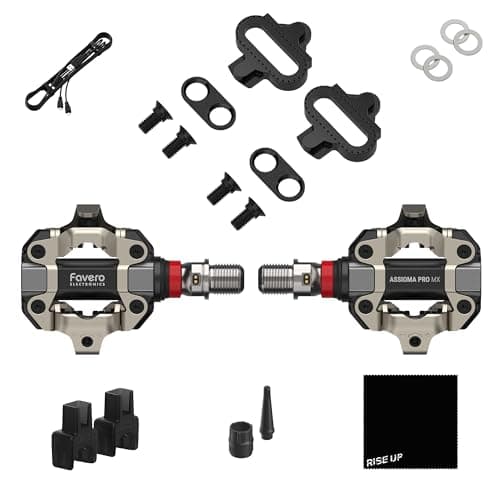 Favero Assioma Pro MX-2 The mountain bike power meter: dual-sided ±1% measurement on an SPD cleat, with no drivetrain compatibility question to answer at all. | Best power meter for mountain bikes overall | 8.98.9 out of 10 | $804.99 · View on Amazon #ad We may earn a commission · Price as of October 21, 2026 |
| 2 | 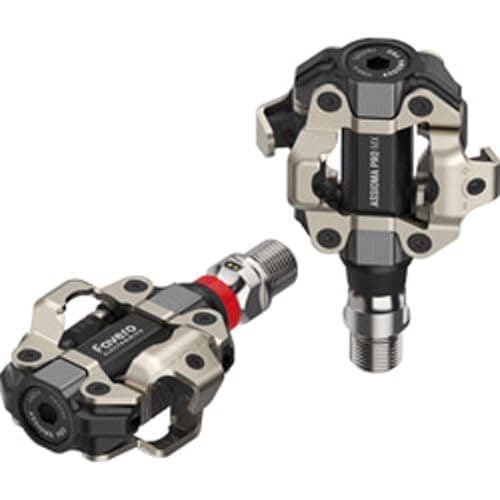 Favero Assioma Pro MX-1 The sensible mountain bike buy for most riders: the same SPD pedal and the same measurement, one side, with the second side available later. | Best value: same pedal, one sensor | 8.68.6 out of 10 | $499.00 · View on Amazon #ad We may earn a commission · Price as of October 21, 2026 |
| 3 | 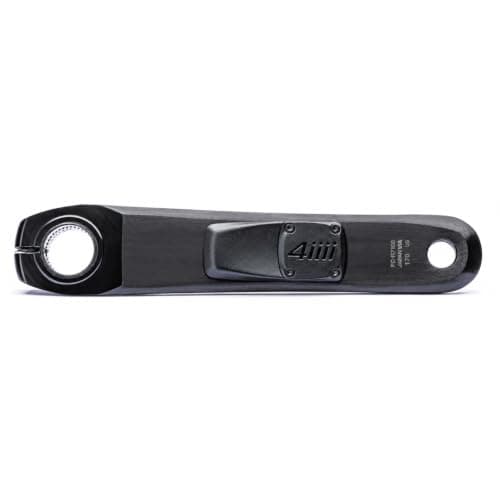 4iiii Precision 3+ The answer when a pedal-mounted sensor is the thing you object to: the same ±1% claim, bolted inboard where rocks cannot reach it — if 4iiii supports your crank. | Best for riders who refuse to put electronics on a pedal | 8.18.1 out of 10 | $437.49 · View on Amazon #ad We may earn a commission · Price as of October 21, 2026 |
| 4 | 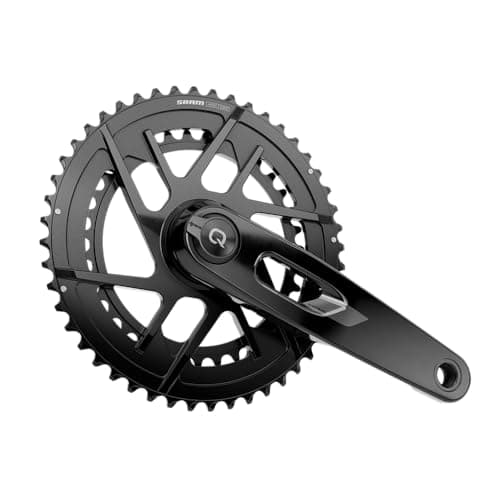 SRAM Rival AXS Power Meter Crankset Well protected and well priced if your bike is SRAM DUB 12-speed, as long as you accept the ±3% total figure SRAM itself publishes. | Best for SRAM DUB mountain bikes | 7.77.7 out of 10 | $385.00 · View on Amazon #ad We may earn a commission · Price as of October 21, 2026 |
| 5 | 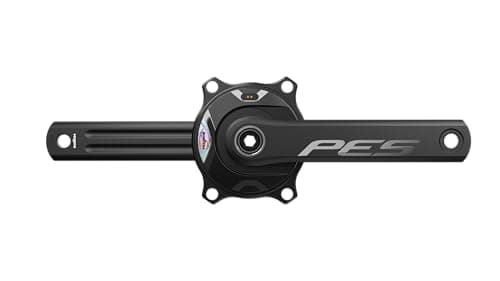 Magene PES P505 The budget complete-crankset option, with the loudest compatibility warning on the page: confirm fitment against your actual mountain bike first. | Cheapest complete crankset with published balance data | 7.47.4 out of 10 | $299.99 · View on Amazon #ad We may earn a commission · Price as of October 21, 2026 |
The reason this page exists separately from our main power meter roundup is that the ranking order changes off-road. On a road bike you can rank on accuracy and price, because almost everything fits almost everything. On a mountain bike, fit decides the purchase, and several otherwise excellent meters simply cannot be installed.
Why pedals win off-road
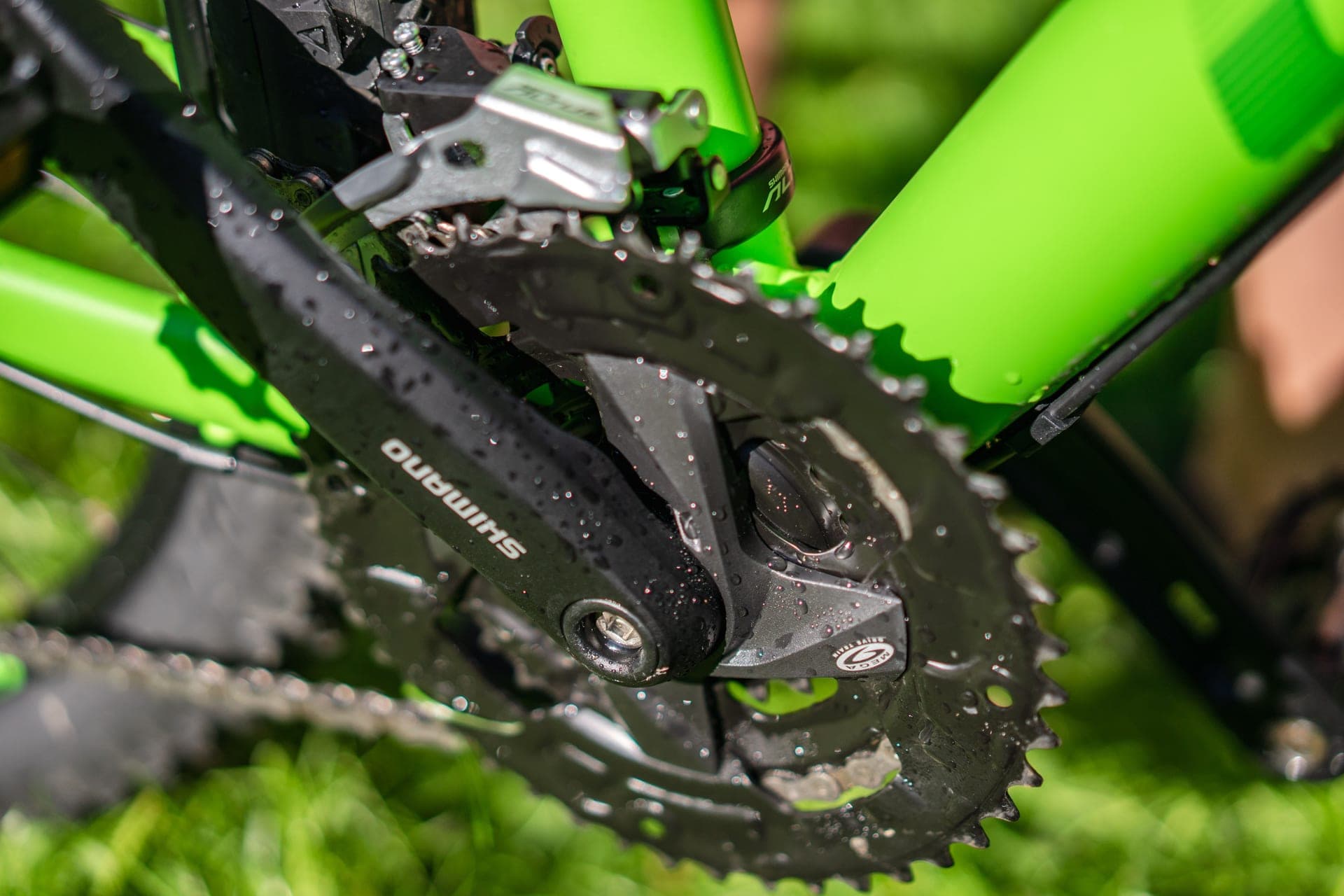
A power meter can live in four places: the pedal, the crank arm, the spider, or the spindle. Three of those four are part of your drivetrain, and a modern mountain bike drivetrain is a narrow target. Boost and super-boost spacing, 12-speed cranks, proprietary direct-mount chainrings, short chainstays and suspension pivots all constrain what you can bolt on, and in practice most riders discover their exact crankset is not supported.
A pedal has one interface: a 9/16-inch thread. It fits a hardtail, a full-suspension enduro bike, and the road bike you put on the trainer in November. That universality is worth more off-road than anywhere else, and it is the single reason the top two picks here are pedals.
The counter-argument is damage. Mountain bike pedals strike rocks, and a pedal with electronics in the spindle is a more expensive thing to strike a rock with. That is a real objection, and it is why the 4iiii Precision 3+is here in third: the sensor sits inboard on the crank arm, out of harm's way, for riders who simply will not accept a sensor in the pedal.
The cleat question, answered once
Mountain bikers ride two-bolt SPD cleats, not three-bolt road cleats. Most pedal power meters are road products with Look Keo or Shimano SPD-SL bodies, which is why the field shrinks so dramatically when you move off-road. Favero's MX line is the SPD answer, and Garmin's Rally system is sold in convertible bodies, which is covered in our power meter pedal cleat guide.
| Location | Fits any bike? | Rock risk | Claimed accuracy |
|---|---|---|---|
| SPD pedal (MX-1 / MX-2) | Yes — pedal thread only | Highest | ±1% |
| Crank arm (4iiii Precision 3+) | No — must match your crank | Low | ±1% |
| Spindle (SRAM Rival) | No — DUB 12-speed only | Lowest | ±3% total |
| Complete crankset (Magene P505) | No — check fitment carefully | Lowest | ±1.5% |
| Smart trainer (indoors only) | Not applicable | None | ±1% to ±2% |
What to look for
Cleat compatibility first. If a pedal power meter does not take the cleat on your shoes, nothing else about it matters. SPD two-bolt is the mountain bike standard.
Published accuracy, not implied accuracy. Favero publishes ±1%. SRAM publishes ±1.5% measurement and states ±3% total because the figure is doubled from one leg. Magene publishes ±1.5%. Any product that does not publish a tolerance at all should be treated as unknown rather than good — how accurate are power meters explains what these numbers do and do not promise.
Stack height and Q-factor.A pedal that raises your foot or widens your stance changes your saddle height and your knee tracking. 11.2 mm of stack is low for an off-road pedal; a thicker one is a fit change you will feel on a long climb.
Battery format. Rechargeable pedals need charging before a big day; coin-cell crank meters run for hundreds of hours and then need a battery you can buy anywhere. Neither is better, but one of them will annoy you. Our power meter battery guide covers the real-world numbers.
Where it goes in winter. If the plan is to ride the mountain bike outdoors and a road bike on the trainer, a pedal meter follows you and a crank meter does not. That is often the deciding factor for riders who train indoors through the off-season.
Do you need one at all?
If your structured training happens indoors and your mountain bike rides are for fun, a smart trainer already gives you power where it matters and you can skip this purchase entirely. Smart trainer vs power meter works through that decision properly, and are power meters worth it is the honest version of the question.
Where a mountain bike power meter earns its money is pacing: long fire-road climbs, enduro transfer stages, marathon races and anything where going too hard in the first hour decides the result. Heart rate lags and perceived effort lies when you are excited. Power does neither.
One more practical note for anyone who already owns a trainer. If you buy a pedal meter, it will almost certainly disagree slightly with your trainer indoors, and that is normal rather than a fault — two devices measuring in different places, each with its own tolerance, will not produce identical numbers. How accurate are smart trainers explains how to decide which one to train to, and connecting a power meter to Zwift covers the pairing order that stops them fighting.
Decided on pedals?
See every power meter pedal rankedThe full reviews
Every pick, in detail
#1 · Best power meter for mountain bikes overall
Favero Assioma Pro MX-2
8.98.9 out of 10#ad We may earn a commission · Price as of October 21, 2026
The mountain bike power meter: dual-sided ±1% measurement on an SPD cleat, with no drivetrain compatibility question to answer at all.
- Type
- Pedal-based, dual-sided
- Cleat system
- Shimano SPD (two-bolt)
- Claimed accuracy
- ±1% (IAV Power System)
- Weight
- 199 g per pedal with sensor
- Stack height
- 11.2 mm
- Q-factor
- 54 mm
What we'd praise
- The only dual-sided ±1% power meter here that uses the SPD two-bolt cleat every mountain biker already owns
- 11.2 mm stack and a 54 mm Q-factor, so fitting it does not change your position on the bike
- Drivetrain-agnostic: Eagle, XT, 11-speed or 12-speed, boost or non-boost, it does not care
- Moves to the trainer bike in winter and back to the mountain bike in spring, in five minutes each way
- Hardened 6061-T6 aluminum body rather than a road pedal wearing an SPD badge
What we'd flag
- Favero quotes at least 60 hours per charge, the shortest runtime in the Assioma family
- A pedal is the part of a mountain bike most likely to meet a rock
- Not compatible with pedal extenders, crank shorteners, or cranks thicker than 15 mm at the thread
- The most expensive pick on this page
Almost every power meter argument on a road bike is a compatibility argument, and on a mountain bike it is worse: suspension linkages, boost spacing, wide-range 12-speed drivetrains and proprietary cranksets between them rule out most crank-based options before you start. A pedal sidesteps the whole conversation, which is why the MX-2 is the pick here.
What makes it a mountain bike product rather than a road product with a different cleat is the geometry. An 11.2 mm stack and a 54 mm Q-factor are unusually low and narrow for an off-road pedal, so you are not being asked to raise your saddle or widen your stance to get the number. The body is hardened aluminum, and the measurement claim is the same ±1% IAV figure Favero publishes across the Assioma line.
The honest caveat is exposure. A pedal on a mountain bike meets rocks, and Favero's quoted runtime of at least 60 hours is the shortest in the family because two sensors draw from two batteries. If you ride rocky trails hard and often, read the crank-based options before you commit.
#2 · Best value: same pedal, one sensor
Favero Assioma Pro MX-1
8.68.6 out of 10#ad We may earn a commission · Price as of October 21, 2026
The sensible mountain bike buy for most riders: the same SPD pedal and the same measurement, one side, with the second side available later.
- Type
- Pedal-based, single-sided
- Cleat system
- Shimano SPD (two-bolt)
- Claimed accuracy
- ±1% (IAV Power System)
- Weight
- 199 g per pedal with sensor
- Stack height
- 11.2 mm
- Upgrade path
- Add the second sensor pedal later
What we'd praise
- Same body, same cleat, same stack, same Q-factor and the same ±1% claim on the leg it reads
- Upgradeable: add the right-hand sensor pedal later and you have an MX-2
- Longer runtime than the MX-2, because only one pedal carries a sensor and a battery
- The cheapest way onto an SPD power meter pedal from a maker with a real independent testing record
What we'd flag
- Single-sided: your left leg, doubled, so any imbalance you have is baked into the number
- No left/right balance, torque effectiveness or pedaling-smoothness data
- Same fitting restrictions as the MX-2 — no extenders, no shorteners, 15 mm crank-thread limit
For training purposes the MX-1 does the same job as the MX-2. You get the same pedal body, the same cleat, the same stack height and the same measurement principle on the leg it reads. What you give up is the second leg, which means no balance figure and no pedaling dynamics.
That trade is easier to accept on a mountain bike than on a road bike, because off-road power is spiky and position-dependent anyway. You are using it to pace a climb, structure intervals and compare efforts, and single-sided data does all three. Our single vs dual-sided explainer goes through what the doubled number actually hides.
The upgrade path is the real argument. Buy the MX-1 now, add the sensing right pedal when you want balance data, and you end up at an MX-2 without having bought a second power meter.
#3 · Best for riders who refuse to put electronics on a pedal
4iiii Precision 3+
8.18.1 out of 10#ad We may earn a commission · Price as of October 21, 2026
The answer when a pedal-mounted sensor is the thing you object to: the same ±1% claim, bolted inboard where rocks cannot reach it — if 4iiii supports your crank.
- Type
- Non-drive-side crank arm
- Claimed accuracy
- ±1%
- Battery
- CR2032, up to 800 hours claimed
- Weight added
- 9 g
- Power range
- 0 - 4,000 W
- Connectivity
- ANT+ and Bluetooth Smart
What we'd praise
- The sensor sits inboard on the crank arm, where a rock strike cannot reach it
- Up to 800 hours from a coin cell, so there is nothing to charge before a long day out
- Adds 9 g and sits 5.5 mm proud, which clears most chainstays and frame bags
- Keeps whatever flat or clipless pedals you already run
What we'd flag
- Must match your specific crank model and length, and mountain bike cranksets are the hardest to match
- Single-sided: left leg, doubled
- Effectively permanent on that bike; moving it is not a five-minute job
- Check clearance against your frame before ordering — short chainstays and suspension pivots are tight
The one real objection to pedal power meters off-road is that pedals get hit. A bonded crank-arm meter answers that objection completely: the strain gauge sits on the inboard face of the non-drive crank, protected by the crank itself, adding 9 g and about 5.5 mm of thickness.
The cost is compatibility. 4iiii bonds its sensor to a specific crank arm, so you are buying a crank, not a sensor, and mountain bike cranksets are the hardest category to match. Check your exact model and length against 4iiii's list before you order, and check clearance: short chainstays, suspension pivots and frame bags all live close to where this sits.
If it fits, it is the lowest-maintenance power meter on this page. A coin cell rated to 800 hours means a battery change roughly once a season, and there is nothing to charge. Our 4iiii Precision review covers the measurement side in detail.
#4 · Best for SRAM DUB mountain bikes
SRAM Rival AXS Power Meter Crankset
7.77.7 out of 10#ad We may earn a commission · Price as of October 21, 2026
Well protected and well priced if your bike is SRAM DUB 12-speed, as long as you accept the ±3% total figure SRAM itself publishes.
- Type
- Spindle-based, left leg doubled
- Claimed accuracy
- ±3% total (±1.5% measurement, doubled)
- Battery
- Coin cell
- Fitment
- SRAM DUB, 12-speed
- Sold as
- Complete crankset
- Connectivity
- ANT+, Bluetooth
What we'd praise
- The cheapest branded route into power if your bike already runs a SRAM DUB bottom bracket
- Electronics live in the bottom bracket area, about as far from rock strikes as it is possible to get
- Coin cell, so nothing to charge before a ride
- Comes as a complete crankset, so there is no arm-matching exercise
What we'd flag
- SRAM states ±3% for the total figure because the ±1.5% measurement is doubled from one leg
- SRAM DUB 12-speed only — this is the compatibility question the pedals let you skip
- Does not move to your trainer bike unless that bike also runs DUB 12-speed
- No true left/right balance
A very large share of current mountain bikes run SRAM DUB cranks, and for those bikes this is the tidiest answer: a complete crankset with the measurement built into the spindle, nothing bonded, nothing exposed and nothing to charge.
Read the accuracy figure carefully, though, because SRAM publishes it honestly and most retailers do not. The measurement tolerance is ±1.5%, but the meter reads one leg and doubles it, so SRAM states ±3% total. That is three times the Favero claim, and on a page where the other picks claim ±1% it is the reason this sits fourth rather than first.
It is still the right pick for a rider who wants power on one bike, already runs DUB, and is not planning to move the meter anywhere. Our best power meters for SRAM bikes page goes through the rest of the SRAM range.
#5 · Cheapest complete crankset with published balance data
Magene PES P505
7.47.4 out of 10#ad We may earn a commission · Price as of October 21, 2026
The budget complete-crankset option, with the loudest compatibility warning on the page: confirm fitment against your actual mountain bike first.
- Type
- Complete crankset with integrated meter
- Claimed accuracy
- ±1.5% (P505 base)
- Weight
- 650 g average
- Power range
- 0 - 2,500 W
- Data
- Power, cadence, L/R balance, pedaling smoothness
- Connectivity
- ANT+ and Bluetooth, IPX7
What we'd praise
- Arrives as a complete crankset, so there is no supported-arm list to satisfy
- Reports left/right balance and pedaling smoothness, which the single-sided picks cannot
- Keeps the electronics inboard, away from rocks
- Cheaper than either Favero pedal
What we'd flag
- ±1.5% claimed, wider than the ±1% claims above it
- Sold primarily as a road crankset — check chainring fitment and crank length against your mountain bike before ordering
- Replacing a working crankset is a lot of parts to change for one sensor
- Does not transfer between bikes
The P505 is here as the price floor for a crankset-based meter that publishes a tolerance at all. ±1.5% is wider than Favero's claim, but it is published, which is more than several cheaper cranksets manage.
It also reports balance and pedaling smoothness, which neither single-sided pick here can, because a complete crankset carries gauges on both arms. For a rider rehabilitating an injury or chasing a known asymmetry, that is worth more than a tenth of a percent of accuracy.
The warning is fitment. This is primarily a road crankset, so chainring interface, crank length and bottom bracket standard all have to be checked against your mountain bike before you order. If any of those does not line up, go back to the pedals — that is the whole reason pedals win off-road.
Good questions
Frequently asked questions
What is the best power meter for a mountain bike?
The Favero Assioma Pro MX-2. It is the only dual-sided power meter in this group that uses the Shimano SPD two-bolt cleat mountain bikers already ride, it claims plus or minus 1% from Favero's IAV system, and because it fits the pedal thread it works on any drivetrain. The single-sided MX-1 is the same pedal with one sensor for less money.
Can you put power meter pedals on a mountain bike?
Yes, provided the pedal uses a two-bolt SPD cleat rather than a three-bolt road cleat. Favero's Assioma Pro MX-1 and MX-2 are built as SPD pedals. A Look Keo or Shimano SPD-SL road pedal power meter will not work with mountain bike shoes, because the cleat pattern is different.
Are crank power meters better than pedals for mountain biking?
They are better protected and worse at fitting. A crank-arm or spindle meter sits inboard where rocks cannot reach it, but it has to match your exact crankset, and mountain bike cranksets are the hardest category to match. A pedal fits any bike with a 9/16-inch thread but is exposed to strikes.
How accurate are mountain bike power meters?
Favero claims plus or minus 1% for the Assioma Pro MX pedals and 4iiii claims plus or minus 1% for the Precision 3+. SRAM publishes plus or minus 1.5% measurement on the Rival crankset but states plus or minus 3% total because the figure is doubled from one leg. Magene publishes plus or minus 1.5% for the P505. These are manufacturer claims, not our measurements.
Will a power meter survive mountain biking?
Pedal-based meters are among the most exposed components on the bike and will eventually meet a rock. Favero builds the MX bodies in hardened 6061-T6 aluminum, but no pedal is immune. If you ride rocky technical trails frequently, a crank-arm meter like the 4iiii Precision 3+ or a spindle-based SRAM unit removes that risk entirely, at the cost of compatibility.
Can I move a mountain bike power meter to my indoor trainer bike?
Only if it is a pedal. The Assioma Pro MX pedals unscrew in minutes and go onto any bike, which makes them the sensible choice if you ride the mountain bike outdoors and a different bike on the trainer. Crank arm, spindle and crankset meters stay on the bike they were installed on.
How we sourced this
Keep going
Read these next
- Power MetersThe Best Power Meters for Gravel Bikes
- Power MetersThe Best Power Meter Pedals
- Power MetersThe Best Crank Power Meters
- Power MetersPower Meter Pedals vs Cranks
- GuidesPower Meter Pedals and Cleat Compatibility
- Power MetersSingle vs Dual-Sided Power Meters
- Power MetersAssioma Pro MX-1 vs MX-2
- GuidesAre Power Meters Worth It?