Comparison
Power Meter Pedals vs Cranks
This is not an accuracy argument — both formats are accurate enough. It is an argument about compatibility, portability and how many bikes you own. Here is how to decide, and the best product on each side.
The short answer
Quick picks
| # | Product | Best for | Score | Price |
|---|---|---|---|---|
| 1 | 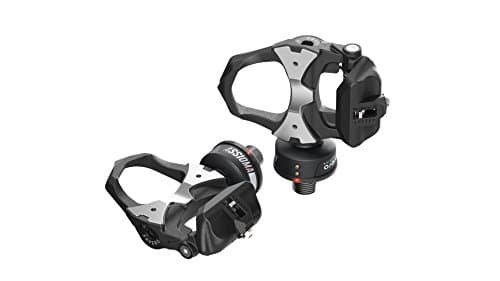 Favero Assioma Duo The best argument for the pedal format: ±1% on both legs, no compatibility homework, and it follows you between bikes. | The pedal case, made best | 9.39.3 out of 10 | $539.97 · View on Amazon #ad We may earn a commission · Price as of October 5, 2026 |
| 2 | 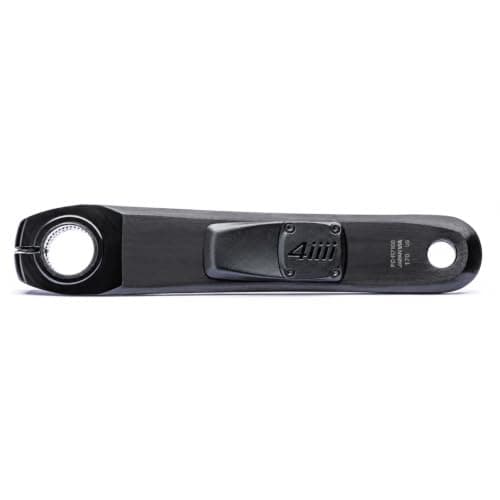 4iiii Precision 3+ The crank format's strongest argument: real power data for the least money, on the pedals you already own. | The crank case, for the least money | 8.68.6 out of 10 | $437.49 · View on Amazon #ad We may earn a commission · Price as of October 5, 2026 |
| 3 | 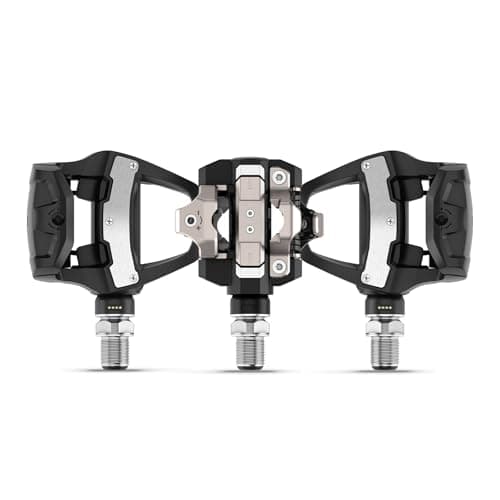 Garmin Rally RS210 The pedal format with no cleat compromise, for riders already on SPD-SL and already in Garmin's ecosystem. | The pedal case, keeping SPD-SL cleats | 8.88.8 out of 10 | |
| 4 | 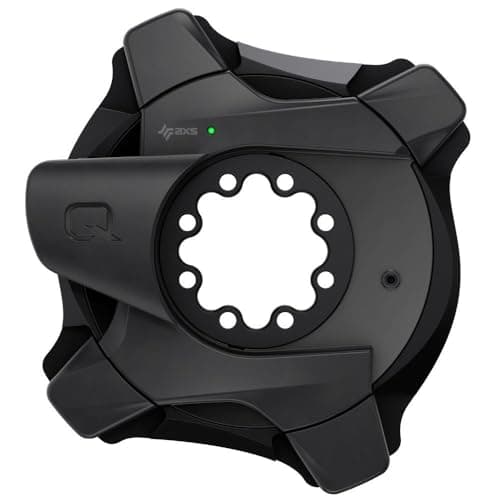 SRAM Red / Force AXS Power Meter Spider The crank format at its most elegant: total power, automatic zeroing, chainring freedom — on SRAM AXS cranks only. | The crank case, measuring total power | 8.58.5 out of 10 | $436.93 · View on Amazon #ad We may earn a commission · Price as of October 5, 2026 |
| 5 | 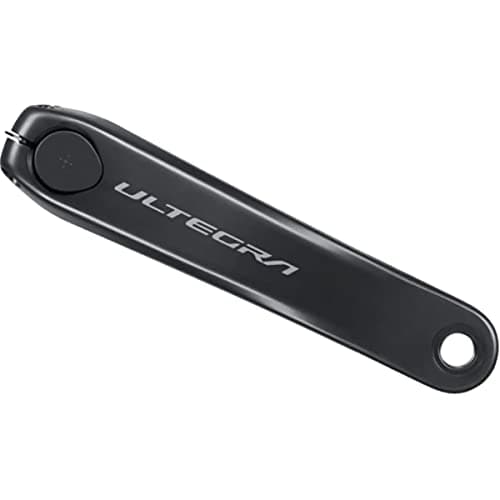 Shimano Ultegra FC-R8100-P Dual-sided crank measurement from Shimano itself — but only on a 12-speed Shimano road bike, and with no published tolerance we could verify. | The crank case, dual-sided from the drivetrain maker | 7.07.0 out of 10 | $899.00 · View on Amazon #ad We may earn a commission · Price as of October 5, 2026 |
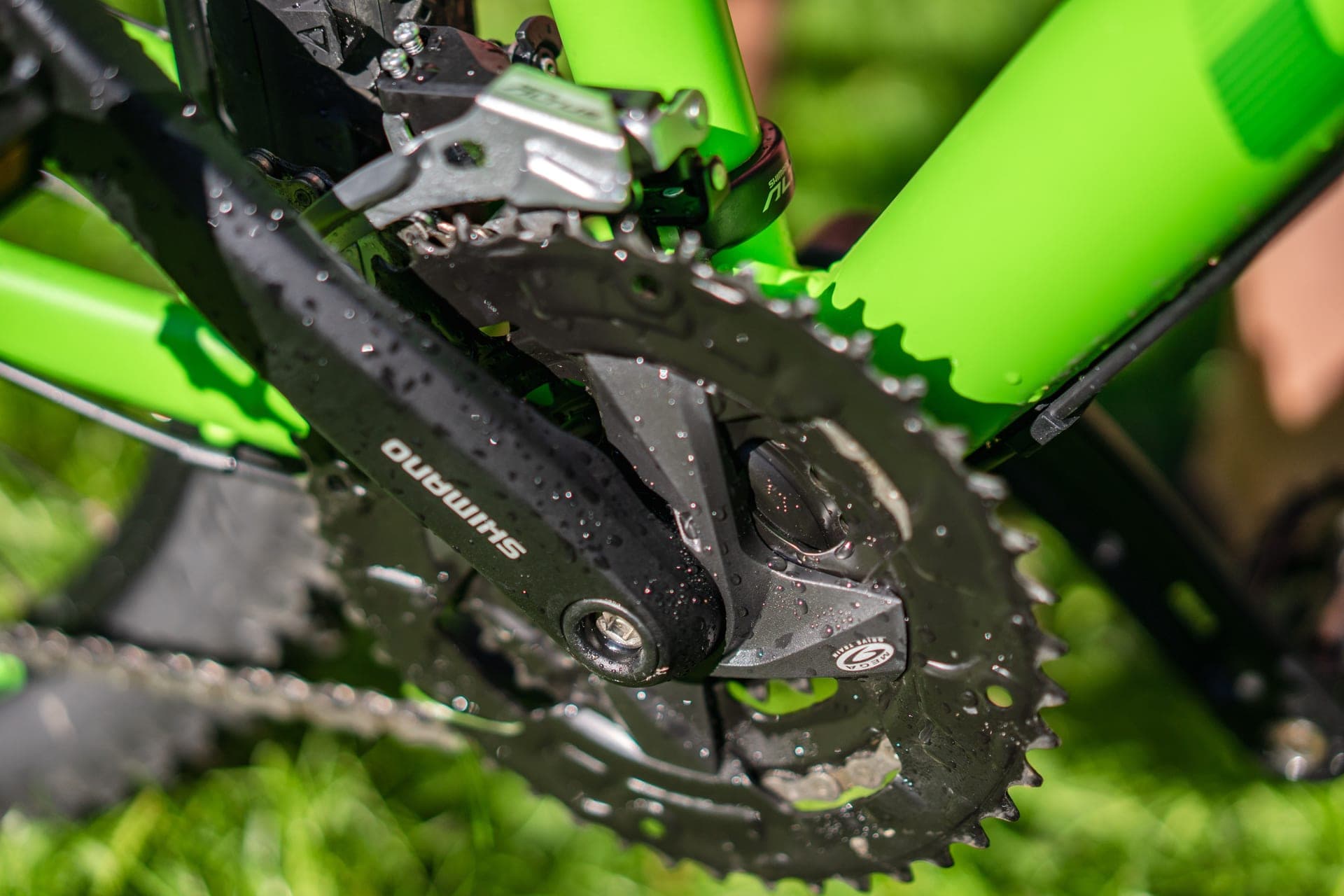
Pedals or cranks is the question riders actually ask once they have decided to buy a power meter, and most of the answers online get it wrong by treating it as an accuracy debate. It is not. A ±1% pedal and a ±1% crank arm are both good enough to train on, and the differences between well-made examples of each are smaller than the day-to-day variation in how you feel. The real decision is about four practical things: whether the product will fit your bike, whether it can move to another bike, what it does to your pedal choice, and how much it costs.
The case for pedals
There is no compatibility question. Every road crank in current production uses the same pedal thread. That means a pedal meter fits a 2012 aluminium winter bike and a current Dura-Ace Di2 race bike equally, with no part numbers to match, no crank length to specify when ordering, and no bottom bracket standard to check. For a lot of buyers that alone decides it, because the alternative is an hour of research with a real chance of ordering the wrong thing.
It moves. If you have a trainer bike and an outdoor bike — which describes a large share of indoor riders — a pedal meter is one instrument for both. A crank meter is one instrument for one bike. Over a few seasons that is worth real money, and more importantly it means your indoor and outdoor numbers come from the same device.
Dual-sided is affordable. Pedals already have hardware on both sides of the bike, so measuring both legs costs the maker very little extra. Crank-based meters at comparable money are nearly all single-sided, doubling the left leg. Single vs dual-sided power meters covers what that actually costs you.
Installation is a torque figure.Fitting pedals is a job you can do on a kitchen floor. Garmin's manual specifies 25 ft-lb (34 Nm); Favero's Pro RS manual specifies 30 to 40 Nm. Our how to install a power meter guide walks both formats through.
The case for cranks
It is cheaper. The cheapest credible power meter is a bonded crank arm, not a pedal, and it is not close. If the budget is the binding constraint, the crank format wins outright.
Your pedals stay yours. This is the point most pedal-meter advocates skip. Plenty of riders have settled on a pedal for a reason — Speedplay for the float, SPD for walkable shoes on a gravel bike, a specific stack height for a bike fit. A pedal meter overrides that decision. A crank meter does not touch it.
Coin cells change the ownership experience. A rechargeable pedal needs charging; 4iiii claims up to 800 hours from a CR2032 and SRAM around 200. That is the difference between a device you maintain and a device you forget about, and for long unsupported rides a spare coin cell in a saddle bag beats any battery percentage.
The electronics are better protected. A pedal is the part of a bike most likely to strike a kerb, a rock or the ground in a crash. A crank arm, spindle or spider is inboard and sheltered.
| Pedal-based | Bonded crank arm | Spider / spindle | |
|---|---|---|---|
| Fitment research needed | None — standard pedal threads | Crankset model and crank length | Crankset family (e.g. SRAM AXS) |
| Moves between bikes | Yes, in minutes | No | No |
| Pedal and cleat choice | Decided for you | Entirely yours | Entirely yours |
| Typical sidedness at this price | Dual-sided available | Usually single (left), doubled | Total power, estimated balance |
| Battery | Rechargeable, 50-160 h claimed | CR2032, up to 800 h claimed | CR2032, around 200 h |
| Cheapest entry point | Higher | Lowest of the three | Middle |
| Exposure to strikes and crashes | Highest | Low | Low |
| Install difficulty | Pedal wrench and a torque figure | Crank bolt and pinch bolts | Most involved |
How to decide in one minute
Do you own more than one bike you want power on? If yes, buy pedals. This single question settles the majority of cases, and nothing else on this page outweighs it.
Is your pedal choice settled for a reason? If yes — Speedplay, SPD on a gravel bike, a stack height from a bike fit — buy a crank meter. A power meter is not worth unpicking a working bike fit.
Is price the binding constraint? If yes, buy a bonded crank arm, accept a doubled left-leg figure, and get on with training. A consistent number you own beats a better number you did not buy.
Do you specifically want left/right balance?If yes, buy dual-sided pedals, or Shimano's own dual-sided crankset if your bike is 12-speed Shimano road. Balance is the one data point the cheap crank format cannot give you.
What this is not an argument about
It is not an argument about accuracy. Four of the five picks on this page claim ±1% or ±1.5%, and the differences between them in practice are smaller than the difference between a correctly entered crank length and an incorrect one. The errors that actually ruin power data are user errors: the wrong crank length, a skipped zero-offset, a meter fitted at the wrong torque. How accurate are power meters goes through all of them, and how to calibrate a power meter covers the habit that prevents most of it.
It is also not an argument about whether to buy a power meter at all. If you ride mostly indoors on a smart trainer with measured power, you may not need one yet — smart trainer vs power meter and are power meters worth it are the pages for that question.
Decided on a format?
See the full power meter rankingsThe full reviews
Head to head
#1 · The pedal case, made best
Favero Assioma Duo
9.39.3 out of 10#ad We may earn a commission · Price as of October 5, 2026
The best argument for the pedal format: ±1% on both legs, no compatibility homework, and it follows you between bikes.
- Format
- Pedal, dual-sided
- Claimed accuracy
- ±1%
- Fitment check needed
- None — standard pedal threads
- Install time
- Minutes, with a pedal wrench or 8 mm hex key
- Battery
- Rechargeable, around 50 hours
- Moves between bikes
- Yes
What we'd praise
- No compatibility research at all: it fits any crank with standard pedal threads, on any groupset, any speed count
- Moves between your trainer bike and your outdoor bike in minutes, so one meter covers both
- True dual-sided ±1% measurement with real left/right balance
- Install is a torque figure and a crank-length entry, not a drivetrain job
- Resale is easy, because the next buyer does not have to check whether it fits their bike
What we'd flag
- Look Keo cleats, so SPD-SL riders buy cleats and re-set their position
- A pedal is the most exposed place on a bike for electronics
- Around 50 hours and a proprietary magnetic charger
- Favero rules out pedal extenders, crank shorteners, and cranks thicker than 15 mm at the thread
If you accept the pedal case, this is the product that makes it. There is nothing to look up before buying — no crankset model, no crank length part number, no bottom-bracket standard, no speed count. It threads into any road crank in production. Fitting is a torque figure and thirty seconds entering your crank length, and then it works.
The dual-sided ±1% measurement is the other half of the argument. Pedals are the only format where measuring both legs independently is cheap, because the sensor is already duplicated on both sides of the bike. Crank-based meters at this price are almost all single-sided. Our Assioma Duo review covers the pedal in detail.
#2 · The crank case, for the least money
4iiii Precision 3+
8.68.6 out of 10#ad We may earn a commission · Price as of October 5, 2026
The crank format's strongest argument: real power data for the least money, on the pedals you already own.
- Format
- Bonded crank arm, single (left)
- Claimed accuracy
- ±1% of the torque it measures
- Fitment check needed
- Crankset model and crank length
- Battery
- CR2032, up to 800 hours claimed
- Weight added
- 9 g
- Moves between bikes
- No
What we'd praise
- The cheapest credible power on either side of this argument
- Up to 800 claimed hours on a coin cell — nothing to charge, and a spare fits in a saddle bag
- Keeps whatever pedals and cleats you already ride
- Adds 9 g and changes nothing about how the bike feels
- Nothing exposed at the pedal, where crash and strike damage happens
What we'd flag
- You must order the arm that matches your exact crankset and crank length
- Single-sided and doubled, with no left/right balance
- Bonded to that crankset — it does not follow you to another bike
- Resale is narrower, because the buyer needs the same crankset
The crank case rests on three things, and the Precision 3+ carries all of them. It is the cheapest route to a trustworthy power number. It leaves your pedal and cleat choice untouched, which matters if you have settled on something specific. And it runs on a coin cell for up to 800 claimed hours, which is a different category of convenience to a rechargeable pedal — you are never charging a power meter the night before a ride.
The costs are equally clear. The arm has to match your crankset and your crank length, so there is real homework before you buy. It is single-sided, so the total is your left leg doubled, and 4iiii's ±1% claim is for the torque it measures rather than your output. And it stays on that crankset. Our 4iiii Precision review covers the unit, and best crank power meters covers the field.
#3 · The pedal case, keeping SPD-SL cleats
Garmin Rally RS210
8.88.8 out of 10The pedal format with no cleat compromise, for riders already on SPD-SL and already in Garmin's ecosystem.
- Format
- Pedal, dual-sensing
- Claimed accuracy
- ±1%
- Cleat system
- Shimano SPD-SL
- Install torque
- 25 ft-lb / 34 N-m (Garmin manual)
- Battery
- Rechargeable, up to 90 hours
- Moves between bikes
- Yes
What we'd praise
- The pedal format without a cleat change, if you already ride Shimano SPD-SL
- Up to 90 rechargeable hours, the longest of the pedals we carry at this level
- True dual-sensing rather than one side doubled
- Garmin's manual gives an explicit install sequence and torque figure
- Native fit with a Garmin Edge and watch, if that is already your setup
What we'd flag
- The most expensive way to buy a ±1% claim here
- Only one pedal washer per side is permitted for chain clearance
- Advanced cycling-dynamics fields need a head unit that supports them
The Rally exists for the rider who wants pedal-format convenience and is not willing to change cleats to get it. It is dual-sensing, claims ±1%, and Garmin quotes up to 90 hours. Installation per Garmin's manual is right pedal first, a thin layer of grease, 25 ft-lb (34 Nm), then rotate the crank and check chain clearance — adding a maximum of one washer per pedal if the chain rubs.
Within the pedal-versus-crank argument its role is simple: it removes the one real disadvantage pedal meters have against crank meters for a Shimano-shod rider, which is the cleat. You pay for that. Our Rally RS210 review covers the range and Assioma vs Garmin Rally is the direct comparison.
#4 · The crank case, measuring total power
SRAM Red / Force AXS Power Meter Spider
8.58.5 out of 10#ad We may earn a commission · Price as of October 5, 2026
The crank format at its most elegant: total power, automatic zeroing, chainring freedom — on SRAM AXS cranks only.
- Format
- Spider, total power
- Claimed accuracy
- ±1.5%
- Fitment check needed
- SRAM AXS crankset
- Battery
- CR2032, around 200 hours
- Calibration
- MagicZero automatic recalibration
- Moves between bikes
- No
What we'd praise
- Measures total power through the spider rather than doubling one leg, which is the crank format's best accuracy story
- MagicZero recalibrates automatically, so the zero-offset habit becomes optional
- OmniCal means chainring changes do not require recalibration
- Around 200 hours on a coin cell, and your pedal choice stays open
What we'd flag
- ±1.5% rather than ±1%
- Balance is estimated, not measured per leg
- SRAM AXS cranks only — the narrowest fitment here
- A spider swap is a more involved job than a pedal or a crank arm
A spider meter measures the torque passing from the crank into the chainrings, which is both legs added together before any assumption is made. That is a cleaner measurement concept than doubling one side, and SRAM claims ±1.5% for it. MagicZero removes the zero-offset routine and OmniCal lets you change chainrings without recalibrating — two features that make this the most maintenance-free power meter on the page.
What you give up is reach. This fits SRAM AXS cranksets, so it is not a product you buy and then decide where to put. If your bike already runs AXS it is an excellent answer; if it does not, this entire row is irrelevant to you, which is itself a good illustration of the format's central weakness. Our Quarq power meter review covers the range.
#5 · The crank case, dual-sided from the drivetrain maker
Shimano Ultegra FC-R8100-P
7.07.0 out of 10#ad We may earn a commission · Price as of October 5, 2026
Dual-sided crank measurement from Shimano itself — but only on a 12-speed Shimano road bike, and with no published tolerance we could verify.
- Format
- Crankset, dual-sided crank arms
- Claimed accuracy
- Not published in an accessible spec sheet
- Fitment check needed
- Shimano 12-speed road, crank length
- Crank length
- 175 mm as listed
- Balance data
- True left/right
- Moves between bikes
- No
What we'd praise
- True dual-sided measurement in the crank format, which is rare below flagship prices
- One part from the drivetrain maker rather than a retrofit bonded to an existing arm
- Nothing hanging off the arm to catch on a frame bag or a chainstay
- Your existing pedals and cleats are not part of the decision
What we'd flag
- We could not verify a published accuracy tolerance in an accessible Shimano spec sheet
- Shimano 12-speed road only, listed at 175 mm
- Priced level with the Garmin pedals without any of their portability
- The least transferable product on this page
This row is here because it answers the one real objection to crank meters at this price: that they are nearly all single-sided. Shimano's FC-R8100-P measures both arms, so a rider who wants true balance data without putting electronics on a pedal has somewhere to go. On a 12-speed Ultegra or 105 Di2 build it is the tidiest installation in this whole comparison.
It also demonstrates the crank format's costs at their sharpest. Fitment is narrow — Shimano 12-speed road, at the listed crank length. Portability is zero. And we could not find a published accuracy tolerance for it in an accessible Shimano specification document, so the table says "not published" rather than guessing a figure.
Good questions
Frequently asked questions
Are power meter pedals or cranks better?
Neither is better in general; they are better for different riders. Pedals fit any bike with standard pedal threads, move between bikes in minutes and are the cheapest route to dual-sided measurement. Crank meters cost less, run for hundreds of hours on a coin cell, leave your pedal and cleat choice alone, and keep the electronics away from strikes. If you own more than one bike, buy pedals. If your pedals are already chosen and price matters, buy a crank meter.
Are power meter pedals less accurate than crank power meters?
No. The best examples of both formats claim ±1%, and in practice the gap between them is smaller than the errors users introduce themselves — an incorrect crank length, a skipped zero-offset, or a meter fitted at the wrong torque. Choose on compatibility and portability rather than on the claimed tolerance.
Do power meter pedals work on any bike?
On any bike with standard pedal threads, which is every road crank in current production. Groupset, speed count, mechanical or electronic shifting and bottom bracket standard are all irrelevant. The exceptions are specific: Favero's manual rules out pedal extenders, crank shorteners, and cranks thicker than 15 mm at the threaded area.
Can I move a crank power meter to another bike?
Usually not in any practical sense. A bonded crank-arm meter is that crank arm, so the second bike needs the same crankset. A spider or spindle meter needs the same crankset family. Moving one is a workshop job rather than a five-minute swap, which is why riders with two bikes almost always end up on pedals.
Is a single-sided crank power meter good enough?
For training, yes. It measures your left leg and doubles it, so the figure is consistent even if it is not your exact total, and consistency is what interval targets and FTP tracking need. What it cannot do is show you a left/right imbalance, or detect one appearing. If that matters to you, buy dual-sided.
Which power meter format is cheaper?
Crank-based, clearly. A bonded crank-arm meter such as the 4iiii Precision 3+ is the cheapest credible power on either side of this comparison. The trade is that it is single-sided, must match your crankset and crank length, and stays on that bike.
Do spider power meters measure both legs?
They measure the total torque going into the chainrings, which includes both legs, but they cannot separate them — the left/right figure a spider meter reports is an estimate rather than a per-leg measurement. That is still a cleaner total than doubling one side, which is why spider meters sit between single-sided cranks and dual-sided pedals on accuracy.
How we sourced this
- Favero — Assioma Duo specifications (manufacturer)
- Favero — Assioma PRO RS specifications and user manual (30-40 N-m, extender and crank-thickness limits)
- Garmin — Installing Rally Pedals, owner's manual (25 ft-lb / 34 N-m, one washer maximum)
- 4iiii — Precision 3+ specifications (manufacturer)
- SRAM / Quarq — AXS power meter spider specifications, MagicZero and OmniCal (manufacturer)
- Shimano — product information portal (manufacturer)
Keep going
Read these next
- Power MetersThe Best Power Meter Pedals, Compared
- Power MetersThe Best Crank Power Meters, Ranked
- Power MetersSingle vs Dual-Sided Power Meters
- Power MetersThe Best Power Meters for Shimano Bikes
- Power MetersThe Best Power Meters for Gravel Bikes
- GuidesHow to Install a Power Meter
- GuidesHow Accurate Are Power Meters?
- GuidesAre Power Meter Pedals Worth It?