Power Meter Review
Quarq Power Meter Review
The spider meter that measures both legs without pretending, hides behind your chainrings, and runs for a season on a coin cell. Here is where it still wins.
The short answer
Quick picks
| # | Product | Best for | Score | Price |
|---|---|---|---|---|
| 1 | 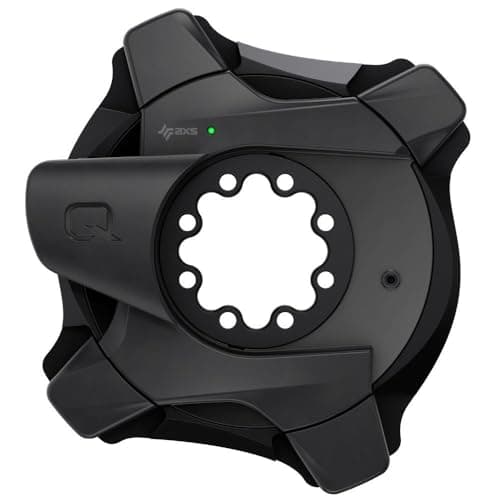 SRAM Red / Force AXS Power Meter Spider The best answer if your bike already runs SRAM AXS: total-power measurement, a chainring-agnostic design and a battery you can change with your fingers. | Best spider power meter | 8.58.5 out of 10 | $448.81 · View on Amazon #ad We may earn a commission · Price as of October 22, 2026 |
| 2 | 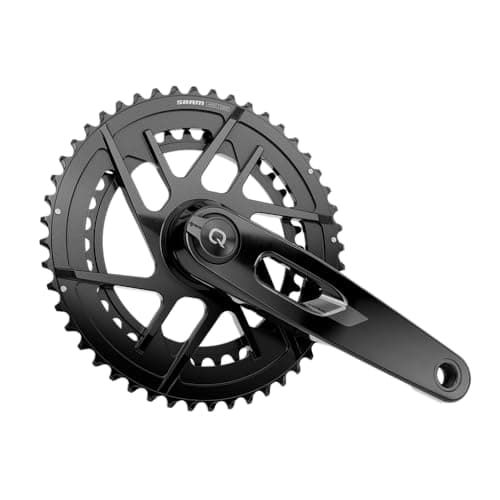 SRAM Rival AXS Power Meter Crankset SRAM's budget power meter: a single-sided spindle sensor in a complete crankset. Fine for training, weaker than a spider on the numbers. | Cheapest way into SRAM power | 7.77.7 out of 10 | $385.00 · View on Amazon #ad We may earn a commission · Price as of October 22, 2026 |
There are three places a bicycle will let you measure power, and each one implies a different product. Measure at the pedal and you get a meter that moves between bikes in five minutes. Measure at the crank arm and you get the cheapest possible unit, at the cost of only seeing one leg. Measure at the spider — the star-shaped carrier between the crank arms and the chainrings — and you get every watt both legs put into the drivetrain, from a component that disappears into the bike.
Quarq has been building the third kind since before most riders had heard of power meters, and the DZero architecture underneath SRAM's current AXS spiders is the mature version of it. This review covers what that architecture actually gets you, the two features worth knowing by name, and whether it still makes sense next to a pedal meter.
Why measuring at the spider is different
A single-sided meter — a crank arm sensor, or a spindle sensor like SRAM's Rival unit — measures the force going through your left leg and multiplies by two. That is a reasonable approximation, and for training purposes it usually works, because the error is consistent. It is still an approximation.
A spider sits after both crank arms and before the chain. Everything either leg contributes has to pass through it, so the measurement is of your genuine total output. No doubling, no symmetry assumption. If your right leg produces 54% of your power, a spider knows the real total and a left-only meter does not.
The nuance worth stating honestly: a spider knows the total but has to infer the split, so the left/right balance figure a Quarq reports is estimated from the shape of the torque curve rather than measured independently the way a dual-sided pedal measures it. If balance is the number you specifically want — for rehabilitation, or after an injury — pedals are the more direct instrument. If the total is what you want, the spider is.
| SRAM AXS spider (Quarq) | SRAM Rival AXS | 4iiii Precision 3+ | Assioma Duo | |
|---|---|---|---|---|
| Measures at | Spider | Spindle | Left crank arm | Both pedals |
| Total power | Both legs, measured | Left doubled | Left doubled | Both legs, measured |
| Claimed accuracy | ±1.5% | ±3% total | ±1% measurement | ±1% |
| Left/right balance | Estimated | No | No | Measured |
| Battery | CR2032, ~200 h | Coin cell | CR2032, up to 800 h | Rechargeable |
| Chainring changes | OmniCal — no recalibration | N/A | N/A | N/A |
| Auto-calibration | MagicZero | Yes | Zero-offset | Auto-zero |
| Moves between bikes | No | No | No | Yes, five minutes |
| Fitment | SRAM 8-bolt AXS, DUB | SRAM DUB 12-speed | Specific Shimano cranks | Any standard crank |
OmniCal and MagicZero, in plain terms
These two names appear all over Quarq's marketing and they are both genuinely useful, so they are worth translating.
OmniCalmeans the meter's calibration does not depend on which chainrings are fitted. On some spider designs, changing chainring size shifts where the load sits on the spider arms and therefore changes the calibration. OmniCal is engineered so it does not. In practice: if you run a compact in winter and a bigger ring in summer, or you fit a different gravel setup, you swap and ride. That is a real convenience and very few competitors offer it.
MagicZero is automatic recalibration during the ride. Every power meter drifts slightly with temperature — the classic case is starting a ride from a warm house on a cold morning — and the traditional fix is a manual zero-offset before you set off, which our calibration guide walks through. MagicZero takes care of it in the background, which mostly matters on long rides where the temperature changes underneath you.
±1.5%, and how much that costs you
Quarq publishes ±1.5%, which is a slightly looser figure than the ±1% Favero and Garmin claim for their pedals. That is about four watts at 250, and it is not a number to lose sleep over.
What matters more, as ever, is repeatability— whether the meter reads the same way every ride. Quarq's reputation here is excellent, helped considerably by MagicZero handling the main source of drift. Our accuracy guide is written about trainers but the principle is identical: a consistent meter gives you correct zones, correctly graded intervals and an honest fitness trend, regardless of a small absolute offset.
There is also a comparison note worth having in advance. A spider meter measures before the chain and a smart trainer measures after it, so drivetrain losses put a few watts between them. That is expected, not a fault, and our smart trainer vs power meter guide explains why chasing agreement between the two is a waste of a winter.
Fitment is the real decision
This is where a spider meter loses to pedals and it is worth being blunt about it. The current AXS spiders fit SRAM 8-bolt cranks running DUB bottom brackets. If that is your bike, the meter is close to invisible — it hides behind the chainrings, adds almost nothing, and needs a coin cell every couple of hundred hours. If it is not your bike, you are looking at a crankset change, which is a much larger purchase than a power meter.
Fitting also means pulling the crank, which is more involved than the pedal wrench a pedal meter needs. It is not difficult — a DUB crank is a single bolt and a preload collar — but it is a job, and it is a job you do again if you move the meter to another bike.
The blunt version: a spider meter suits a rider with one good bike they intend to keep. A pedal meter suits a rider with several bikes, or one who changes bikes often. Our crank power meter roundup covers the full field of the former.
Indoors, and why a spider is a good trainer companion
On a direct-drive trainer, your rear wheel comes off and the trainer supplies both resistance and a power figure. A pedal or spider meter is still useful indoors for one specific reason: it gives you a single measurement device that follows you indoors and out, so your winter numbers and your spring numbers come from the same instrument.
A spider handles this cleanly. Most platforms will let you select the power meter as the power source while the trainer handles resistance control — our Zwift setup guide covers that pairing — and because a spider is bolted to the bike, there is nothing to swap when the bike goes on the trainer. It also means ERG mode holds you against a number you trust year-round.
Who should buy it
Buy the Quarq-based AXS spider if you ride SRAM AXS, you keep your bikes a long time, and you want a power meter you never think about again. Total power from both legs, chainring freedom through OmniCal, automatic drift correction and a finger-swap battery is a strong combination, and these units are famous for lasting.
Buy the cheaper Rival crankset if you want SRAM power on a budget and can accept a doubled left leg. Buy pedals if you have more than one bike. And buy the 4iiii Precision 3+ if the honest constraint is money — it delivers training-grade data for a fraction of any of these. The full ranking puts them all in order.
Weighing spider against pedals?
See every power meter rankedFor how the spider compares with SRAM's other power meter formats on the same bike, see best power meters for SRAM bikes.
The full reviews
Every pick, in detail
#1 · Best spider power meter
SRAM Red / Force AXS Power Meter Spider
8.58.5 out of 10#ad We may earn a commission · Price as of October 22, 2026
The best answer if your bike already runs SRAM AXS: total-power measurement, a chainring-agnostic design and a battery you can change with your fingers.
- Type
- Spider-based, total power
- Claimed accuracy
- ±1.5%
- Battery
- CR2032, around 200 hours
- Calibration
- MagicZero automatic recalibration
- Chainrings
- OmniCal — swap rings without recalibrating
- Connectivity
- ANT+, Bluetooth
What we'd praise
- Measures total power at the spider, so both legs are counted for real rather than one doubled
- OmniCal means you can change chainrings — including to a different size — without affecting accuracy
- MagicZero recalibrates automatically as you ride, so the number does not drift over a long session
- Tool-free CR2032 battery door and around 200 hours of runtime
- IPX7 rated and mechanically simple; these are famously long-lived power meters
What we'd flag
- ±1.5% is a slightly looser claim than Favero and Garmin's ±1% pedals
- Fits SRAM 8-bolt AXS cranks and DUB bottom brackets — this is not a universal part
- Left/right balance is estimated from the spider rather than measured per leg
- Fitting it means removing the crank, which is more work than a pedal swap
Quarq's DZero architecture measures where the crank arms meet the chainrings, which means it sees every watt both legs produce rather than assuming symmetry. That is the fundamental argument for a spider meter over a single-sided crank arm, and it is why the design has stayed relevant for over a decade.
Two features are worth knowing by name. OmniCal lets you fit different chainrings without recalibrating, which matters if you change gearing seasonally. MagicZero recalibrates in the background as you ride, so drift over a long session takes care of itself.
#2 · Cheapest way into SRAM power
SRAM Rival AXS Power Meter Crankset
7.77.7 out of 10#ad We may earn a commission · Price as of October 22, 2026
SRAM's budget power meter: a single-sided spindle sensor in a complete crankset. Fine for training, weaker than a spider on the numbers.
- Type
- Spindle-based, left leg doubled
- Claimed accuracy
- ±3% total (±1.5% measurement, doubled)
- Battery
- Coin cell
- Fitment
- SRAM DUB, 12-speed
- Sold as
- Complete crankset
- Connectivity
- ANT+, Bluetooth
What we'd praise
- Substantially cheaper than a spider meter and arrives as a complete crankset
- Simple: one sensor on the spindle, nothing bonded to a chainring carrier
- The same ANT+ and Bluetooth broadcast as the more expensive units
- A genuinely good route to power for a bike that is already on a SRAM DUB drivetrain
What we'd flag
- Measures the left leg and doubles it, so the ±3% total figure is the honest one to quote
- No true left/right balance
- Locked to SRAM DUB fitment and 12-speed
- Buying a whole crankset is wasteful if your current one is fine
The Rival power meter is functionally a left-only unit: the sensor sits on the spindle, reads the left leg, and doubles it. SRAM quotes ±3% for the total as a result, which is the honest way to publish a doubled figure.
It is cheaper and easier to live with than a spider. What it cannot do is tell you the truth about a leg imbalance — see our single vs dual-sided guide.
Good questions
Frequently asked questions
How accurate is a Quarq power meter?
Quarq publishes ±1.5% for its spider-based meters, which is about four watts at 250 W. That is slightly looser than the ±1% claimed by Favero and Garmin pedals, but the measurement is a genuine total from both legs rather than one leg doubled, and MagicZero auto-recalibration keeps drift under control on long rides.
What is the difference between a Quarq spider and a SRAM Rival power meter?
The Quarq spider sits between the crank arms and the chainrings, so every watt from both legs passes through it and the total is measured directly. The Rival unit is a spindle-based sensor that reads the left leg and doubles it, which is why SRAM quotes ±3% for the total figure. The Rival is cheaper; the spider is the better instrument.
What is Quarq OmniCal?
A design that keeps the power meter's calibration valid when you change chainrings, including changing to a different size. On some spider meters, chainring changes shift where load sits on the spider arms and affect accuracy. With OmniCal you swap rings and ride, which is genuinely useful if you change gearing seasonally.
What is MagicZero?
Automatic recalibration during the ride. Every power meter drifts a little with temperature, and the traditional fix is a manual zero-offset before setting off. MagicZero handles it in the background, which matters most on long rides where the temperature changes underneath you.
Will a Quarq power meter fit my bike?
Only if your crank matches. The current AXS spiders are designed for SRAM 8-bolt cranks on DUB bottom brackets, so this is not a universal part. If your drivetrain is Shimano or older SRAM, either budget for a crankset change or buy a pedal-based meter, which fits any standard crank with no research at all.
Does a Quarq measure left/right balance?
It reports a balance figure, but it is inferred from the shape of the torque curve rather than measured independently for each leg — a spider sits after both crank arms, so it sees the total. If a true measured balance is what you need, a dual-sided pedal meter like the Favero Assioma Duo is the more direct instrument.
How we sourced this
- Quarq DZero DUB power meter specifications (SRAM, manufacturer)
- Quarq AXS power meter spider specifications (SRAM, manufacturer)
- SRAM Rival AXS power meter: hands-on and first rides (DC Rainmaker)
- SRAM Rival AXS power meter review (road.cc)
- SRAM and Quarq power meter range and specifications (Power Meter City)
Keep going