Power Meter Review
4iiii Precision 3+ Review
Nine grams, eight hundred hours and a ±1% claim, for less than any other power meter costs. The catch is that it only counts one leg — here is exactly what that means.
The short answer
Quick picks
| # | Product | Best for | Score | Price |
|---|---|---|---|---|
| 1 | 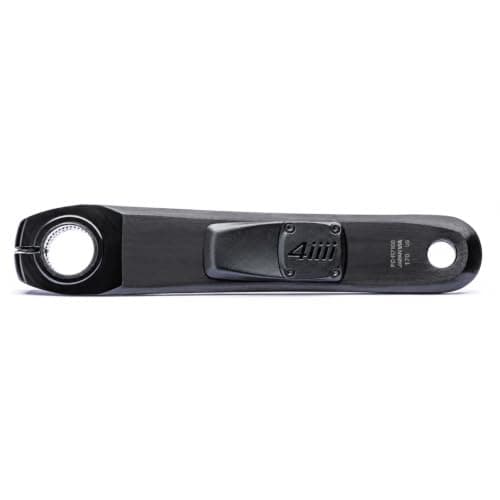 4iiii Precision 3+ The cheapest honest way to own a real power meter, and for most riders that trade is the correct one. Just understand that ±1% describes the measurement, not your total output. | Best cheap power meter | 8.68.6 out of 10 | $437.49 · View on Amazon #ad We may earn a commission · Price as of October 21, 2026 |
| 2 | 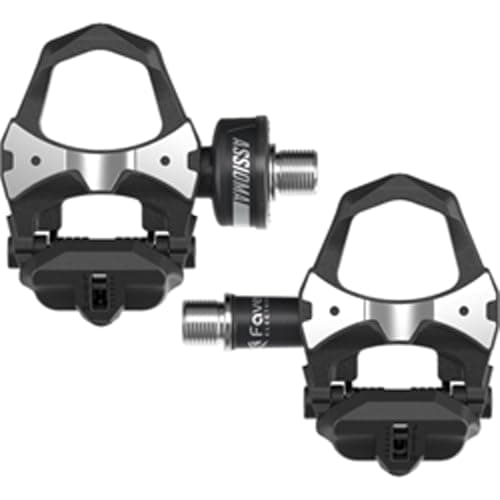 Favero Assioma Uno The other way to buy single-sided power: more money, zero compatibility research, and it follows you to whatever bike you own next. | If you want to move it between bikes | 8.78.7 out of 10 | $381.22 · View on Amazon #ad We may earn a commission · Price as of October 21, 2026 |
There is a specific moment in a rider's progression when heart rate stops being enough. You start doing intervals and discover that heart rate lags the effort by thirty seconds, that it drifts upward on a hot day at the same wattage, and that it tells you nothing at all about a twenty-second sprint. At that point you want power, and for most of cycling's history the answer was that power cost more than the bike did.
The 4iiii Precision is a large part of why that changed. It is a strain gauge bonded to the inside of a left crank arm, adding 9 g, running up to 800 hours on a CR2032, claiming ±1%, and costing a fraction of a pedal system. It is the default answer to "what is the cheapest power meter worth owning," and it has been for years.
What ±1% actually refers to
This is the single most misread specification in power meters, so it is worth being precise.
4iiii claims ±1% for the measurement it takes — that is, the torque going through your left crank arm is measured to within one percent. That claim is credible and the hardware deserves it. What the number does not describe is the accuracy of your total power, because the total is arrived at by doubling the left side.
So if your legs are perfectly balanced, your total is accurate to about ±1%. If you produce 52% of your power with your right leg, the meter is reading roughly 4% low and it will do so consistently. That consistency is the important part: your zones, your intervals and your fitness trend are all still internally correct, because they are all built on the same slightly offset number. Our single vs dual-sided guide works through the real-world size of that effect, and it is smaller than most people fear.
Where it does cost you is comparison: your figure against a friend's dual-sided meter, or against a smart trainer measuring at the hub. Expect a difference and do not go looking for a fault. Our smart trainer vs power meter guide explains why two honest devices legitimately disagree.
| 4iiii Precision 3+ | Favero Assioma Uno | Favero Assioma Duo | |
|---|---|---|---|
| Type | Left crank arm | Left pedal | Both pedals |
| Claimed accuracy | ±1% | ±1% | ±1% |
| Sided | Single, doubled | Single, doubled | Dual, independent |
| Battery | CR2032, up to 800 h | Rechargeable | Rechargeable |
| Added weight | 9 g | Pedal weight | Pedal weight |
| Moves between bikes | No — crank swap | Yes, five minutes | Yes, five minutes |
| Compatibility research | Required | None | None |
| Left/right balance | No | No | Yes |
| Connectivity | ANT+, Bluetooth | ANT+, Bluetooth | ANT+, Bluetooth |
Eight hundred hours, and why that beats everything
A CR2032 coin cell for up to 800 hours is the best battery story in power meters and it does not get enough credit. Eight hundred hours is two or three seasons for most riders. It means the power meter is not a device you manage; it is a thing that is simply on, and when it eventually is not you buy a battery in a supermarket and carry on.
Compare that with rechargeable pedal systems, which need a charging habit and a proprietary clip you can lose. Neither approach is wrong, but if the appeal of a power meter to you is that it disappears into the bike, the coin cell wins comfortably.
Compatibility is the real work
This is where people go wrong, and it is worth ten careful minutes before ordering.
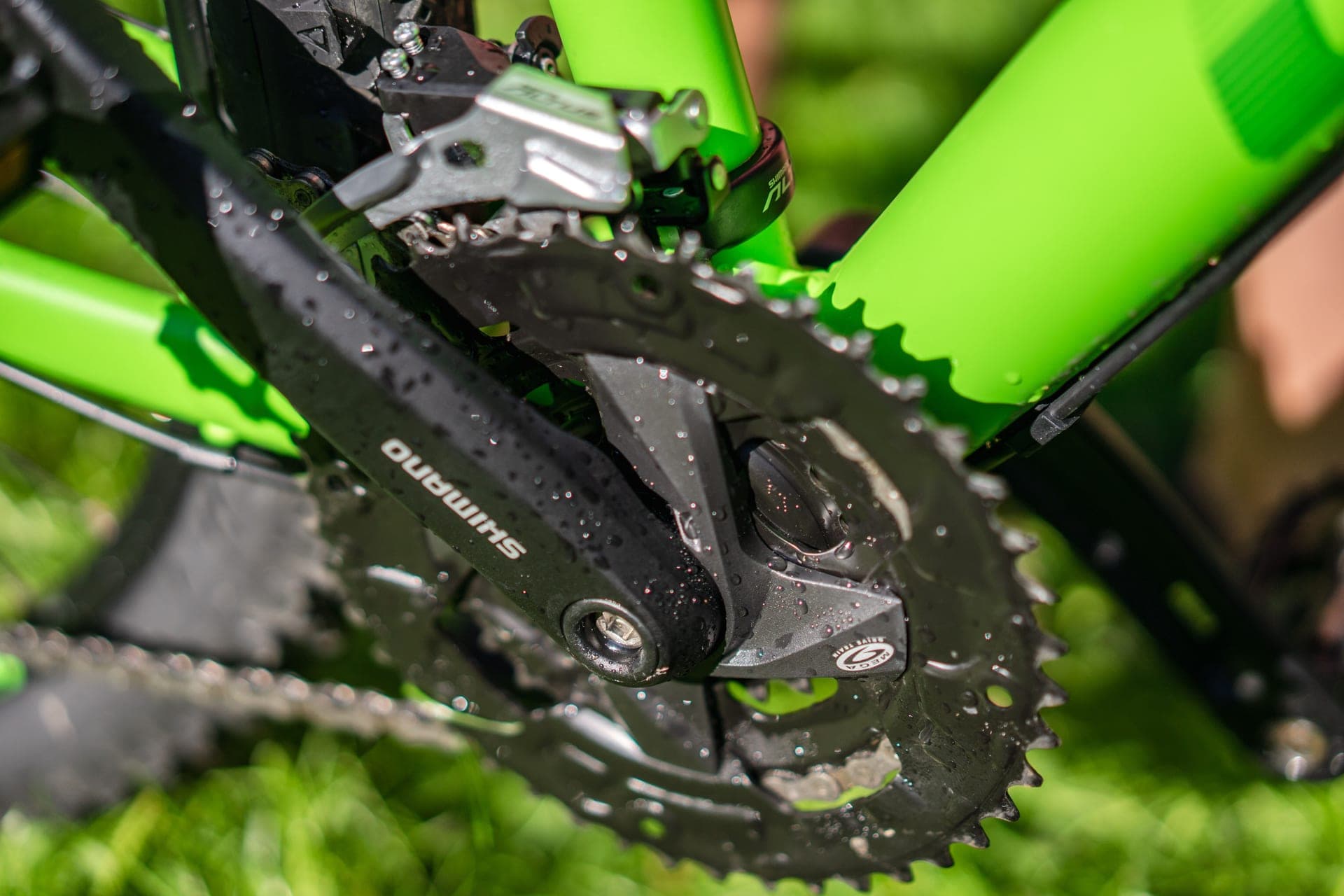
The Precision is sold ride-ready on a specific crank arm — a particular Shimano model, in a particular length. You are not buying a sensor that clips onto your existing crank; you are buying a replacement left crank arm with a sensor already bonded to it. It has to match your drivetrain generation and your existing crank length, or your fit changes and your chainline assumptions stop holding.
Practical steps: read the model number printed on the back of your current left crank arm, note the length stamped near the pedal eye, and match both. If your bike is not on a mainstream Shimano crank, 4iiii also offers a factory-install service where you send your own arm in — which solves the problem entirely at the cost of some downtime.
If any of that feels like more effort than it is worth, that is a legitimate reason to buy a pedal-based meter instead. There is no compatibility question at all with pedals, and you pay for that privilege.
Fitting it and living with it
Installation is one crank bolt and a pinch bolt on a Shimano Hollowtech II crank — genuinely a ten-minute job with a hex key and a torque wrench, and no bottom-bracket removal. Once on, it broadcasts ANT+ and Bluetooth simultaneously, so a head unit and a phone can both see it, and it will feed Zwift as a power source while a smart trainer handles resistance control.
Calibrate it after installation and then occasionally: a zero-offset takes ten seconds with the crank vertical and the bike unloaded, and it is the fix for the classic "my numbers look wrong today" problem. Our power meter calibration guide covers when it matters — mostly after a big temperature change or a knock.
The higher-specified Pro variant adds Apple Find My integration, which is a small feature that turns out to be reassuring on an expensive bike.
Who should buy it
Buy the Precision 3+ if you want power and price is the reason you do not have it yet. That is a very large number of riders, and this is the correct answer for almost all of them. The data is good, the battery is superb, and the compromise — one leg, doubled — costs you far less in practice than the marketing for dual-sided systems implies.
Buy something else if you genuinely need left/right balance, in which case go straight to a dual-sided pedal; if you own several bikes and want the meter to follow you; or if your crank is unusual enough that compatibility is a headache. Our budget power meter roundup ranks the cheap end, and best crank power meters covers the crank-based field in full.
The install is the part most buyers worry about and the part that is genuinely straightforward — a crank bolt and two pinch bolts, no bottom bracket removal. How to install a power meter walks through it alongside the pedal procedure, with the torque figures and the zero-offset step that has to follow. For what the ±1% claim actually covers on a single-sided unit like this one, see how accurate are power meters.
Comparing the field?
See every power meter rankedFor the comparison most buyers run before deciding, see 4iiii Precision vs Favero Assioma, which puts the bonded crank arm against both the single-sided and the dual-sided pedals.
The full reviews
Every pick, in detail
#1 · Best cheap power meter
4iiii Precision 3+
8.68.6 out of 10#ad We may earn a commission · Price as of October 21, 2026
The cheapest honest way to own a real power meter, and for most riders that trade is the correct one. Just understand that ±1% describes the measurement, not your total output.
- Type
- Left crank arm, single-sided
- Claimed accuracy
- ±1%
- Battery
- CR2032, up to 800 hours
- Added weight
- 9 g
- Power range
- 0–4,000 W, cadence 30–170 rpm
- Connectivity
- ANT+, Bluetooth
What we'd praise
- ±1% claimed accuracy at a price no other power meter approaches
- Up to 800 hours from a CR2032 you can buy in a supermarket — this is the battery story to beat
- Adds 9 g, which is genuinely nothing
- Sold ride-ready on a fitted Shimano crank arm, so installation is a single crank bolt
- IPX7 rated and simple enough that there is very little to fail
What we'd flag
- Single-sided: it measures your left leg and doubles it, which is only as good as your symmetry
- You must match the exact crank arm — length, model and drivetrain — before ordering
- No left/right balance, no pedal smoothness, none of the cycling dynamics data
- A left-leg unit will disagree slightly with a smart trainer or dual-sided meter, and that is expected
A power meter used to be a four-figure purchase. The Precision 3+ is a strain gauge bonded to a left crank arm, weighing 9 g, running for up to 800 hours on a coin cell, claiming ±1%, and costing a fraction of a pedal-based system. It is the product that made owning power normal.
The single compromise is that it measures one leg. What that costs you is the whole discussion, and it is covered properly in our single vs dual-sided guide.
#2 · If you want to move it between bikes
Favero Assioma Uno
8.78.7 out of 10#ad We may earn a commission · Price as of October 21, 2026
The other way to buy single-sided power: more money, zero compatibility research, and it follows you to whatever bike you own next.
- Type
- Pedal-based, single-sided
- Claimed accuracy
- ±1%
- Battery
- Rechargeable
- Installation
- Pedal wrench, five minutes
- Cleat system
- Look Keo compatible
- Connectivity
- ANT+, Bluetooth
What we'd praise
- Moves between bikes in five minutes with nothing but a pedal wrench
- No crank compatibility question at all — it fits any standard crank
- Upgradeable to dual-sided later by adding the second pedal
- Same ±1% single-sided claim as the 4iiii
What we'd flag
- Costs meaningfully more than a crank-arm meter
- Ties you to the Look Keo cleat standard
- Rechargeable, so it needs a charging routine rather than a coin cell every couple of years
If the 4iiii's compatibility matrix is the thing giving you pause — and for a lot of riders it is — a pedal meter sidesteps it entirely. You pay more and you get to stop thinking.
Good questions
Frequently asked questions
Is the 4iiii Precision 3+ accurate?
4iiii claims ±1% for the torque it measures, and that claim is credible. What it describes is the left crank arm measurement, not your total output — the total is the left side doubled, so any left/right imbalance you have carries straight into the number. The error is consistent, which is what matters for training.
How long does the 4iiii Precision 3+ battery last?
Up to 800 hours from a standard CR2032 coin cell, which is two or three seasons for most riders. It is the best battery life in the category by a wide margin, and replacement cells cost almost nothing and are available everywhere.
Will the 4iiii Precision fit my bike?
Only if you match the crank arm. It is sold ride-ready on a specific Shimano crank arm in a specific length, so you are replacing your left crank arm rather than adding a sensor to it. Read the model number on the back of your current arm and the length stamped near the pedal eye, and match both. 4iiii also offers a factory-install service on your own arm.
Is a single-sided power meter good enough for training?
For the great majority of riders, yes. Training runs on consistency: if the meter reads the same way every ride, your zones, your intervals and your fitness trend are all internally correct even if the absolute number is a few percent off. Dual-sided matters if you need genuine left/right balance for rehabilitation or bike-fit reasons.
Why does my 4iiii read differently from my smart trainer?
Because they measure in different places and one of them is doubling a single leg. A trainer measures at the hub after drivetrain losses; a crank meter measures at the crank before them, and a left-only unit assumes symmetry. A difference of a few percent between two honest devices is normal and not a fault.
How hard is the 4iiii Precision to install?
About ten minutes. On a Shimano Hollowtech II crank it is a crank bolt and two pinch bolts with a hex key and a torque wrench — no bottom bracket removal. Run a zero-offset calibration after fitting, and again after any big temperature change or knock.
How we sourced this
- 4iiii PRECISION 3+ powermeter specifications (manufacturer)
- 4iiii complete guide to the PRECISION 3+ powermeter (manufacturer)
- 4iiii Precision 3+ Pro power meter review (BikeRadar)
- 4iiii Precision 3+ Pro review — data and Find My integration (Cycling Weekly)
- Favero Assioma power meter pedals, specifications (manufacturer)
Keep going