The Pain Cave
The Best Trainer for Zwift, Weighted for Value
Zwift runs beautifully on far cheaper hardware than the marketing suggests. Here's the best trainer to actually run Zwift — starting from the cheapest honest way in, not the flagship.
The short answer
Quick picks
| # | Product | Best for | Score | Price |
|---|---|---|---|---|
| 1 | 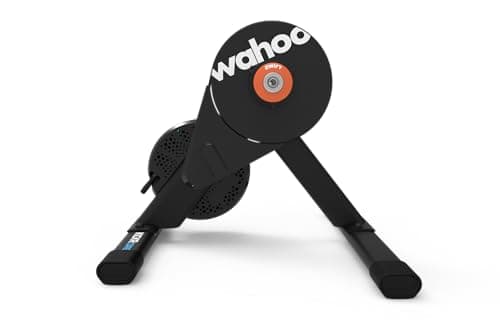 Wahoo Kickr Core 2 The trainer to buy if you want a great Zwift experience without tying yourself to one platform. | Best all-round for Zwift | 9.09.0 out of 10 | $549.99 · View on Amazon #ad We may earn a commission · Price as of October 22, 2026 |
| 2 | 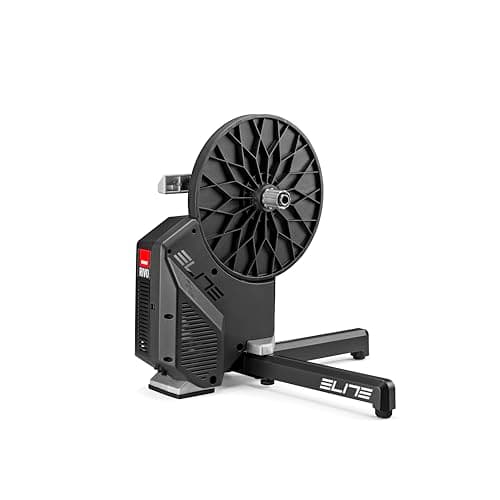 Elite Rivo The cheapest honest way onto Zwift with direct-drive resistance, virtual shifting support and WiFi. | Cheapest way onto Zwift | 7.87.8 out of 10 | $549.99 · View on Amazon #ad We may earn a commission · Price as of October 22, 2026 |
| 3 | Elite Suito-T The Zwift trainer for riders short on space — folds away, ships ready, and pairs in minutes. | Best compact | 8.48.4 out of 10 | |
| 4 | 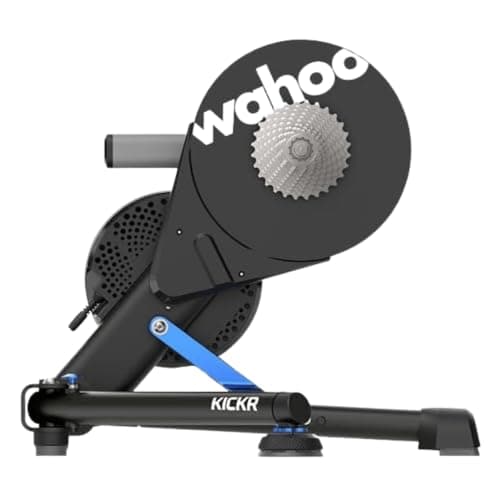 Wahoo Kickr v6 The premium Zwift pick — buy it for onboard WiFi and top-tier accuracy, not because Zwift demands it. | Best premium | 9.09.0 out of 10 | $849.99 · View on Amazon #ad We may earn a commission · Price as of October 22, 2026 |
| 5 | 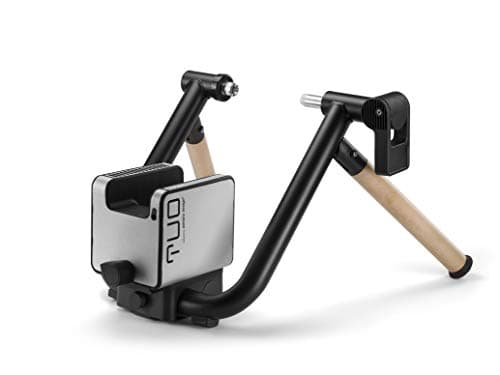 Elite Tuo The cheapest controllable way onto Zwift — a real smart trainer, with the wheel-on trade-offs to match. | Cheapest wheel-on option | 7.67.6 out of 10 | $149.99 · View on Amazon #ad We may earn a commission · Price as of October 22, 2026 |
Here's the thing the trainer marketing won't lead with: Zwift barely cares what trainer you own. Any controllable smart trainer — direct-drive or wheel-on, ±1% or ±3% — pairs over Bluetooth or ANT+ and lets the game set your resistance on the climbs. The difference between the cheapest pick here and the most expensive is real, but it's about accuracy, road feel and quiet, not about whether Zwift "works." So this roundup is deliberately weighted toward value: the cheapest honest way onto the platform first, and the premium options last, framed for what they actually add.
That's the difference between this page and our premium Zwift trainer roundup, which goes deeper on the flagship models for riders chasing the top of the field. This one is for the rider asking "what's the cheapest trainer for Zwift I won't regret," and the answer is happily near the top of the list. As always, we don't run a lab — we compiled the published specs and did the math, and we say so plainly on our how we review page.
What tier of trainer does Zwift actually need?
Less than you think. Zwift's only hard requirement is a way to send it your power and, ideally, a way for it to send resistance back — a controllable smart trainer covers both. Below that line sit "dumb" trainers paired with a separate power meter or speed sensor, which technically work but give a flatter, less responsive ride. Above the line, every controllable trainer on this page delivers the core Zwift experience. What more money buys is tighter accuracy for racing, a heavier flywheel for convincing descents, and lower noise — nice to have, not need to have.
So the honest tiering is simple. Wheel-on (the Elite Tuo) is the cheapest controllable entry and rides accordingly. Entry direct-drive (the Elite Rivo) is the value sweet spot and where most riders should look first. Mid direct-drive (the Kickr Core 2, Elite Suito-T) adds accuracy and road feel without the flagship premium. Flagship(the Kickr v6) is for riders who want the last few percent and onboard WiFi. Match the tier to how seriously you race, not to the price you feel you "should" spend.
| Trainer | Type | Claimed accuracy | Max power | Gradient | Best for |
|---|---|---|---|---|---|
| Elite Rivo | Direct drive | ±2.5% | 2,000 W | 18% | Cheapest in |
| Wahoo Kickr Core 2 | Direct drive | ±2% | 1,800 W | 16% | All-round |
| Elite Suito-T | Direct drive | ±2.5% | 1,900 W | 15% | Compact |
| Wahoo Kickr v6 | Direct drive | ±1% | 2,200 W | 20% | Premium |
| Elite Tuo | Wheel-on | ±2.5% | 1,300 W | 10% | Cheapest wheel-on |
Don't forget the rest of the room
Whatever trainer you land on, the trainer is only part of a good Zwift experience. A screen you can actually see, a device to run the app, and — above all — a fan that moves real airmatter as much as the last few watts of trainer accuracy. Overheating will end your Zwift session faster than any spec gap. Once the trainer's chosen, the Zwift setup guide walks through pairing it and getting riding, and the complete pain cave build covers the whole room at budget, mid and dream tiers.
The full reviews
Every pick, in detail
#1 · Best all-round for Zwift
Wahoo Kickr Core 2
9.09.0 out of 10#ad We may earn a commission · Price as of October 22, 2026
The trainer to buy if you want a great Zwift experience without tying yourself to one platform.
- Type
- Direct drive
- Claimed accuracy
- ±2%
- Max resistance
- 1,800 W
- Max gradient
- 16%
- Flywheel
- 5.4 kg
- Connectivity
- WiFi, Bluetooth, ANT+ FE-C
What we'd praise
- The best-balanced trainer for Zwift — accuracy, road feel and price all sensible
- Not locked to any one app, so you can roam beyond Zwift freely
- ±2% claimed accuracy handles racing and structured work alike
What we'd flag
- Costs more than the budget direct-drive picks
- ±2% is unchanged from the original Core, so this is not an accuracy upgrade
The Core 2 is the pick for the rider who'll ride Zwift most days but wants a trainer that isn't owned by any single app. The 5.4 kg flywheel gives a road feel that holds up on virtual descents and sprints, ±2% claimed accuracy is steady enough for Zwift racing and structured intervals, and the 2025 revision added onboard WiFi — which keeps both of Apple TV's in-game Bluetooth slots free for your other sensors.
It costs more than the Rivo, and that's the whole decision: pay more for measured power, ANT+ and a heavier flywheel, or save it and accept an estimated figure. For most upgrading riders the Core 2 is the sensible middle, and our Kickr Core 2 vs Elite Rivo comparison works the decision through in detail. It's also the anchor of our complete pain cave build.
#2 · Cheapest way onto Zwift
Elite Rivo
7.87.8 out of 10#ad We may earn a commission · Price as of October 22, 2026
The cheapest honest way onto Zwift with direct-drive resistance, virtual shifting support and WiFi.
- Type
- Direct drive
- Claimed accuracy
- ±2.5%, estimated
- Max resistance
- 2,000 W at 40 km/h
- Max gradient
- 18%
- Shifting
- Zwift Cog and Click compatible
- Connectivity
- WiFi, Bluetooth (no ANT+)
What we'd praise
- The lowest-cost route to real direct-drive resistance on Zwift
- Run the Zwift Cog and there is no cassette to match to your groupset
- Onboard WiFi at this price, which also keeps Apple TV's Bluetooth slots free
- Folds, weighs 10 kg and has a carry handle — it does not have to own the room
What we'd flag
- Elite states power as estimated at ±2.5%, not directly measured
- No ANT+ at all, so an ANT+ head unit cannot record alongside Zwift
- The 4 kg flywheel feels lighter than a heavier trainer on virtual descents
If the question is literally "what is the cheapest trainer for Zwift that isn't a compromise," this is the answer now that Zwift has discontinued its own Hub. The Rivo runs electromagnetic resistance to 2,000 W at 40 km/h, simulates 18%, and works with the Zwift Cog and Click, so you can skip the cassette-matching headache and shift in software. Onboard WiFi at this price is unusual, and it matters on Apple TV, where Zwift allows only two Bluetooth connections — a network-connected trainer uses neither.
The honest caveat is in Elite's own specification: power is estimated at ±2.5% rather than measured, and there is no ANT+. Our Elite Rivo reviewcovers what that means for racing and for comparing your numbers to other people's. New to the platform entirely? Start with our Zwift setup guide.
#3 · Best compact
Elite Suito-T
8.48.4 out of 10The Zwift trainer for riders short on space — folds away, ships ready, and pairs in minutes.
- Type
- Direct drive
- Claimed accuracy
- ±2.5%
- Max resistance
- 1,900 W
- Max gradient
- 15%
- Flywheel
- 7.6 lb
- Connectivity
- BT, ANT+
What we'd praise
- Folding legs make it the easiest here to store between rides
- Ships with a cassette pre-installed — pairing to Zwift takes minutes
- Strong direct-drive value for a space-limited setup
What we'd flag
- Lighter flywheel gives a slightly less planted feel out of the saddle
- ±2.5% claimed accuracy is mid-pack
The Suito-T is the pick when the pain cave is also a spare bedroom. Folding legs and a pre-installed cassette make it the least demanding trainer here to live with, and it pairs to Zwift over Bluetooth or ANT+ in minutes. The lighter 7.6 lb flywheel is the compromise you feel most in hard standing efforts, but for steady Zwift miles and group rides it's honest for the money.
If storage is your real constraint — a trainer that lives in a closet between rides — this is the one to shortlist. Pair it with a good fan and you have a tidy, packable Zwift setup.
#4 · Best premium
Wahoo Kickr v6
9.09.0 out of 10#ad We may earn a commission · Price as of October 22, 2026
The premium Zwift pick — buy it for onboard WiFi and top-tier accuracy, not because Zwift demands it.
- Type
- Direct drive
- Claimed accuracy
- ±1%
- Max resistance
- 2,200 W
- Max gradient
- 20%
- Flywheel
- 16 lb
- Connectivity
- WiFi, BT, ANT+
What we'd praise
- ±1% claimed accuracy and onboard WiFi for hands-off uploads
- Heavier flywheel gives the most convincing road feel of the Wahoo line
- WiFi connection is the most stable way to keep a busy Zwift session solid
What we'd flag
- You pay a clear premium over the Core for gains most riders won't feel
- Overkill if Zwift is your only reason to ride indoors
The v6 is the top of the sensible Zwift stack. Onboard WiFi means firmware and ride data move without your phone acting as a bridge, ±1% claimed accuracy sits at the top of the field, and the 16 lb flywheel carries momentum convincingly on virtual descents and sprints. For a rider who races on Zwift and wants the most stable, hands-off connection, this is the buy.
The honest framing: Zwift itself doesn't require any of this — it runs beautifully on far cheaper trainers. You're buying the v6 for the accuracy and the WiFi, not because the platform asks for it. If you want the deeper premium comparison, our premium Zwift trainer roundup goes further into the flagship tier.
#5 · Cheapest wheel-on option
Elite Tuo
7.67.6 out of 10#ad We may earn a commission · Price as of October 22, 2026
The cheapest controllable way onto Zwift — a real smart trainer, with the wheel-on trade-offs to match.
- Type
- Wheel-on
- Claimed accuracy
- ±2.5%
- Max resistance
- 1,300 W
- Max gradient
- 10%
- Setup
- Rear wheel stays on
- Connectivity
- BT, ANT+
What we'd praise
- The lowest cost of entry to controllable resistance on Zwift
- Wheel-on design means no cassette or wheel removal to set up
- Genuinely controllable — Zwift can still set your resistance on the climbs
- ±2.5% claimed is strong for a wheel-on trainer
What we'd flag
- A 1,300 W ceiling and 10% gradient are the lowest on this page
- Tire pressure affects the power reading, and the tire wears
- Louder and less planted than any direct-drive pick on this page
The Tuo is here for one reason: it's the least you can spend and still get a controllable smart trainer that lets Zwift set your resistance on the climbs. Your rear wheel stays on and presses against a roller, so there's no cassette to match and setup is quick. Elite's claimed ±2.5% is strong for a wheel-on unit, but it still moves with tire pressure, so it wants a consistent warm-up and a repeatable tire setup to read steadily.
It's louder and less planted than any direct-drive pick here, but as a first step onto Zwift on the tightest budget it does the job. If you can stretch, the direct-drive picks above are a real jump — see our budget trainer guide for where the value line actually sits.
Good questions
Frequently asked questions
What is the cheapest trainer for Zwift?
The cheapest sensible direct-drive option is now the Elite Rivo, which adds WiFi and Zwift Cog and Click support at the price wheel-on trainers used to occupy. Zwift discontinued its own Hub, so that is no longer an option new. If you want to spend even less, a wheel-on controllable trainer like the Elite Tuo is the lowest cost of entry, with a lower resistance ceiling and tire-pressure sensitivity as the trade.
Do I need an expensive trainer to run Zwift well?
No. Any controllable smart trainer pairs with Zwift over Bluetooth or ANT+ and lets the game set your resistance. More money buys tighter accuracy, a heavier flywheel and lower noise, but the core Zwift experience is the same from the cheapest pick here to the flagship.
Direct drive or wheel-on for Zwift?
Direct drive if you can stretch to it — the ride is quieter, more accurate and more planted, which matters on virtual descents and sprints. Wheel-on trainers like the Elite Tuo still work with Zwift and cost less, but tire pressure affects the power reading and they are louder under load.
Will a cheaper trainer's accuracy hurt my Zwift racing?
For most riders, no. Repeatability matters more than the absolute claimed figure, and even a ±2.5% trainer reads consistently enough for fair racing. If you race at a high level where a couple of watts changes the result, that is the case for stepping up to a ±1% trainer like the Kickr v6.
How is this different from your premium Zwift trainer roundup?
This page is weighted for value and the cheapest honest way onto Zwift, and it explains what tier Zwift actually needs. Our best smart trainers for Zwift roundup goes deeper on the premium models for riders chasing the top of the field. Start here, then read that one if you're set on a flagship.
What else do I need besides the trainer to ride Zwift?
A device to run Zwift (an Apple TV, iPad, phone or PC), a screen to watch it on, and a fan to keep from overheating. A cadence sensor and heart-rate strap round out the data. Our Zwift setup guide walks through pairing everything and getting your first ride going.
How we sourced this
Keep going
Read these next
- DealsBlack Friday & Cyber Monday Indoor Cycling Deals 2026
- Indoor SetupZwift Setup on a Budget
- TrainersThe Best Turbo Trainers, Ranked
- Indoor SetupZwift Setup Guide
- TrainersBest Smart Trainers for Zwift
- TrainersBest Budget Smart Trainers
- Indoor SetupBuild Your Pain Cave
- Indoor SetupZwift vs TrainerRoad
- AccessoriesThe Best ANT+ Adapters for Zwift
- TrainersZwift Hub Review