Indoor Trainers
The Best Smart Trainers for Zwift, Ranked
Controllable resistance, clean ERG, virtual shifting and dual-channel data — the trainers we'd pick specifically for the Zwift experience, not just for indoor cycling in general.

The short answer
Quick picks
| # | Product | Best for | Score | Price |
|---|---|---|---|---|
| 1 | 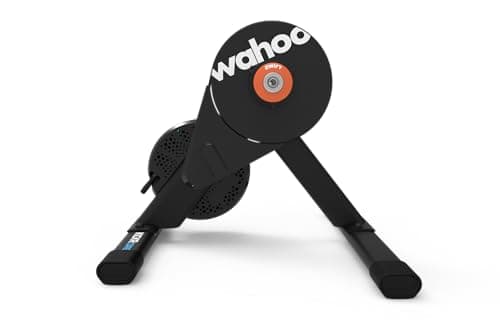 Wahoo Kickr Core 2 The trainer we'd put most Zwifters on: full ERG and SIM control, dual-channel data, and money left for a fan. | Best for Zwift overall | 9.09.0 out of 10 | $549.99 · View on Amazon #ad We may earn a commission · Price as of October 22, 2026 |
| 2 | 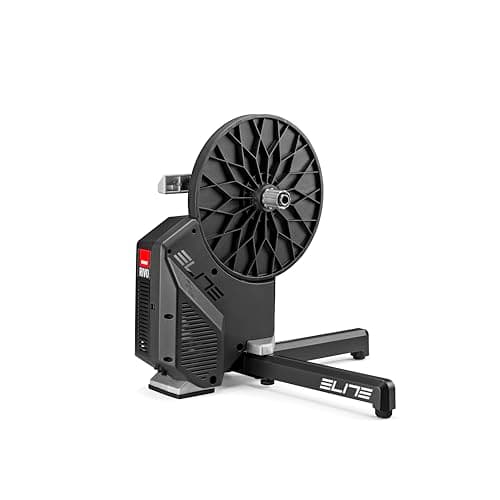 Elite Rivo The cheapest current route onto Zwift with virtual shifting and WiFi — as long as you accept an estimated power figure. | Best value for Zwift | 7.87.8 out of 10 | $549.99 · View on Amazon #ad We may earn a commission · Price as of October 22, 2026 |
| 3 | 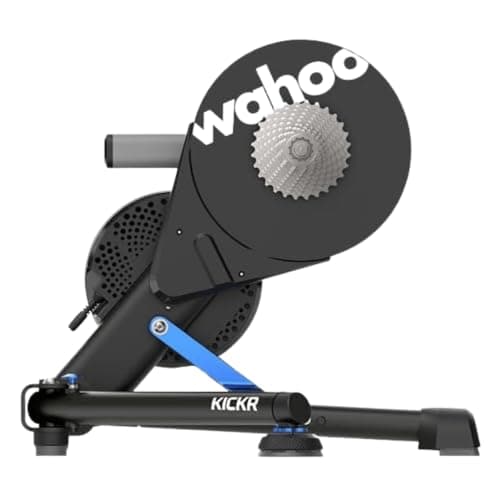 Wahoo Kickr v6 The Zwift trainer that never makes you think about hardware: WiFi uploads, ±1% power, auto-calibration. | Best premium | 9.29.2 out of 10 | $849.99 · View on Amazon #ad We may earn a commission · Price as of October 22, 2026 |
| 4 | 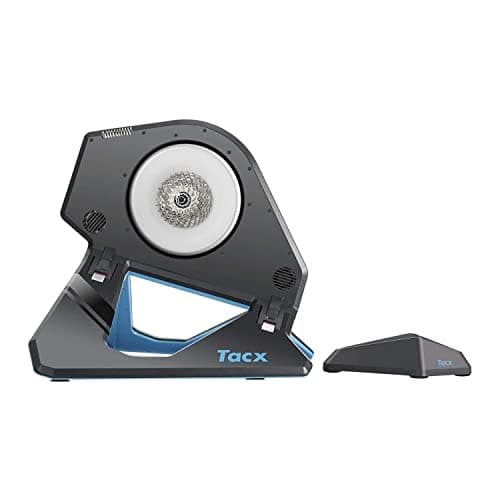 Tacx Neo 2T Buy it for immersion: on Zwift the Neo makes descents coast and rough roads buzz in a way the Kickr can't. | Best road feel | 9.19.1 out of 10 | $899.99 · View on Amazon #ad We may earn a commission · Price as of October 22, 2026 |
| 5 |  Elite Suito-T The Zwift pick for riders short on space — folds away, ships ready to ride, and controls cleanly. | Best compact | 8.18.1 out of 10 |
This is the Zwift-specific cut of our trainer coverage. If you want the whole field ranked for indoor cycling in general — including the quiet-apartment and best-value picks — start with our best smart trainers roundup. This page asks a narrower question: which of those trainers gives you the best Zwiftexperience, specifically? That comes down to three things the general roundup doesn't weigh as heavily — how cleanly the trainer holds a target in ERG mode, whether it does virtual shifting, and whether it can talk Bluetooth and ANT+ at the same time.
Why dual-channel matters on Zwift
Every trainer here is controllable — Zwift can raise and lower resistance to match the road or an ERG target. The Zwift-specific detail that trips people up is dual-channel broadcasting: a trainer that transmits over Bluetooth andANT+ at the same time lets Zwift drive the resistance over one channel while a Garmin or Wahoo head unit records the ride over the other. Buy a trainer that only holds one connection and you're forced to choose between controlling Zwift and getting a clean file on your bike computer. Every pick on this list broadcasts on both, and we call it out in the table.
How we ranked them
We don't run a test lab, and we say so plainly on our how we reviewpage. What we did instead: pulled the manufacturer spec sheet and manual for every trainer, recorded the claimed power accuracy, resistance ceiling, simulated gradient and connectivity, checked each against Zwift's own supported-trainer and virtual-shifting documentation, and scored them on what a Zwifter actually feels — the platform experience, accuracy, connectivity and value. Prices are live from Amazon and change constantly, so you'll see today's number or "Check price," never a stale one we typed in months ago.
| Trainer | Claimed accuracy | Max power | Gradient | Dual BT + ANT+ | Best for |
|---|---|---|---|---|---|
| Wahoo Kickr Core 2 | ±2% | 1,800 W | 16% | Yes | Zwift overall |
| Elite Rivo | ±2.5% | 2,000 W | 18% | No — WiFi + BT | Best value |
| Wahoo Kickr v6 | ±1% | 2,200 W | 20% | Yes (+WiFi) | Premium |
| Tacx Neo 2T | ±1% | 2,200 W | 25% | Yes | Road feel |
| Elite Suito-T | ±2.5% | 1,900 W | 15% | Yes | Compact |
ERG, virtual shifting and the Zwift ride
ERG modeis where you'll spend your structured Zwift workouts, and a good trainer holds the target watt without the "spiral of death" when your cadence drops. Every direct-drive unit here does this well; the differences are small and mostly about how quickly resistance settles after a change. SIM mode— where Zwift matches resistance to the on-screen gradient — is where road feel and flywheel mass show up, and it's the Neo 2T's whole argument.
Virtual shiftingis the newer wrinkle. Zwift introduced it on the Hub One via the Zwift Cog and Click, letting you change gears in software with no rear derailleur to index, and has since extended it to a range of compatible trainers — the Elite Rivo and the Kickr Core 2 among them, both of which are sold in Zwift Cog and Click versions. If you love the idea of never touching your drivetrain again, that matters; if you'd rather shift a real cassette, every trainer here also takes one.
Whichever you choose, budget for the rest of the room. A trainer feeds a screen and a fan— and on Zwift the fan is not optional, because you'll hold efforts indoors you'd coast through outside. If you're building the whole setup from scratch, our best trainer for Zwift and Zwift setup guide pages cover the screen, the cabling and the first-login steps.
The full reviews
Every pick, in detail
#1 · Best for Zwift overall
Wahoo Kickr Core 2
9.09.0 out of 10#ad We may earn a commission · Price as of October 22, 2026
The trainer we'd put most Zwifters on: full ERG and SIM control, dual-channel data, and money left for a fan.
- Type
- Direct drive
- Claimed accuracy
- ±2%
- Max resistance
- 1,800 W
- Max gradient
- 16%
- Connectivity
- WiFi, Bluetooth, ANT+ FE-C
- ERG / SIM control
- Full FE-C + FTMS
What we'd praise
- Onboard WiFi, which also means it does not use up one of Apple TV's two Bluetooth slots
- Broadcasts over Bluetooth and ANT+ at once, so Zwift and a head unit both get clean data
- ERG mode holds a target watt smoothly through interval blocks
- The value benchmark the whole Zwift-trainer conversation is measured against
What we'd flag
- ±2% is unchanged from the original Core, so this is not an accuracy upgrade
- 1,800 W and 16% both sit below the flagship Kickr v6
The Kickr Core 2 is the trainer we point most Zwift riders at, and the reason is boring in the best way: it does everything the platform asks and nothing goes wrong. It broadcasts over Bluetooth and ANT+ simultaneously, so Zwift can drive resistance over one channel while a Garmin or Wahoo head unit records the ride over the other — no dropped pairing when both want the trainer at once. ERG mode holds a target power cleanly through a workout, and SIM mode responds fast enough that hitting a Zwift ramp actually feels like one.
The 2025 revision added the thing the original Core was missing on Zwift: onboard WiFi. That matters more than it sounds if you run Zwift on an Apple TV, which only allows two Bluetooth connections in the game — a network-connected trainer uses none of them. Full detail in our Kickr Core 2 review. What you still give up against the v6 below is the last accuracy percent and some resistance ceiling. Neither is a dealbreaker. Spend the gap on a proper fan and your Zwift races get faster than another 1% of trainer accuracy ever would.
#2 · Best value for Zwift
Elite Rivo
7.87.8 out of 10#ad We may earn a commission · Price as of October 22, 2026
The cheapest current route onto Zwift with virtual shifting and WiFi — as long as you accept an estimated power figure.
- Type
- Direct drive
- Claimed accuracy
- ±2.5%, estimated
- Max resistance
- 2,000 W at 40 km/h
- Max gradient
- 18%
- Shifting
- Zwift Cog and Click compatible
- Connectivity
- WiFi, Bluetooth (no ANT+)
What we'd praise
- Virtual shifting works via the Zwift Cog and Click, so there is no cassette to match
- Onboard WiFi at this price, which keeps Apple TV's Bluetooth slots free
- The cheapest honest on-ramp to controllable resistance on Zwift
- Folding legs and a carry handle, so it can live somewhere other than the floor
What we'd flag
- Elite states the power figure as estimated at ±2.5%, not directly measured
- No ANT+ at all, so an ANT+ head unit cannot record the ride alongside Zwift
- The 4 kg flywheel gives a lighter road feel than the pricier picks
The Rivo took over the bottom of this list after Zwift discontinued the Hub, and it covers the same ground: run the Zwift Cog and Click and you shift through virtual gears instead of indexing a real drivetrain, with no cassette to buy or match to your groupset. It also has onboard WiFi, which almost nothing else at this price does, and that keeps both of Apple TV's Bluetooth slots free for a heart rate strap and anything else.
The trade is written into Elite's own specification: power is estimated at ±2.5% rather than measured, and there is no ANT+ at all. Our Elite Rivo review works through what that means in practice, and the Zwift setup guide walks the first-login checklist if you are new to the platform.
#3 · Best premium
Wahoo Kickr v6
9.29.2 out of 10#ad We may earn a commission · Price as of October 22, 2026
The Zwift trainer that never makes you think about hardware: WiFi uploads, ±1% power, auto-calibration.
- Type
- Direct drive
- Claimed accuracy
- ±1%
- Max resistance
- 2,200 W
- Max gradient
- 20%
- Dual BT + ANT+
- Yes (+ onboard WiFi)
- Flywheel
- 16 lb
What we'd praise
- Onboard WiFi uploads Zwift rides and firmware without leaning on a phone bridge
- ±1% claimed accuracy puts your Zwift power in the top tier
- Auto-calibration means no spindown to remember before a race
What we'd flag
- You pay a premium over the Core for gains a mid-pack Zwifter barely feels
- Feet can transmit noise to a hard floor without a mat
The v6 is the Kickr Core with the last irritations engineered out, and on Zwift those irritations are worth money to some riders. Onboard WiFi means your race uploads and firmware updates move without a phone acting as a bridge — the ride is on Strava before you've stopped sweating. Claimed ±1% accuracy sits at the top of the field, and auto-calibration removes the spindown you'd otherwise run before a serious effort.
Like the Core it broadcasts Bluetooth and ANT+ together, so pairing to Zwift while recording to a head unit is a non-event. If you race the Zwift calendarhard and want the hardware to disappear, this is the pick. If you don't, the Core gives up remarkably little of it.
#4 · Best road feel
Tacx Neo 2T
9.19.1 out of 10#ad We may earn a commission · Price as of October 22, 2026
Buy it for immersion: on Zwift the Neo makes descents coast and rough roads buzz in a way the Kickr can't.
- Type
- Direct drive (virtual flywheel)
- Claimed accuracy
- ±1%
- Max resistance
- 2,200 W
- Max gradient
- 25%
- Dual BT + ANT+
- Yes
- Road-feel effects
- Surface simulation (Zwift/Tacx)
What we'd praise
- The best road feel in the class — Zwift descents and cobbles actually register underneath you
- Motor-driven flywheel freewheels near-silently for 5am sessions
- Steepest simulated gradient here at a claimed 25%
What we'd flag
- No onboard WiFi
- Surface-simulation feel is a reason to buy for some and a novelty for others
The Neo 2T is the trainer that makes Zwift feel like somewhere rather than a number. Garmin swapped the physical flywheel for a motor-driven virtual one, which lets it push you along on descents, buzz through cobbled sectors, and stay eerily quiet the rest of the time. Claimed accuracy is ±1%, matching the Kickr v6, and the claimed 25% simulated gradient is the steepest on this list — Alpe du Zwift bites the way it should.
It broadcasts Bluetooth and ANT+ together, so recording to a head unit alongside Zwift is simple. The reason to spend up is feel, not data: if you ride Zwift for immersion the Neo is the upgrade, and if you stare at a power target in ERG all winter you're paying for a sensation you won't use.
#5 · Best compact
Elite Suito-T
8.18.1 out of 10The Zwift pick for riders short on space — folds away, ships ready to ride, and controls cleanly.
- Type
- Direct drive
- Claimed accuracy
- ±2.5%
- Max resistance
- 1,900 W
- Max gradient
- 15%
- Dual BT + ANT+
- Yes
- Flywheel
- 7.6 lb
What we'd praise
- Folding legs make it the easiest Zwift trainer here to stow between sessions
- Ships with a cassette pre-installed — pair to Zwift and ride in minutes
- Full FE-C and FTMS control at a strong mid-tier price
What we'd flag
- Lighter flywheel feels slightly less planted in hard standing efforts
- ±2.5% claimed accuracy is mid-pack
The Suito-T is the Zwift trainer for the rider whose pain cave is also a spare bedroom. Folding legs and a pre-installed cassette make it the least demanding unit here to live with: unfold it, pair over Bluetooth or ANT+, and you're in the pen. It broadcasts on both channels, so a head-unit recording alongside your Zwift session works fine, and its FE-C and FTMS control is complete — ERG holds and SIM responds.
The lighter 7.6 lb flywheel is the compromise you feel most in a hard Zwift sprint finish, where a heavier unit carries momentum more convincingly. For everything short of bunch-sprint racing it's a tidy, packable way onto the platform.
Good questions
Frequently asked questions
Do I really need dual Bluetooth and ANT+ for Zwift?
You need it if you want to run Zwift AND record the ride to a Garmin or Wahoo head unit at the same time. A trainer that broadcasts on both channels lets Zwift control resistance over one while your bike computer logs the file over the other. Every trainer on this list does that.
What is virtual shifting and do I need it on Zwift?
Virtual shifting changes your gear in software instead of on a real derailleur. Zwift introduced it with the Zwift Cog and Click and has extended it to a range of compatible trainers, including the Elite Rivo and the Kickr Core 2. It's convenient and removes drivetrain fuss, but it isn't required — a normal cassette works perfectly on Zwift too.
Elite Rivo or Wahoo Kickr Core 2 for Zwift?
The Rivo is the cheaper path onto Zwift, with WiFi, virtual shifting support and no cassette to match if you run the Zwift Cog. The Kickr Core 2 costs more but measures power to a tighter claimed figure, carries a heavier flywheel and adds ANT+ for a head unit. Pick the Rivo for value, the Core 2 for a more planted ride and data you can take anywhere.
Does ERG mode work well for Zwift workouts on these trainers?
Yes. Every direct-drive trainer here supports full ERG control, holding a target power through Zwift's structured workouts without you shifting. The differences between them are small; all five settle on the target smoothly enough for interval sessions.
Can a budget trainer keep up with Zwift racing?
Yes. The Elite Rivo and Elite Suito-T both deliver controllable resistance quick enough for Zwift racing. The main thing you give up lower down is a little claimed accuracy and flywheel mass, which shows up most in all-out sprint finishes rather than steady efforts.
Is onboard WiFi worth it for Zwift?
It's a convenience, and it has one specific Zwift benefit. WiFi on the Kickr v6, Kickr Core 2 and Elite Rivo uploads rides and firmware without your phone acting as a bridge, and a network-connected trainer does not use one of Apple TV's two in-game Bluetooth connections. Trainers without it, like the Tacx Neo 2T, route uploads through the Zwift app or a head unit — a minor extra step, not a barrier.
How we sourced this
Keep going
Read these next
- DealsBlack Friday & Cyber Monday Indoor Cycling Deals 2026
- ReviewTacx Neo 2T Review
- ComparisonDirect Drive vs Wheel-On Trainers
- TrainersThe Best Smart Trainers, Compared
- Indoor SetupThe Best Trainer for Zwift
- Indoor SetupZwift Setup Guide
- TrainersBest Budget Smart Trainers
- TrainersThe Quietest Smart Trainers
- TrainersElite Rivo Review