Indoor Trainers
The Quietest Smart Trainers, Ranked
Noise is the reason a lot of pain caves go unused. Here is what actually makes a trainer loud, which models are genuinely quiet, and the cheap fix that matters more than the model you buy.
The short answer
Quick picks
| # | Product | Best for | Score | Price |
|---|---|---|---|---|
| 1 | 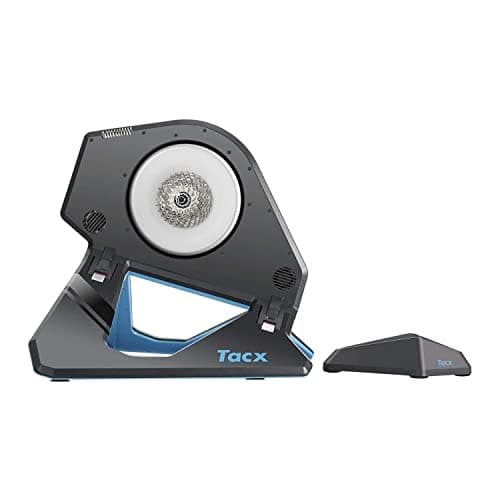 Garmin Tacx Neo 2T The only trainer here whose quiet comes from its architecture rather than from careful engineering around a belt — and the one to buy if noise is genuinely the deciding factor. | Quietest trainer you can buy | 9.09.0 out of 10 | $899.99 · View on Amazon #ad We may earn a commission · Price as of October 22, 2026 |
| 2 | 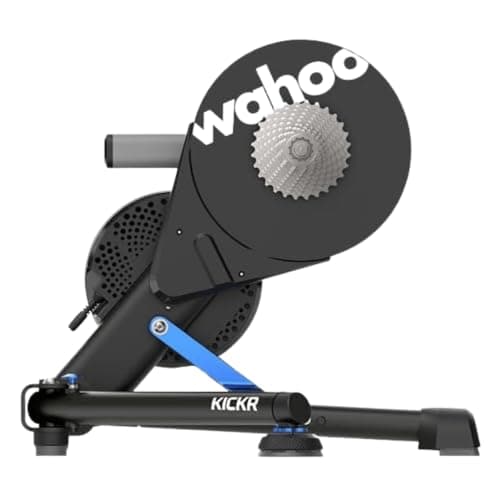 Wahoo Kickr v6 The quietest trainer with a conventional belt-and-flywheel drive, and the one to buy if you want silence plus Wahoo's ecosystem. | Quietest belt-driven flagship | 8.88.8 out of 10 | $849.99 · View on Amazon #ad We may earn a commission · Price as of October 22, 2026 |
| 3 | 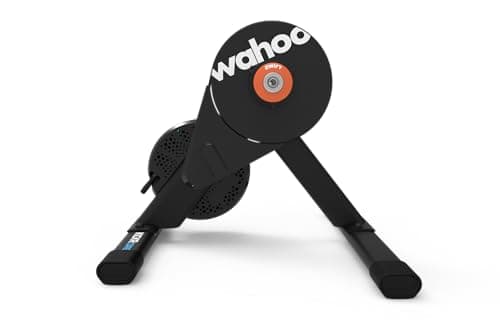 Wahoo Kickr Core 2 Nearly all of the flagship's quiet for substantially less money — the sensible buy for an apartment on a budget. | Best quiet trainer for the money | 8.68.6 out of 10 | $549.99 · View on Amazon #ad We may earn a commission · Price as of October 22, 2026 |
| 4 | 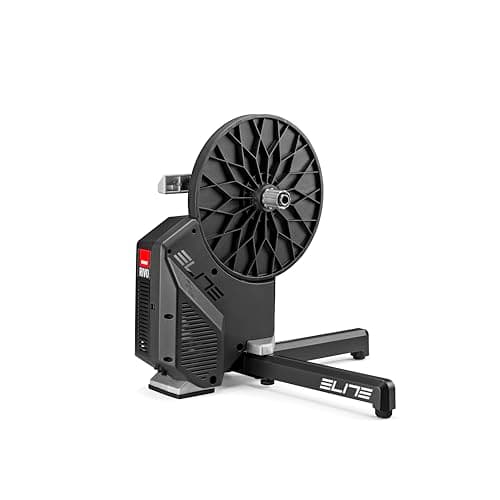 Elite Rivo A quiet, WiFi-equipped direct-drive trainer that undercuts the flagships — best suited to a virtual-shifting single-cog setup. | Quiet mid-tier alternative to Wahoo | 7.87.8 out of 10 | $549.99 · View on Amazon #ad We may earn a commission · Price as of October 22, 2026 |
| 5 | 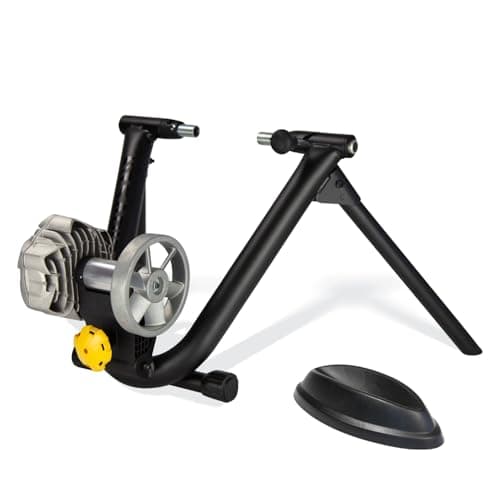 Saris Fluid2 The quietest thing you can buy that still keeps the rear wheel on — good for warm-ups and base miles, not a real substitute for direct drive. | Quietest wheel-on trainer | 6.66.6 out of 10 |
Noise is the constraint nobody plans for. You buy the trainer, build the room, ride it twice at 6am, and then discover that the person below you can hear every interval. From that point the setup gets used at socially convenient hours only, which is to say hardly at all. This roundup ranks the trainers that solve that problem, but it starts somewhere more useful: with the four distinct sounds a trainer setup makes, because three of them are not the trainer.
The four noises, and which one you are actually buying away
One: the resistance unit. On most trainers this is a belt spinning a steel flywheel, and it produces a whine whose pitch rises with wheel speed. This is the noise that model choice fixes. Two: the tire. On a wheel-on trainer, a rubber contact patch is being scrubbed against a drum, which hisses and roars and gets worse as the tire wears. Direct drive deletes this noise entirely, and that single change is the biggest quietness upgrade available at any price.
Three: your drivetrain. Chain over cassette, at whatever angle your gear choice puts it. On a good direct-drive trainer this becomes the loudest thing in the room, which is why people who spend flagship money on quiet are sometimes disappointed. It is fixed with a clean, lubricated chain and a sensible gear, not with money. Four: structure-borne vibration— the low-frequency energy that travels through the frame, into the feet, into the floor and out of your downstairs neighbor's ceiling. This is what complaints are usually about, and no trainer solves it. A mat does.
How we ranked them
We do not run a sound lab and we are not going to publish decibel figures we did not measure — our how we review page explains that stance. Manufacturer decibel claims are also close to useless for comparison, because they are quoted at different wheel speeds, at different microphone distances, in different rooms. So we ranked on mechanism instead, which is both honest and more predictive: what is physically spinning inside the unit, whether a tire is involved, whether the noise rises with effort, and how much the frame and feet will transmit into a floor. Then we scored quietness alongside accuracy, road feel and value, because a silent trainer you cannot train on is not a good trainer.
| Trainer | Type | Drive | Tire noise | Rises with effort | Best for |
|---|---|---|---|---|---|
| Garmin Tacx Neo 2T | Direct drive | Direct magnetic, no belt | None | Barely | Absolute quiet |
| Wahoo Kickr v6 | Direct drive | Belt, 16 lb flywheel | None | Yes | Quiet flagship |
| Wahoo Kickr Core 2 | Direct drive | Belt, 5.4 kg flywheel | None | Yes | Quiet on a budget |
| Elite Rivo | Direct drive | Electromagnetic, 4 kg flywheel | None | Yes | Single-cog setups |
| Saris Fluid2 | Wheel-on | Fluid, progressive | Yes | Yes | Cheapest quiet-ish option |
Airborne noise versus structure-borne noise
These are two different problems and they need two different fixes. Airborne noise is what you hear standing in the room: belt whine, tire hiss, chain rattle. It travels through air, is attenuated by doors and soft furnishings, and is mostly what the trainer choice governs. Structure-borne noise is vibration coupled directly into the building. It passes through walls and floors almost unimpeded, it is felt as much as heard, and it is entirely unaffected by which trainer you bought.
If your complaint is coming from a neighbor rather than from someone in the same room, it is almost certainly structure-borne, and the answer is decoupling: a dense rubber mat, ideally with a second layer of interlocking foam under it, so that the vibration is absorbed before it reaches the joists. This costs a fraction of a trainer upgrade and works better. Riders regularly spend a four-figure sum solving a problem a mat would have fixed.
The out-of-the-saddle problem
Every fixed-frame trainer has the same weakness: stand up, and the whole assembly rocks slightly against the floor, thumping in time with your pedal stroke. This is the loudest thing most setups ever do, and it is not in any spec sheet. The Kickr v6's Axis feet exist precisely to absorb it; a mat under any trainer does much the same job. If your riding involves a lot of standing efforts, weight that consideration higher than belt noise, because a rhythmic thud carries through a building far better than a steady whine does.
Five things that quiet a setup more than an upgrade
Clean and lube the chain. A dry chain on a direct-drive trainer is the single loudest, most fixable noise in the room. Pick a middle gear. Cross-chaining makes noise and wears parts; a straight chain line is quieter. Get a mat. Discussed above, and worth repeating. Move the fan. High-flow fans are loud — often louder than the trainer — so position it to blow across you rather than parking it beside your ear, and check whether a lower setting is genuinely enough. Close the door. Airborne noise is stopped by mass, and a closed internal door is a surprising amount of mass.
For the rest of the room, our fan roundup covers airflow against noise, and our apartment setup guide assembles the whole quiet build in one place, including the floor stack and the timing conversation to have with your neighbors before, not after.
Where to spend, and where the spending stops helping
The quietness curve is steep and then flat. Going from a wheel-on trainer to any direct-drive trainer is an enormous change — the tire noise disappears, and with it the sound most people describe as "a jet taking off in the spare room." Going from the cheapest direct-drive unit to the most expensive one is a much smaller change, audible if you listen for it, invisible through a wall.
So the recommendation for most people is not the trainer at the top of this list. It is the Kickr Core 2 plus a good mat, which lands well under the price of the Neo 2T and solves the actual complaint. Buy the Neo 2T when you have already done the cheap fixes, the constraint is still real, and you want the quietest thing that exists — or when you want a flagship anyway and quiet is the tiebreaker. That is a genuinely good reason to buy it; it just is not the first thing to try. If you are still working out which tier fits, our cost guide lays out what each band buys, and the best smart trainers roundup ranks the field on everything other than noise.
If you already own the trainer and replacing it is not the plan, how to make a bike trainer quieter works through the free fixes and the two cheap purchases that actually help.
The full reviews
Every pick, in detail
#1 · Quietest trainer you can buy
Garmin Tacx Neo 2T
9.09.0 out of 10#ad We may earn a commission · Price as of October 22, 2026
The only trainer here whose quiet comes from its architecture rather than from careful engineering around a belt — and the one to buy if noise is genuinely the deciding factor.
- Type
- Direct drive
- Drive
- Direct magnetic — no belt, no physical flywheel
- Claimed accuracy
- ±1%
- Max gradient
- 25%
- Calibration
- None required
- Power
- Mains only for descent simulation
What we'd praise
- No drive belt and no physical flywheel — the two loudest moving parts in a normal trainer simply are not there
- Nothing in the resistance unit gets louder as you push harder, so a sprint does not announce itself downstairs
- Runs without mains power for normal riding, which means no fan or transformer hum in a quiet room
- No calibration ritual, so you never spin it up loudly before a 5am session
What we'd flag
- The most expensive trainer on this list by a wide margin
- Road-surface simulation buzzes the frame deliberately — a feature, but one to switch off if you live above someone
- Your own drivetrain becomes the loudest thing in the room, which surprises people expecting silence
Almost every trainer on the market spins a physical flywheel through a belt. The belt is the noise. The Neo 2T does not have one: the resistance and the simulated inertia both come from electromagnets acting directly on the freehub assembly, so there is no belt to whine and no heavy steel disc to hum. Under load it produces very little of its own sound, and crucially the sound it does produce barely rises when you push harder.
That last part is what people underestimate. On a belt-driven trainer, a hard interval is audibly a hard interval — the pitch climbs with wheel speed and that rising whine is exactly what carries through a floor. The Neo 2T flattens that curve. What is left is your chain running across a cassette, which is a sound you control with a clean drivetrain and sensible gear selection rather than with money. If the budget will not stretch this far, the Kickr Core is the sensible step down, and our Kickr Core vs Neo 2T comparison settles that trade in detail.
#2 · Quietest belt-driven flagship
Wahoo Kickr v6
8.88.8 out of 10#ad We may earn a commission · Price as of October 22, 2026
The quietest trainer with a conventional belt-and-flywheel drive, and the one to buy if you want silence plus Wahoo's ecosystem.
- Type
- Direct drive
- Drive
- Belt to 16 lb steel flywheel
- Claimed accuracy
- ±1%
- Max gradient
- 20%
- Calibration
- Automatic
- Feet
- Axis action feet included
What we'd praise
- Sealed, well-damped drive train — among the quietest belt trainers ever built, and far quieter than any wheel-on unit
- Axis action feet absorb a measurable amount of the vibration that would otherwise go straight into the floor
- Onboard WiFi removes the phone from the connection chain, so no laptop fan spins up next to the bike
- Heavy frame does not creak or resonate under out-of-the-saddle efforts
What we'd flag
- There is still a belt and a 16 lb flywheel, so the pitch does rise with effort — noticeably so in a sprint
- Flagship pricing for a quietness advantage that the cheaper Kickr Core 2 largely matches
- Needs mains power at all times, so the unit is never fully silent when idle
Six generations of refinement have gone somewhere, and a good chunk of it went into noise. The v6 runs a sealed belt to a 16 lb flywheel inside a heavy, well-damped shell, and the result is a trainer that at endurance pace disappears under the sound of your own chain. It is genuinely quiet in a way that a wheel-on trainer never is, because there is no tire being scrubbed against a drum.
Be realistic about the limit, though. A belt has to spin, and belt pitch scales with speed, so a 1,200 W sprint is audible in the next room in a way the Neo 2T's is not. The Axis feet in the box help with the other half of the problem — structural vibration into the floor — which is what neighbors below actually complain about. Add a trainer mat under it and you have removed most of what a downstairs flat would ever hear. The full picture on this trainer is in our Kickr v6 review.
#3 · Best quiet trainer for the money
Wahoo Kickr Core 2
8.68.6 out of 10#ad We may earn a commission · Price as of October 22, 2026
Nearly all of the flagship's quiet for substantially less money — the sensible buy for an apartment on a budget.
- Type
- Direct drive
- Drive
- Belt to 5.4 kg flywheel
- Claimed accuracy
- ±2%
- Max gradient
- 16%
- Calibration
- Spindown
- Feet
- Fixed — Axis feet sold separately
What we'd praise
- Shares the flagship's sealed direct-drive architecture, so it is within a whisker of the v6 on noise
- No tire on a roller means no scrubbing sound and no rubber dust, the single biggest noise win over a turbo
- Lighter flywheel actually helps slightly at low speeds — less mass to keep spinning, less hum
- Costs far less than the flagships, which frees budget for a mat that does more for floor noise
What we'd flag
- Fixed feet transmit more vibration into the floor than the v6's Axis feet — factor a mat into the price
- Belt whine climbs with effort just as it does on the v6
- Spindown calibration means a short, loud warm-up spin every few weeks
The thing to understand about trainer noise is that the largest single reduction comes from moving to direct drive at all, not from moving up within direct drive. Taking the tire off the equation removes a scrubbing, hissing sound source that no amount of engineering can quiet. The Kickr Core 2 makes that jump for the least money of any Wahoo we would recommend, and the gap between it and the v6 on noise is small enough that most riders would not identify it blind.
Where it genuinely loses is vibration transfer. The v6 ships with elastomer Axis feet; the Core 2 has rigid ones. In a house that does not matter. In a flat above someone it matters a lot, and the fix is cheap — a proper mat handles it. Spend the difference there rather than on the badge. The head-to-head is in Kickr vs Kickr Core.
#4 · Quiet mid-tier alternative to Wahoo
Elite Rivo
7.87.8 out of 10#ad We may earn a commission · Price as of October 22, 2026
A quiet, WiFi-equipped direct-drive trainer that undercuts the flagships — best suited to a virtual-shifting single-cog setup.
- Type
- Direct drive, electromagnetic
- Claimed accuracy
- ±2.5% (estimated power)
- Connectivity
- Bluetooth, WiFi, Zwift protocol
- Max gradient
- 18%
- Flywheel
- 4 kg
- Frame
- Folding legs, 10 kg
What we'd praise
- Direct-drive architecture in a sealed enclosure — the same fundamental noise advantage as the Wahoos
- Onboard WiFi at a mid-tier price, which keeps a laptop and its fan out of the setup
- Virtual-shifting support means you can run a single cog and never shift, removing chain-crossover noise entirely
- Folding legs make it genuinely storable, which matters in the small rooms that also have noise problems
What we'd flag
- Elite lists the power figure as an estimate at ±2.5%, not a direct measurement — the loosest claim here
- No ANT+ at all, so an ANT+ head unit or an older setup will not see it
- Newer model with a shorter track record than the Wahoo and Garmin alternatives
The Rivo is Elite's answer to the Kickr Core 2, and it brings one thing to the noise conversation that the Core does not: virtual shifting. Run a single-cog setup and your chain stays on one sprocket for the entire ride. No shifting, no chain crossing at an angle, no rattle when you drop two gears at the bottom of a climb. Since drivetrain noise is the dominant sound on any direct-drive trainer, removing the shifting removes a real slice of it.
The trade is accuracy, and Elite is unusually candid about it: the specification sheet lists "estimated power" at ±2.5%, meaning the trainer calculates your wattage from its own resistance model rather than measuring it directly. For solo structured training that is perfectly usable, because what training needs is repeatability rather than absolute truth — a point we make properly in our accuracy guide. For racing against other riders' hardware it is a real limitation. Full details are in the Elite Rivo review.
#5 · Quietest wheel-on trainer
Saris Fluid2
6.66.6 out of 10The quietest thing you can buy that still keeps the rear wheel on — good for warm-ups and base miles, not a real substitute for direct drive.
- Type
- Wheel-on, fluid
- Resistance control
- Progressive — no lever, no app
- Power data
- None — add your own sensor
- Frame
- Wide-stance folding legs
- Built
- Made in the USA
- Mains power
- Not required
What we'd praise
- Fluid resistance with no stepped magnetic unit is about as quiet as a tire-on-drum trainer can be
- No electronics at all, so nothing hums, buzzes or spins up when the room is otherwise silent
- Folding legs mean it can leave the room entirely between rides
- By far the cheapest way into a quiet-ish setup
What we'd flag
- Still meaningfully louder than any direct-drive trainer, because the tire is the noise source
- No power measurement and no app control at all — gearing is your only resistance adjustment
- Tire wear produces rubber dust and a rising hiss as the tread degrades
- Wide-stance legs need more floor than a compact fixed-frame trainer
If the budget cannot reach direct drive, this is the honest recommendation, with the caveat stated plainly: the quietest wheel-on trainer is still louder than the loudest direct-drive one. A tire pressed against a spinning drum makes noise. Fluid resistance minimizes it — there is no magnetic stepping, no motor and no fan — but it cannot delete the contact patch.
What the Fluid2 does have is total silence when idle and legs that fold flat, so it can be lifted out of a bedroom or a shared studio between rides. It also gives you no data whatsoever, so treat it as a warm-up and base-miles machine rather than a training tool. If you want the ranked wheel-on field, our best turbo trainers roundup covers it, and direct drive vs wheel-on explains exactly what you give up.
Good questions
Frequently asked questions
What is the quietest smart trainer?
The Garmin Tacx Neo 2T, because of how it is built rather than how well it is damped. It has no drive belt and no physical flywheel — resistance and simulated inertia come from electromagnets — so the two loudest moving parts in a conventional trainer are simply absent, and its noise barely rises as you push harder.
Are direct-drive trainers quieter than wheel-on trainers?
Substantially, and it is the biggest single quietness upgrade available. A wheel-on trainer presses a rubber tire against a spinning drum, which hisses and roars and gets louder as the tread wears. Direct drive removes the tire from the equation entirely, leaving only the drive mechanism and your own drivetrain.
Will a trainer mat actually reduce noise for my downstairs neighbors?
Yes, and usually more than a trainer upgrade would. What travels through a building is structure-borne vibration, not airborne sound, and a dense mat decouples the trainer feet from the floor before that energy reaches the joists. A rubber mat with interlocking foam beneath it is the most cost-effective fix there is.
Why is my direct-drive trainer still noisy?
Because on a quiet trainer your drivetrain becomes the loudest thing in the room. A dry or dirty chain, a cross-chained gear selection, or a cassette that does not match your chain's speed will all produce more noise than the trainer itself. Clean and lube the chain and pick a straight chain line before assuming the trainer is at fault.
Is the Kickr Core 2 quiet enough for an apartment?
For most apartments, yes — especially with a mat. It uses the same sealed direct-drive architecture as the flagship Kickr, so it shares the large quietness advantage over any wheel-on trainer, and the remaining gap to the v6 is small. Budget for the mat, since the Core 2's feet are rigid rather than the v6's elastomer Axis feet.
Do quiet trainers cost more?
The quietest one does, but the relationship is not linear. Almost all of the available quietness comes from moving to direct drive at all, which the mid-tier trainers do just as completely as the flagships. Past that point you are paying for a small further reduction that is difficult to hear through a wall.
How we sourced this
- Garmin Tacx Neo 2T specifications (manufacturer)
- Wahoo Kickr v6 and Kickr Core specifications (manufacturer)
- Elite Rivo technical specifications (manufacturer)
- Elite direct-drive home trainer range (manufacturer)
- Saris Fluid2 product information (manufacturer)
- Trainer drive mechanisms and noise explainer (DC Rainmaker)
Keep going