Head to Head
Kickr Core vs Tacx Neo 2T
The classic value-versus-flagship decision, with an unusually clear answer. What the price gap actually buys, and the two specific riders who should pay it.

The short answer
Quick picks
| # | Product | Best for | Score | Price |
|---|---|---|---|---|
| 1 | 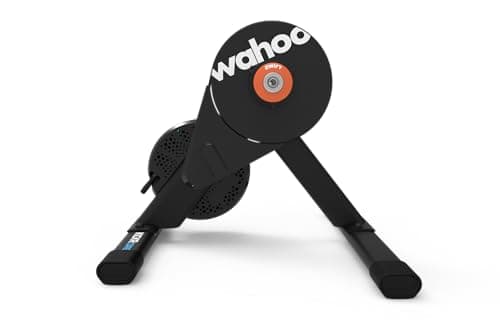 Wahoo Kickr Core The value benchmark: roughly 90% of a flagship ride for a fraction of the flagship gap, if you keep up with calibration. | Best value | 9.09.0 out of 10 | $549.99 · View on Amazon #ad We may earn a commission · Price as of October 22, 2026 |
| 2 | 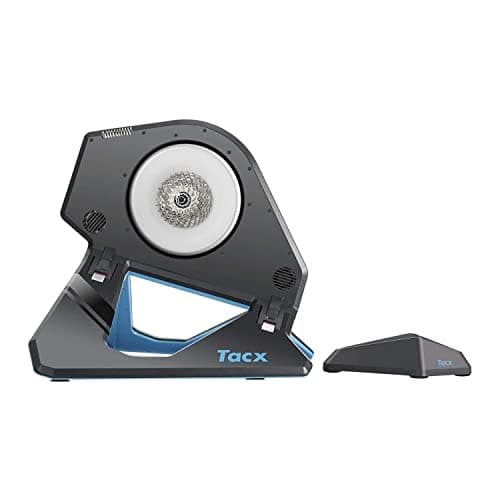 Garmin Tacx Neo 2T The flagship that removes maintenance from the equation: tighter accuracy, higher ceilings, and no calibration for the life of the trainer. | Best accuracy and simulation | 9.19.1 out of 10 | $899.99 · View on Amazon #ad We may earn a commission · Price as of October 22, 2026 |
This is not a flagship-versus-flagship comparison. The Neo 2T sits at the top of the category and the Kickr Core sits in the middle, and the gap between them is large in money and modest in experience. That makes it one of the more interesting decisions in indoor cycling, because the obvious answer — spend more, get more — turns out to be right in a much narrower set of circumstances than the spec sheet implies.
| Kickr Core | Tacx Neo 2T | |
|---|---|---|
| Claimed accuracy | ±2% | ±1% |
| Calibration | Spindown, periodically | None, ever |
| Max resistance | 1,800 W | 2,200 W |
| Max gradient | 16% | 25% |
| Flywheel | 12 lb steel | Virtual, electromagnetic |
| Onboard WiFi | No | No |
| Works unplugged | No | Yes, for normal riding |
| Descent / road-surface simulation | No | Yes |
| Price band | Value | Flagship |
Accuracy: ±2% vs ±1%, and the part that matters more
At 250 W, ±2% is a window of about ten watts and ±1% is about five. That is the headline difference, and on its own it is not a good enough reason to spend flagship money — training adaptation follows repeatability far more closely than absolute accuracy, and a Core that reads consistently will chart your progress perfectly well.
The difference that actually matters is how the accuracy is maintained. The Core uses a spindown calibration, which corrects for belt tension and internal friction as they change with temperature and use. It takes a minute and it works — when you remember. The Neo 2T has no belt and no friction surfaces, so there is nothing to correct and nothing to remember. If you are the kind of rider who will never run a spindown, the real-world accuracy gap is wider than the spec sheet suggests. If you are disciplined, it is narrower. Our accuracy guide explains why repeatability beats precision for most training.
Gradient: 16% vs 25%
This is the spec most people over-weight and a few genuinely need. Most Zwift routes rarely hold gradients above 16%, and when they do, your gearing absorbs a good deal of the difference. If you ride flat and rolling routes, the Core's ceiling will never bother you.
Where the Neo 2T's 25% earns its keep is on the very steep virtual climbs, and for heavier riders, who reach a trainer's resistance ceiling at a lower gradient than a light rider does. If you are a bigger rider who likes climbing routes, this spec is not marketing — it is the difference between the trainer holding the simulated slope and quietly capping it.
Road feel: steel versus electromagnets
The Core spins a 12 lb steel flywheel; the Neo 2T has none and simulates inertia electronically. Both feel good. They do not feel the same. Steel gives you unmistakable stored momentum, which is reassuring in a big gear and at low cadence. The Neo 2T's simulated inertia varies with the virtual gradient, which many riders find more convincing on rolling terrain and a minority find subtly synthetic in grinding efforts.
There is no objectively better answer here, which is why we score both highly and separately. If you have ridden a flywheel trainer for years and love the feel, do not assume the electronic version is an upgrade — assume it is a different flavor, and treat the chance to try one as worth taking.
The features only one of them has
The Neo 2T runs unplugged for normal riding, which is genuinely useful in a garage or shed with no convenient socket, and it simulates descents by driving the pedals and road surfaces by vibrating. Neither is a training feature. Both are pleasant, and both stop being novel quickly.
The Core has one advantage that is easy to miss: it is a Wahoo, so it sits inside an ecosystem of accessories that assume a Wahoo trainer, including the Kickr Climb gradient simulator and the Headwind fan. If a future Climb is on your wish list, that compatibility is worth counting.
Want the full ranking?
See both against the rest of the fieldWhere the money is better spent
Here is the argument we would make to a rider upgrading from a wheel-on trainer. The jump from wheel-on to the Kickr Core is enormous: measured power instead of an estimate, automatic resistance, no tire wear, far less noise. The jump from the Core to the Neo 2T is refinement. Both jumps cost money; only one of them changes what you can do.
Spend the difference on the room instead. A proper fan, a mat, a screen you want to look at and a year of Zwift will get you on the bike more often than one percentage point of claimed accuracy ever will. Our indoor cycling setup guide shows how those pieces fit together.
The verdict
Buy the Kickr Core unless you can point at a specific reason not to. It is the value benchmark for good reason, and for the great majority of upgrading riders it is the last trainer they will need for years.
Buy the Tacx Neo 2Tif you want accuracy you never have to maintain, if you are a heavier rider or a climber who will actually use the 25% ceiling, if your setup has no power outlet, or if you are buying once and want the top of the market. If it is Wahoo's flagship you are weighing instead, our Kickr vs Tacx Neo 2T comparison is the one you want.
The full reviews
Head to head
#1 · Best value
Wahoo Kickr Core
9.09.0 out of 10#ad We may earn a commission · Price as of October 22, 2026
The value benchmark: roughly 90% of a flagship ride for a fraction of the flagship gap, if you keep up with calibration.
- Type
- Direct drive
- Claimed accuracy
- ±2%
- Max resistance
- 1,800 W
- Max gradient
- 16%
- Flywheel
- 12 lb steel
- Status
- Superseded by the Kickr Core 2, which added onboard WiFi
- Calibration
- Spindown
What we'd praise
- Costs far less than the Neo 2T while covering the same core job
- 12 lb steel flywheel gives the inertial feel some riders specifically prefer
- Wahoo's app and firmware ecosystem is mature and dependable
What we'd flag
- ±2% claimed accuracy, and it depends on you remembering to run a spindown
- 1,800 W and 16% ceilings are the lowest of the two by a clear margin
- Needs mains power and has no onboard WiFi
The Core is the trainer most upgrading riders should buy, and the reason this comparison exists at all is that a lot of people find themselves choosing between the sensible option and the aspirational one. It is a genuine direct-drive trainer with a 12 lb steel flywheel, ±2% claimed accuracy and Wahoo's full app ecosystem, and it delivers the overwhelming majority of the flagship experience.
What it asks in return is a spindown calibration now and then, and a tolerance for lower ceilings you will rarely touch. Full detail in our Kickr Core review.
#2 · Best accuracy and simulation
Garmin Tacx Neo 2T
9.19.1 out of 10#ad We may earn a commission · Price as of October 22, 2026
The flagship that removes maintenance from the equation: tighter accuracy, higher ceilings, and no calibration for the life of the trainer.
- Type
- Direct drive, motor-driven
- Claimed accuracy
- ±1%
- Max resistance
- 2,200 W
- Max gradient
- 25%
- Flywheel
- Virtual — electromagnetic
- Calibration
- None required
What we'd praise
- ±1% claimed accuracy that never needs calibrating — nothing to remember, nothing to drift
- 25% gradient ceiling and 2,200 W give real headroom on steep simulated climbs
- Runs unplugged for normal riding, and simulates descents and road surfaces when plugged in
What we'd flag
- Costs substantially more, and the gap buys refinement rather than a different category of ride
- No onboard WiFi, so connections still depend on Bluetooth or ANT+
- Electromagnetic feel is a preference, not a universal upgrade
The Neo 2T is the trainer for the rider who wants the machine to disappear. No spindown, no drift, no belt, no flywheel — resistance comes from electromagnets, which is why Garmin can quote ±1% and mean it on ride fifty as much as on ride one. It also clears a 25% simulated gradient, which the Core cannot approach.
Whether that is worth the price gap over the Core is the entire question on this page. Our Neo 2T review covers the trainer on its own terms.
Good questions
Frequently asked questions
Is the Tacx Neo 2T worth the extra over a Kickr Core?
For most upgrading riders, no. The Core covers the same core job for far less. The Neo 2T is worth the gap if you want accuracy that never needs calibrating, if you ride steep simulated climbs above 16%, if you are a heavier rider who reaches resistance ceilings sooner, or if your setup has no power outlet.
How much accuracy do you give up with the Kickr Core?
On paper, ±2% versus ±1% — roughly ten watts versus five at 250 W. In practice the bigger variable is calibration. The Core relies on a periodic spindown to stay within its claim, while the Neo 2T needs none at all, so a rider who never calibrates loses more than the spec sheet suggests.
Does the 16% gradient limit on the Kickr Core matter?
Rarely for lighter riders on flat and rolling routes, because gearing absorbs much of the difference. It matters more for heavier riders and for anyone who rides very steep virtual climbs, since a trainer reaches its resistance ceiling at a lower gradient the more the rider weighs.
Which is quieter, the Kickr Core or the Tacx Neo 2T?
The Neo 2T. Both are direct-drive trainers with no tire on a roller, so both are far quieter than any wheel-on unit, but the Neo 2T has no belt, no flywheel and no friction brake, leaving your drivetrain as the dominant noise source.
Do either of them have WiFi?
Neither does. Both connect over Bluetooth and ANT+ FE-C. Onboard WiFi is a Wahoo Kickr v6 feature, and it is the main practical reason to consider the v6 over either trainer on this page if mid-workout dropouts have been a problem for you.
Can I use the Kickr Climb with the Tacx Neo 2T?
No. The Kickr Climb is designed to work with compatible Wahoo Kickr trainers, so it pairs with the Kickr Core and Kickr v6 rather than with a Tacx unit. If a gradient simulator is on your wish list, that ecosystem compatibility is a genuine point in Wahoo's favor.
How we sourced this
Keep going