Head to Head
Wahoo Kickr v6 vs Tacx Neo 2T: Two Ways to Spend Up
Two flagships, two philosophies. The Kickr bets on connectivity and ecosystem; the Neo bets on a motor-driven ride and near silence. We put the published specs side by side to sort which one earns your money.

These are the two trainers enthusiasts cross-shop when budget isn't the deciding factor. On the headline accuracy figure they're a dead heat — both claim ±1% — and both put down more resistance than you'll ever use. So the choice isn't about which is "better" on a spec sheet; it's about which philosophy fits how you ride. We pulled the published specs for both and lined up the rows that actually differ.
The two flagships, side by side
Both are direct-drive units with ±1% claimed accuracy and a 2,200 W published resistance ceiling, so the spec table is really a story about how each one makes its ride. The Kickr uses a heavy physical flywheel and a belt; the Neo uses a motor to simulate a flywheel and the surfaces you're rolling over. That single design fork drives almost every difference below.
| Spec | Kickr v6 | Tacx Neo 2T |
|---|---|---|
| Claimed accuracy | ±1% | ±1% |
| Max resistance | 2,200 W | 2,200 W |
| Max gradient | 20% | 25% |
| Flywheel | 16 lb (physical) | Virtual (simulated) |
| Onboard WiFi | Yes | No |
| Road feel / surfaces | Physical flywheel | Motor-driven, simulates surfaces |
We compile these from each manufacturer's own spec sheets — we don't run a bench lab, and we say so on our how we review page. With accuracy tied on the claim, the interesting question is whether that ±1% means the same thing on both; our how accurate are smart trainers guide gets into why repeatability, not the headline figure, is what you actually feel.
The case for the Kickr: connectivity and ecosystem
The v6's argument is everything that happens around the ride. Onboard WiFi lets firmware and ride uploads move without your phone acting as a bridge, and auto-calibrationmeans you never run a manual spindown. Beyond the trainer itself, Wahoo has built the deepest accessory and software world in the category — climb units, motion platforms, headwind fans and a mature app — so the Kickr slots into a system rather than sitting on its own. If you want a connected setup that just works with everything and keeps getting better through firmware, that ecosystem is a real, ongoing advantage the Neo doesn't match.
The case for the Neo: road feel, silence, no belt
The Neo's argument is the ride, and it's a strong one. Replacing the physical flywheel with a motor-driven virtual one lets it simulate surfaces— cobbles, gravel, wooden boards — and, more usefully for most riders, it means there's no belt to wear out and the trainer freewheels near silently. On a descent the Neo drives the drivetrain the way real momentum would, which is the feel the Kickr can't quite reproduce. It can even run without mains power in a pinch, at reduced resistance. For a rider who spends winters immersed in a virtual world and cares how the road feels under the tire, the Neo is the upgrade. For a household that needs quiet at 5am, its near-silent freewheel is the reason to buy.
Who should buy which
Buy the Kickr v6if you value the system: WiFi and auto-calibration for convenience, and Wahoo's ecosystem for where your setup can grow. It's the pick for the rider who wants low-friction connectivity above all.
Buy the Tacx Neo 2Tif you value the sensation: the best road feel in the class, near-silent operation, and a beltless design with less to wear. It's the pick for the rider whose reason to spend up is how indoor riding feels, not how it connects.
Want to see how both stack against the wider field, or weigh the Kickr against its cheaper sibling first? Our best smart trainers roundup ranks every direct-drive unit worth buying, and Kickr v6 vs Kickr Core covers whether you even need the flagship Wahoo before you compare it to the Neo.
The full reviews
Head to head
Connectivity and ecosystem
Wahoo Kickr v6
9.29.2 out of 10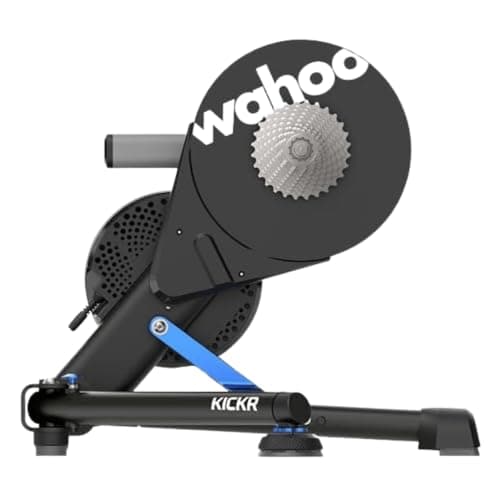
#ad We may earn a commission · Price as of October 21, 2026
The connectivity and ecosystem pick — onboard WiFi, auto-calibration and the most polished app in the class.
- Type
- Direct drive
- Claimed accuracy
- ±1%
- Max resistance
- 2,200 W
- Max gradient
- 20%
- Flywheel
- 16 lb (physical)
- Connectivity
- WiFi, BT, ANT+
What we'd praise
- Onboard WiFi plus a deep, well-supported app and accessory ecosystem
- Auto-calibration means you never remember a manual spindown
- ±1% claimed accuracy, matching the Neo, with a heavy physical flywheel
What we'd flag
- Physical flywheel and belt make it audibly busier than the Neo under load
- Road-feel simulation can't match the Neo's motor-driven surface effects
The Kickr v6 wins on everything that happens off the flywheel. Onboard WiFi moves firmware and ride uploads without a phone acting as a bridge, auto-calibration removes the manual spindown entirely, and Wahoo's app and accessory ecosystem — climb simulators, desks, headwind fans — is the deepest and best-supported in the category. Claimed accuracy is ±1%, matching the Neo exactly, and the 16 lb physical flywheel gives a genuinely planted ride.
What it can't do is disappear the way the Neo does. There is a real flywheel and a belt in there, so under load it's audibly busier, and its road-feel simulation is good rather than uncanny. If your priority is a connected, low-friction, well-supported system that just works with everything, the v6 is the one to beat.
Road feel and silence
Tacx Neo 2T
9.19.1 out of 10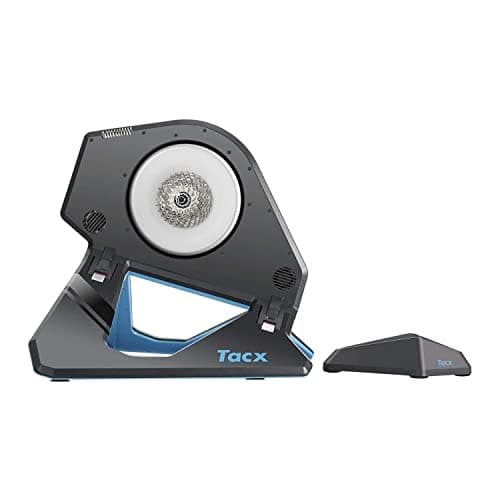
#ad We may earn a commission · Price as of October 21, 2026
Buy it for the ride — motor-driven road feel and near silence the Kickr's belt-and-flywheel design can't match.
- Type
- Direct drive (virtual flywheel)
- Claimed accuracy
- ±1%
- Max resistance
- 2,200 W
- Max gradient
- 25%
- Flywheel
- Simulated (no physical)
- Connectivity
- BT, ANT+
What we'd praise
- The best road feel in the class — descents, cobbles and surfaces feel real
- No physical flywheel means no belt to wear and near-silent freewheeling
- Can run without mains power in a pinch, at reduced resistance
What we'd flag
- No onboard WiFi and a shallower accessory ecosystem than Wahoo's
- Its surface-simulation effects are a novelty to some and the reason to buy to others
The Neo 2T is the trainer riders describe with the word "feel" unprompted. Garmin replaced the physical flywheel with a motor-driven virtual one, which does two things a belt can't: it simulates surfaces — cobbles, gravel, wooden boards — and, more usefully day to day, it freewheels almost silently because there's no belt to spin. Claimed accuracy is ±1%, level with the Kickr, and the simulated gradient climbs to 25%.
The trade is the ecosystem. There's no onboard WiFi, and Garmin's accessory and app support around the trainer is thinner than Wahoo's. Buy the Neo for the ride quality and the silence, not for the connected-system experience — see our best trainer for Zwift notes if immersion is your main reason to ride indoors.
Good questions
Frequently asked questions
Wahoo Kickr v6 or Tacx Neo 2T — which is better?
Neither is universally better; they win on different things. Both claim ±1% accuracy and a 2,200 W ceiling, so it's a tie on the numbers. The Kickr v6 wins on connectivity and ecosystem (onboard WiFi, auto-calibration, the deepest app and accessory support). The Neo 2T wins on the ride — the best road feel in the class and near-silent, beltless operation.
Is the Tacx Neo 2T quieter than the Wahoo Kickr?
Yes. The Neo replaces the physical flywheel with a motor-driven virtual one, so there's no belt and it freewheels almost silently. The Kickr v6 has a physical flywheel and a belt, which makes it audibly busier under load. If a quiet pain cave matters — early mornings, shared walls — the Neo has the edge.
Does the Neo 2T's road feel really matter, or is it a gimmick?
It depends how you ride. The surface-simulation effects (cobbles, gravel) are a novelty some riders switch off. But the underlying motor-driven flywheel also delivers more realistic momentum on descents and a more road-like ride overall, which many riders feel in the first five minutes and value long term. If you ride mostly structured ERG intervals staring at a power number, you'll notice it less.
Do both trainers have the same accuracy?
Both manufacturers claim ±1%, so on the headline figure they're level. In practice, repeatability — reading consistently ride to ride — matters more than the absolute claim, and both are strong there. See our how accurate are smart trainers guide for why the ±1% number is less decisive than it looks.
Does the Tacx Neo 2T work with Zwift and Wahoo apps?
Yes. The Neo 2T is a controllable smart trainer that pairs with Zwift, TrainerRoad and other platforms over Bluetooth and ANT+. What it lacks versus the Kickr is onboard WiFi and Wahoo's broader first-party accessory ecosystem, not third-party app compatibility.
How we sourced this
Keep going