Head to Head
Wahoo Kickr v6 vs Kickr Core: Where the Money Actually Goes
Same firmware, same app, same brand of ride. We put the published specs of Wahoo's flagship and its value benchmark side by side to find the two things you're really paying extra for.

These two trainers share a badge, an app, a firmware base and most of a ride, which is exactly why the question is so common: is the v6 worth the step up over the Core, or is the Core all the trainer an upgrading rider needs? We pulled the published specs for both, lined up the numbers that differ, and did the math on what changes when you spend more. The short answer is that the premium buys convenience, not capability you'll reach.
The two trainers, side by side
Both are direct-drive units — your rear wheel comes off and the bike bolts to the flywheel. Both run Wahoo's app and firmware, so the ERG behavior, the ride feel character and the pairing experience are the same family. The differences are concentrated in six rows, and two of them are the whole argument.
| Spec | Kickr v6 | Kickr Core |
|---|---|---|
| Claimed accuracy | ±1% | ±2% |
| Max resistance | 2,200 W | 1,800 W |
| Max gradient | 20% | 16% |
| Flywheel | 16 lb | 12 lb |
| Onboard WiFi | Yes | No |
| Auto-calibration | Yes | No |
We compile these from Wahoo's own spec sheets rather than a bench of our own — we don't run a test lab and we say so on our how we review page. What we can do is read the numbers honestly, and the honest read is that four of these six rows describe headroom, while two describe your daily experience.
The two rows that actually decide it
Onboard WiFiis the v6's quietest but most useful upgrade. On the Core, firmware updates and ride uploads route through the Wahoo app on your phone; the phone has to be present and awake as a bridge. On the v6, the trainer talks to your network directly, so updates arrive on their own and rides sync whether or not your phone is in the pain cave. If you train off a dedicated head unit or a screen and would rather leave your phone out of the loop, this is a genuine quality-of-life gain.
Auto-calibration is the other one. The Core wants an occasional manual spindown — a quick coast-down calibration — after big temperature swings to keep its power numbers honest. It takes a minute and the app walks you through it, but you have to remember. The v6 calibrates itself in the background and you never touch the menu. For a rider who chases repeatable numbers and hates fiddling, that alone can justify the step up.
The rows that look decisive and aren't
The spec table shows the v6 ahead on accuracy, resistance, gradient and flywheel mass, and it's tempting to read that as four wins. Look closer. The 2,200 W versus 1,800 W resistance ceiling only matters if you routinely put down sprint numbers north of 1,800 W — most enthusiasts never see the Core's ceiling, let alone the v6's. The 20% versus 16% simulated gradient is the same story: 16% is already steeper than almost anything you'll climb in a virtual world at a realistic effort.
The accuracy gap — ±1% against ±2% claimed — is the one enthusiasts fixate on, and it's the one that matters least past a point. For training by power and following structured workouts, ±2% is plenty; repeatability ride to ride matters more than the absolute claimed figure. If you run formal FTP protocols where two watts moves your zones, the tighter claim is worth having, but that's a narrow reason. The heavier 16 lb flywheel does give the v6 a slightly more planted feel out of the saddle, though the Core's 12 lb is no slouch and few blind riders would call the difference night and day.
Who should buy which
Buy the Kickr Coreif you're an upgrading rider coming off a wheel-on trainer, you train and race by power, and you'd rather the saving went into the rest of the room. It is the value bar the whole category is measured against for a reason. If you're building a first serious pain cave, the Core plus a proper fan and a screen beats the v6 alone in a hot, bare room every time.
Buy the Kickr v6if convenience is worth a premium to you: you want firmware and uploads to move without your phone, you never want to run a manual spindown, and you value never thinking about the hardware again. You're paying for the two conveniences and a touch more headroom — a fair trade if those things are named needs rather than nice-to-haves.
Still deciding whether either belongs in your setup, or how they stack against the wider field? Our best smart trainers roundup ranks both against every direct-drive unit worth buying, and the Kickr Core review goes deep on the value pick on its own terms.
The full reviews
Head to head
The set-and-forget flagship
Wahoo Kickr v6
9.29.2 out of 10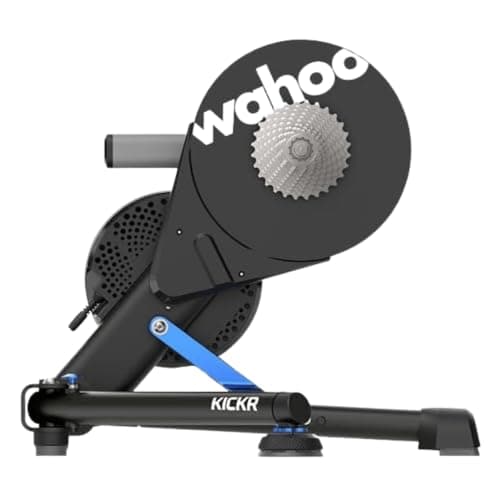
#ad We may earn a commission · Price as of October 21, 2026
The flagship for the rider who wants to stop thinking about the hardware — WiFi, auto-calibration and the top accuracy tier.
- Type
- Direct drive
- Claimed accuracy
- ±1%
- Max resistance
- 2,200 W
- Max gradient
- 20%
- Flywheel
- 16 lb
- Connectivity
- WiFi, BT, ANT+
What we'd praise
- Onboard WiFi moves firmware and ride uploads without a phone acting as a bridge
- Auto-calibration means you never remember a manual spindown
- ±1% claimed accuracy and a heavier flywheel put it in the top tier
What we'd flag
- You pay a clear premium over the Core for gains most riders won't feel
- Feet can telegraph noise to a hard floor without a mat
The v6 is what you buy when you want the trainer to disappear. Wahoo's claimed ±1% power accuracy sits at the top of the field, the 16 lb flywheel plus electromagnetic resistance gives a planted, road-like feel, and the two headline conveniences over the Core are onboard WiFi and auto-calibration. WiFi means firmware updates and ride uploads stop depending on your phone staying in the room; auto-calibration means you never think about a spindown again.
The published resistance ceiling is 2,200 W against the Core's 1,800 W, and the simulated gradient tops out at 20% versus 16%. Both numbers are beyond what most enthusiasts touch, which is the honest catch: the v6 is better on paper in ways you rarely reach. Buy it for the convenience, not the ceiling — if never touching a calibration menu is worth the premium to you, this is the pick.
The value benchmark
Wahoo Kickr Core
9.09.0 out of 10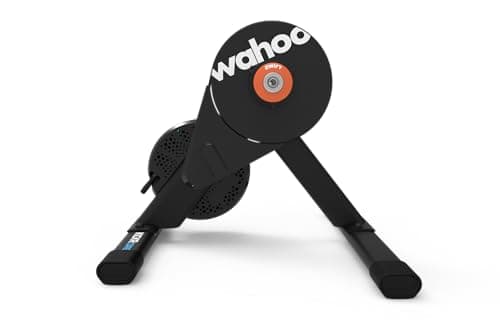
#ad We may earn a commission · Price as of October 21, 2026
About 90% of the flagship's ride for a good deal less — the value pick unless WiFi or auto-calibration is a hard need.
- Type
- Direct drive
- Claimed accuracy
- ±2%
- Max resistance
- 1,800 W
- Max gradient
- 16%
- Flywheel
- 12 lb
- Connectivity
- BT, ANT+
- Status
- Superseded by the Kickr Core 2, which added onboard WiFi
What we'd praise
- Roughly the same ride as the flagship for meaningfully less money
- ±2% claimed accuracy is plenty for training and racing by power
- The value bar the entire direct-drive category is measured against
What we'd flag
- No onboard WiFi — uploads route through your phone or head unit
- Needs an occasional manual spindown after big temperature swings
The Core is the answer to "how little can I give up to save real money?" It runs the same Wahoo firmware and app, pairs the same way over Bluetooth and ANT+, and puts down resistance that feels like a sibling of the v6 at the wattages an enthusiast actually rides. The 12 lb flywheel is lighter and the claimed accuracy is ±2% rather than ±1%, but for structured training and racing by power that gap is a rounding error, not a downgrade.
What you give up is the two conveniences: no onboard WiFi, so uploads lean on your phone, and a manual spindown every few weeks after temperature swings. Neither is a dealbreaker. Put the saving toward the rest of the room — read our full Kickr Core review for the deep version.
Good questions
Frequently asked questions
Is the Wahoo Kickr v6 worth it over the Kickr Core?
For most upgrading riders, no — the Core delivers about 90% of the flagship's ride for meaningfully less. The v6 is worth the premium if onboard WiFi or auto-calibration is a specific need, or if you value never thinking about the hardware over the money saved. The accuracy, resistance and gradient advantages are mostly headroom you won't reach.
What do you actually get for the extra money on the v6?
Two conveniences and some headroom. The conveniences are onboard WiFi (firmware and ride uploads move without your phone as a bridge) and auto-calibration (no manual spindown to remember). The headroom is a higher claimed accuracy (±1% vs ±2%), a higher resistance ceiling (2,200 W vs 1,800 W), a steeper simulated gradient (20% vs 16%) and a heavier 16 lb flywheel.
Is the Kickr Core accurate enough for structured training?
Yes. Wahoo claims ±2% for the Core, which is plenty for training and racing by power. Repeatability — reading consistently ride to ride — matters more than the absolute figure. Chase the v6's ±1% claim only if you run formal FTP protocols where a couple of watts changes your zones.
Does the Kickr Core need calibration?
Occasionally. The Core uses a manual spindown calibration that the Wahoo app walks you through, recommended after big temperature swings. It takes about a minute. The v6's advantage here is that it auto-calibrates in the background, so you never do it manually.
Do both trainers work with Zwift and other apps?
Yes. Both are controllable smart trainers that pair with Zwift, TrainerRoad and the rest over Bluetooth and ANT+. The v6 adds onboard WiFi, but that's for firmware and direct uploads to Wahoo's ecosystem, not a requirement for third-party training apps.
How we sourced this
Keep going