Trainers
Kickr Move vs Kickr v6
Same drive unit, same ±1% claim, same WiFi. One of them slides. This comparison is really about how long you ride, and whether the rail earns its premium.
The short answer
Quick picks
| # | Product | Best for | Score | Price |
|---|---|---|---|---|
| 1 | 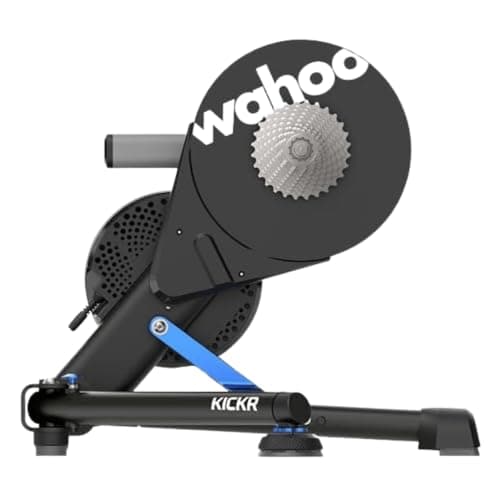 Wahoo Kickr v6 The same data, the same connectivity and a smaller footprint for less money — the right choice unless ride length is your problem. | Best flagship value | 8.98.9 out of 10 | $849.99 · View on Amazon #ad We may earn a commission · Price as of October 21, 2026 |
| 2 | 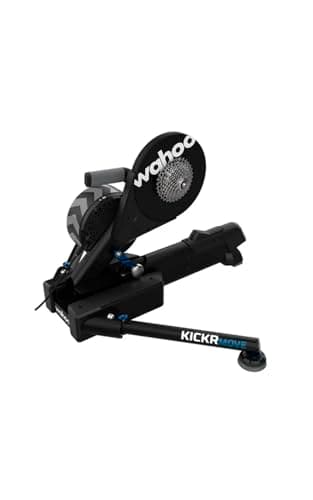 Wahoo Kickr Move The v6 with a movement rail — worth the premium if your rides are long, pointless if they are short. | Best for long indoor rides | 9.09.0 out of 10 | $1,332.64 · View on Amazon #ad We may earn a commission · Price as of October 21, 2026 |
This is the rare head-to-head where the specification sheets are almost entirely irrelevant, because they are the same sheet. The Wahoo Kickr Move and the Wahoo Kickr v6 share a drive unit, a ±1% claimed accuracy figure, a 2,200 W resistance ceiling, a 20% simulated gradient limit, a 16 lb flywheel, onboard WiFi and automatic calibration. Every watt either one reports is produced the same way by the same hardware.
The Move adds a rail. The trainer sits on it and travels fore and aft as you pedal. That is the whole difference, and the entire buying decision comes down to whether that motion is worth the premium to you. We think the answer is genuinely yes for some riders and genuinely no for most.
| Kickr Move | Kickr v6 | |
|---|---|---|
| Type | Direct drive on rail | Direct drive, fixed |
| Claimed accuracy | ±1% | ±1% |
| Max resistance | 2,200 W | 2,200 W |
| Max gradient | 20% | 20% |
| Flywheel | 16 lb | 16 lb |
| Movement | Fore-aft rail travel | Axis feet flex only |
| Onboard WiFi | Yes | Yes |
| Auto-calibration | Yes | Yes |
| Footprint | Longer — rail plus travel | Compact |
| Price band | Discontinued; remaining retail stock | Flagship, in production |
What the rail is actually solving
A bike outdoors is never still. It moves forward and back beneath you as you accelerate and ease, and it rocks side to side under your stroke. You do not notice, because the motion is small and continuous. What it accomplishes is that no part of your body stays loaded in exactly the same way for long — the saddle pressure point migrates, your hand position shifts, your pelvis rotates fractionally.
A fixed trainer stops all of it. That is why an experienced rider who is comfortable for five hours on the road starts fidgeting at seventy minutes indoors, and why the classic advice for long turbo sessions is to stand up every ten minutes. Standing is the manual version of what the road does automatically.
The Move's rail restores the fore-aft half of that. It does not restore the lateral half — the trainer does not lean. That distinction matters and is the single most common source of disappointment among buyers who did not read carefully. If lateral motion is what you want, you are shopping for a smart bike or a rocker plate, not a Kickr Move.
The v6 case: everything that lands in the file is the same
It is worth being blunt about this, because trainer marketing rarely is. The Move will not make you faster. It will not make your FTP test more accurate, your ERG holds tighter or your Zwift races more competitive. Both trainers claim ±1%, both hold a target wattage the same way, both connect over WiFi so a phone is not in the data path, and both calibrate themselves. If you bought a Move expecting better numbers you would be disappointed, and rightly.
Which means the v6 wins on everything except comfort over duration. It is smaller, lighter, easier to reposition, and cheaper. In a spare bedroom where the trainer shares floor space with a wardrobe door, the compact footprint is a real advantage rather than a spec-sheet footnote. Our apartment setup guide covers the space math in detail.
Duration is the deciding variable
Here is the honest test, and it takes no equipment: think about the last five indoor rides you actually completed. If most were under an hour, the rail is solving a problem you do not have — buy the v6. If you regularly ride ninety minutes or more indoors, or you have abandoned rides because you could not sit down any longer rather than because your legs were finished, the rail is targeting exactly your limiter and the premium is defensible.
Winter base training is the clearest case for the Move: long, low-intensity hours where the only thing that ends the ride is discomfort. Criterium-style interval training is the clearest case against it: short, hard, over before the saddle becomes an issue.
What else that money could buy
The gap between these two trainers is not small, and it is worth naming what it buys elsewhere. A genuinely high-flow fan is the single highest-return purchase in a pain cave, because overheating ends more indoor rides than saddle discomfort does. A proper mat solves floor noise, sweat and vibration. A trainer desk puts your bottles and towel where you can reach them without leaning off the bike.
If none of those are missing from your setup already, the Move is a reasonable place for the money. If any of them are, buy them first — every one of them will get you on the bike more often than a movement rail will, and getting on the bike is the whole point.
The verdict
The Kickr v6is the better buy for most riders, because most riders' indoor sessions are not long enough for the rail to earn its premium, and because the money has higher- return homes elsewhere in the room. The Kickr Move is the better buy for the long-distance rider, the winter base-mile rider, and anyone whose indoor ceiling is comfort rather than fitness — for them it is not a luxury, it is the fix.
And for a third group, the answer is neither. If the reason you are reading this is that you are upgrading from a wheel-on trainer, the biggest single jump available to you is direct drive itself, not the tier within it. The Kickr Core makes that jump for substantially less than either trainer here, and our best smart trainers roundup ranks the whole field.
Want the wider view?
See how both rank against the full fieldThe full reviews
Head to head
#1 · Best flagship value
Wahoo Kickr v6
8.98.9 out of 10#ad We may earn a commission · Price as of October 21, 2026
The same data, the same connectivity and a smaller footprint for less money — the right choice unless ride length is your problem.
- Type
- Direct drive, fixed frame
- Claimed accuracy
- ±1%
- Max resistance
- 2,200 W
- Max gradient
- 20%
- Flywheel
- 16 lb
- Movement
- Axis action feet (limited lateral flex)
What we'd praise
- Every number that lands in your ride file is identical to the Move's, for less money
- Smaller, lighter and easier to move or store than the rail-mounted Move
- Axis action feet take the hardest edge off a fixed frame without a rail
- The cheaper of the two by a margin that buys a serious fan, a mat and a year of Zwift
What we'd flag
- Fixed fore-aft position is exactly the thing that makes long indoor rides uncomfortable
- Axis feet are a small mitigation, not movement — they flex, they do not travel
- Still flagship money for a trainer the Kickr Core largely matches on data
The v6 is the trainer the Move is built on, and on every measurable axis they are the same machine. If your indoor sessions are structured and finite — an hour of intervals, a 45-minute recovery spin, a race on Zwift — you will finish before fixed-position discomfort becomes the thing that ends the ride, and the Move's rail will have solved a problem you did not have.
The v6 is also easier to live with in a small room, because there is no rail travel to allow for. Our Kickr v6 review covers it in full, and Kickr vs Kickr Core is the next question down if the budget is doing real work.
#2 · Best for long indoor rides
Wahoo Kickr Move
9.09.0 out of 10#ad We may earn a commission · Price as of October 21, 2026
The v6 with a movement rail — worth the premium if your rides are long, pointless if they are short.
- Type
- Direct drive on a fore-aft rail
- Claimed accuracy
- ±1%
- Max resistance
- 2,200 W
- Max gradient
- 20%
- Flywheel
- 16 lb
- Movement
- Fore-aft travel
What we'd praise
- Fore-aft rail unloads your saddle contact point continuously, which is what makes long rides tolerable
- Standing efforts feel far more natural because the bike is not fighting your forward surge
- Identical drive unit to the v6 — WiFi, auto-calibration and ±1% claimed accuracy all carry over
- The most comfortable way to ride a real bike indoors short of a smart bike
What we'd flag
- Costs meaningfully more than the v6 for a difference that shows up in comfort, never in data
- Longer footprint and heavier, so it needs a permanent home
- Movement is fore-aft only — no lateral lean, which is the motion sprinters miss most
Everything the Move does differently happens below the trainer, not inside it. The drive unit, the firmware, the app, the accuracy claim and the connectivity are the v6's. What changes is that the whole assembly rides on a rail and travels a few inches forward and back with your pedal stroke. That constant small motion is why riders report far less saddle discomfort on long sessions — your sit bones are not parked on one spot for two hours.
It is a genuine improvement and an expensive one. Full detail is in our Kickr Move review.
Good questions
Frequently asked questions
Is the Kickr Move more accurate than the Kickr v6?
No. Both claim ±1% power accuracy and use the same drive unit, so the numbers they report are produced identically. The movement rail affects comfort and ride feel only, and has no bearing on measurement.
What does the Kickr Move do that the Kickr v6 does not?
It travels fore and aft on a rail as you pedal. That continuous small motion stops your body being loaded in exactly the same position for the whole ride, which delays saddle and lower-back discomfort on long sessions and makes standing efforts feel more natural.
Does the Kickr Move rock side to side?
No, its travel is fore-aft only. Lateral lean is a different motion that neither trainer provides. A smart bike or a rocker plate under a conventional trainer is the route to side-to-side movement.
Which needs more space, the Kickr Move or the Kickr v6?
The Move, clearly. The rail makes the unit longer and the bike travels within that footprint, so you need clearance fore and aft. The v6 is compact enough to reposition easily. In a small or shared room the v6 is the more practical choice.
Is the Kickr Move worth it for Zwift racing?
Not for the racing itself. Both trainers deliver the same power data and respond to gradient changes identically, so neither offers a competitive advantage. The Move helps only if your races are long enough that comfort limits you before your legs do.
Should I buy a Kickr Core instead of either of these?
For a lot of riders, yes. The Core uses the same sealed direct-drive architecture and delivers most of the ride for substantially less, giving up onboard WiFi, four pounds of flywheel and one percentage point of claimed accuracy. If you are upgrading from a wheel-on trainer, that is the biggest jump per dollar available.
How we sourced this
Keep going