Head to Head
Smart Bike vs Smart Trainer
Same watts, same ceilings, very different money. The honest case for a dedicated indoor bike — and the three questions that decide whether you are actually one of its buyers.

The short answer
Quick picks
| # | Product | Best for | Score | Price |
|---|---|---|---|---|
| 1 | 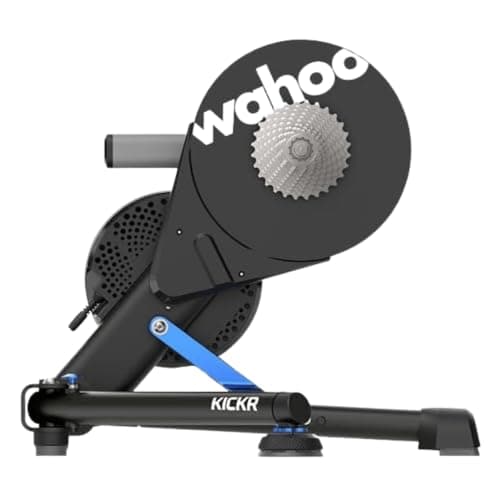 Wahoo Kickr v6 The same accuracy and ceilings as a smart bike, on the bike you already own and love, for a fraction of the money. | The smart trainer case | 9.29.2 out of 10 | $849.99 · View on Amazon #ad We may earn a commission · Price as of October 22, 2026 |
| 2 | 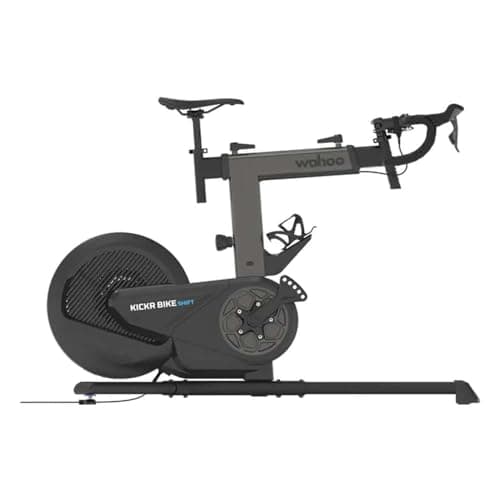 Wahoo Kickr Bike Shift The convincing version of the smart bike argument: ±1% power, virtual shifting and a fit you dial once, at a price that has to be justified by how often you ride. | The smart bike case | 8.78.7 out of 10 | $2,381.52 · View on Amazon $2,699.99Save 12% #ad We may earn a commission · Price as of October 22, 2026 |
A smart bike is a complete stationary bicycle with the resistance unit built in — no road bike required, no wheel to remove, and on most models no chain at all. A smart trainer is a resistance unit your own bike attaches to. Both measure power, both take app control, and at the top of each category the published numbers are close enough to be a coin flip. So the decision is not really about performance. It is about how the machine fits into your life, and how much that fit is worth.
| Smart bike | Smart trainer | |
|---|---|---|
| Typical claimed accuracy | ±1% | ±1% to ±2.5% by tier |
| Your own bike fit | Approximated by adjustment | Exact — it is your bike |
| Time from walking in to riding | Seconds | Two to five minutes |
| Drivetrain wear | None on most models | Yes, chain and cassette |
| Noise | Very low — no chain | Low, but drivetrain is audible |
| Sharing between riders | Adjust and go | Swap bikes |
| Portability | Poor — it stays put | Good |
| Price band | Several times a trainer | Budget to flagship |
Question one: how often do you actually ride indoors?
The smart-bike case is a convenience case, and convenience compounds with frequency. If you ride indoors three or four times a week for six months of the year, the two-to-five minutes of mounting a bike — plus the reluctance it creates on a marginal evening — is a real tax. Removing it changes how many sessions you actually complete, and completed sessions are the only thing that makes you faster.
If you ride indoors once a week when the weather is bad, that same tax is trivial. Buying a smart bike for occasional use is buying a very expensive solution to a problem you barely have. In that case, put the money into a better trainer and a better room. Our indoor cycling setup guide is the blueprint.
Question two: does anyone else ride it?
This is the argument that convinces most people who buy one. A smart bike with five-point fit adjustment can move between two riders of very different sizes in under a minute. A trainer cannot — it requires a second bike, or a saddle and stem swap nobody will actually perform.
Households where two people both want to ride indoors are the clearest smart-bike buyers there are, because the alternative is two bikes and two trainers. Framed that way, the price gap narrows considerably.
Question three: how much do you care about your fit?
This one cuts against smart bikes. A good smart bike approximates your position through adjustable stack, reach, saddle height, setback and crank length. Approximates is the operative word: the contact points are the machine's saddle and bars, not yours, and no adjustment range reproduces the exact feel of a bike you have spent years dialing in.
For a rider training toward outdoor events, that matters. The specificity of riding your own bike — same saddle, same bar drop, same reach — is worth something real, and it is the reason many serious riders stay on trainers regardless of budget. If you are chasing indoor fitness generally, it matters much less.
The quiet advantage nobody mentions
Most smart bikes use virtual shifting with no chain and no cassette. That means no drivetrain noise, no chain to lube, no cassette to wear out, and no indoor grime on a drivetrain you also take outside. Riders who train indoors heavily often find their outdoor drivetrain lasting noticeably longer once indoor miles move off it.
It also means the whole setup is quieter than a trainer, because on a direct-drive trainer the chain is the noise. If you live in an apartment or ride while a household sleeps, this is not a small thing — though a good trainer mat closes some of the gap for much less money.
Leaning toward a trainer?
See the best smart trainers, rankedWhat you are not buying
You are not buying more accurate power. Both categories top out at a claimed ±1%. You are not buying more resistance — the ceilings match. And you are not buying a training advantage: no study, no manufacturer claim and no honest reviewer suggests a smart bike produces better adaptation than a flagship trainer.
You are buying the removal of friction, the ability to share, and a machine that stays set up. Those are legitimate things to want. They are just not performance, and any sales pitch that frames them as performance should be treated with suspicion.
The verdict
Buy a smart trainerunless you can answer yes to question one or question two. The Kickr v6 matches the smart bike's headline specs for a fraction of the price, and a Kickr Core gets you most of the way there for less again. Spend what you save on the room: a fan, a mat, a screen, and the platform subscription you will actually use.
Buy a smart bike if you ride indoors most weeks and the setup ritual is genuinely costing you sessions, or if two riders share it. In that case the Kickr Bike Shift is the sensible entry to the category — and our Kickr Bike Shift review covers what it does and does not include. Our best smart bikes roundup ranks it against the rest of the class, and if the money is the obstacle rather than the concept, the Zwift Ride delivers the same removal of friction for roughly a third of flagship smart bike pricing. Those two are the decision most buyers actually face, so we have put them head to head in Zwift Ride vs Wahoo Kickr Bike Shift.
The full reviews
Head to head
#1 · The smart trainer case
Wahoo Kickr v6
9.29.2 out of 10#ad We may earn a commission · Price as of October 22, 2026
The same accuracy and ceilings as a smart bike, on the bike you already own and love, for a fraction of the money.
- Type
- Direct-drive trainer (your bike)
- Claimed accuracy
- ±1%
- Max resistance
- 2,200 W
- Max gradient
- 20%
- Flywheel
- 16 lb steel
- Connectivity
- WiFi, BT, ANT+ FE-C
What we'd praise
- You train on your own bike, with your own fit, saddle and contact points
- A fraction of smart-bike money for the same claimed accuracy and resistance ceiling
- Onboard WiFi makes it the most connection-reliable trainer Wahoo sells
- Packs down and travels far more easily than a smart bike ever will
What we'd flag
- Mounting and dismounting the bike is a recurring chore that adds up over a winter
- Your drivetrain still wears indoors, and it is the loudest part of the setup
- Sharing between riders of different sizes means swapping bikes, not turning a knob
The strongest argument against a smart bike is a really good smart trainer, and the Kickr v6 is that. It claims the same ±1% accuracy and the same 2,200 W and 20% ceilings as the Kickr Bike Shift, adds onboard WiFi that the Shift's trainer rivals lack, and costs a fraction as much. It also has one advantage no smart bike can match: your position is your position, because it is your bike.
The costs are the ones every trainer owner knows — wheel off, bike on, drivetrain wear, and the noise of a chain doing work. Whether those add up to the price of a smart bike is a question about how you live, not about watts. The full breakdown is in our Kickr v6 review.
#2 · The smart bike case
Wahoo Kickr Bike Shift
8.78.7 out of 10$2,699.99Save 12%
#ad We may earn a commission · Price as of October 22, 2026
The convincing version of the smart bike argument: ±1% power, virtual shifting and a fit you dial once, at a price that has to be justified by how often you ride.
- Type
- Smart bike (no bike required)
- Claimed accuracy
- ±1%
- Max resistance
- 2,200 W
- Max gradient
- 20%
- Shifting
- Virtual, configurable drivetrain
- Adjustment
- Five-point fit adjustment
What we'd praise
- No bike to mount, strip or maintain — walk up and ride
- Virtual shifting means no chain, no cassette wear and no drivetrain noise at all
- Five-point fit adjustment makes it genuinely shareable between riders of different sizes
- Frees your road bike to stay built, clean and ready for outdoors
What we'd flag
- Costs several times a good direct-drive trainer, and it is a single-purpose object
- Fixed frame with no tilt on this model — the Kickr Bike Pro adds incline movement
- You train on a machine, not on your own bike's exact fit and contact points
The Kickr Bike Shift is Wahoo's more attainable smart bike, sitting below the Kickr Bike Pro. It removes the bike from the equation entirely: an adjustable frame, integrated resistance unit, virtual shifting with a configurable drivetrain, and a claimed ±1% power accuracy. Nothing wears out because nothing touches anything — there is no chain, no cassette, and no drivetrain to clean.
The argument for it is time and friction rather than performance. If your indoor riding is frequent enough that mounting and dismounting a bike is a real barrier, or if two riders of different sizes share the setup, a smart bike changes the daily experience in a way no trainer upgrade can. What it does not do is make you faster than a Kickr v6 would.
Good questions
Frequently asked questions
Is a smart bike more accurate than a smart trainer?
No. Flagship smart bikes and flagship smart trainers both typically claim ±1% power accuracy. The difference between the categories is convenience, adjustability and drivetrain wear, not measurement quality. A mid-tier trainer at ±2% is a wider tolerance, but that is a tier difference rather than a category one.
Is a smart bike worth it if I already have a good trainer?
Usually not on performance grounds, because a flagship trainer matches a smart bike's accuracy and resistance ceilings. It becomes worth it when convenience or sharing is the deciding factor: riding indoors most days, a household where two riders of different sizes both train, or a setup you want permanently ready.
Do smart bikes have a chain?
Most do not. Virtual shifting replaces the drivetrain with an electronically simulated one, so there is no chain to lubricate, no cassette to wear out and almost no mechanical noise. That also means your outdoor bike's drivetrain stops accumulating indoor miles.
Can a smart bike replicate my road bike fit?
It can approximate it closely through adjustable saddle height, setback, reach, stack and often crank length. It cannot reproduce it exactly, because the saddle, bars and their shapes belong to the machine rather than to you. Riders training for outdoor events often prefer a trainer for that reason.
Are smart bikes quieter than smart trainers?
Yes, generally. On a direct-drive smart trainer the dominant noise is your own chain and cassette under load. A smart bike with virtual shifting has neither, so the setup runs quieter. A trainer mat reduces vibration transmitted through the floor, which is what people below you actually hear.
What is the difference between the Kickr Bike Shift and the Kickr Bike Pro?
The Shift is the more attainable model with a fixed frame, while the Pro sits above it and adds incline movement that tilts the bike on climbs and descents. Both offer virtual shifting and a claimed ±1% accuracy, so the gap between them is about simulation and price rather than measurement.
How we sourced this
Keep going