Smart Bike Review
Zwift Ride Review: A Smart Bike for a Third of the Money
Zwift's frame plus a Wahoo Kickr Core 2 costs about a third of a flagship smart bike and fits more riders than any of them. The compromises are real, and they are not the ones people expect.
The short answer
Quick picks
| # | Product | Best for | Score | Price |
|---|---|---|---|---|
| 1 | Zwift Ride with Kickr Core 2 The smart bike that stopped being a luxury: flagship-category convenience and the widest fit range in the class, bought with accuracy, ceilings and a chain. | The cheapest complete smart bike | 8.68.6 out of 10 | |
| 2 | 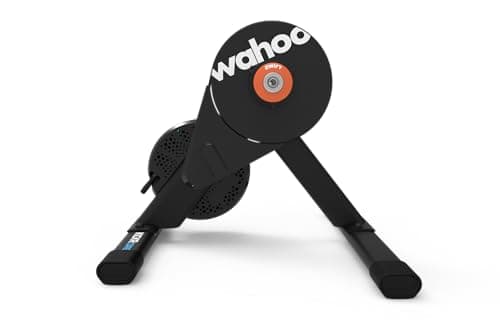 Wahoo Kickr Core 2 The honest alternative to this whole page: the same trainer, the same numbers, a fraction of the money — if you are willing to keep mounting your own bike. | The trainer on its own, if you keep your bike | 8.78.7 out of 10 | $549.99 · View on Amazon #ad We may earn a commission · Price as of October 6, 2026 |
| 3 | 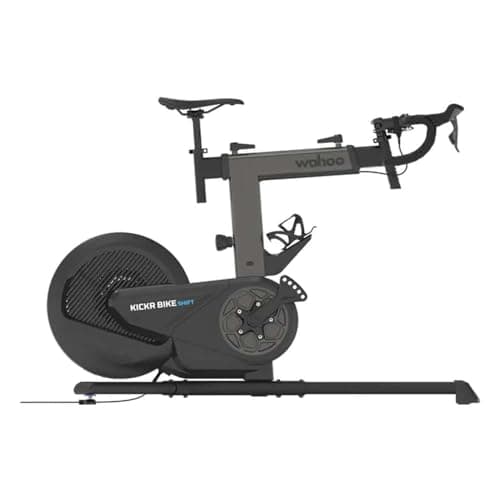 Wahoo Kickr Bike Shift What the extra money actually buys: a belt drive, ±1% power and a 2,200 W ceiling — not a different experience. | The step up, if the chain bothers you | 8.88.8 out of 10 | $2,104.53 · View on Amazon $2,699.99Save 22% #ad We may earn a commission · Price as of October 6, 2026 |
The Zwift Ride is not a trainer and it is not quite a bike. It is a frame — saddle, bars, cranks, controllers — designed to have a direct-drive trainer bolted into the back of it, and Zwift sells it bundled with a Wahoo Kickr Core 2 that supplies the resistance, the power measurement and the radios. The combination is the cheapest complete smart bike you can buy, at a price Zwift lists as $1,299.99 on its US store.
That matters because the smart bike category has spent years being a four-thousand-dollar answer to a five-minute problem. The real benefit of a smart bike has never been watts; it is that nothing has to be set up. The Zwift Ride is the first version of that argument most riders can actually act on. This review covers what the V2 frame changed, what the Core 2 brings and does not, and the three groups of rider who should buy something else instead. We have not ridden this bike: every figure below is Zwift's or Wahoo's published specification, or an attributed finding from a reviewer who has one.
What you actually get in the box
Zwift lists the bundle as the Zwift Ride V2 smart frame, a Kickr Core 2 with the Zwift Cog already fitted, handlebars with integrated rechargeable controllers, flat pedals, a charging cable for the controllers, magnetic cable tidies and the Zwift Key assembly tool. Flat pedals are a small but genuine saving — both Wahoo smart bikes arrive without pedals at all.
The controllers are the part people underrate. Shifting and steering buttons are built into the bars rather than clipped on, they recharge, and because the trainer runs a single Zwift Cog instead of a cassette, the gear range is software. There is no derailleur to index, no cassette to match to your drivetrain, and no cassette purchase to make before your first ride.
| Specification | Figure |
|---|---|
| Claimed power accuracy | ±2% |
| Max resistance | 1,800 W |
| Max simulated grade | 16% |
| Flywheel | 5.4 kg, electromagnetic resistance |
| Rider height range | 146-198 cm (about 4 ft 10 in to 6 ft 6 in) |
| Max rider weight | 120 kg (265 lb) |
| Stepover height | 73 cm |
| Saddle height range | 57.1-86.5 cm |
| Handlebar height range | 82.2-102.1 cm |
| Crank lengths | 160, 165, 170, 172.5, 175 mm |
| Handlebar width | 42 cm, center to center |
| Footprint | 134 cm long x 60.2 cm wide |
| Total weight | 35.5 kg |
| Connectivity | WiFi, Bluetooth, ANT+ |
| Platform support | Zwift and Rouvy (per Zwift) |
Fit is the headline, not the price
The specification that should decide this purchase for a lot of households is the fit envelope: 146 cm to 198 cm of rider height, a 120 kg weight limit, a 73 cm stepover and five crank lengths. Both Wahoo smart bikes stop at 6 ft 4 in and 250 lb, and the Tacx Neo Bike Plus allows 120 kg. The cheapest bike in the class has the widest envelope in the class, which is not how this usually goes.
This is also where the V2 did its work. Per DC Rainmaker's hands-on, the V2 frame dropped the minimum rider height from about 5 ft to 4 ft 10 in, replaced the V1's single 170 mm crank with five lengths from 160 to 175 mm, added roughly 3 cm of extra fore-aft saddle adjustment across four seatpost positions, lowered the minimum bar height by about 4 cm and gave the bars oversized tops. The single largest grouping of complaints about the V1, by DC Rainmaker's account, was fit rather than features — so the V2 is a response to the right criticism.
The V2 also added an extra internal seal to the controllers against sweat and moisture, which was the V1's documented failure mode. If you are shopping the used market for a V1 to save money, that is the specific risk to ask the seller about — and our sweat protection guide explains why electronics on a bike you sweat over fail the way they do.
The chain is the real compromise
Four of the five smart bikes in the class use a belt drive and an electromagnetic brake, and the selling point is that there is no drivetrain to maintain. The Zwift Ride is the exception: it runs a real chain over the Zwift Cog.
That has two consequences, both documented by DC Rainmaker. You still lube the chain and eventually replace it, and the chain is a somewhat unusual type and size, so it is not a grab-one-off-the-shelf job. And you hear it. DC Rainmaker describes the drivetrain noise as greatly reduced with the newer Zwift Cog and still audible — below fan level, but louder than a well-dialed chain and cassette. In practice, in most pain caves the fan is the loudest object in the room by a distance, which is why our quiet trainer roundup spends as much time on airflow as on hardware. But if silence is the reason you are buying a smart bike, this is not the one.
What the Kickr Core 2 does and does not give you
The trainer in this bundle is a current, well-regarded unit rather than a stripped-out special. Wahoo claims ±2% from measured power, a 1,800 W ceiling and a 16% simulated grade, with WiFi, Bluetooth and ANT+ FE-C, plus Race Mode (a faster data rate to the app) and Kickr Bridge (a sensor relay that pushes your heart rate through the trainer, freeing a Bluetooth connection on an Apple TV). That last feature is worth more than it sounds if you have ever lost a workout to a dropped sensor — see when Zwift will not see your trainer.
What you do not get is flagship measurement. ±2% against the ±1% claimed by the Kickr Bike Shift, Kickr Bike Pro, Tacx Neo Bike Plus and Wattbike Atom. For most riders that gap is irrelevant, because training responds to repeatability rather than absolute accuracy, and this trainer is repeatable. It starts to matter when your numbers have to travel — a coach reading your files, a race category, an FTP you want to compare against a power meter on your outdoor bike. Our accuracy guide draws that line properly.
The ceilings are the other place this bundle sits at the bottom of the class: 1,800 W and 16%, against 2,200-2,500 W and 20-25% on the flagships. The wattage ceiling is close to irrelevant for almost everyone. The grade ceiling is not, and it is weight-dependent: a heavier rider reaches a trainer's resistance limit at a lower simulated gradient than a light one, because the machine has to produce more force for the same slope. If you are a bigger rider who rides the steep stuff, that is the specification to think hardest about.
Want the ranking?
Compare it against the whole classThree riders who should buy something else
You already own a current direct-drive trainer. Then you are paying roughly $700 for a frame, and the only thing it buys you is not mounting your bike. If your bike lives on the trainer anyway, that is a bad trade. Our smart bike vs smart trainer page is the longer version of this argument.
You want the frame to climb. No smart bike at this price tilts, and the Zwift Ride closes the usual workaround too: it is not Kickr Climb compatible, so you cannot add physical gradient later. If that is the feature you want, it is the Kickr Bike Pro or nothing.
You want a sealed, silent, maintenance-free machine. Belt drive is the specification you are looking for, and the Kickr Bike Shift is the cheapest bike that has it.
The verdict
The Zwift Ride is the most sensible thing to happen to smart bikes. It takes the part of the category that genuinely changes how often you ride — nothing to set up, a fit you dial once, shifters on the bars — and sells it for about a third of what the flagships ask, with a current trainer included and the widest fit range in the class. The compromises are all honest and all on the spec sheet: ±2% rather than ±1%, the lowest ceilings in the class, a chain to maintain and listen to, and no fan, screen or tilt.
If you are choosing between this and a flagship bike, buy this one and spend the difference on the room: a serious fan, a mat and a screen you can actually see will do more for your winter than half a percent of claimed accuracy. If you are choosing between this and a trainer you already own, keep the trainer.
The full reviews
Every pick, in detail
#1 · The cheapest complete smart bike
Zwift Ride with Kickr Core 2
8.68.6 out of 10The smart bike that stopped being a luxury: flagship-category convenience and the widest fit range in the class, bought with accuracy, ceilings and a chain.
- Type
- Smart bike frame plus Kickr Core 2 trainer
- Claimed accuracy
- ±2%
- Max resistance
- 1,800 W
- Simulated grade
- 16%
- Flywheel
- 5.4 kg, electromagnetic
- Rider range
- 146-198 cm, up to 120 kg (265 lb)
- Cranks
- 160, 165, 170, 172.5, 175 mm
- Connectivity
- WiFi, Bluetooth, ANT+
What we'd praise
- Zwift listed it at $1,299.99 on its US store on 2026-10-05 — roughly a third of flagship smart bike money, with the trainer included
- Fits riders from 146 cm to 198 cm with a 120 kg limit: the widest envelope of any smart bike we have looked at
- Shift and steer controllers are built into the handlebar, rechargeable, with nothing to strap on
- The Kickr Core 2 underneath it is a current trainer with WiFi, ANT+ FE-C, Race Mode and the Kickr Bridge sensor relay
- V2 added five crank lengths, four seatpost positions worth 3 cm of extra fore-aft, oversized bar tops, a lower minimum bar height and better-sealed controllers
- Zwift lists Rouvy compatibility as well as Zwift, so the hardware is not locked to one subscription
What we'd flag
- It keeps a chain and the Zwift Cog, so you lube it and eventually replace it — DC Rainmaker notes the chain is a somewhat unusual type and size
- Chain noise is audible: DC Rainmaker puts it below fan level but louder than a dialed-in chain and cassette
- ±2% claimed accuracy, where the flagship smart bikes claim ±1%
- 1,800 W and a 16% grade ceiling are the lowest figures in the smart bike class
- No built-in fan, no screen, no USB charging, no handlebar width adjustment and no frame tilt
- Not compatible with the Wahoo Kickr Climb, so the climb-simulation upgrade path is closed
The Zwift Ride is a frame, not a trainer. The resistance, the power measurement and the connectivity all come from the Wahoo Kickr Core 2 bolted into the back of it, and the frame supplies the parts a trainer cannot: a saddle, bars, cranks, a stepover and a fit. Bundled together, Zwift lists it at $1,299.99 on its US store.
That bundle price is the whole story. Nothing else gives you walk-up-and-ride convenience, tool-free fit adjustment and handlebar shifters for anywhere near this money, and the gap to the next cheapest complete bike is roughly another $700.
#2 · The trainer on its own, if you keep your bike
Wahoo Kickr Core 2
8.78.7 out of 10#ad We may earn a commission · Price as of October 6, 2026
The honest alternative to this whole page: the same trainer, the same numbers, a fraction of the money — if you are willing to keep mounting your own bike.
- Type
- Direct drive, electromagnetic
- Claimed accuracy
- ±2%, measured
- Max resistance
- 1,800 W
- Max gradient
- 16% up, -10% down
- Flywheel
- 5.4 kg (12 lb)
- Connectivity
- WiFi, Bluetooth, ANT+ FE-C
What we'd praise
- It is the same trainer that powers the Zwift Ride bundle, so the ride feel and the numbers are identical
- Race Mode pushes power to the app far faster than the original Core, so surges register almost immediately
- Kickr Bridge relays a heart rate strap through the trainer, taking one connection out of the chain
- Sold either with the Zwift Cog and Click or with an 11-speed cassette, so virtual shifting is optional
What we'd flag
- You keep the setup ritual the Zwift Ride exists to remove: rear wheel off, bike on, bike off again
- Fixed frame with no folding legs and no carry handle
- ±2% is unchanged from the original Core, so this is a connectivity update rather than an accuracy one
Before buying the frame, price the trainer on its own. The Kickr Core 2 is the engine of the Zwift Ride bundle, and bought by itself it costs a fraction of what the bundle does. Everything you give up is convenience and fit, not watts.
If your bike already lives on a trainer in a spare room and you do not strip it between sessions, that is the better purchase. Our Kickr Core 2 review covers it in full, and Kickr Core 2 vs Elite Rivo puts it against the trainer it competes with on price.
#3 · The step up, if the chain bothers you
Wahoo Kickr Bike Shift
8.88.8 out of 10$2,699.99Save 22%
#ad We may earn a commission · Price as of October 6, 2026
What the extra money actually buys: a belt drive, ±1% power and a 2,200 W ceiling — not a different experience.
- Claimed accuracy
- ±1%
- Max resistance
- 2,200 W
- Simulated grade
- +20% to -15%
- Drivetrain
- Belt drive, programmable virtual shifting
- Rider range
- 5 ft 0 in to 6 ft 4 in, up to 250 lb
- Weight
- 79 lb
What we'd praise
- Belt drive and an electronic brake: no chain to lube, nothing to replace, less noise
- ±1% claimed accuracy and a 2,200 W ceiling, both a step above the Zwift Ride bundle
- Programmable virtual shifting for SRAM, Shimano or Campagnolo gear ratios
- ANT+ FE-C and Direct Connect, so head units and wired setups can see it
What we'd flag
- Substantially more money than the Zwift Ride bundle for gains most riders will not feel
- 250 lb rider limit and a 6 ft 4 in height ceiling — both tighter than the Zwift Ride's
- Still no fan, no screen and no frame tilt
The Kickr Bike Shift is the natural upgrade from this bundle and the useful reference point for judging it. The headline differences are a belt drive instead of a chain, ±1% instead of ±2%, and a 2,200 W rather than 1,800 W ceiling.
Notably, the Zwift Ride beats it on fit: 146-198 cm and 120 kg against 5 ft to 6 ft 4 in and 250 lb. Our Kickr Bike Shift review has the full picture, and the best smart bikes roundup ranks both against the rest of the class.
Good questions
Frequently asked questions
Is the Zwift Ride a smart bike or just a frame?
Both, depending on how you buy it. The Zwift Ride is a frame with handlebar-integrated shift and steer controllers; it needs a direct-drive trainer bolted into the back to supply resistance and power measurement. Zwift sells it bundled with a Wahoo Kickr Core 2, and in that configuration it is a complete smart bike with nothing else to buy except pedals you prefer.
How much does the Zwift Ride cost?
Zwift listed the Zwift Ride with Kickr Core 2 at $1,299.99 on its US store when we checked on 2026-10-05. The bundle has been discounted periodically below that. Because Zwift sells the bike direct rather than through Amazon, there is no live marketplace price to compare against, so check Zwift's own page for the current figure before buying.
What size riders does the Zwift Ride fit?
Zwift publishes a rider height range of 146 to 198 cm (roughly 4 ft 10 in to 6 ft 6 in) and a maximum rider weight of 120 kg (265 lb), with a 73 cm stepover, a saddle height range of 57.1 to 86.5 cm, a handlebar height range of 82.2 to 102.1 cm, and five crank lengths from 160 to 175 mm. That is a wider fit envelope than either Wahoo smart bike offers.
What changed on the Zwift Ride V2?
Per DC Rainmaker's hands-on, the V2 lowered the minimum rider height to about 4 ft 10 in, replaced the single 170 mm crank with five lengths from 160 to 175 mm, added around 3 cm more fore-aft saddle adjustment across four seatpost positions, lowered the minimum handlebar height by about 4 cm, gave the bars oversized tops, and added an extra internal seal to the controllers against sweat ingress. The price stayed at $1,299.99 and the bundled trainer remained the Kickr Core 2.
Does the Zwift Ride need chain maintenance?
Yes. Unlike the belt-drive smart bikes, it runs a chain over the Zwift Cog, so it needs lubing and eventually replacing. DC Rainmaker notes the chain is a somewhat unusual type and size, which makes replacement less convenient than a standard chain, and describes the drivetrain noise as much improved with the newer Cog but still audible - below fan level, and louder than a well-dialed chain and cassette.
Is the Zwift Ride accurate enough for training?
For most riders, yes. Power comes from the Kickr Core 2, which Wahoo claims at plus or minus 2% from measured rather than estimated power, and training adaptation follows repeatability more than absolute accuracy. It is less suitable when your numbers have to be comparable to someone else's: a coach reading your files, a race category, or an FTP you want to line up against a power meter on your outdoor bike.
Does the Zwift Ride work with apps other than Zwift?
Yes. Zwift lists compatibility with Zwift and Rouvy, and the Kickr Core 2 underneath broadcasts over WiFi, Bluetooth and ANT+ FE-C, which is what third-party apps use to control a trainer. The handlebar controllers are designed around Zwift's virtual shifting, so the shifting experience is at its best inside Zwift.
Can you add a Kickr Climb to a Zwift Ride?
No. The Zwift Ride is not compatible with the Wahoo Kickr Climb, so there is no route to physical gradient simulation on this frame. If a frame that pitches up and down is the feature you want, the Wahoo Kickr Bike Pro is the bike that does it, at roughly three times the money.
How we sourced this
- Zwift Ride with KICKR CORE 2 specifications and price (Zwift US store)
- Zwift Ride V2 hands-on: everything that's different (DC Rainmaker)
- Zwift Ride in-depth review (DC Rainmaker)
- Zwift Ride V2 announcement (Zwift newsroom)
- Wahoo KICKR CORE 2 specifications (manufacturer)
- Wahoo KICKR BIKE SHIFT specifications and price (manufacturer)
- Zwift Ride V2 with KICKR CORE 2 bundle page (Wahoo)
Keep going