Trainer Review
Elite Avanti Review: A Measured Watt at Mid-Range Money
Elite's mid-range trainer swaps the Rivo's estimated power for a real optical torque sensor at a claimed ±1%, and keeps the light flywheel. Here is who that trade suits.
There is a gap in every trainer range that nobody markets honestly: the point where a manufacturer stops estimating your power and starts measuring it. Elite puts that line in the middle of its lineup, and the Avanti is the cheapest model on the measured side of it. Everything about the trainer follows from that one decision.
Below it sits the Rivo, which derives wattage from its own resistance model and publishes ±2.5% for the result. Above it sits the Justo, which pairs the same class of sensor with a heavier flywheel and a much steeper gradient ceiling. The Avanti takes the sensor from the top of the range and the flywheel from the bottom, adds the widest radio stack Elite makes, and asks a mid-range price for the combination.
The optical torque sensor is the entire argument
Elite specifies the Avanti's power meter as an optical torque sensor with an accuracy of ±1%. That phrasing matters. An estimating trainer works backward: it knows how much electromagnetic resistance it applied and how fast the flywheel is turning, and it infers the wattage that must have produced it. A torque sensor sits in the drive path and reads the force you are actually applying, then reports it. The first approach is cheaper and drifts with temperature and wear; the second is what a power meter does.
The practical difference is not that estimated power is wrong. Estimated power is usually repeatable, and repeatability is what a training plan runs on — our accuracy guide makes that case at length. The difference shows up the moment your number has to leave your own pain cave: an FTP set outdoors on pedals, a Zwift race against people on flagship hardware, a structured plan a coach wrote from outdoor data. Those all require the trainer to agree with a different device, and a measured figure is the only one that reliably does.
Elite pairs it with automatic calibration, which is quietly the more useful half. Every trainer manufacturer tells you to spin down before a session and almost nobody does it. A trainer that recalibrates itself as it warms up removes the most-skipped maintenance job in indoor cycling — and in DC Rainmaker's in-depth test the Avanti held its accuracy across a wide temperature range without manual intervention.
| Elite Avanti | Elite Rivo | Wahoo Kickr Core 2 | Elite Justo | Wahoo Kickr v6 | |
|---|---|---|---|---|---|
| Power figure | Measured (optical torque sensor) | Estimated | Measured | Measured (optical torque sensor) | Measured |
| Claimed accuracy | ±1% | ±2.5% | ±2% | ±1% | ±1% |
| Max resistance | 2,100 W at 40 km/h | 2,000 W at 40 km/h | 1,800 W | 2,300 W at 40 km/h | 2,200 W |
| Max gradient | 18% | 18% | 16% | 24% | 20% |
| Flywheel | 4 kg | 4 kg | 5.4 kg | 6.2 kg | 16 lb |
| ANT+ | Yes | No | Yes | Yes | Yes |
| Onboard WiFi | Yes | Yes | Yes | No | Yes |
| Wired Ethernet | Yes | No | No | No | No |
| Virtual shifting | Zwift Cog and Click | Zwift Cog and Click | Zwift Cog and Click | Not listed | Model dependent |
| Weight | 13 kg | 10 kg | ~18 kg | Not published | ~22 kg |
Where the money did not go: the flywheel
Four kilograms is a light flywheel for a trainer at this price, and it is the specification most riders will feel from the saddle rather than read on a screen. Flywheel mass carries your momentum through the dead spots at the top and bottom of the pedal stroke. Less of it means a marginally more stop-start sensation, most noticeable at low cadence and high torque — grinding a big gear at 60 rpm rather than spinning at 95.
Elite is not hiding anything here; the number is published. But it does mean the Avanti is not the trainer to buy if what you want is a flagship ride. The Justo, one step up the same range, fits 6.2 kg and raises the gradient ceiling to 24%. The Kickr Core 2, a tier below on price, carries more flywheel mass than the Avanti does. If your priority is the feeling of the ride rather than the truthfulness of the number, the money is better spent in one of those two directions.
Elite partly compensates with its flex feet, which allow the frame to move laterally rather than holding the bike rigid. Retailer specifications list the movement as 4.5 or 7 degrees depending on how the feet are set, and DC Rainmaker's review of a launch unit describes roughly 4.5 degrees in practice. It is not a Kickr Move and it is not a rocker plate, but it takes the hardest edge off a fixed trainer for free.
Connectivity is the quietly excellent part
Elite lists ANT+, Bluetooth, WiFi and Ethernet for the Avanti. That is the widest set of radios in the mid-range, and each one solves a real problem.
ANT+ is the omission that costs the cheaper Rivo sales: without it, ANT+ head units and older sensor chains cannot see the trainer at all. The Avanti has it, alongside dual Bluetooth so more than one app can hold a connection. WiFi removes the most common failure point in indoor cycling — the hop from trainer to phone or tablet that quietly downgrades mid-interval, which is why our connection troubleshooting guide exists in the first place. And Ethernet, which almost nothing at this price offers, is the answer for a garage or a basement where WiFi is weak; running a cable is cheaper than a mesh node.
Elite also lists compatibility with its own Rizer gradient simulator and the Square platform, which matters if you expect to add climb simulation later rather than now. The one weak spot is software: Elite's My E-Training app is functional but dated next to Wahoo's, and DC Rainmaker reported repeated failures of the manual calibration routine even though automatic calibration worked correctly throughout. Given the automatic system is the one you would use, that is an annoyance rather than a fault.
Zwift Cog, Click, and which version to actually buy
The Avanti is sold in two versions that read almost identically in a listing title. The standard trainer ships with a freehub fitted for Shimano and SRAM 9, 10 and 11-speed cassettes, and no cassette in the box. The Zwift Ready version adds the Zwift Cog and the Zwift Click, replacing the cassette with a single sprocket and moving shifting into software.
Buy the Zwift Ready bundle if Zwift is where you ride. Bought separately the Cog and Click usually cost more than the price gap between the two versions, and running one sprocket removes the drivetrain compatibility question permanently. Buy the standard version if you split time across TrainerRoad, Rouvy or a head unit, because the Cog only shifts inside Zwift — everywhere else it is one fixed gear and ERG mode does the work. Our Zwift vs TrainerRoad comparison is the right place to settle that question before you pick a box.
Either way, no cassette arrives. At this price that is a legitimate criticism rather than a detail, and it is the one DC Rainmaker leads with too — budget for a matching cassette or for the Cog version, but do not assume the trainer is ready to ride out of the carton.
What independent testing found
We do not run a test lab, and we say so on our how we review page. What we do is read the manufacturer specifications carefully and weigh them against credible independent testing. For the Avanti that testing exists and it is thorough.
DC Rainmaker compared the Avanti against Quarq, Favero Assioma and Garmin Rally reference power meters and found it tracking within roughly 5 to 7 W across structured workouts and simulation rides — consistent with the ±1% claim at the wattages most riders spend their time at. ERG response was measured at about three seconds to move from 150 W to 450 W, which is competitive rather than class-leading. Noise was described as essentially silent, with drivetrain noise the only thing audible; road feel was placed alongside the Kickr Core rather than the heavier trainers, which is exactly what a 4 kg flywheel predicts.
The most useful finding is a warning. Pushed well beyond its published 18% ceiling in testing, the trainer produced audible grinding and a brief burning smell. That is behavior outside the specification and not something a normal rider will meet — Zwift's hardest sustained climbs sit below 18%, and most people run reduced trainer difficulty anyway — but it does mean the 18% figure is a real limit rather than a conservative one.
Elite Avanti vs Elite Rivo
This is the comparison most people arrive at, and it has a clean answer. The Rivo is cheaper, lighter, folds smaller and shares the same 4 kg flywheel and 18% ceiling. What it does not have is a torque sensor — its power is estimated at ±2.5% — and it has no ANT+ radio at all. The Avanti adds the measured sensor, ANT+, Ethernet and flex feet, and weighs three kilograms more.
So: if the trainer is for your own structured training and nothing else, the Rivo does the same job for less, and our Elite Rivo review makes that case. If you race, if you own an outdoor power meter, or if anything in your setup speaks ANT+ only, the Avanti is the model that fixes all three at once, and it is the cheapest Elite that does. The full head-to-head, including the freehub and axle accessory lists both share, is in Elite Avanti vs Elite Rivo.
Elite Avanti vs Wahoo Kickr Core 2
Wahoo's value benchmark undercuts the Avanti by a clear margin and answers it on feel rather than data. The Core 2 measures power at a claimed ±2%, carries a heavier flywheel, has onboard WiFi and Race Mode, and relays a heart rate strap through the trainer with Kickr Bridge. What it gives up is the percentage point of accuracy, 300 W of headroom that almost nobody uses, two degrees of gradient, the Ethernet port and the flex feet.
Choose on one question: does your power number have to agree with another device? If yes, the Avanti's measured ±1% is the reason it costs more and it is worth the difference. If no, the Core 2 spends the gap on flywheel mass and a better app. We work that decision through in full, spec by spec and with both sets of independent accuracy testing, in Elite Avanti vs Kickr Core 2. The same logic decided our Kickr Core 2 vs Elite Rivo head-to-head at the tier below, where the Wahoo won on exactly this point.
Living with it
At 13 kg the Avanti is heavier than the Rivo and much lighter than a flagship, so one person can move it without ceremony. Elite publishes an open footprint of 58 × 70 × 52 cm and a closed one of 58 × 21 × 52 cm, and the second number is the one that decides whether the trainer can live in a shared room between rides. A power supply is included; an internal drawer holds the axle adapters, which sounds trivial until the third time you cannot find the thru-axle adapter for your bike.
Noise is a non-issue, as it is on any direct-drive trainer — the tire is out of the equation and what you hear is your own drivetrain. A clean, correctly indexed chain does more for the sound of your pain cave than the trainer choice does, which we cover in the quietest smart trainers. Budget for a mat regardless: sweat, floor protection and vibration are the same problems on every trainer, and sweat is the one that kills hardware.
Who should buy it
Buy the Avanti if your watts need to be comparable rather than merely consistent — if you race online, own an outdoor power meter, or follow a plan built from outdoor data — and if flagship pricing is out of reach. Buy it if your connection setup is awkward: ANT+ head units, a crowded Bluetooth environment, or a garage where WiFi does not reach and a cable can. Buy the Zwift Ready version if Zwift is your home and you would rather never fit a cassette.
Skip it if road feel is what you are actually shopping for. The 4 kg flywheel is the honest limit of this trainer, and both the Justo above it and the Kickr Core 2 below it carry more mass. Skip it too if 18% feels tight for the climbing you do in software, or if you expected a cassette in the box at this price. Our best smart trainers roundup ranks the whole field if you would rather see the tier in one place first.
Still deciding?
See how the Avanti ranks against the whole fieldThe full reviews
Every pick, in detail
The pick: measured ±1% power at mid-range money
Elite Avanti
8.58.5 out of 10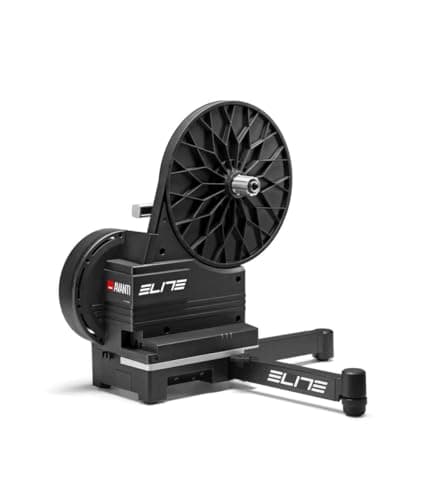
#ad We may earn a commission · Price as of October 22, 2026
The cheapest Elite that measures your power instead of estimating it, with the best connectivity list in the mid-range — as long as you accept a light flywheel and buy your own cassette.
- Type
- Direct drive, electromagnetic
- Claimed accuracy
- ±1% (optical torque sensor)
- Max resistance
- 2,100 W at 40 km/h
- Max gradient
- 18%
- Flywheel
- 4 kg
- Connectivity
- ANT+, Bluetooth, WiFi, Ethernet, Zwift
- Weight
- 13 kg
- Cassette
- Not included; freehub fitted for Shimano/SRAM 9/10/11-speed
What we'd praise
- A real optical torque sensor at ±1%, so the number is measured rather than modeled from resistance
- Auto-calibration that holds through temperature swings, which removes the single most-skipped maintenance job
- ANT+, Bluetooth, WiFi and a wired Ethernet port — the widest connectivity list at this price
- Zwift Cog and Click support, so you can run virtual shifting and skip the cassette question entirely
- Flex feet give a small amount of lateral sway without buying a rocker plate
- Works with Elite's Rizer gradient simulator if you later want climb simulation
What we'd flag
- The 4 kg flywheel is the same one the far cheaper Rivo uses, so road feel is mid-pack, not flagship
- No cassette in the box at a price where some rivals include one
- 18% gradient ceiling is the lowest of the ±1% trainers — DC Rainmaker reported audible grinding when pushing well past it
- Elite's My E-Training app still feels dated next to Wahoo's and Zwift's software
- Sold in two versions that look nearly identical online; buy the wrong one and the Zwift Cog and Click are not in the box
The Avanti exists to answer one objection. Elite's cheaper Rivo is an excellent piece of value engineering that publishes an uncomfortable line in its own specifications: power is estimated, to ±2.5%. The Avanti replaces that model with an optical torque sensor reading actual force in the drive path, and Elite claims ±1% for it — the same headline figure as a Kickr v6 or a Tacx Neo 2T.
What you do not get for the extra money is a heavier flywheel. Elite lists 4 kg here, exactly as on the Rivo, while the pricier Justosteps up to 6.2 kg. That is the honest shape of this trainer: you are buying a sensor and a radio stack, not a ride feel upgrade. Whether that is the right trade depends entirely on whether your watts need to agree with somebody else's.
Best version if you plan to run virtual shifting
Elite Avanti Zwift Ready (Cog and Click included)
8.68.6 out of 10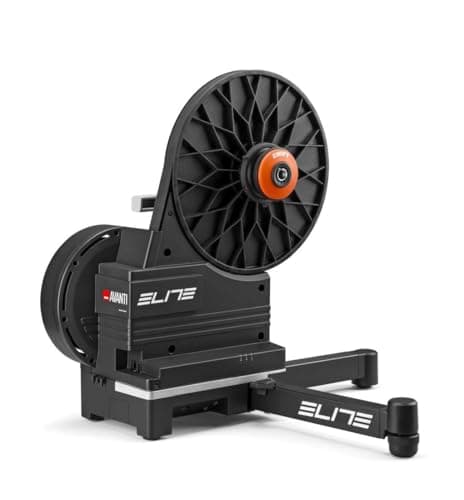
#ad We may earn a commission · Price as of October 22, 2026
The same trainer with the Zwift Cog and Click in the box — the version to buy if Zwift is your main app and you would rather never fit a cassette.
- Hardware
- Identical Avanti trainer
- In the box
- Zwift Cog and Zwift Click, per the listing
- Shifting
- Virtual, in Zwift — no derailleur movement
- Cassette
- Not needed if you run the Cog
- Accuracy
- ±1% (optical torque sensor)
- Max gradient
- 18%
What we'd praise
- Removes the cassette purchase and the 11-vs-12-speed compatibility question in one go
- Cog and Click bought separately usually costs more than the gap between the two versions
- Nothing to change if you later fit a normal cassette — the Cog unbolts
- Same sensor, same radios, same warranty as the standard Avanti
What we'd flag
- Virtual shifting via the Zwift Cog only shifts inside Zwift; other apps see a single fixed gear
- Pointless if you already own a spare cassette that matches your chain
- Listing titles for the two versions are nearly identical — read the bullet that names the Cog
- Ties one useful feature of the trainer to one company's subscription platform
Elite sells the Avanti in two configurations that are easy to confuse. The standard version arrives with a freehub fitted and no cassette; you supply your own, matched to your chain. The Zwift Ready version adds the Zwift Cog and the Zwift Click, which together replace the cassette with a single sprocket and move shifting into software.
Virtual shifting is genuinely good, and the reason is mechanical rather than magical: with one cog there is no chain crossover, no derailleur indexing to a cassette that is not yours, and no compatibility question when your next bike is 12-speed. The catch is that the Cog shifts inside Zwift only. Ride in TrainerRoad or Rouvy with the Cog fitted and you are on one gear, using ERG mode to do the work. If you split your time across apps, buy the standard version and a cassette — our cassette guide covers what has to match.
Best cheaper alternative if road feel matters more than accuracy
Wahoo Kickr Core 2
8.48.4 out of 10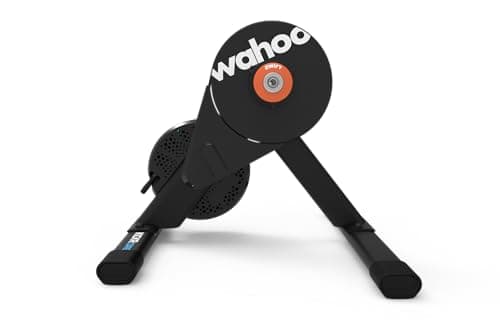
#ad We may earn a commission · Price as of October 22, 2026
The value benchmark the Avanti has to beat: less accurate on paper, heavier where it counts for feel, and consistently cheaper.
- Type
- Direct drive, electromagnetic
- Claimed accuracy
- ±2%
- Max resistance
- 1,800 W
- Max gradient
- 16%
- Flywheel
- 5.4 kg
- Connectivity
- WiFi, Bluetooth, ANT+ FE-C
What we'd praise
- Costs a clear tier less than the Avanti while measuring power at a claimed ±2%
- Heavier 5.4 kg flywheel, so the ride is more settled through the pedal stroke
- Race Mode pushes data at 10 Hz and Kickr Bridge relays a heart rate strap through the trainer
- Sold in a version with the Zwift Cog and Click included, same as the Avanti
What we'd flag
- ±2% and 1,800 W both sit below the Avanti, and there is no Ethernet port
- 16% gradient ceiling is the lowest here, though few riders ever meet it
- Wahoo does not publish a flywheel weight for the Core 2 — the 5.4 kg figure comes from the Core lineage and third-party reviews
- No flex feet, so any lateral movement has to be bought separately
If the Avanti's premium looks steep, this is what it is being measured against. The Kickr Core 2 gives up a percentage point of claimed accuracy and 300 W of headroom nobody uses, and takes back a heavier flywheel, onboard WiFi and Wahoo's software, which is the more polished of the two.
The decision is unusually clean. If your indoor numbers have to line up with an outdoor power meteror with the rest of a race field, the Avanti's measured ±1% is worth paying for. If they only have to be consistent with themselves, the Core 2 spends your money on the thing you feel every pedal stroke instead. Our Kickr Core 2 review goes through it in full.
Good questions
Frequently asked questions
Is the Elite Avanti accurate?
Elite specifies an optical torque sensor with ±1% accuracy, which means the trainer measures the force you apply rather than estimating it from resistance and flywheel speed. DC Rainmaker's independent testing found it tracking within roughly 5 to 7 W of Quarq, Favero and Garmin reference power meters, and holding calibration across a wide temperature range.
Does the Elite Avanti come with a cassette?
No. The standard version ships with a freehub fitted for Shimano and SRAM 9, 10 and 11-speed cassettes but no cassette in the box, so you supply one matched to your chain. The Zwift Ready version includes the Zwift Cog and Click instead, which replaces the cassette with a single sprocket.
Does the Elite Avanti have ANT+?
Yes. Elite lists ANT+, Bluetooth, WiFi and Ethernet for the Avanti, which is the widest connectivity set in its price class. That is one of the main differences from the cheaper Elite Rivo, which has no ANT+ radio at all.
Does the Elite Avanti support Zwift virtual shifting?
Yes. Elite lists the Avanti as compatible with the Zwift Cog and Click, and it is sold in a Zwift Ready version with both included. Virtual shifting only operates inside Zwift, so if you run the Cog and then ride in TrainerRoad or Rouvy you are on a single fixed gear with ERG mode doing the work.
Elite Avanti or Elite Rivo?
The Rivo is cheaper, lighter and folds smaller, and it shares the same 4 kg flywheel and 18% gradient ceiling, but its power is estimated at ±2.5% and it has no ANT+. The Avanti adds a measured ±1% torque sensor, ANT+, Ethernet and flex feet. Choose the Rivo for your own training, the Avanti if your numbers have to match another device.
Elite Avanti or Elite Justo?
Both use an optical torque sensor at a claimed ±1%. The Justo costs more and spends it where you feel it: a 6.2 kg flywheel against the Avanti's 4 kg, and a 24% gradient ceiling against 18%. The Avanti answers back with onboard WiFi and Ethernet, which the Justo does not have. Pick the Justo for ride quality, the Avanti for connectivity.
How steep a gradient can the Elite Avanti simulate?
Elite publishes a maximum simulated slope of 18% and a maximum resistance of 2,100 W at 40 km/h. That covers Zwift's hardest sustained climbs, especially since most riders run a reduced trainer-difficulty setting, but it is the lowest ceiling among the ±1% trainers and independent testing found the unit protesting audibly when pushed well beyond it.
How we sourced this
- Elite Avanti technical specifications (manufacturer)
- Elite home trainer range (manufacturer)
- Elite Avanti in-depth review and power-accuracy testing, DC Rainmaker
- Elite Avanti retailer specification listing (flex feet, OTS sensor)
- Wahoo indoor cycling device specifications for comparison (manufacturer)
- Zwift support: supported trainers, Cog and Click, virtual shifting
Keep going