Head to Head
Elite Avanti vs Wahoo Kickr Core 2
One trainer claims ±1% and adds a wired Ethernet port. The other claims ±2%, spins more flywheel and costs a lot less. Here is where the money actually goes.
The short answer
Quick picks
| # | Product | Best for | Score | Price |
|---|---|---|---|---|
| 1 | 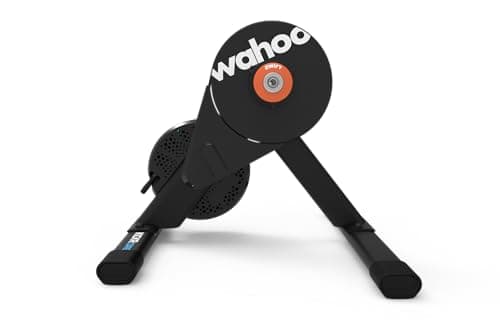 Wahoo Kickr Core 2 Less money, more flywheel and a measured number that is good enough for almost everyone — the default answer unless you have a specific reason to want ±1%. | The pick for most riders | 9.09.0 out of 10 | $549.99 · View on Amazon #ad We may earn a commission · Price as of September 30, 2026 |
| 2 | 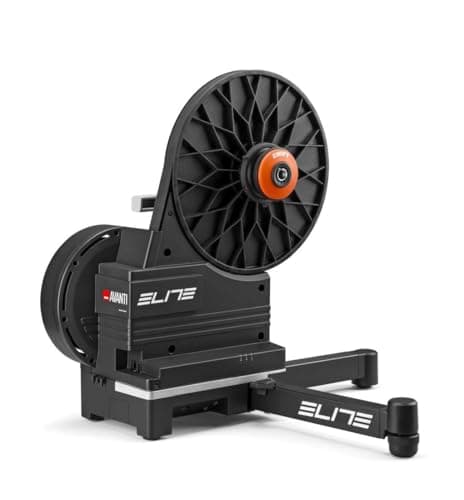 Elite Avanti Buys you a tighter number, a wired port and automatic calibration — and asks you to pay flagship-adjacent money for a mid-range flywheel. | The pick if the number has to be ±1% | 8.58.5 out of 10 | $769.99 · View on Amazon #ad We may earn a commission · Price as of September 30, 2026 |
This is the head-to-head Elite created when it put the Avanti into the market. The Kickr Core 2 is the trainer the mid-range is measured against, and the Avanti arrives above it asking a clear question: is a tighter accuracy claim, a wired port and automatic calibration worth a price step of several hundred dollars?
The honest answer is that it depends on exactly one thing, and it is not the thing most comparison pages lead with. Both of these trainers measurepower rather than estimating it from a resistance model — which is the distinction that separates the Core 2 from the cheaper Elite Rivo and the one we normally spend a whole page on. Here, that argument is already settled in both trainers' favor, and what is left is a much narrower question about how tight the tolerance band needs to be.
| Elite Avanti | Wahoo Kickr Core 2 | |
|---|---|---|
| Claimed accuracy | ±1%, integrated power meter | ±2% |
| Max resistance | 2,100 W at 40 km/h | 1,800 W |
| Max gradient | 18% | 16% (and -10% decline) |
| Flywheel | 4 kg | Not published by Wahoo |
| Trainer weight | 13 kg | 30 lb / 13.6 kg |
| Rider limit | Not published | 250 lb / 113 kg |
| Onboard WiFi | Yes | Yes |
| Wired Ethernet | Yes | No |
| ANT+ FE-C | Yes | Yes |
| Bluetooth | Yes | Yes, up to 3 connections |
| Calibration | Automatic | Not required in normal use |
| Cassette in the box | No — freehub fitted, sprockets not supplied | Yes on the cassette version (11-speed, 11-28) |
| Virtual shifting | Zwift Cog and Click version available | Zwift Cog and Click version available |
| Warranty | 2 years, 4 with registration | 1 year |
±1% against ±2%: what the gap is actually worth
Elite rates the Avanti's integrated power meter at ±1%. Wahoo rates the Core 2 at ±2%. On a 250 W steady effort that is a band of roughly five watts against roughly ten. Stated that way it sounds like a real difference, and in a laboratory it is one. In a spare room it very often is not.
The reason is that a tolerance figure describes the worst case a manufacturer is willing to stand behind, not the error you will see. Independent testing is the better guide, and it is unusually flattering to both trainers here. DC Rainmaker held the Avanti within a 5-7 W spread of a Quarq RED, a Favero Assioma and a Garmin Rally RS200 through structured work, and recorded two devices reading 915 and 922 W concurrently at a sprint peak. He measured the Core 2 within a 1.5% spread at worst against Garmin Rally pedals and a SRAM crankset, and found it agreed with its references inside Wahoo's stated 2% in simulation mode across different bikes and riders.
In other words, both trainers tested better than their published claims, and the real-world gap between them is narrower than 1% against 2% implies. The place the tighter claim earns its money is not your Tuesday interval session — it is when the number has to travel somewhere that cares about the specification rather than the measurement. A coach working from files, a power figure you want to line up against a power meter on your outdoor bike, a testing protocol that names a tolerance. Our accuracy guide sets out why repeatability drives training adaptation far more than absolute accuracy does, and that logic applies squarely here.
Flywheel and road feel: the advantage that goes the other way
Elite publishes 4 kg for the Avanti's flywheel — the same flywheel it fits to the much cheaper Rivo. Wahoo publishes no flywheel weight for the Core 2 at all, which is a genuine gap in its spec sheet, but the Core lineage and third-party reviews put it around 12 lb, comfortably heavier than the Elite.
Stored momentum is what makes a trainer feel like a bike rolling rather than a machine resisting. More mass carries the pedal stroke over its own dead spots, so a big gear at 60 rpm feels planted rather than notchy. Less mass gives up speed faster between strokes. It is the first thing you notice on a trainer and the hardest thing to convey in writing.
Two caveats keep this honest. The first is DC Rainmaker's: the Avanti's lighter inertia is noticeable when you go directly back and forth between trainers, and otherwise "you'll probably never know what you're missing." The second is that neither of these is unpleasant — this is mid-range against mid-range, not flagship against wheel-on. But it remains the case that the more expensive trainer here has the lighter flywheel, and no firmware update changes that.
Ceilings: 2,100 W and 18% against 1,800 W and 16%
The Avanti quotes more watts and a steeper slope. Both are real and both matter less than the headline suggests.
The wattage ceiling is easy to dismiss. 1,800 W is well past a hard sprint for the overwhelming majority of riders, and Elite quotes its 2,100 W figure at 40 km/h — resistance on an electromagnetic trainer depends on flywheel speed, so that is a best case rather than a floor.
The gradient ceiling deserves more respect, for one group. A trainer has to generate more force to simulate the same slope for a heavier rider, so heavier riders reach the ceiling at a lower gradient than lighter ones. If you are a bigger rider who rides steep virtual climbs, the difference between 16% and 18% is the difference between holding the simulated slope and quietly capping it. If you are 70 kg on rolling terrain, you will never find either.
There is a caution on each side. Elite does not publish a maximum rider weight for the Avanti at all, while Wahoo states 250 lb / 113 kg for the Core 2 — so the trainer with the better gradient number for heavy riders is also the one that will not tell you whether it is rated for you. Our trainer weight limits guide collects what each maker actually publishes. And DC Rainmaker pushed the Avanti onto a route beyond its ceiling, at 25-30%, and reported audible grinding and a brief burning smell after fifteen minutes, with the power data itself unaffected. That is not a reason to avoid the trainer; it is a reason to treat 18% as a real limit rather than a suggestion.
The Core 2 has one ceiling the Avanti does not advertise: a -10% simulated decline, so the trainer drives back at you downhill instead of freewheeling.
Connectivity: the Avanti's clearest win
Both trainers do onboard WiFi, Bluetooth and ANT+ FE-C, which already covers Zwift on an Apple TV, a tablet, a laptop, or a Garmin or Wahoo head unit. Neither has the ANT+ hole that makes the Elite Rivo awkward, and our ANT+ adapter guide is largely academic for this pair.
The Avanti adds one thing the Core 2 has no answer to: a wired Ethernet port. If your pain cave is a garage at the far end of the WiFi, or a block of flats where the 2.4 GHz band is a warzone, being able to run a cable to the trainer is worth more than any spec line on this page. It is the single most underrated feature in this comparison and the one we would pay for first if it applied to us.
Wahoo's two connectivity extras are more mixed. Race Mode pushes power to the app about ten times faster than the original Core did, which DC Rainmaker was frank about: in theory the avatar reacts to a sprint sooner, in practice most riders will not notice. Kickr Bridge, which relays a heart rate strap through the trainer so your app sees one device, was the weaker of the two in his testing — he saw everything from complete non-function to frozen values across two trainers and several straps, with Wahoo aware of it and nothing resolved when he published. If connection dropouts are the problem you are trying to solve, do not buy the Core 2 for Bridge specifically.
One more in Elite's column: the Avanti calibrates itself. Spin-downs are the maintenance job riders skip most often, and a trainer that handles it is a trainer whose numbers drift less between January and July. Our calibration guide explains what the process is actually doing and why temperature is the variable that matters.
Still weighing the tier?
See both against the whole fieldWhat is in the box, and the version trap
Both trainers are sold in more than one configuration, and on both sides it is easy to buy the wrong one.
The Core 2 comes either bundled with the Zwift Cog and Click, or with an 11-speed 11-28 cassette already fitted. The cassette version is the cheaper route to a conventional setup; the Cog and Click version hands gear selection to a wireless controller and gives you 24 virtual gears in software, which sidesteps drivetrain compatibility entirely. Wahoo lists fitments for 130/135 mm quick release and 12x142 and 12x148 thru axles.
The Avanti comes with its freehub pre-installed for Shimano and SRAM 9/10/11-speed, Shimano 12-speed road, and SRAM SX and NX 12-speed — but no cassette. Micro Spline, Campagnolo and SRAM XD/XDR bodies are sold separately. There is also a version bundled with the Zwift Cog and Click, and the two look near-identical in a listing. Check the title before you buy: this is the mistake people actually make with this trainer. Our cassette guide covers what to buy and the two tools you need if you go the conventional route, and thru-axle compatibility handles the frame side.
DC Rainmaker made the same point about the Avanti we would: at this price, with cheaper rivals including a cassette, leaving it out is a real mark against it. Budget for one.
Living with them
The two trainers weigh within a few hundred grams of each other — Elite lists 13 kg, Wahoo 30 lb / 13.6 kg — so neither is a machine you carry upstairs cheerfully. Elite publishes a folded dimension for the Avanti alongside its open one, and fits flex feet that allow a small amount of lateral sway without a rocker plate. The Core 2 is a fixed frame.
Noise is a non-issue on both. DC Rainmaker described the Avanti as essentially silent with the drivetrain dominating, and said much the same of the Core 2 — which is the normal state of affairs for direct drive, and the reason our quietest smart trainers page spends more time on floors and mats than on trainers.
Warranty is the last practical difference and it runs Elite's way: two years as standard, four if you register the trainer, against one year from Wahoo. On a machine with an electromagnetic resistance unit and a mains supply, that is not nothing.
Price, and the thing to watch
We do not print dollar figures in prose because they move, and the live prices on this page come straight from the retailer. What is stable is the shape: the Avanti sits a clear tier above the Core 2, and the gap is wide enough to buy a cassette, a decent fan and a mat with change left over.
Worth knowing before you commit: DC Rainmaker noted the Core 2 dropped well below its launch price within weeks of release, so Wahoo clearly has room on it. If the two trainers ever converge on price, the calculation in this comparison changes, and the Avanti's tighter claim and longer warranty start looking like the better buy rather than the more expensive one. Check both prices above before you decide, and our deals tracker if you can wait.
The verdict
Buy the Wahoo Kickr Core 2. Both trainers measure power rather than estimating it, both tested better than their published claims, and the Core 2 does that job for substantially less money with a heavier flywheel, a published rider limit and the option of a cassette in the box. For the rider upgrading from a wheel-on trainer or an old Core, that is the complete answer.
Buy the Elite Avanti if one of four specific things applies to you: you need the ±1% specification rather than a ±2% one that happens to test well; your trainer needs a wired network connection; you want the trainer to calibrate itself; or you are heavy enough, or climb steeply enough, to live against a 16% ceiling. Any one of those justifies the step up. A general wish for the better trainer does not, because on flywheel weight and price the Avanti is the one giving ground.
If neither fits, three neighbors are worth a look. The Avanti against Elite's cheaper Rivo is the measured-versus-estimated version of this argument; Kickr Core 2 vs Elite Rivo pits the Wahoo against the same Elite at the same price; and the Kickr v6is where Wahoo's own ±1% trainer lives if you would rather spend up inside one ecosystem. The full field is in our best smart trainers roundup.
The full reviews
Head to head
#1 · The pick for most riders
Wahoo Kickr Core 2
9.09.0 out of 10#ad We may earn a commission · Price as of September 30, 2026
Less money, more flywheel and a measured number that is good enough for almost everyone — the default answer unless you have a specific reason to want ±1%.
- Type
- Direct drive, electromagnetic, belt
- Claimed accuracy
- ±2%
- Max resistance
- 1,800 W
- Max gradient
- 16% up, -10% down
- Weight
- 30 lb / 13.6 kg
- Rider limit
- 250 lb / 113 kg
- Connectivity
- WiFi, Bluetooth (3 connections), ANT+ FE-C
- Axle fitments
- 130/135 mm QR, 12x142, 12x148
What we'd praise
- Costs meaningfully less than the Avanti while doing the same core job — direct drive, app control, onboard WiFi
- Heavier flywheel than the Avanti, and it is the difference you feel first rather than the one you read about
- Wahoo publishes a 250 lb / 113 kg rider limit; Elite publishes none for the Avanti
- DC Rainmaker measured it within a 1.5% spread against Garmin Rally pedals and a SRAM crankset, inside Wahoo's own ±2% claim
- Hit the target in about two seconds on DC Rainmaker's 30x30 ERG test — a shade quicker than the Avanti managed
- Sold either with the Zwift Cog and Click or with an 11-speed 11-28 cassette pre-installed, so you can skip buying one
What we'd flag
- ±2% is unchanged from the seven-year-old original Core, and it is the looser claim on this page
- 1,800 W and 16% are both lower ceilings than the Avanti quotes
- Wahoo does not publish a flywheel weight for the Core 2 at all, so the heavier-flywheel advantage rests on the Core lineage and third-party reviews rather than a spec line
- Kickr Bridge, one of the three headline additions, misbehaved badly in DC Rainmaker's testing across two units and several straps, and was unresolved when he published
- No ANT+-free fallback if your room is Bluetooth-crowded is not the issue here — the issue is the fixed frame, which does not fold or carry
- One-year warranty, against two years from Elite
The Core 2 is a deliberately narrow update to a trainer that was already well judged. Wahoo left the resistance unit, the flywheel and the accuracy claim alone and spent the revision on the connection: onboard WiFi, a faster data rate called Race Mode, and a sensor relay called Kickr Bridge. Nothing else changed.
Against the Avanti that reads like a trainer standing still, and in one sense it is. What it also is, though, is the cheaper machine in this pair by a wide margin, with the heavier flywheel and a published rider limit. Full detail in our Kickr Core 2 review.
#2 · The pick if the number has to be ±1%
Elite Avanti
8.58.5 out of 10#ad We may earn a commission · Price as of September 30, 2026
Buys you a tighter number, a wired port and automatic calibration — and asks you to pay flagship-adjacent money for a mid-range flywheel.
- Type
- Direct drive, electromagnetic
- Claimed accuracy
- ±1%, integrated power meter
- Max resistance
- 2,100 W at 40 km/h
- Max gradient
- 18%
- Flywheel
- 4 kg
- Weight
- 13 kg
- Connectivity
- ANT+, Bluetooth, WiFi, Ethernet, Zwift
- Calibration
- Automatic
What we'd praise
- ±1% is the tightest claim at this end of the market, and Elite states it as an integrated power meter reading rather than an estimate
- DC Rainmaker held it within a 5-7 W spread of a Quarq RED, a Favero Assioma and a Garmin Rally RS200 through structured work
- Wired Ethernet alongside ANT+, Bluetooth and WiFi — the only trainer in this pair you can hard-wire
- Automatic calibration, so the most-skipped maintenance job on a trainer stops being a job
- Higher ceilings on paper: 2,100 W at 40 km/h and an 18% simulated slope
- Two-year warranty, which Elite extends to four years if you register the trainer
- Works with Elite's Rizer if you later want the front wheel to rise and fall on climbs
What we'd flag
- Costs substantially more than the Core 2 for a trainer that is not better everywhere
- 4 kg flywheel — the same one Elite fits to the far cheaper Rivo — so road feel is mid-pack, not flagship
- No cassette in the box; the freehub is fitted but the sprockets are your purchase
- DC Rainmaker pushed it past its 18% ceiling on a 25-30% route and got audible grinding and a brief burning smell, though the data held
- Elite publishes no maximum rider weight for the Avanti, which the Core 2's spec sheet does state
- Elite's My E-Training app is dated next to Wahoo's and Zwift's software
- Sold in near-identical-looking versions, and only one of them has the Zwift Cog and Click in the box
The Avanti is Elite answering an objection to its own range. The cheaper Rivo publishes an uncomfortable line in its specifications — power is estimated, to ±2.5% — and the Avanti replaces that with an integrated power meter Elite rates at ±1%, the same headline figure as a Kickr v6 or a Tacx Neo 2T.
What the extra money does not buy is a heavier flywheel. Elite lists 4 kg here, exactly as on the Rivo. You are buying a sensor, a radio stack and a warranty, not a ride-feel upgrade. Our Elite Avanti review takes it apart on its own terms.
Good questions
Frequently asked questions
Is the Elite Avanti more accurate than the Kickr Core 2?
On paper yes: Elite claims ±1% from an integrated power meter, Wahoo claims ±2%. Both measure power rather than estimating it, and both tested better than their claims independently — DC Rainmaker held the Avanti within a 5-7 W spread of a Quarq RED, a Favero Assioma and a Garmin Rally RS200, and the Core 2 within a 1.5% spread against Garmin Rally pedals and a SRAM crankset. The practical gap is narrower than the specifications suggest.
Which has the better road feel, the Avanti or the Core 2?
The Kickr Core 2, because it spins more flywheel mass. Elite publishes 4 kg for the Avanti — the same flywheel it fits to the much cheaper Rivo — while Wahoo publishes no figure for the Core 2 at all, though the Core lineage and third-party reviews put it around 12 lb. DC Rainmaker noted the Avanti's lighter inertia is mainly noticeable if you ride the two back to back.
Does the Elite Avanti come with a cassette?
No. The freehub is pre-installed for Shimano and SRAM 9/10/11-speed, Shimano 12-speed road and SRAM SX and NX 12-speed, and Micro Spline, Campagnolo and SRAM XD/XDR bodies are available separately, but the sprockets themselves are not supplied. The Kickr Core 2 is sold in a version with an 11-speed 11-28 cassette already fitted, so budget for a cassette on the Elite.
Do both trainers support Zwift virtual shifting?
Yes. Both are sold in a version bundled with the Zwift Cog and Click, which replaces the cassette with a single cog and hands gear selection to a wireless controller, giving 24 virtual gears in software. On both trainers the Cog and Click version and the conventional version look very similar in a listing, so read the title before ordering.
Does the Kickr Core 2 have an Ethernet port?
No. Both trainers have onboard WiFi, Bluetooth and ANT+ FE-C, but only the Elite Avanti lists a wired Ethernet connection. If your trainer sits at the weak end of the house WiFi, or in a building with a congested 2.4 GHz band, that port is the most useful thing separating these two machines.
Is the 16% gradient limit on the Kickr Core 2 a problem?
Rarely for lighter riders on flat and rolling routes, because gearing absorbs most of the difference against the Avanti's 18%. It matters for heavier riders and for anyone riding very steep virtual climbs, since a trainer reaches its resistance ceiling at a lower gradient the more the rider weighs. Note that Wahoo publishes a 250 lb / 113 kg rider limit and Elite publishes none for the Avanti.
Is Kickr Bridge a reason to choose the Core 2?
Not on current evidence. Bridge is meant to relay a heart rate strap through the trainer so your app sees one device, but DC Rainmaker reported it misbehaving across two trainers and several straps, from complete non-function to frozen readings, with Wahoo aware and no fix at the time of publication. Buy the Core 2 for its price, flywheel and measured power, not for Bridge.
Which trainer has the better warranty?
The Elite Avanti. Elite covers it for two years as standard and extends that to four years if you register the trainer after purchase. Wahoo includes a one-year warranty with the Kickr Core 2.
How we sourced this
- Elite Avanti technical specifications (manufacturer)
- Wahoo KICKR CORE 2 specifications (manufacturer)
- Elite Avanti in-depth review and power-accuracy testing (DC Rainmaker)
- Wahoo KICKR CORE 2 in-depth review (DC Rainmaker)
- Wahoo Kickr Core 2 review (BikeRadar)
- Zwift support: supported trainers, Cog and Click, virtual shifting
Keep going