The Supporting Cast
The Best ANT+ Adapters for Zwift, Ranked
The cheapest fix for the most common indoor cycling failure. Here is when an ANT+ dongle solves your dropouts, which to buy, and why placement beats brand every time.
The short answer
Quick picks
| # | Product | Best for | Score | Price |
|---|---|---|---|---|
| 1 | 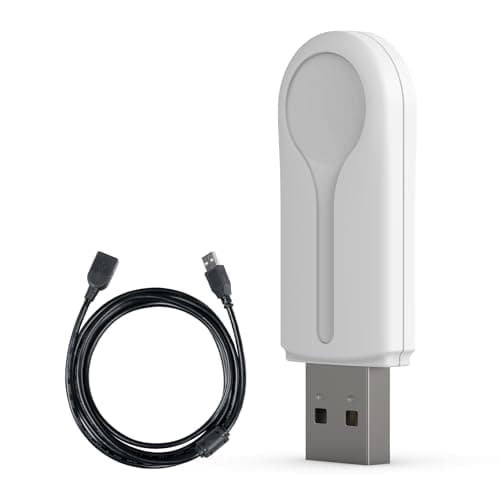 CYCPLUS ANT+ USB Receiver Stick The one to buy, and the reason is the extension cable rather than the electronics — dongle placement matters far more than dongle brand. | Best ANT+ adapter overall | 8.58.5 out of 10 | $16.99 · View on Amazon #ad We may earn a commission · Price as of October 22, 2026 |
| 2 | 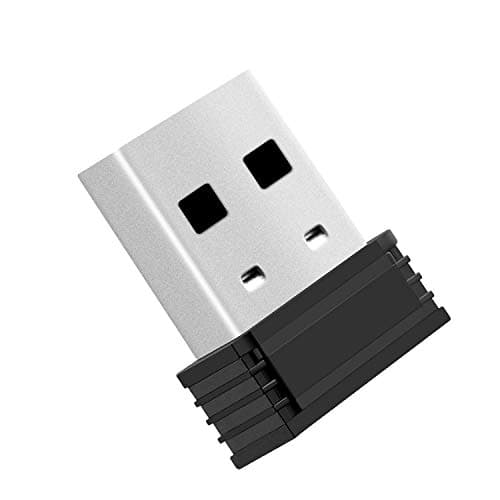 CooSpo USB ANT Stick The cheapest way in, on the condition that you buy or already own a USB extension cable — without one, expect range problems. | Best value ANT+ adapter | 7.97.9 out of 10 | $15.99 · View on Amazon #ad We may earn a commission · Price as of October 22, 2026 |
| 3 | 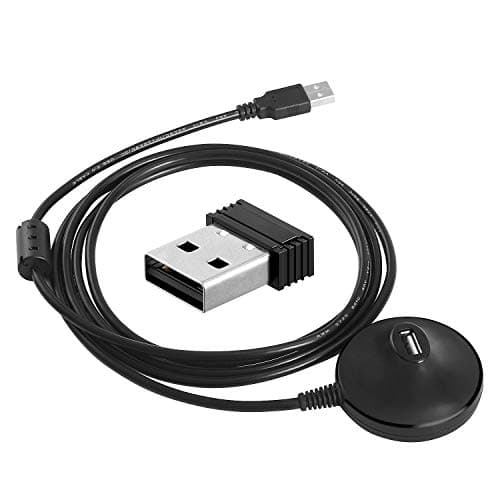 COOSPO USB ANT Stick with Cable A step up in the same family — buy it only if it is in stock when the cheaper options are not, or if the bundle suits you. | Alternative with a longer reach | 7.77.7 out of 10 | $24.99 · View on Amazon #ad We may earn a commission · Price as of October 22, 2026 |
| 4 | 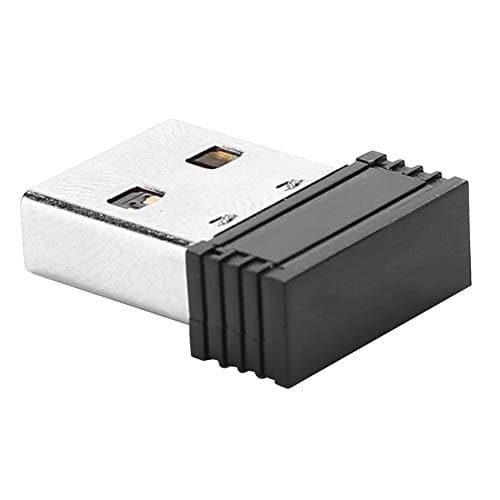 UPQRSG USB ANT Stick Included because availability matters in a commodity category — perfectly serviceable, with no reason to prefer it. | Backup option when others are out of stock | 7.27.2 out of 10 | $18.80 · View on Amazon #ad We may earn a commission · Price as of October 22, 2026 |
| 5 | 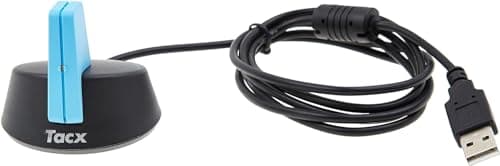 Tacx ANT+ Antenna The name on the box is the only advantage, and it costs several times what an identical generic stick does. | The brand-name option | 6.86.8 out of 10 | $79.99 · View on Amazon #ad We may earn a commission · Price as of October 22, 2026 |
Dropped connections are the single most common complaint in indoor cycling, and they are almost always Bluetooth's fault. Bluetooth is a short-range protocol designed for a phone in your pocket and an earbud in your ear. A pain cave asks it to hold four simultaneous connections across a room, through a human body, in an environment full of 2.4 GHz interference from WiFi, and it does not always cope.
ANT+ is the alternative, and it was built for exactly this: a low-power sensor network designed to broadcast to many receivers at once, with better behavior in crowded environments and no pairing limit that matters. Most computers do not have an ANT+ radio, which is what these dongles are for.
ANT+ against Bluetooth, honestly
Bluetooth is universal, works on every phone and tablet, and needs no extra hardware. Its weaknesses are range, its historic limit on simultaneous connections per device, and its vulnerability to interference in a room full of WiFi.
ANT+ handles many devices at once without complaint, holds a connection across a room more reliably, and lets several receivers read the same sensor — so your head unit and your laptop can both see your heart rate. Its weakness is that you need a dongle for most computers, and it does not work with phones or tablets at all.
WiFi, where a trainer supports it, beats both. The trainer joins your home network and talks to the app over IP, removing the whole radio-link problem. If you are shopping for a trainer and connection reliability matters to you, that is a feature worth paying for — our best smart trainers roundup notes which units have it.
| Adapter | Extension cable | Multi-device | Brand support | Best for |
|---|---|---|---|---|
| CYCPLUS ANT+ Stick | Yes — 3 m included | Yes | None | Overall |
| CooSpo USB ANT Stick | No | Yes | None | Best value |
| COOSPO ANT Stick (higher tier) | Check listing | Yes | None | When the cheaper one is out of stock |
| UPQRSG USB ANT Stick | No | Yes | None | Backup option |
| Tacx ANT+ Antenna | No | Yes | Established brand | Brand reassurance only |
The extension cable is the whole product
This is the most useful thing on this page. An ANT+ dongle plugged flush into the back of a laptop is in about the worst position a small radio can occupy: shielded by a metal chassis, sitting next to a WiFi antenna transmitting on the same 2.4 GHz band, several meters from your sensors, with your body between the two.
Put the same dongle on a USB extension cable and lay it on the floor near the bottom bracket, with clear line of sight to the trainer, the pedals and your chest, and the dropouts usually stop immediately. Riders who buy a second dongle to fix a problem the first one had are almost always buying a cable-shaped solution in a dongle-shaped box.
A 2-3 m cable is plenty. Longer runs on USB 2.0 start to become unreliable in their own right, which is a different problem you do not need.
Where does the interference come from?
Everything in a pain cave that is not the bike. Your WiFi router and any 2.4 GHz mesh node. Microwave ovens on the other side of a kitchen wall. Bluetooth speakers, wireless keyboards, baby monitors, and increasingly smart bulbs and plugs. A garage or basement adds thick walls, which cut signal in some directions and reflect it in others.
Two practical fixes cost nothing. Move the laptop or tablet closer to the bike rather than against the far wall. And if your router supports it, put your training computer on the 5 GHz WiFi band, which frees the 2.4 GHz band your sensors are using. Both of those, plus a dongle on a cable, resolve the large majority of connection complaints. The full diagnostic sequence is in smart trainer not connecting to Zwift.
How we ranked them
This is a commodity category and we are not going to pretend otherwise. ANT+ is an open standard; every dongle here implements the same protocol, and none of the manufacturers publish meaningful technical specifications to compare. Claiming that one generic stick has better signal quality than another, without a lab, would be making things up — and our how we review page commits us not to.
So we ranked on what genuinely differs: whether an extension cable is included (the single biggest practical factor), stated platform compatibility, brand track record where one exists, and price. That produces a clear winner for a reason that has nothing to do with the electronics.
What a dongle will not fix
A trainer that will not change resistance. That is a pairing problem — the trainer must be paired as a controllable device, not just as a power source. Radio protocol is irrelevant.
A flat sensor battery. Heart-rate straps and cadence sensors drop out as their cells fade, and it looks exactly like interference. Change the battery before you change the protocol.
A phone or tablet setup. These dongles are USB devices for computers. If you run Zwift on an iPad or Apple TV, an ANT+ stick is not the answer and Bluetooth placement is your only lever.
An out-of-date trainer firmware.Update through the manufacturer's app first; a surprising share of connection complaints resolve there. Our setup guide puts that step in the right order.
Before you buy a dongle at all
A dongle only helps on Windows and macOS, and only if ANT+ is actually the answer to your problem. ANT+ vs Bluetooth for Zwift covers which platforms support which protocol, why ANT+ has no connection limit while Bluetooth does, and the specific case that catches most people — Apple TV, where no dongle will help because the platform has no ANT+ path at all. If heart rate is the sensor you are trying to fit in, our best heart rate monitors for Zwift ranks straps on exactly that constraint.
The full reviews
Every pick, in detail
#1 · Best ANT+ adapter overall
CYCPLUS ANT+ USB Receiver Stick
8.58.5 out of 10#ad We may earn a commission · Price as of October 22, 2026
The one to buy, and the reason is the extension cable rather than the electronics — dongle placement matters far more than dongle brand.
- Protocol
- ANT+
- Connection
- USB-A
- In the box
- 3 m extension cable
- Platforms
- Windows and macOS with ANT+ support
- Works with
- Trainers, power meters, HR straps, cadence sensors
- Why it wins
- The cable is the feature
What we'd praise
- Ships with a 3 m extension cable, which is the single thing that makes an ANT+ dongle work reliably
- Getting the dongle away from a laptop chassis and near the bike solves most range complaints outright
- Cheap enough that it is a trivial purchase against a session lost to dropouts
- Reads every ANT+ device at once — trainer, power meter, heart rate and cadence
What we'd flag
- Generic hardware with no manufacturer support to speak of if it fails
- USB-A only, so a modern laptop may need a hub or adapter as well
- Does nothing at all for a phone or tablet setup — this is a computer accessory
Here is the thing nobody tells you about ANT+ dongles: they are all functionally the same radio, and the difference between a setup that works and one that drops out constantly is almost entirely where the dongle physically sits. Plugged directly into the back of a laptop, it is behind a metal chassis, next to a WiFi antenna, two meters from your trainer and shielded by your own body. That is a bad place for a low-power radio.
A 3 m extension cable lets you put the dongle on the floor near the bottom bracket, in clear line of sight of the trainer, power meter and heart-rate strap. Riders who do this stop having dropout problems. That is why this one ranks first — not because the chip is better, but because the cable is in the box. If you are chasing connection problems more broadly, our troubleshooting guide works through the rest.
#2 · Best value ANT+ adapter
CooSpo USB ANT Stick
7.97.9 out of 10#ad We may earn a commission · Price as of October 22, 2026
The cheapest way in, on the condition that you buy or already own a USB extension cable — without one, expect range problems.
- Protocol
- ANT+
- Connection
- USB-A
- Form
- Compact stick, no cable included
- Platforms
- Windows and macOS with ANT+ support
- Compatibility
- Listed for Zwift, Wahoo, Tacx, BKOOL
- Price band
- Entry
What we'd praise
- The cheapest reliable way to add ANT+ to a computer that does not have it
- Small enough that it lives in the laptop permanently without catching on anything
- Reads multiple ANT+ devices simultaneously, which is the whole point
- Widely used, so setup guides and forum answers exist for it
What we'd flag
- No extension cable in the box, and you will almost certainly want one
- Compact form means it plugs flush into the machine, which is the worst position for range
- No meaningful manufacturer support if it stops working
This is the dongle most people buy, and it works. The radio is the same standard ANT+ implementation as everything else in this category, it presents itself correctly to Zwift and TrainerRoad on Windows and macOS, and it handles several devices at once.
Our only real caveat is the one above: it plugs flush into your machine, which is the worst possible antenna position. If you already own a USB extension cable, buy this one and save the difference. If you do not, buy the CYCPLUS above, because the cable costs about as much separately as the price gap.
#3 · Alternative with a longer reach
COOSPO USB ANT Stick with Cable
7.77.7 out of 10#ad We may earn a commission · Price as of October 22, 2026
A step up in the same family — buy it only if it is in stock when the cheaper options are not, or if the bundle suits you.
- Protocol
- ANT+
- Connection
- USB-A
- Platforms
- Windows and macOS with ANT+ support
- Compatibility
- Listed for Zwift, Wahoo, Tacx, BKOOL
- Devices
- Multiple simultaneous ANT+ connections
- Price band
- Mid
What we'd praise
- Same well-proven CooSpo implementation as the cheaper stick
- Positioned as the fuller-featured version of the same product line
- Broad stated compatibility across the main indoor training platforms
- Reads trainer, power meter, heart rate and cadence together
What we'd flag
- Costs more than the basic CooSpo stick for what is essentially the same radio
- Check the listing carefully for what is actually included before ordering
- No manufacturer support worth the name in this whole category
We will be straight about this pick: the ANT+ dongle market is a commodity market, and this is the same manufacturer's product at a higher price point. It is listed here because availability in this category fluctuates constantly and it is genuinely useful to know which alternatives are equivalent.
If all three of the cheaper options above are available, there is no strong reason to choose this one. If they are not, this will do the same job. Either way, the placement advice applies: get the radio away from the computer and close to the bike.
#4 · Backup option when others are out of stock
UPQRSG USB ANT Stick
7.27.2 out of 10#ad We may earn a commission · Price as of October 22, 2026
Included because availability matters in a commodity category — perfectly serviceable, with no reason to prefer it.
- Protocol
- ANT+
- Connection
- USB-A
- Platforms
- Windows and macOS with ANT+ support
- Use
- Indoor cycling training data
- Devices
- Multiple simultaneous ANT+ connections
- Price band
- Entry to mid
What we'd praise
- Functionally equivalent to the other generic sticks at a similar price
- Useful to know about, because stock in this category comes and goes constantly
- Handles the full set of indoor sensors at once
- Cheap enough to keep a spare in the toolbox
What we'd flag
- Unknown brand with no support and no published specifications to evaluate
- No extension cable, so plan on buying one
- Nothing here justifies choosing it over the cheaper CooSpo stick
There is no interesting engineering story here and we are not going to invent one. This is a standard ANT+ USB stick that does what the others do. It earns its place on this page for a practical reason: these products go in and out of stock constantly, and knowing which alternatives are equivalent saves you from paying a premium during a gap.
Buy it if the cheaper options are unavailable. Add a USB extension cable either way — the single biggest determinant of whether an ANT+ setup works is how far the radio sits from your sensors, which our cadence sensor guide touches on from the other end of the connection.
#5 · The brand-name option
Tacx ANT+ Antenna
6.86.8 out of 10#ad We may earn a commission · Price as of October 22, 2026
The name on the box is the only advantage, and it costs several times what an identical generic stick does.
- Protocol
- ANT+
- Connection
- USB
- Brand
- Tacx, now part of Garmin
- Platforms
- Windows and macOS with ANT+ support
- Use
- Tacx software and third-party platforms
- Price band
- High for the category
What we'd praise
- From an established trainer manufacturer rather than an unknown brand
- Long track record with Tacx's own software and with third-party platforms
- Reassuring if you run a Tacx trainer and want everything from one ecosystem
What we'd flag
- Several times the price of a generic stick that does the same job
- Same ANT+ standard as everything else here — there is no performance advantage to buy
- No extension cable, despite costing far more than sticks that include one
- Availability is patchy and it is an older product
ANT+ is an open standard, and a dongle either implements it or it does not. There is no proprietary Tacx magic in a Tacx antenna that makes a Tacx trainer connect better than a generic stick would — your trainer broadcasts a standard ANT+ FE-C signal and any compliant receiver picks it up.
We have included it because riders with Tacx trainers reasonably wonder whether they need it, and the answer is no. If the brand reassurance is worth the difference to you, it is a perfectly good product. If it is not, buy the CYCPLUS and put the difference toward a heart-rate strap, which will do considerably more for your training.
Good questions
Frequently asked questions
Do I need an ANT+ dongle for Zwift?
Only if you run Zwift on a Windows PC or Mac and either your devices are ANT+ only or Bluetooth keeps dropping. Phones, tablets and Apple TV use Bluetooth and cannot use ANT+ dongles at all. If your trainer has onboard WiFi, you almost certainly do not need one.
Is ANT+ better than Bluetooth for indoor cycling?
For a computer-based setup with several sensors, usually yes. ANT+ was designed as a sensor network, so it handles many simultaneous devices and holds a connection across a room more reliably. Bluetooth is more universal and needs no extra hardware, but is more affected by range and interference.
Why does my ANT+ dongle keep dropping out?
Almost always placement. Plugged flush into a laptop, the dongle sits behind a metal chassis next to a WiFi antenna, several meters from your sensors, with your body in the way. Put it on a 2-3 m USB extension cable near the bottom bracket with clear line of sight and the problem usually disappears.
Are expensive ANT+ dongles better than cheap ones?
No meaningful difference in practice. ANT+ is an open standard and every compliant dongle implements the same protocol, so a branded antenna offers no performance advantage over a generic stick. What actually differs is whether an extension cable is included and where you position the dongle.
Can I use an ANT+ dongle with an iPad or Apple TV?
No. These are USB devices for computers running Windows or macOS. Phones, tablets and Apple TV connect over Bluetooth, so if you are getting dropouts on one of those, the fixes are moving the device closer to the bike, reducing 2.4 GHz interference, and checking sensor batteries.
How many devices can one ANT+ dongle handle?
Comfortably more than a normal pain cave needs — trainer, power meter, heart-rate strap and cadence sensor together is routine. Handling multiple simultaneous sensors reliably is exactly what the ANT+ standard was designed for, and it is the main reason computer-based setups prefer it.
How we sourced this
Keep going