Accessories
The Best Heart Rate Monitors for Cycling, Ranked
Chest strap or armband, electrical or optical, dual protocol or not. The sensor decisions that matter for indoor training, and the ones that do not.
The short answer
Quick picks
| # | Product | Best for | Score | Price |
|---|---|---|---|---|
| 1 | 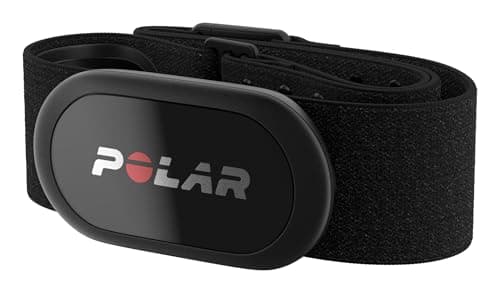 Polar H10 The reference chest strap: dual Bluetooth plus ANT+, onboard memory, and the contact quality that makes intervals read cleanly. | Best heart rate monitor overall | 9.39.3 out of 10 | $104.45 · View on Amazon #ad We may earn a commission · Price as of October 21, 2026 |
| 2 | 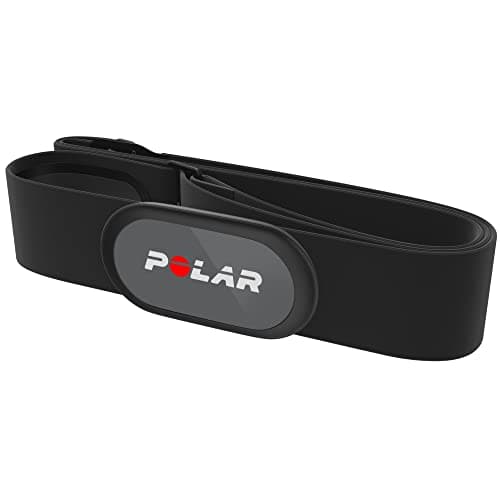 Polar H9 Most of the H10 for less: the same strap design and sensing quality, minus the memory and the extra connections. | Best mid-price strap | 8.88.8 out of 10 | $69.90 · View on Amazon #ad We may earn a commission · Price as of October 21, 2026 |
| 3 | 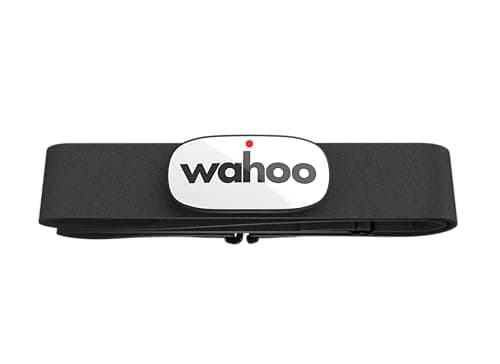 Wahoo TRACKR Heart Rate Monitor Wahoo's current chest strap, and the natural pick if your trainer, head unit and app are all Wahoo already. | Best for Wahoo setups | 8.78.7 out of 10 | $98.50 · View on Amazon #ad We may earn a commission · Price as of October 21, 2026 |
| 4 | 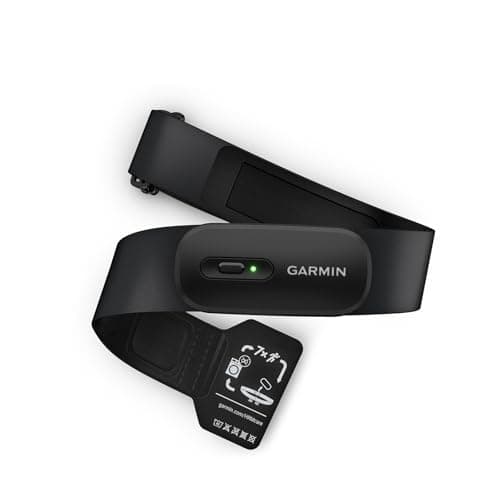 Garmin HRM 200 The straightforward Garmin strap: dual protocol, coin-cell simplicity, and zero friction with Garmin head units. | Best for Garmin ecosystems | 8.78.7 out of 10 | |
| 5 | 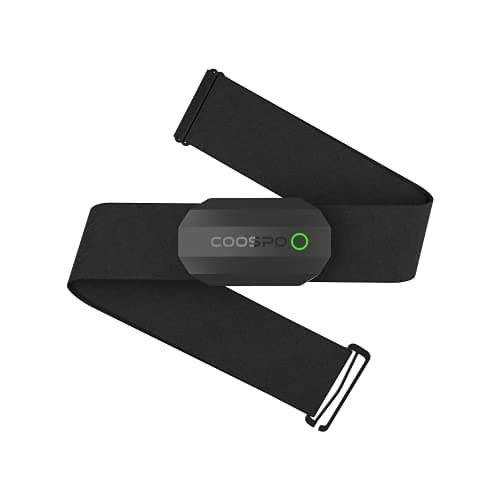 COOSPO H808S The strap that makes not owning one indefensible: dual protocol, works with everything, costs very little. | Best budget strap | 8.48.4 out of 10 | $29.99 · View on Amazon #ad We may earn a commission · Price as of October 21, 2026 |
| 6 | 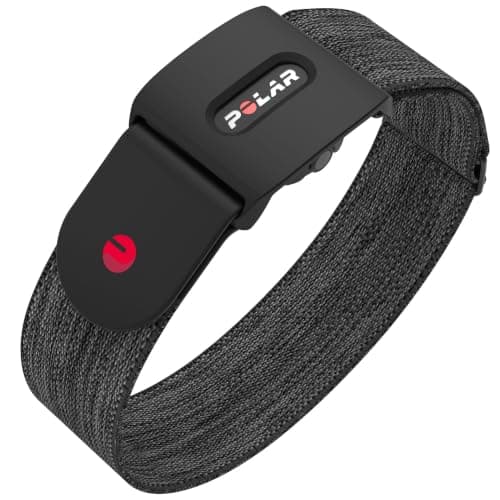 Polar Verity Sense The one you will actually wear: an optical armband that trades a little interval responsiveness for no chest strap at all. | Best strap-free option | 8.48.4 out of 10 | $104.95 · View on Amazon #ad We may earn a commission · Price as of October 21, 2026 |
A heart rate monitor is the cheapest sensor that makes your training more informative, and on an indoor setup it does something power cannot: it tells you what the effort cost you. Two identical 250 W sessions can sit twenty beats apart depending on sleep, heat and fatigue, and only one of those numbers knows that. This roundup ranks the monitors worth buying for indoor cycling, explains the chest-versus-armband decision honestly, and covers the connectivity detail that decides whether it works with your setup at all.
Electrical or optical: the real difference
A chest strap measures the electrical signal your heart produces — effectively a single-lead ECG. It responds instantly and it does not care how hard you are breathing or how cold your hands are. That is why every serious training tool assumes one.
An optical sensor shines light into your skin and infers heart rate from changes in blood flow. It is far more comfortable, and its weakness is responsiveness: when your heart rate jumps sharply at the start of an interval, an optical reading lags. Worn on the forearm or upper arm, as with an armband, optical is substantially more reliable than on the wrist, where movement and tendon interference degrade it further.
The practical rule: if your training includes short, hard intervals, use a chest strap. If your riding is steady endurance work and comfort is why you stopped wearing a monitor, an armband is the better sensor because you will actually wear it.
Dual protocol is not optional
Look for both Bluetooth and ANT+. Zwift and most apps use Bluetooth; a lot of bike computers prefer ANT+. Bluetooth also historically limits how many devices can connect at once, which is why the Polar H10's ability to hold two Bluetooth connections plus ANT+ is a genuine feature rather than a spec-sheet flourish — it is the difference between running Zwift and a watch together or having one of them silently fail.
Every monitor in this roundup is dual protocol. A single-protocol strap is a false economy that will eventually cost you a workout.
How we ranked them
We do not run a test lab, and we say so on our how we choose our pickspage. What we did instead: pulled the manufacturer specification for each monitor, recorded sensing type, supported protocols, simultaneous connection support, battery type and water resistance, then scored each on accuracy, comfort, value and connectivity. Accuracy scores reflect the sensing method and the manufacturer's published capability, not our own measurements — optical armbands score lower on accuracy and higher on comfort because that is the actual trade the technology makes. Prices come live from Amazon.
| Monitor | Sensing | Worn | Protocols | Battery | Onboard memory |
|---|---|---|---|---|---|
| Polar H10 | Electrical | Chest | BT x2 + ANT+ | Coin cell | Yes |
| Polar H9 | Electrical | Chest | BT + ANT+ | Coin cell | No |
| Wahoo TRACKR HR | Electrical | Chest | BT + ANT+ | Rechargeable | No |
| Garmin HRM 200 | Electrical | Chest | BT + ANT+ | Coin cell | No |
| COOSPO H808S | Electrical | Chest | BT + ANT+ | Coin cell | No |
| Polar Verity Sense | Optical | Arm | BT x2 + ANT+ | Rechargeable | Yes |
The most common head-to-head in this list is Polar against Polar. Polar H10 vs H9reads Polar's own comparison table: the same sensor and battery, with dual Bluetooth, session memory and the Pro Strap reserved for the H10.
Why heart rate still matters when you have power
Power tells you what you did. Heart rate tells you what it cost. Together they tell you something neither can alone: whether the same work is getting easier. A gradual drop in heart rate at a fixed wattage across a training block is one of the clearest fitness signals there is, and a sudden rise at a familiar effort is often the first sign you are under-recovered or getting ill.
On a budget trainer, heart rate does one more job — it is a sanity check on a power number that depends on tire pressure and roller tension. If your watts look great and your heart rate says otherwise, believe the heart rate. That interplay is worth understanding alongside our accuracy guide.
Getting a clean signal
Most "faulty" straps are dry straps. Electrical sensing needs conductive contact, so wet the electrodes before you put it on — water is enough, and a dab of electrode gel is better in a dry room. If your first five minutes show wild spikes and then settle, that is the classic dry-contact signature, not a defect.
Wash the strap regularly. Sweat salts build up on the contacts and degrade the signal over months, which people usually mistake for a dying battery. And replace the strap rather than the sensor when readings get flaky after a couple of years — the pod usually outlives the fabric.
What about a watch?
A wrist-based optical watch is the least reliable option for indoor cycling, because your wrists are relatively still on the bars while your grip tension changes constantly. It will give you a usable average for a steady ride and it will miss the shape of your intervals.
If you already own a watch, use it for easy sessions and add a strap for anything structured. Most watches will happily record from an external strap, which gives you the best of both. The rest of the sensor stack is covered in our accessories checklist and our cadence sensor roundup.
If you ride indoors on Zwift
This page ranks straps for cycling generally — outdoors as well as in. On Zwift specifically the criteria change, because the binding constraint stops being the sensor and becomes the number of connections your platform will hold: Apple TV allows only two Bluetooth devices inside the game. Our best heart rate monitors for Zwift re-ranks the same field on simultaneous connections and ANT+ support, and ANT+ vs Bluetooth for Zwift explains why one protocol has no connection limit and the other does.
Wahoo's older strap is still widely owned and still turns up cheaply — our Wahoo TICKR review covers whether it is worth buying now.
If the thing stopping you is the strap itself rather than the choice of strap, that is a different decision and it has its own page: chest strap vs armband heart rate monitor compares what each type actually measures, where the lag in optical sensing comes from, and why an upper arm reads far better than a wrist.
The full reviews
Every pick, in detail
#1 · Best heart rate monitor overall
Polar H10
9.39.3 out of 10#ad We may earn a commission · Price as of October 21, 2026
The reference chest strap: dual Bluetooth plus ANT+, onboard memory, and the contact quality that makes intervals read cleanly.
- Type
- Chest strap, electrical
- Connectivity
- Bluetooth and ANT+
- Simultaneous links
- Two Bluetooth plus ANT+
- Onboard memory
- Yes — one session
- Water resistance
- Swim rated
- Battery
- Replaceable coin cell
What we'd praise
- The strap most often used as the reference in third-party accuracy comparisons
- Connects to two Bluetooth devices and ANT+ at once — Zwift plus a watch, no fighting
- Onboard memory records a session even if every connection drops
- Silicone-dotted strap is the most reliable at staying put and staying in contact
What we'd flag
- Costs noticeably more than budget straps that are accurate most of the time
- Strap needs regular washing or contact quality degrades
If you buy one heart rate strap and never think about it again, buy this one. The H10 pairs to two Bluetooth devices and ANT+ simultaneously, which in practice means Zwift on a tablet and a watch on your wrist both getting data without a fight — a scenario that trips up cheaper straps constantly.
It also records a session to onboard memory, so a total connection failure does not lose the ride. The silicone-dotted strap is the unglamorous part that matters most: contact quality is the entire game with electrical heart rate, and this is the strap that keeps it.
#2 · Best mid-price strap
Polar H9
8.88.8 out of 10#ad We may earn a commission · Price as of October 21, 2026
Most of the H10 for less: the same strap design and sensing quality, minus the memory and the extra connections.
- Type
- Chest strap, electrical
- Connectivity
- Bluetooth and ANT+
- Battery
- Replaceable coin cell
- Water resistance
- Water resistant
- Strap
- Washable Polar strap
- Onboard memory
- No
What we'd praise
- Polar's sensing and strap quality at a clear discount to the H10
- Bluetooth plus ANT+, so it works with Zwift and an ANT+ head unit together
- Uses the same well-regarded Polar strap design as the H10
What we'd flag
- No onboard memory, and a single Bluetooth connection where the H10 has two
- Costs more than budget straps that cover the same basic job
The H9 is the H10 with the features most riders never use removed. You keep the Polar strap and the sensing quality that make the brand the reference; you lose onboard memory and the ability to hold multiple Bluetooth connections at once.
For a rider using a single device — Zwift on a tablet, or a bike computer, but not both at once — that is a very sensible trade and the best value in the Polar range.
#3 · Best for Wahoo setups
Wahoo TRACKR Heart Rate Monitor
8.78.7 out of 10#ad We may earn a commission · Price as of October 21, 2026
Wahoo's current chest strap, and the natural pick if your trainer, head unit and app are all Wahoo already.
- Type
- Chest strap, electrical
- Connectivity
- Bluetooth and ANT+
- Battery
- Rechargeable
- Indicator
- LED status light
- Ecosystem
- Wahoo app and head units
- Strap
- Washable, replaceable
What we'd praise
- Rechargeable rather than coin cell, so no battery hunt mid-training block
- Pairs instantly with Wahoo head units and the Wahoo ecosystem
- LED indicator tells you it is awake and connected before you get on the bike
What we'd flag
- Costs close to the Polar H10 without the dual-Bluetooth or onboard memory
- Rechargeable means one more thing on the charging pile
Wahoo's TRACKR replaces the long-running TICKR as the brand's chest strap, and the headline change is a rechargeable battery instead of a coin cell. If you already run a Wahoo Kickr and a Wahoo head unit, everything in this ecosystem appears where you expect it with no configuration.
Outside that ecosystem it is a very good strap at a price close to the Polar H10, which offers more connections and onboard memory. Buy it for the integration, not because it beats the H10 on paper.
#4 · Best for Garmin ecosystems
Garmin HRM 200
8.78.7 out of 10The straightforward Garmin strap: dual protocol, coin-cell simplicity, and zero friction with Garmin head units.
- Type
- Chest strap, electrical
- Connectivity
- Bluetooth and ANT+
- Battery
- Replaceable coin cell
- Ecosystem
- Garmin Edge and watches
- Strap
- Washable, replaceable
- Sizing
- M-XL
What we'd praise
- Appears instantly on Garmin Edge units and Forerunner watches with no configuration
- Dual Bluetooth and ANT+ covers Zwift and a bike computer at the same time
- Replaceable coin cell — nothing to charge, and a spare weighs nothing when traveling
What we'd flag
- No onboard memory, so a dropped connection loses that data
- Priced above budget straps that read almost as well in normal use
If your bike computer and watch are Garmin, this is the path of least resistance. It appears in the sensor list, it stays paired, and the data lands in Garmin Connect alongside everything else without a sync step.
It also broadcasts standard Bluetooth and ANT+, so Zwift and TrainerRoad read it perfectly well. The coin cell is a genuine advantage for travel — a spare battery in a saddle bag is simpler than remembering a charger.
#5 · Best budget strap
COOSPO H808S
8.48.4 out of 10#ad We may earn a commission · Price as of October 21, 2026
The strap that makes not owning one indefensible: dual protocol, works with everything, costs very little.
- Type
- Chest strap, electrical
- Connectivity
- Bluetooth and ANT+
- Water resistance
- IP67
- Battery
- Replaceable coin cell
- Strap
- Washable, adjustable
- Compatibility
- Zwift, Wahoo, Garmin, apps
What we'd praise
- Dual Bluetooth and ANT+ at a price where many straps offer only one protocol
- Cheap enough to keep a second one as a spare, or one per household rider
- Works with everything — Zwift, TrainerRoad, Garmin and Wahoo head units
What we'd flag
- Strap material and contact quality are not on the level of Polar's
- Much shorter track record than the established brands
The H808S exists to remove the excuse. At this price there is no good argument for training without heart rate, and it does the things that matter: dual Bluetooth and ANT+, IP67 water resistance, a washable strap, and compatibility with every app and head unit worth using.
What you give up is the strap material and the long track record. Contact quality is where budget straps show their price, so wet the electrodes before every ride and wash the strap regularly. Do that and it will read cleanly. It leads our budget picks in Zwift setup on a budget.
#6 · Best strap-free option
Polar Verity Sense
8.48.4 out of 10#ad We may earn a commission · Price as of October 21, 2026
The one you will actually wear: an optical armband that trades a little interval responsiveness for no chest strap at all.
- Type
- Optical armband
- Worn
- Upper arm, or a swimming goggle clip
- Connectivity
- ANT+ plus two simultaneous Bluetooth connections
- Battery
- Rechargeable, up to 30 hours
- Onboard memory
- 16 MB, about 600 hours of sessions
- Water resistance
- WR50
What we'd praise
- No chest strap, which solves the single most common reason people stop wearing one
- Optical on the upper arm is far more reliable than optical on a wrist during hard efforts
- Two Bluetooth connections at once plus ANT+, so a tablet and a head unit can both read it
- Records offline to 16 MB of onboard memory, so it works with no phone or app present
What we'd flag
- Optical sensing responds more slowly than electrical to sharp changes in effort
- Fit matters enormously — too loose and it reads badly, too tight and it is uncomfortable
- Costs more than most chest straps here, including the Polar H9
The best heart rate monitor is the one you put on. For a lot of riders that is not a chest strap, and the Verity Sense is the sensible alternative — an optical sensor on the upper arm, where blood flow is steadier and the sensor moves less than it does on a wrist. Wahoo used to sell the obvious alternative here, the TICKR FIT, and discontinued it; this is what took its place.
Two details separate it from cheap armbands. It holds two Bluetooth connections at the same time as broadcasting ANT+, so your tablet and your head unit can both read it, and it has 16 MB of onboard memory — roughly 600 hours — so it will record a session with nothing paired to it at all. The honest trade is responsiveness: optical sensing lags electrical when your heart rate changes sharply, which shows up in short, hard intervals as a curve that arrives a beat or two late. For steady rides and zone work it is a non-issue.
Good questions
Frequently asked questions
Is a chest strap more accurate than a wrist or armband monitor?
Yes, particularly for intervals. A chest strap measures the heart's electrical signal directly and responds instantly, while optical sensors infer heart rate from blood flow and lag when effort changes sharply. Optical worn on the forearm is much better than on the wrist, but still slower to respond.
Do I need Bluetooth and ANT+ on a heart rate monitor?
Yes, get both. Zwift and most training apps use Bluetooth, while many bike computers prefer ANT+. A dual-protocol strap works with everything and lets you run an app and a head unit together, which a single-protocol strap often cannot do reliably.
Do I still need heart rate if my trainer measures power?
Yes. Power tells you what you did; heart rate tells you what it cost. Tracking both shows whether the same wattage is getting easier over a training block, and a raised heart rate at a familiar effort is often the first sign of fatigue or illness.
Why does my heart rate strap read erratically at the start of a ride?
Almost always dry contacts. Electrical sensing needs a conductive path, so wet the electrodes before putting the strap on. Spikes in the first few minutes that settle once you start sweating are the classic dry-contact signature rather than a fault.
How long do heart rate straps last?
The sensor pod usually outlives the fabric strap. Sweat salts build up on the contacts and degrade signal quality over months, which people often mistake for a dying battery. Wash the strap regularly, and when readings get flaky after a couple of years replace the strap rather than the whole unit.
Which heart rate monitor works best with Zwift?
Any dual-protocol strap in this roundup pairs with Zwift over Bluetooth. If you also want a watch or a bike computer recording at the same time, the Polar H10 is the safest choice because it supports two Bluetooth connections plus ANT+ simultaneously.
How we sourced this
Keep going
Read these next
- AccessoriesThe Best Heart Rate Monitors for Zwift
- GuidesANT+ vs Bluetooth for Zwift
- AccessoriesPolar H10 vs Polar H9
- Gift GuideGifts for the Data-Driven Cyclist
- AccessoriesThe Best Cadence Sensors
- AccessoriesIndoor Cycling Accessories Checklist
- GuidesCadence Sensor vs Power Meter
- Indoor SetupZwift Setup on a Budget
- AccessoriesWahoo Kickr Headwind Review
- AccessoriesThe Best ANT+ Adapters for Zwift