Accessory Review
Wahoo Kickr Headwind Review: Automation You Pay For
A fan that ramps with your heart rate and aims its airflow like a headwind. It is genuinely the best tool for the job — and a high-velocity floor fan costs a fraction of it.
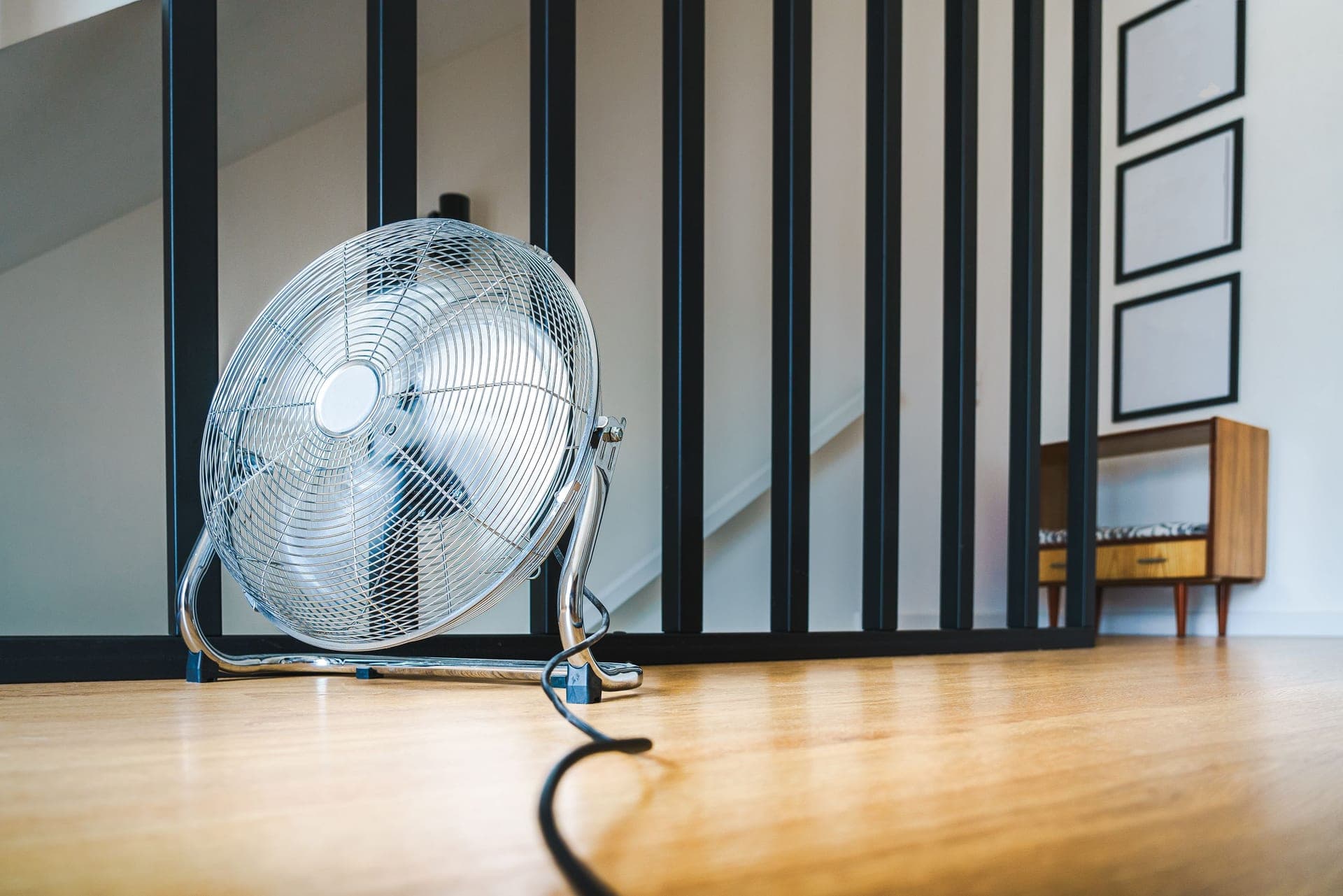
Heat is the thing that ends indoor rides. Outdoors you are moving through air at speed, so sweat evaporates and takes heat with it. Indoors the air is still, evaporative cooling collapses, core temperature climbs, heart rate drifts up at the same power, and the session ends earlier than your legs required. A fan is the highest-return purchase in a pain cave for exactly this reason.
The Wahoo Headwind is the most expensive answer to that problem, and it is also the only one engineered specifically for it. This review is about whether those two facts justify each other.
What the shaped airflow actually does
A normal floor fan produces a roughly conical spread of air, because it is designed to stir a room. Aim it at a cyclist and a lot of that air goes past you — over your shoulders, under the bottom bracket, into the wall behind. What reaches you is a fraction of what the fan is moving.
The Headwind shapes its output into a tall column sized to a person on a bike, so a much larger proportion of the airflow lands on the surfaces that matter: face, neck, chest, thighs. That is why it feels stronger than its claimed 30 mph figure alone would suggest against a generic fan quoting similar numbers. It is not producing more wind; it is wasting less of it.
The limitation is the flip side of the same design. It cools one rider in one position. Move the bike, add a second rider, or want the room itself to be less stuffy, and a room circulator does a job the Headwind simply is not built for.
Auto mode is the feature, and it is better than it sounds
Pair the Headwind to a heart-rate strap or a compatible trainer and it manages its own speed: more airflow as your effort rises, less as you recover. Described on paper this sounds like a gimmick. In practice it changes the experience in a specific way that is hard to appreciate until you have it.
The reason is that manual fan management is genuinely disruptive. During a hard interval you are too hot, but reaching down to a dial means coming out of position and losing rhythm; during recovery you are suddenly cold with a gale on your chest. Most people solve this by setting the fan to maximum and enduring the noise, or to medium and enduring the heat. Auto mode removes the compromise entirely, and it means the fan is quiet during warm-up and recovery, which matters more in a flat than any trainer noise does.
Two caveats. It needs a paired sensor, so a heart-rate strap is effectively a prerequisite for the headline feature. And it is another Bluetooth or ANT+ device in a room that may already have four — if your connections are marginal, an ANT+ adapter is worth having.
| Wahoo Headwind | High-velocity floor fan | Room circulator | |
|---|---|---|---|
| Airflow shape | Column matched to a rider | Narrow cone | Whole-room |
| Claimed airflow | Up to 30 mph | Varies, often comparable | Whole-volume circulation |
| Auto speed control | Yes — heart rate or speed | No | No |
| Speeds | 4 manual plus auto | 2-3 typical | 3-4 typical |
| Cools the room | No | Barely | Yes |
| Needs a paired sensor | For auto mode | No | No |
| Noise at full speed | High | High | High |
| Price band | Flagship | Budget | Mid |
The value argument, stated plainly
Here is the uncomfortable comparison. A good high-velocity floor fan costs a small fraction of the Headwind and delivers airflow in the same broad territory. Position it properly — low, in front, aimed at your chest and face — and the cooling difference in the saddle is real but not transformative.
What you are buying for the difference is the automation, the shaped column, the fact that it is the right height without propping it on a box, and a device that integrates with the rest of a connected setup. Those are real things. They are convenience things.
So the honest recommendation depends on where you are. If you do not currently own a fan, buy a cheap high-velocity one today — the jump from no fan to any fan is enormous, and the jump from a good fan to the Headwind is incremental. If you already have a fan and a mat and a screen and the setup is otherwise sorted, this is a legitimate next purchase and you will enjoy it. If you are choosing between the Headwind and a trainer upgrade, buy neither and read our setup guide first.
Living with it
Placement. Directly in front of the bike, close, aimed at your chest and face rather than your legs. The column is shaped for that position and it loses a lot of its advantage if you put it off to one side.
Noise. It is loud at full speed, as any fan moving that much air is. Auto mode helps enormously here, because full speed only happens when you are working hard enough not to notice. In a shared flat, that is a genuine benefit over a fan pinned at maximum for the whole session.
Cables and space. It needs mains power and it occupies the floor directly in front of the bike, which is also where a trainer desk or a screen wants to be. Plan the layout before you commit; retrofitting a large fan into a tight setup usually means moving everything else.
Sweat. It is going to sit in the drip zone. Wipe it down occasionally, as you should the frame and the mat.
Who should buy it
Buy the Headwind if your indoor riding is a serious, frequent part of your training; if you already own a heart-rate strap so the auto mode works; if your sessions are structured enough that reaching for a fan dial genuinely interrupts them; and if the rest of your setup is already good. In that context it is a well-made product that solves a real problem more elegantly than anything else.
Skip it if you do not currently own any fan, because the cheap option captures most of the benefit. Skip it if your room needs whole-space airflow rather than one directed column. And skip it if the money is coming out of a budget that has not yet covered a mat, a decent screen, or a heart-rate strap — all three do more per dollar for whether you finish your sessions.
Want the cheaper options?
Compare the Headwind against every fan we rankThe full reviews
Every pick, in detail
Best smart fan for indoor cycling
Wahoo KICKR Headwind
8.58.5 out of 10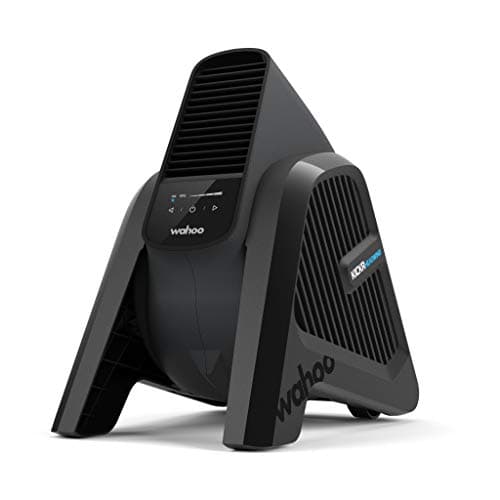
#ad We may earn a commission · Price as of October 22, 2026
The best fan for the job and the worst value in the category — you are buying automation and shaped airflow, not raw watts of wind.
- Type
- Smart directional cycling fan
- Airflow
- Up to 30 mph (claimed)
- Speeds
- 4 manual, plus auto modes
- Auto control
- Tracks heart rate or speed
- Connectivity
- Bluetooth and ANT+
- Airflow shape
- Column aimed at head, chest and legs
What we'd praise
- Auto mode ramps airflow with your heart rate or speed, so cooling matches effort with no reaching down
- Airflow is shaped into a column that follows the body profile rather than sprayed across a room
- Four manual speeds mean it works perfectly well as a dumb fan when you want it to
- Height and angle suit a bike on a trainer specifically, which generic fans do not
- Pairs over both Bluetooth and ANT+, so it fits into almost any existing setup
What we'd flag
- Costs many times what a high-velocity floor fan delivering comparable raw airflow does
- Directional by design — it cools one rider in one position and does nothing for the room
- Loud at full speed, and in a quiet flat it will be the loudest thing in the setup
- Auto mode needs a paired heart-rate strap or trainer, so it is not standalone
- Bulky and heavy for something that must sit directly in front of the bike
The Headwind is the only mass-market fan designed specifically for a person on a bicycle that is not moving. That shows in two ways: the airflow is shaped into a column that follows the body profile from head to legs rather than dispersed across a room, and the unit's height and angle assume there is a bike in front of it.
The feature that justifies the price, if anything does, is the auto mode. Paired to a heart-rate strap or a trainer over Bluetooth or ANT+, it scales its own speed with your effort — full blast during an interval, quiet on recovery, without you reaching down mid-effort. It works, and once you have it you stop thinking about the fan entirely. Whether that is worth the money is the whole question, and we answer it below. The wider field is ranked in our fan roundup.
Good questions
Frequently asked questions
Is the Wahoo Headwind worth the money?
It depends on what you already own. If you have no fan, a cheap high-velocity floor fan captures most of the cooling benefit for a fraction of the price. If your setup is otherwise complete and you want automation and shaped airflow, the Headwind is the best tool for the job and you will use it every session.
How does the Headwind auto mode work?
It pairs to a heart-rate strap or a compatible trainer over Bluetooth or ANT+ and scales its own speed with your effort — more airflow as heart rate or speed rises, less on recovery. It needs a paired sensor to do this, so a heart-rate strap is effectively a prerequisite for the headline feature.
Is the Wahoo Headwind loud?
Yes at full speed, like any fan moving that volume of air. Auto mode mitigates it in practice, because maximum airflow only happens during hard efforts when you are least likely to notice, and the fan stays quiet through warm-up and recovery.
Does the Headwind cool the whole room?
No, and it is not designed to. Its airflow is shaped into a column matched to a rider on a bike, which is why it cools you efficiently and does nothing for ambient room temperature. If your problem is a hot garage rather than a hot rider, a whole-room circulator is the right tool.
Do I need a Wahoo trainer to use the Headwind?
No. It works as a four-speed manual fan with any setup, and the auto mode pairs over standard Bluetooth and ANT+ to heart-rate straps and compatible trainers rather than requiring Wahoo hardware specifically.
Where should I position a cycling fan?
Low and directly in front of the bike, aimed at your chest and face rather than your legs. Evaporative cooling works where sweat and blood flow are highest, and the Headwind's shaped column is designed around exactly that position — placing it off to one side gives away most of its advantage.
How we sourced this
Keep going