The Pain Cave
The Garage Pain Cave
A garage is the best room in the house for a trainer and the most hostile. Cold, damp, concrete and no ventilation — here is how to solve each one in the right order.
The short answer
Quick picks
| # | Product | Best for | Score | Price |
|---|---|---|---|---|
| 1 | 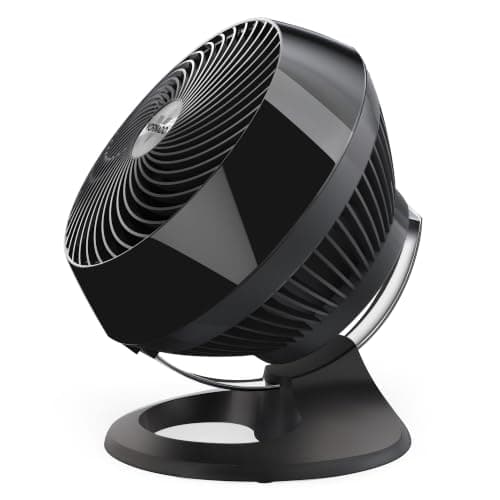 Vornado 660 The fan a garage actually needs: enough airflow to move a large volume of air, rather than a breeze aimed at one rider. | Best fan for a big cold-then-hot space | 8.38.3 out of 10 | $96.92 · View on Amazon #ad We may earn a commission · Price as of October 22, 2026 |
| 2 | 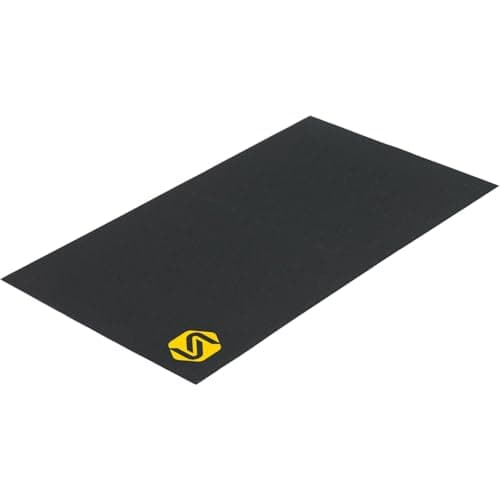 Saris Trainer Mat Cheap, permanent, and the difference between a garage floor you can sell a house with and one you cannot. | Concrete floor protection and sweat | 8.88.8 out of 10 | $79.99 · View on Amazon #ad We may earn a commission · Price as of October 22, 2026 |
| 3 | 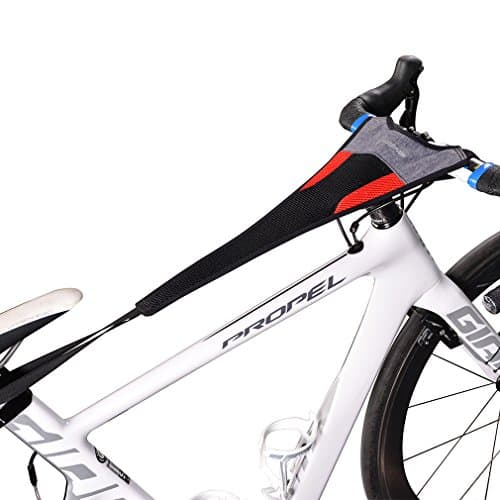 ROCKBROS Bike Trainer Sweat Net The cheapest thing here and the one that saves a bike — in a damp garage it is not optional. | Corrosion protection in a damp space | 8.48.4 out of 10 | $11.99 · View on Amazon #ad We may earn a commission · Price as of October 22, 2026 |
| 4 | 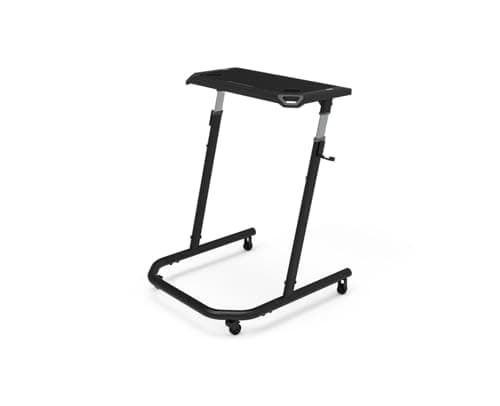 Wahoo Kickr Desk V2 A luxury with a real return: everything you need within reach means fewer interrupted intervals and longer rides. | The cockpit for a permanent setup | 8.18.1 out of 10 | $229.99 · View on Amazon #ad We may earn a commission · Price as of October 22, 2026 |
| 5 | 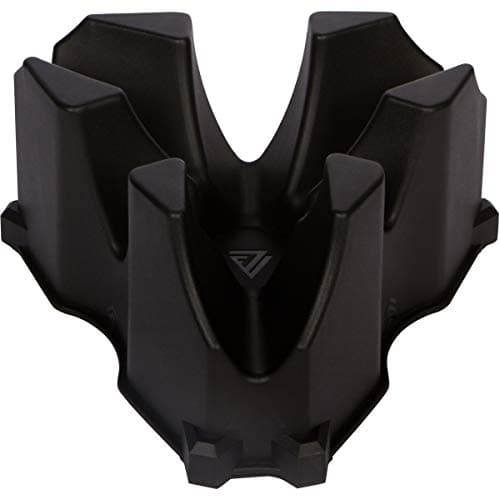 KOM Cycling Riser Block The cheapest fix for the position problem every direct-drive setup has, and doubly useful on a floor that slopes. | Leveling the bike on an uneven slab | 8.48.4 out of 10 | $34.99 · View on Amazon #ad We may earn a commission · Price as of October 22, 2026 |
A garage is the best place in most houses for a trainer, for one reason above all: nobody else needs the room. You can leave the setup built, make noise, sweat on the floor and hang a screen on the wall. That freedom is worth more than any piece of equipment, and it is why serious indoor setups end up out there.
It is also actively hostile to bikes and to riders. It is cold in January, brutal in July, damp most of the year, floored in porous concrete, and usually short of both power sockets and light. Every one of those is solvable. Here is the order.
Cold is a warm-up problem, not a heating problem
The instinct is to heat the space. Resist it, at least at first. You are about to produce a few hundred watts of mechanical work and several times that in waste heat, in a room with no ventilation — within fifteen minutes you will be too warm, and you will have paid to get there.
What actually works is treating the first ten minutes as the problem. Dress for the cold room and plan to shed layers: arm warmers, a gilet, a cap, and shoe covers if the floor is a cold slab. Start the fan off and turn it on once you are warm rather than fighting it from minute one. If the garage is genuinely freezing, a small heater run for twenty minutes before you go out is far more effective than one running during the ride.
The equipment does not much care. Trainers and power meters have wide operating temperature ranges — 4iiii publishes 0 to 50 °C for the Precision 3+, for example. What does care is calibration: a meter or trainer zeroed in a warm house and then ridden in a cold garage will drift, so calibrate out there. Both routines are covered in how to calibrate a smart trainer and how to calibrate a power meter.
Summer is the real enemy
An uninsulated garage with a dark roof and a closed door is, by August, the hottest room on the property — and unlike a spare bedroom it usually has no openable window. That combination ends more rides than any amount of January cold.
Three things help, in order of return. A big fan that moves the whole volume of air, not a desk fan aimed at your face. A cross-draft if you can create one — opening the main door a foot and a side door or window gives you air exchange rather than recirculated hot air. Riding earlier, which is free and works better than anything you can buy.
If the garage is unavoidably an oven, be honest and move the summer training somewhere else. Nobody completes a threshold session at 38 °C.
| Problem | What fixes it | What does not |
|---|---|---|
| Freezing for the first 10 minutes | Layers you shed, pre-heating the space | Running a heater during the ride |
| Unbearable in summer | Big circulator fan plus a cross-draft | A small fan aimed at your face |
| Sweat staining concrete | A dense rubber mat, from day one | Cleaning it up afterwards |
| Seized bolts and dead headsets | Sweat guard, towel, wipe-down habit | Hoping damp air dries it |
| Bike nose-up and floor sloped | Multi-height front riser block | Getting used to it |
| Dark and unpleasant at 6am | Bright overhead light on a switch by the door | Phone torch and willpower |
| Power meter reading oddly | Calibrate in the garage, not indoors | Assuming the meter has failed |
Damp is what actually destroys the bike
Indoors, sweat lands on your frame and dries within an hour. In a cold, damp garage it does not. Salt stays wet on stem bolts, in headset bearings and around the bottom bracket for hours, and that is exactly the condition corrosion needs. The bike that lives on a garage trainer ages faster than the one that lives in a hall, and the damage is invisible until a bolt refuses to turn.
The fix is three habits and one cheap product. Fit a sweat guard. Put a towel over the bars. Wipe the frame, headset and bolts down when you finish rather than walking away. And do not store the bike on the trainer still wet — either dry it or bring it in. Do those and a garage is perfectly safe for a bike; skip them and you will be replacing parts by spring.
Concrete, and what to put on it
Bare concrete is porous, so sweat soaks in and leaves a permanent shadow. Sealed or epoxy floors resist it but discolor over time, and a heavy trainer on a smooth sealed floor will slowly walk under load. A dense rubber mat solves all three and adds a small thermal break, which you notice through your feet on a January slab.
Slabs also slope. Garages are poured with a fall toward the door so water drains out, which means your bike is tilted before you even remove the rear wheel — and removing it tilts you again. A multi-height riser block lets you cancel both and ride the position you actually ride outdoors.
Power, light and the things that get you out there
Count your sockets before you build. A trainer, a fan, a screen, a laptop and a light is five plugs, and most garages have one. Use a proper surface-mounted extension rather than a coiled lead across the floor, and keep it well clear of the sweat cone — the drip line under your bars is not where a power strip belongs.
Light matters more than it sounds. A single dim bulb makes a garage feel like a garage; a bright overhead light on a switch you can reach from the door makes it feel like a room. The same is true of a screen you enjoy looking at, which is the single biggest determinant of whether you walk out there in the dark. Whether you need a big screen at all depends on your platform — our Zwift vs TrainerRoad comparison covers that, since one of them runs perfectly well on an old tablet.
Connectivity is the last thing to check and the easiest to forget: a garage is usually the furthest point from your router. If Zwift keeps dropping out, that is the reason, and our connection troubleshooting guide covers the fixes, including whether an ANT+ adapter or a trainer with onboard WiFi is the better answer for your setup.
What a garage lets you do that no other room does
Leave it built. That is the whole advantage and it is a big one — the single strongest predictor of whether an indoor setup gets used is how many seconds pass between deciding to ride and clipping in. A garage lets that number be about thirty.
It also lets you make noise, which quietly removes a whole category of constraint: you can sprint, stand, run a big fan at full speed and not think about a quiet trainer at all. If you are choosing between a garage and a spare bedroom, that alone is usually decisive. The full build across every budget is in the best indoor cycling setup, and pain cave setup ideas covers layout and the upgrade order.
The full reviews
Every pick, in detail
#1 · Best fan for a big cold-then-hot space
Vornado 660
8.38.3 out of 10#ad We may earn a commission · Price as of October 22, 2026
The fan a garage actually needs: enough airflow to move a large volume of air, rather than a breeze aimed at one rider.
- Type
- Whole-room air circulator
- Speeds
- Four
- Airflow pattern
- Deep, columnar — reaches across a room
- Head
- Tilts through a wide arc
- Best position
- Low and in front, aimed at chest and face
- Use in a garage
- Also moves stale air out of a closed space
What we'd praise
- Moves air across a whole garage rather than just in front of it, which matters when the space is large
- Four speeds, so it is usable as gentle circulation in winter and full blast in summer
- Tilting head lets you aim the column at your face rather than your shins
- Doubles as general garage ventilation on days you are not riding
What we'd flag
- Loud at its top setting — in a detached garage that is fine, in an attached one less so
- Bulky, and it needs floor space you may want for the bike
- No thermostat or remote; you get off the bike to change it
Garages get the temperature problem twice. In winter they are cold enough that you need a warm-up plan; by July an uninsulated garage under a sunny roof is the hottest room on the property. That second case is where rides get abandoned, and it is why the fan is the first purchase for a garage build rather than the fourth.
A circulator like this moves air across the space instead of blowing a narrow jet at one point, which is what a large room needs — it stops the pocket of hot, humid air building up around the bike. Position it low and in front so the column hits your chest and face, where evaporative cooling actually works. The full airflow comparison is in our fan roundup.
#2 · Concrete floor protection and sweat
Saris Trainer Mat
8.88.8 out of 10#ad We may earn a commission · Price as of October 22, 2026
Cheap, permanent, and the difference between a garage floor you can sell a house with and one you cannot.
- Job
- Sweat, floor protection, vibration, trainer grip
- Material
- Dense rubber
- On concrete
- Stops the trainer walking and adds a thermal break
- Placement
- Under the whole bike and trainer
- Care
- Wipe down after each session
- Bonus
- Marks the permanent setup position
What we'd praise
- Sweat on bare concrete soaks in and stains permanently — a mat prevents it entirely
- Adds a small thermal break between a cold slab and your setup
- Stops a heavy trainer creeping across a smooth sealed floor
- Damps the resonance a hard concrete surface gives back
What we'd flag
- Rubber gets stiff and slippery-cold in an unheated garage in winter
- Grit tracked in from a garage floor will work into the surface over time
- Does nothing about the cold itself
Concrete looks indestructible and is not. It is porous, and salty sweat dripping onto the same square foot three times a week soaks in and leaves a mark that does not come out. Sealed concrete and epoxy floors resist it better but still discolor, and a trainer's feet on a smooth sealed floor will gradually walk under load.
A dense rubber mat handles all of that and adds a small amount of thermal separation from a cold slab, which you notice through your feet during a warm-up. The full field is in our trainer mat roundup.
#3 · Corrosion protection in a damp space
ROCKBROS Bike Trainer Sweat Net
8.48.4 out of 10#ad We may earn a commission · Price as of October 22, 2026
The cheapest thing here and the one that saves a bike — in a damp garage it is not optional.
- Job
- Catches sweat before it reaches the frame
- Fit
- Bars to seatpost
- Protects
- Headset, stem bolts, top tube
- Why a garage
- Damp air slows drying, so salt sits on metal longer
- Care
- Machine washable
- Fitting time
- Seconds
What we'd praise
- Stops salt reaching the two places it does most damage — headset bearings and stem bolts
- Matters more in a garage than indoors, because damp air keeps everything wet for longer
- Costs a fraction of a headset service
- Fits and removes in seconds, washes in a machine
What we'd flag
- Covers the top-tube area where a mount might otherwise sit
- Does nothing for sweat running down your legs onto the bottom bracket
- Needs washing regularly or it holds the salt against the bike anyway
Sweat is corrosive everywhere, but a garage makes it worse in a way that catches people out: the air is damper and colder, so a bike that would have dried in an hour in a heated room stays wet for far longer. Salt sitting on a stem bolt overnight is how a bolt seizes.
A sweat guard catches most of it. The other half of the job is habit: towel over the bars, wipe the frame and headset down when you finish, and if the garage is genuinely damp, do not leave the bike on the trainer wet. Our accessories checklist covers the rest of the maintenance kit.
#4 · The cockpit for a permanent setup
Wahoo Kickr Desk V2
8.18.1 out of 10#ad We may earn a commission · Price as of October 22, 2026
A luxury with a real return: everything you need within reach means fewer interrupted intervals and longer rides.
- Type
- Height-adjustable trainer desk
- Surface
- Angled, with a lip and cup holder
- Mobility
- Castors
- Holds
- Laptop or tablet, bottles, phone, towel, remote
- Adjustment
- Height and tilt
- Why a garage
- A permanent room deserves a permanent cockpit
What we'd praise
- Puts screen, bottles and towel at bar height so you never lean off the bike mid-interval
- Height and tilt adjustment means it fits your position rather than the other way round
- Castors let you roll it clear when the garage has to be a garage again
- Lipped surface stops a phone sliding off under vibration
What we'd flag
- Expensive next to a folding table that holds the same objects
- Takes up floor space in front of the bike permanently
- Electronics sitting under your bars are directly in the sweat cone unless you position it carefully
The trivial-sounding purchases are the ones that change how long you ride. Reaching down and behind you for a bottle mid-interval breaks the effort; a laptop on a cardboard box slides off; a towel on the floor is a towel you stop using. A proper desk puts all of it at bar height and the effect on ride quality is out of proportion to the price.
A garage is exactly where this earns its keep, because the setup is permanent and there is usually room. One placement note: keep the screen out from directly under your bars, since that is where sweat lands. The alternatives are ranked in our trainer desk roundup.
#5 · Leveling the bike on an uneven slab
KOM Cycling Riser Block
8.48.4 out of 10#ad We may earn a commission · Price as of October 22, 2026
The cheapest fix for the position problem every direct-drive setup has, and doubly useful on a floor that slopes.
- Type
- Front wheel riser block
- Heights
- Three positions
- Job
- Restores the bike to level after the rear wheel comes out
- Why a garage
- Garage slabs are often sloped for drainage
- Fit
- Road and mountain tire widths
- Also does
- Stops the front wheel wandering
What we'd praise
- Three heights let you match your outdoor position rather than approximate it
- Garage floors slope toward the door by design — a block is how you cancel that out
- Stops the front wheel steering and wandering during hard efforts
- Cheap, indestructible, and nothing to charge or pair
What we'd flag
- Three fixed heights rather than continuous adjustment
- One more thing on the floor to trip over in a dark garage
- Does nothing for side-to-side lean on a badly uneven slab
Two things conspire against your position in a garage. First, taking the rear wheel out and dropping the frame onto a trainer leaves the bike nose-up on almost every setup. Second, garage slabs are usually poured with a deliberate slope toward the door so water runs out, which tilts you again.
A riser block with multiple heights lets you cancel both and get back to the position you ride outdoors, which over a winter of long sessions is the difference between a saddle that works and one that does not. The full comparison is in our riser block roundup.
Good questions
Frequently asked questions
Is a garage too cold for indoor cycling in winter?
Rarely, once you are riding. You generate a lot of waste heat and a closed garage has nowhere to put it, so most riders are too warm within fifteen minutes. Dress for the first ten minutes with layers you can shed, and pre-heat the space briefly rather than running a heater during the ride.
Will a garage damage my bike?
Damp air plus indoor sweat will, if you do nothing. Salt stays wet on stem bolts, headset bearings and the bottom bracket for far longer than it would indoors. A frame sweat guard, a towel over the bars and a wipe-down after every session prevent almost all of it.
Do I need to seal or cover a concrete garage floor?
You need a mat under the trainer at minimum, because bare concrete is porous and sweat leaves a permanent stain. Sealing the whole floor is a nice-to-have. A dense rubber trainer mat also stops the trainer walking on a smooth floor and adds a small thermal break from a cold slab.
Why does my bike feel nose-up in the garage?
Two reasons stacked together. Removing the rear wheel and mounting the frame on a direct-drive trainer usually leaves the bike nose-up, and garage slabs are poured with a deliberate slope toward the door for drainage. A multi-height front riser block cancels both and restores your outdoor position.
How do I stop my garage getting unbearably hot in summer?
Move air rather than cooling it. A whole-room circulator fan beats a desk fan by a wide margin, and creating a cross-draft by opening the main door and a side door or window gives you actual air exchange rather than recirculated hot air. Riding earlier in the day is free and works better than either.
Does a cold garage affect trainer or power meter accuracy?
It affects calibration rather than capability. Strain gauges are temperature sensitive, so a unit zeroed in a warm house and then ridden in a cold garage will drift. Calibrate where you ride, after a few minutes at ambient temperature, and the problem disappears.
How we sourced this
Keep going