The Supporting Cast
The Best Front Wheel Riser Blocks, Ranked
The cheapest accessory that fixes a real problem: every trainer leaves your bike tilted, and a winter in the wrong position is a winter of avoidable discomfort.

The short answer
Quick picks
| # | Product | Best for | Score | Price |
|---|---|---|---|---|
| 1 | 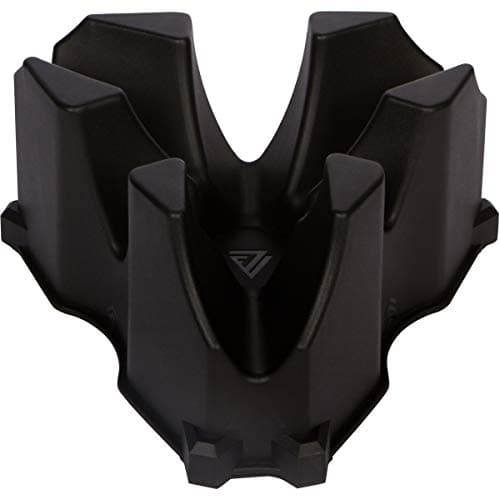 KOM Cycling Riser Block The only block here that genuinely lets you dial in your position rather than guess at it — worth the premium for a permanent setup. | Best riser block overall | 8.48.4 out of 10 | $34.99 · View on Amazon #ad We may earn a commission · Price as of October 22, 2026 |
| 2 | 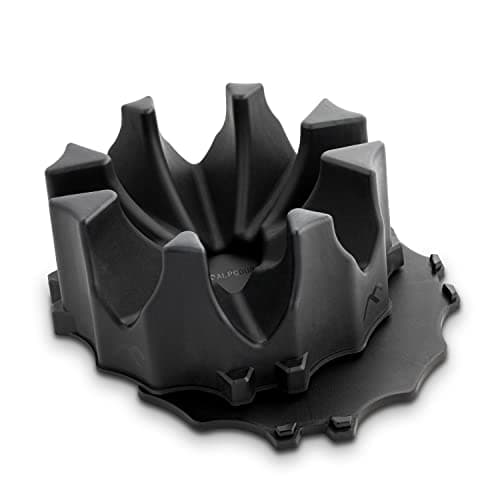 Alpcour 4-Tier Riser Block The block to buy if you want to ride deliberately nose-up — four settings on the block and an extender in the box, at the price the old Saris climbing block sold for. | Best for climbing simulation | 7.97.9 out of 10 | $39.95 · View on Amazon #ad We may earn a commission · Price as of October 22, 2026 |
| 3 | 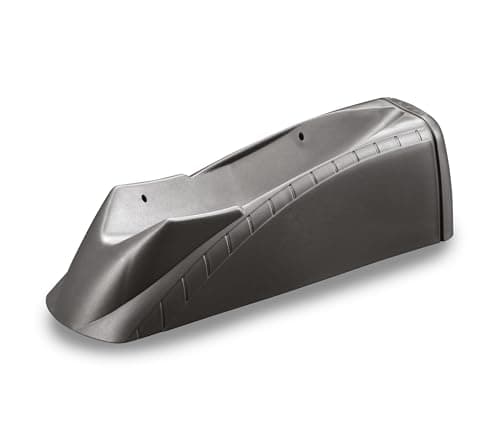 Elite Travel Wheel Block The block for setups that travel or pack away — buy it for the race bag and a taller one for the pain cave. | Best for travel and small spaces | 7.77.7 out of 10 | $16.32 · View on Amazon #ad We may earn a commission · Price as of October 22, 2026 |
| 4 | 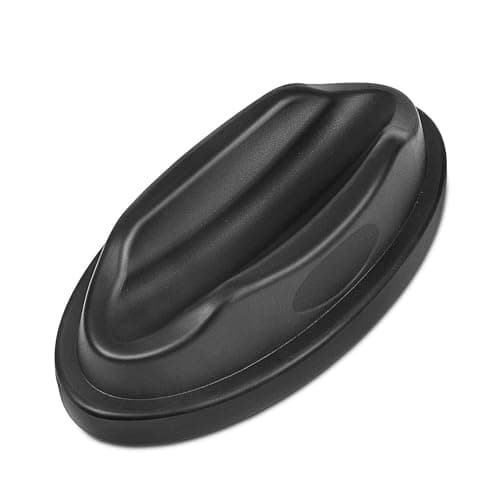 Flexzion Bike Trainer Front Wheel Block The honest budget answer: it is not as good as the blocks above, and it is enormously better than a stack of books. | Cheapest block that does the job | 7.17.1 out of 10 | $9.95 · View on Amazon #ad We may earn a commission · Price as of October 22, 2026 |
| 5 | 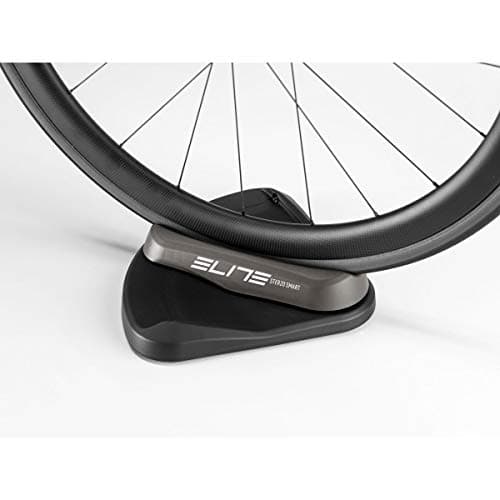 Elite Sterzo Smart Not really a riser block — a steering accessory that happens to raise the front wheel. Buy it for engagement, not for position. | The upgrade beyond a riser block | 7.67.6 out of 10 |
This is the cheapest accessory in indoor cycling and one of the few that fixes a problem you can measure. Mount a bike on a trainer and it almost never sits level. On a direct-drive unit the rear wheel comes out and the frame drops onto a fixed axle height; on a wheel-on unit the rear wheel is lifted by the roller. Either way the bike ends up nose-up or nose-down relative to how you ride it outside.
A few degrees does not sound like much. Over a two-hour session it changes where your weight sits on the saddle, how much reach you have to the bars, and how your hips are rotated on the seat — which is to say it changes everything that determines whether you are comfortable.
Why the bike ends up tilted
On a direct-drive trainer, your rear wheel is removed and the frame bolts to the trainer's own axle. That axle height is fixed by the trainer's design and is usually a little lower than your wheel's axle was, so the back of the bike drops and the front sits relatively high. This is the case that most often needs a tall block.
On a wheel-on trainer, your rear wheel stays on and is clamped against a roller, which typically raises the rear axle slightly. The bike ends up nose-down, and a modest block restores level.
The amount varies by trainer and by frame, which is exactly why an adjustable block is worth having and why any advice of the form "you need X inches" is guesswork. Measure your own setup.
How to find the right height, in five minutes
Do this with the bike already on the trainer. One: put a long spirit level, a straight edge or a phone with a level app along the top tube, or measure the distance from the floor to the center of the front and rear axles with a tape. Two: add or remove height at the front until those two axle heights match, or the top tube reads level relative to how it sits outdoors.
Three: ride for ten minutes and check the feel. If you are sliding forward on the saddle, the front is too low. If your weight is pushed back and your hands are light, the front is too high. Your body is a better instrument than a tape measure here, and this is the step people skip.
| Block | Heights | Wheel retention | Portable | Best for |
|---|---|---|---|---|
| KOM Cycling Riser Block | Three | Molded trough | Moderate | Getting the position right |
| Alpcour 4-Tier Riser Block | Four, plus extender | Molded groove | Moderate | Simulating climbs |
| Elite Travel Wheel Block | One, low | Molded trough | Excellent | Travel and small rooms |
| Flexzion Wheel Block | One, low | Molded trough | Good | Cheapest workable option |
| Elite Sterzo Smart | One | Spring-centered plate | Poor | Steering in virtual worlds |
What a riser block does besides level the bike
It stops the front wheel steering. With no road forces acting on it, a front wheel on a fixed trainer drifts to one side during seated efforts and can flick sharply when you stand. A trough or a cradle holds it straight, which is a stability and comfort improvement in its own right.
It protects your floor and your fork. A tire spinning slowly against a hard floor marks the floor; a block gives it a defined home.
It marks the setup position. Small, but useful — the block sits where it sits, so the bike goes back in the same place every time and your fan and screen stay aimed correctly.
The mistakes worth avoiding
Using books, planks or a foam roller. They compress, they slide, and they let the wheel steer. The cheapest purpose-made block costs less than a coffee and solves all three.
Going too high. The instinct is that more is better, and it is not. Overshooting pushes your weight rearward onto the saddle and unloads your hands, which produces exactly the sit-bone discomfort you were trying to avoid. Level is the target, not raised.
Ignoring floor grip. A light block on tile or sealed concrete will skate during a sprint. Either buy one with a proper non-slip base or put it on the mat with the trainer, which is the tidier answer anyway.
Buying a block when you needed a climb simulator. If what you actually want is for the bike to tilt as the virtual gradient changes, that is a different product entirely — see our Wahoo Kickr Climb review. A riser block is a fixed height, and it should be.
Where it sits in the priority list
Be realistic about this. A riser block is genuinely useful and it is not the first thing to buy. The order that produces the most rideable setup is a fan, then a mat, then something to look at, then this. The block costs little enough that it usually ends up in the same order as everything else, which is fine — just do not let it displace the fan.
The full list, with a must-have and nice-to-have split, is in our accessories checklist, and the whole build at three budgets is in the best indoor cycling setup.
The full reviews
Every pick, in detail
#1 · Best riser block overall
KOM Cycling Riser Block
8.48.4 out of 10#ad We may earn a commission · Price as of October 22, 2026
The only block here that genuinely lets you dial in your position rather than guess at it — worth the premium for a permanent setup.
- Heights
- Three positions
- Construction
- Molded plastic, hollow
- Fit
- Road and mountain tire widths
- Base
- Wide, non-slip footprint
- Weight
- Light enough to move one-handed
- Use
- Direct-drive and wheel-on trainers
What we'd praise
- Three distinct heights mean you can actually match your outdoor bar drop rather than approximate it
- The tallest setting suits direct-drive trainers, which usually leave the bike more nose-up than wheel-on units
- Wide base does not skate across a hard floor during out-of-the-saddle efforts
- Fits mountain bike tire widths as well as road, which the cheapest blocks often do not
What we'd flag
- Three fixed heights rather than continuous adjustment, so there is always some rounding
- Costs several times what a basic plastic block does
- Hollow molded construction feels less substantial than the price suggests
Every other block on this page gives you one height and hopes it is right. This one gives you three, and that single feature is why it wins. Different trainers raise the rear axle by different amounts, and different frames have different bottom bracket drops, so the correct front-wheel height is genuinely bike-and-trainer specific.
The practical method: get on the bike, ride for a minute, and check whether your weight feels pushed back into the saddle compared with outdoors. If it does, go up a height. Direct-drive trainers generally need the taller settings, because removing the rear wheel usually drops the rear axle lower than a wheel-on unit does. Our smart trainer setup guide covers where this fits in the wider build.
#2 · Best for climbing simulation
Alpcour 4-Tier Riser Block
7.97.9 out of 10#ad We may earn a commission · Price as of October 22, 2026
The block to buy if you want to ride deliberately nose-up — four settings on the block and an extender in the box, at the price the old Saris climbing block sold for.
- Heights
- Four settings, plus one extender included
- Extenders
- Stack for more height; extras sold separately
- Footprint
- 13.7 x 13.7 x 6.9 in (listed)
- Fit
- 26 in, 650b, 700c, 27.5 in and 29 in wheels; 23-29 mm tires as listed
- Construction
- Molded plastic, anti-skid pad underneath
- Rider limit
- 330 lb (listed)
What we'd praise
- Four height settings on the block itself, one more than the KOM, so a nose-up position is a setting rather than a stack of books
- Ships with one extender and takes more, so the front can go well past level for deliberate climbing work
- Anti-skid pad on the base keeps the block still under out-of-the-saddle efforts and off a hard floor
- Listed for 26 in through 29 in wheels, so a mountain bike sits in it as readily as a road bike
What we'd flag
- Alpcour does not publish the height of each setting in inches, so you cannot match a known trainer axle height from the listing alone
- Raising the front wheel changes your position, not the resistance — it is a fit change, not a workout
- Smaller brand with less history than Saris, KOM or Elite, and the molded plastic is functional rather than refined
- Extra extenders are a separate purchase, so the full climbing stack costs more than the headline price
Most blocks exist to make the bike level. This one is built to make it deliberately not level. Alpcour lists four height settings on the block plus an extender in the box, with more extenders sold separately, so the front end can sit considerably higher than any single-groove block reaches. On a long virtual climb that changes where your weight sits and which muscles do the work, which is the whole point. It replaced the Saris Climbing Riser Block in this slot when the Saris listing went off sale on Amazon; the Saris block is still sold direct by Saris if you would rather have that one.
Be honest with yourself about what it does not do: raising the front wheel changes your position, not the resistance. If you want the gradient to actually bite you need a smart trainer doing the work. Used as a plain riser it is a good one — a 13.7 by 13.7 inch base with an anti-skid pad, listed for wheels from 26 to 29 inches and rated by Alpcour to 330 lb of rider. The one thing the listing does not give you is the height of each setting in inches, which the KOM block does.
#3 · Best for travel and small spaces
Elite Travel Wheel Block
7.77.7 out of 10#ad We may earn a commission · Price as of October 22, 2026
The block for setups that travel or pack away — buy it for the race bag and a taller one for the pain cave.
- Heights
- Single
- Design
- Compact, flat-packing
- Base
- Non-slip
- Fit
- Universal tire widths
- Use case
- Race warm-ups, travel, storage-limited rooms
- Weight
- Very light
What we'd praise
- Small and light enough to live in a race bag alongside a folding trainer or rollers
- Takes up almost no storage space in a room where the setup has to disappear
- Universal fit across tire widths, so it works with whatever bike is on the trainer that day
- Cheap enough to own two — one at home, one in the car
What we'd flag
- Lower than most riders need for a direct-drive setup
- Single height, so no adjustment for different bikes or trainers
- Light construction slides more readily than a heavier block on smooth floors
There is a real second use case here that the tall adjustable blocks do not serve: the setup that has to fit somewhere. If your trainer folds into a cupboard, or if it lives in a car trunk for race-day warm-ups, a bulky three-height block is a nuisance and this one is not.
Be aware of the height limitation. It is a modest lift, which suits wheel-on trainers and rollers better than it suits a direct-drive unit that drops the rear axle further. If it is your only block and you are on direct drive, you may still find the bike sitting nose-up. It pairs naturally with the folding setups covered in our apartment pain cave guide.
#4 · Cheapest block that does the job
Flexzion Bike Trainer Front Wheel Block
7.17.1 out of 10#ad We may earn a commission · Price as of October 22, 2026
The honest budget answer: it is not as good as the blocks above, and it is enormously better than a stack of books.
- Heights
- Single
- Construction
- Molded plastic
- Fit
- Road and mountain tires
- Base
- Textured underside
- Weight
- Very light
- Price band
- Entry
What we'd praise
- Costs about as little as a bike accessory can while still working
- Does the fundamental job — raises the front wheel and stops it steering
- Light and easy to kick into position without getting off the bike
- Cheap enough that owning one is obviously better than owning none
What we'd flag
- Single, fairly low height that will not fully level a bike on a tall direct-drive trainer
- Light plastic slides on tile and sealed concrete under a hard effort
- No cushioning, so the wheel sits in a hard trough and can still shift
- Build quality is exactly what the price implies
A great many riders solve this problem with an old phone book, a plank or a couple of magazines, and every one of those is worse than the cheapest purpose-made block — they compress, they slide, and they let the wheel steer. For very little money this removes all three problems.
What it does not do is give you the height a direct-drive setup often needs, or stay put on a slick floor when you stand up. If either of those describes your setup, the KOM block above is the upgrade and it is not expensive in absolute terms. If you are buying accessories in priority order, though, note that a fan and a mat both come first.
#5 · The upgrade beyond a riser block
Elite Sterzo Smart
7.67.6 out of 10Not really a riser block — a steering accessory that happens to raise the front wheel. Buy it for engagement, not for position.
- Type
- Steering plate with front wheel support
- Function
- Raises the front wheel and reports steering angle
- Connectivity
- Bluetooth
- Steering range
- Limited arc, spring-centered
- Power
- Battery
- Also does
- Everything a plain riser block does
What we'd praise
- Lets you steer in supported virtual worlds, which changes group riding and descents meaningfully
- Also functions as a conventional front wheel support, so it replaces rather than supplements a block
- Spring-centered plate keeps the wheel from wandering during hard efforts
- Adds a genuine element of engagement to indoor riding, which is the real problem for most people
What we'd flag
- Many times the price of a riser block for a feature only some apps and routes use
- Needs a battery and a Bluetooth pairing — one more thing to fail before a session
- Steering support varies by platform and route, so its usefulness depends on what you ride
- Height is fixed, so it does not solve the position problem as flexibly as an adjustable block
The Sterzo Smart sits at the far end of this category and is a different proposition entirely. It supports and raises the front wheel like any block, but the plate also rotates and reports the angle over Bluetooth, so supported apps let you actually steer — moving across a road, taking a line through a corner, picking a wheel to sit on.
Whether that is worth the money depends on what stops you riding indoors. If the answer is boredom, this is one of the few accessories that directly addresses it. If the answer is a bike that sits nose-up, buy the adjustable block instead and spend the difference on the room. Our platform comparison is worth reading first, since steering only matters on one of them.
Good questions
Frequently asked questions
Do I need a front wheel riser block?
If your bike sits noticeably nose-up or nose-down on the trainer, yes — and most do. A few degrees of tilt changes where your weight sits on the saddle and how far you reach to the bars, which over a long session is the difference between comfortable and not. It also stops the front wheel steering itself.
How high should a riser block be?
High enough that your front and rear axles sit at the same height as they do outdoors, and no higher. Measure both axle heights with a tape, adjust, then ride for ten minutes and check the feel. Sliding forward means it is too low; light hands and weight pushed back means it is too high.
Can I use books instead of a riser block?
You can, and it is worse in three specific ways: books compress under load, they slide on hard floors, and they do not stop the front wheel steering. A purpose-made block costs very little and fixes all three, which makes it one of the easiest accessory decisions there is.
Do direct-drive trainers need a riser block?
Usually more than wheel-on trainers do. Removing the rear wheel drops the frame onto the trainer's own axle, which typically sits lower than your wheel's axle did, leaving the bike nose-up. That is why an adjustable block with a taller setting is worth having on a direct-drive setup.
What is the difference between a riser block and a climb simulator?
A riser block is a fixed support that levels the bike. A climb simulator such as the Wahoo Kickr Climb replaces your front wheel entirely and raises and lowers the front of the bike as the virtual gradient changes. They solve completely different problems and cost very different amounts.
What happened to the Saris Climbing Riser Block?
Its Amazon listing went to Currently unavailable and no replacement listing appeared, so it no longer holds our climbing-simulation slot. Saris still sells the block directly from its own site. Our current pick for riding deliberately nose-up is the Alpcour 4-Tier Riser Block, which has four settings on the block and ships with an extender.
Will a riser block stop my front wheel wobbling?
Largely, yes — that is one of its main jobs. A molded trough or groove holds the wheel straight, which matters during out-of-the-saddle efforts, and a deeper groove holds it better than a shallow one. A steering plate such as the Elite Sterzo uses a spring-centered design that does the same thing while also reporting steering angle.
How we sourced this
- Elite trainer accessories, wheel blocks and Sterzo (manufacturer)
- Alpcour 4-Tier Riser Block listing (settings, extender, footprint, wheel sizes, rider limit as published by Alpcour)
- Saris Climbing Riser Block (manufacturer; sold direct, no longer listed on Amazon)
- Wahoo indoor cycling accessories (manufacturer)
- Trainer setup and bike position explainer (DC Rainmaker)
- Zwift support: steering and supported accessories
Keep going