The Pain Cave
The Apartment Pain Cave
Small room, shared walls, someone directly below. Here is what actually travels through a building, the cheap fixes that work, and the kit worth buying in that order.
The short answer
Quick picks
| # | Product | Best for | Score | Price |
|---|---|---|---|---|
| 1 | 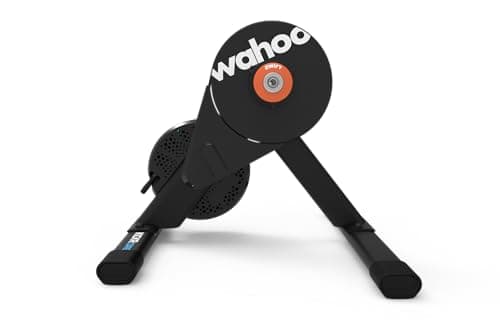 Wahoo Kickr Core 2 The trainer to buy for a flat: direct-drive quiet at a price that leaves money for the mat and fan that finish the job. | Best apartment trainer overall | 8.58.5 out of 10 | $549.99 · View on Amazon #ad We may earn a commission · Price as of October 22, 2026 |
| 2 | 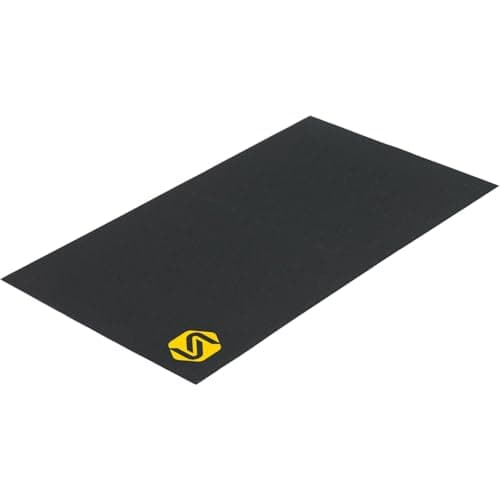 Saris Trainer Mat The cheapest thing on this page and the one most likely to keep your downstairs neighbor from knocking. | The single most important apartment purchase | 8.88.8 out of 10 | $79.99 · View on Amazon #ad We may earn a commission · Price as of October 22, 2026 |
| 3 | 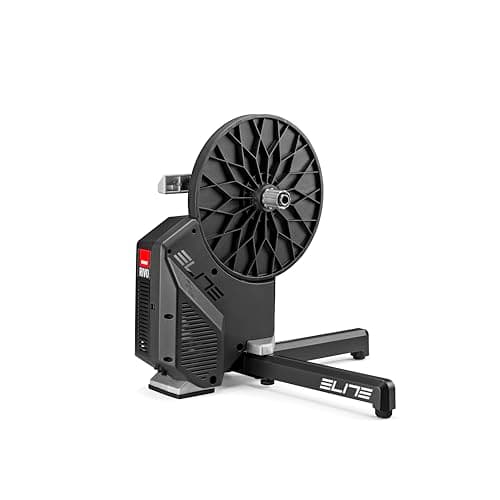 Elite Rivo The only direct-drive trainer here you can realistically put away after every ride — the answer when the pain cave is also the living room. | Best for a room you have to pack away | 8.08.0 out of 10 | $549.99 · View on Amazon #ad We may earn a commission · Price as of October 22, 2026 |
| 4 | 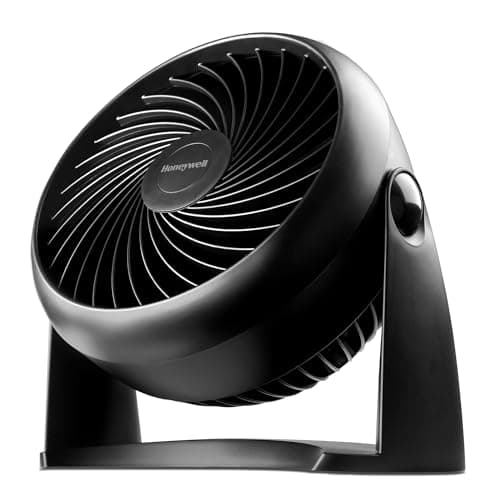 Honeywell HT-900 TurboForce Small, cheap and moves real air — the right fan for a room where a pedestal fan would be absurd. | Best compact fan for a small room | 7.87.8 out of 10 | $18.79 · View on Amazon #ad We may earn a commission · Price as of October 22, 2026 |
| 5 | 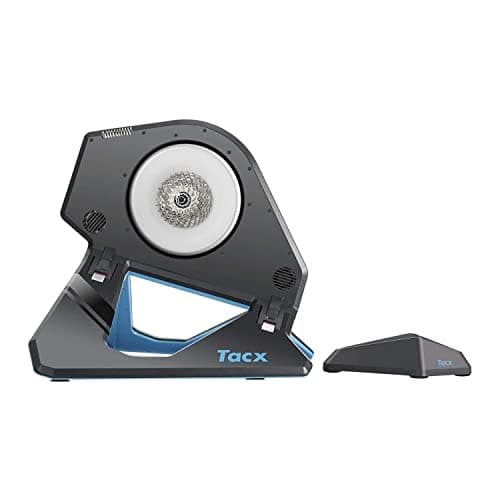 Garmin Tacx Neo 2T The quietest trainer that exists — worth it only after the mat, the fan position and the timing conversation have all been tried. | Quietest possible upgrade | 8.48.4 out of 10 | $899.99 · View on Amazon #ad We may earn a commission · Price as of October 22, 2026 |
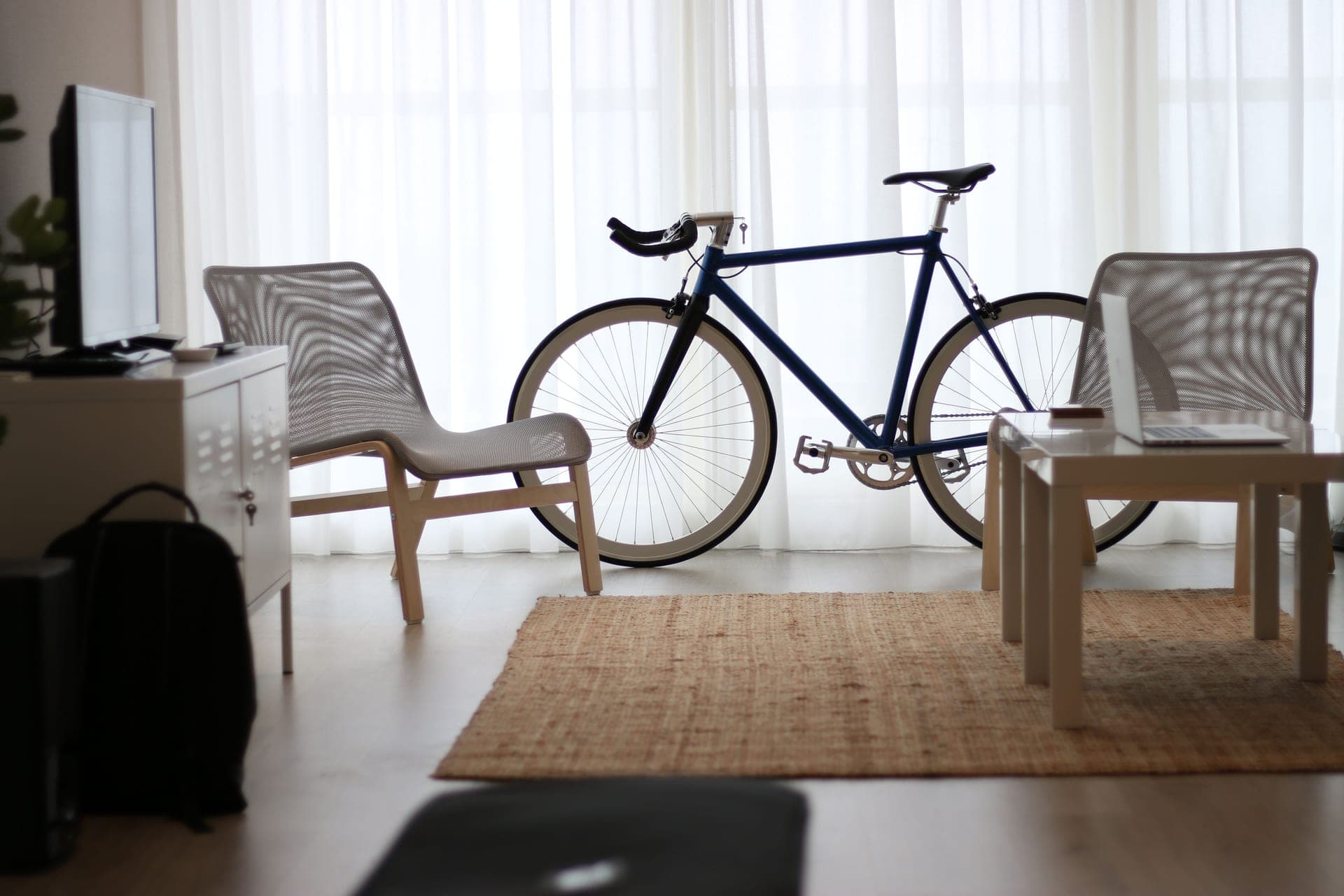
Building a pain cave in a house is a question of budget. Building one in a flat is a question of physics and diplomacy. You are working against a small volume of air, a floor you probably do not own, walls shared with people who did not choose to live above a bike, and a room that has to go back to being a living room afterwards.
All of that is solvable, and most of it is solvable cheaply. What follows is the order to solve it in, because the expensive fix is usually the last one you need rather than the first.
The two kinds of noise, and only one of them is your trainer
Airborne noise is what someone in the room hears: belt whine, chain rattle, fan roar, your breathing. It is attenuated by mass and distance, which means a closed door helps a lot and a wall helps more. It rarely reaches a neighbor at a level worth complaining about.
Structure-borne noise is vibration coupled straight into the building. It passes through floors and walls almost unimpeded and is felt as much as heard — a low thump in time with your pedal stroke. This is what neighbors complain about, it is almost never fixed by buying a quieter trainer, and it is entirely fixable with the right floor.
Diagnose before you spend. If the complaint is from someone in the same flat, work on airborne noise: close doors, move the fan, clean the chain. If the complaint comes from below, it is structure-borne and the money goes into the floor.
The floor stack that actually works
From the bottom up: interlocking foam gym tiles covering an area larger than the bike, then a dense rubber trainer mat on top of them, then the trainer. The foam decouples, the rubber adds mass and damping, and the combination interrupts the vibration path before it reaches the joists.
Two details people miss. First, cover more area than the trainer footprint — vibration spreads outward through the floor and a small mat under the feet only treats part of the path. Second, avoid rigid contact bridges: a trainer leg touching bare floorboard at one corner because the mat edge curled up undoes a good deal of the work.
If you are directly above a bedroom, add one more thing: schedule. A 5am session over someone sleeping is a social problem before it is an acoustic one, and a short conversation buys more goodwill than any material.
| Problem | What fixes it | What does not |
|---|---|---|
| Neighbor below hears thumping | Rubber mat over foam tiles | A quieter trainer |
| Room-mate hears whining | Closed door, clean chain, direct drive | A thicker mat |
| Sweat on the carpet | Mat plus a frame sweat guard and a towel | Riding harder to finish sooner |
| Room too hot after 20 minutes | High-velocity fan low and in front | Opening one small window |
| Nowhere to put the trainer | A 10 kg folding direct-drive unit | Disassembling the bike each time |
| Corroded bolts and headset | Sweat guard, wipe-down, dry the bar tape | Ignoring it until it seizes |
Space: the constraint nobody plans for
A trainer setup needs more floor than the bike. You need room to get on and off, space for a fan that is not in your knee, somewhere for a screen, and enough clearance that you are not rebuilding the corner of the room every time. Measure before you buy: bike length plus roughly a meter in front for the fan and screen, and enough width to swing a leg over.
If the setup has to disappear between rides, that changes the trainer decision entirely and it is why the Elite Rivo is on this list. A 10 kg unit that folds to 16 cm deep can genuinely live in a cupboard. An 18 kg fixed-frame trainer cannot, and a setup that takes fifteen minutes to rebuild is a setup you will stop rebuilding. For layout ideas in a permanent room, our pain cave setup ideas page covers the full build.
Heat and sweat in a small room
A small room heats up alarmingly fast, because you are producing a few hundred watts of mechanical work and several times that in waste heat with nowhere for it to go. Two things follow. First, buy more fan than you think you need and put it low and in front — evaporative cooling works on your face and chest, not on your back. Second, expect the room to be uncomfortable within twenty minutes regardless, and plan for a cross-draft if you can get one.
Sweat is the other half. Indoors, without airflow carrying it away, it falls straight down onto your frame, headset and bottom bracket — and it is corrosive. A frame sweat guard, a towel over the bars and a wipe-down after each ride will add years to the bike. The full accessory list is in our accessories checklist.
The screen problem in a room with no wall for it
Wall-mounting a TV is not usually an option in a rented flat, so most apartment setups end up with a tablet or laptop on a trainer desk, which also gives you somewhere for bottles, a phone and a towel. That is genuinely enough — the platform matters more than the screen size, and Zwift vs TrainerRoad is worth reading before you buy a bigger display, because one of those two runs perfectly well on an old tablet.
Keep the electronics out of the sweat cone. A laptop directly under your bars will eventually die, and the failure mode is not gradual.
What to buy, in order
Mat first, even before the trainer if the trainer is a while away — it is cheap and it solves the problem most likely to end the whole project. Then a direct-drive trainer: the Kickr Core if the setup is permanent, the Elite Rivo if it has to pack away. Then a fan, low and forward. Then a desk or mount for a screen and bottles. Then, and only then, consider whether a quieter trainer is still necessary — for most people it is not.
The whole-setup version of this at three budgets is in the best indoor cycling setup, and if money is the binding constraint, Zwift setup on a budget lists what to buy first and what to skip.
For the noise problem on its own, in diagnostic order, see how to make a bike trainer quieter.
The full reviews
Every pick, in detail
#1 · Best apartment trainer overall
Wahoo Kickr Core 2
8.58.5 out of 10#ad We may earn a commission · Price as of October 22, 2026
The trainer to buy for a flat: direct-drive quiet at a price that leaves money for the mat and fan that finish the job.
- Type
- Direct drive
- Claimed accuracy
- ±2%
- Max resistance
- 1,800 W
- Max gradient
- 16%
- Flywheel
- 12 lb
- Tire noise
- None — direct drive
What we'd praise
- Direct drive removes the tire from the equation, which is the single largest noise reduction available at any price
- Sealed drive unit is genuinely quiet at endurance pace — your own chain becomes the loudest thing in the room
- ±2% claimed accuracy is enough for structured training and online racing alike
- Costs far less than the flagships, which leaves budget for the mat that solves the floor problem
What we'd flag
- Rigid feet transmit more vibration into a floor than the flagship's elastomer feet — budget for a mat
- Belt pitch still climbs with effort, so a sprint is audible next door
- Heavy and not something you will be packing away between rides
If you take one thing from this page, take this: the biggest quietness upgrade in indoor cycling is not spending more on a trainer, it is moving from wheel-on to direct drive at all. A tire scrubbing against a drum is a loud, broadband, tire-wearing noise source, and direct drive simply deletes it. The Kickr Core 2 makes that jump for the least money we would recommend.
What you give up against the flagships is a percentage point of claimed accuracy, four pounds of flywheel and the elastomer feet. Only the last of those matters in a flat, and a mat fixes it for a fraction of the upgrade cost. Full detail is in our Kickr Core review.
#2 · The single most important apartment purchase
Saris Trainer Mat
8.88.8 out of 10#ad We may earn a commission · Price as of October 22, 2026
The cheapest thing on this page and the one most likely to keep your downstairs neighbor from knocking.
- Job
- Decouples trainer feet from the floor
- Also handles
- Sweat, floor protection, trainer position
- Material
- Dense rubber
- Placement
- Under the whole bike and trainer
- Best paired with
- Interlocking foam tiles beneath
- Noise type addressed
- Structure-borne vibration
What we'd praise
- Attacks structure-borne vibration, which is the noise that actually travels through a building
- Catches an amount of sweat that genuinely surprises first-time indoor riders
- Protects a floor you may not own from corrosion and indentation
- Gives the trainer a consistent surface so it does not creep across floorboards
What we'd flag
- Does nothing for airborne noise — belt whine and chain rattle still cross the room
- Takes up its full footprint permanently, which is real estate in a small flat
- Needs wiping down after rides or it becomes the smell of the room
Noise complaints in flats are almost never about the sound in the air. They are about structure-borne vibration: low-frequency energy that couples from the trainer feet into the floor, through the joists and out of a ceiling below. Airborne noise is stopped by doors and soft furnishings; structure-borne noise ignores them.
A dense rubber mat decouples the trainer from the floor before that energy reaches the structure, and it does the job better than a four-figure trainer upgrade would. If you can, put interlocking foam gym tiles underneath the mat for a second decoupling layer — the combination is what riders in upstairs flats end up with. Our mat roundup covers the options.
#3 · Best for a room you have to pack away
Elite Rivo
8.08.0 out of 10#ad We may earn a commission · Price as of October 22, 2026
The only direct-drive trainer here you can realistically put away after every ride — the answer when the pain cave is also the living room.
- Type
- Direct drive, electromagnetic
- Weight
- 10 kg
- Folded size
- 52 x 16 x 49 cm
- Claimed accuracy
- ±2.5%, estimated power
- Max gradient
- 18%
- Connectivity
- Bluetooth, WiFi, Zwift protocol
What we'd praise
- Folds to 16 cm deep and weighs 10 kg — one person can genuinely stand it in a cupboard
- Direct-drive quiet in a trainer light enough to move, which nothing else here manages
- Onboard WiFi keeps a laptop and its fan out of the setup entirely
- Zwift Cog and Click support means you can run a single cog and never shift, removing chain noise
What we'd flag
- Elite lists the power as estimated at ±2.5%, which is the loosest claim among direct-drive trainers
- No ANT+ at all, so ANT+ head units cannot see it
- 4 kg flywheel gives a less settled ride than a heavier unit
Most apartment advice assumes you have a spare room. Plenty of people do not, and for them the binding constraint is not noise but storage: a trainer that lives permanently in the middle of a living room does not survive contact with the rest of the household. Elite publishes a folded size of 52 x 16 x 49 cm and a 10 kg weight, with an integrated handle, and those two numbers are the entire argument for this trainer.
It is a real direct-drive unit, so it brings the quietness advantage with it. The trade is the power figure, which Elite states plainly as estimated at ±2.5% — fine for your own structured training, a genuine handicap if you race others online. Our Elite Rivo review covers it in full.
#4 · Best compact fan for a small room
Honeywell HT-900 TurboForce
7.87.8 out of 10#ad We may earn a commission · Price as of October 22, 2026
Small, cheap and moves real air — the right fan for a room where a pedestal fan would be absurd.
- Type
- Compact high-velocity floor fan
- Footprint
- Small enough for a shelf or floor corner
- Control
- Three manual speeds
- Aim
- Pivoting head
- Best position
- Low and forward, aimed at chest and face
- Noise
- Audible at top speed
What we'd praise
- Genuinely high airflow for its size, which is exactly what a small room needs
- Small enough to store between rides, unlike a pedestal or drum fan
- Cheap enough that buying two and aiming them from different angles is realistic
- Pivoting head lets you get the airflow onto your face rather than your knees
What we'd flag
- Loud at its top setting — in a small flat the fan is often louder than the trainer
- Manual speeds only; there is no thermostat or app control
- Moves less air than a full-size drum fan, so a hot room will still get hot
Heat ends more indoor rides than legs do, and a flat is usually the worst case: small volume, poor airflow, often no openable window on the side you need. You cannot solve that with a desk fan, but you also cannot install a drum fan in a studio. The HT-900 is the compromise that works — high velocity for its size, small enough to move, cheap enough to buy two.
Position matters more than power. Low and in front, aimed at your chest and face, beats a bigger fan pointed at your back, because evaporative cooling works where the sweat and the blood flow are. Be aware that in a quiet flat the fan may become your loudest noise source; try the middle speed before assuming you need maximum. The full airflow-against-noise comparison is in our fan roundup.
#5 · Quietest possible upgrade
Garmin Tacx Neo 2T
8.48.4 out of 10#ad We may earn a commission · Price as of October 22, 2026
The quietest trainer that exists — worth it only after the mat, the fan position and the timing conversation have all been tried.
- Type
- Direct drive
- Drive
- Direct magnetic — no belt, no physical flywheel
- Claimed accuracy
- ±1%
- Max gradient
- 25%
- Calibration
- None required
- Mains power
- Only for descent simulation
What we'd praise
- No belt and no physical flywheel means the two loudest parts of a normal trainer are absent
- Noise barely rises with effort, so a hard interval does not announce itself downstairs
- Runs unplugged for normal riding — no transformer hum in a quiet room
- No spindown to run, which matters when your rides start at 5am
What we'd flag
- By far the most expensive way to solve an apartment noise problem
- Road-surface simulation deliberately vibrates the frame — switch it off if you live above someone
- Heavy and permanent; this is not a trainer you pack away
The Neo 2T is quiet because of its architecture rather than its damping: resistance and simulated inertia both come from electromagnets acting on the freehub, so there is no drive belt to whine and no steel flywheel to hum. Crucially, its noise barely climbs as you push harder, which is exactly the characteristic that stops intervals carrying through a floor.
We rank it last here on purpose. It is the best answer to the question and the worst answer to the budget, and most apartment noise problems are solved for a fraction of the price by a mat, a repositioned fan and a clean chain. Buy it when you have done all of that and the constraint is still real. The full noise ranking is in the quietest smart trainers.
Good questions
Frequently asked questions
How do I stop my bike trainer disturbing the neighbors below?
Attack structure-borne vibration rather than airborne sound. Put a dense rubber trainer mat over interlocking foam tiles, covering an area larger than the bike, and make sure no trainer foot touches bare floor. That combination does more than any trainer upgrade, because vibration through joists is what people below actually hear.
What is the quietest trainer for an apartment?
The Tacx Neo 2T, because it has no drive belt and no physical flywheel and its noise barely rises with effort. But it is also the most expensive answer, and the far cheaper Kickr Core delivers most of the same benefit since almost all of the quietness comes from moving to direct drive at all.
Can I do indoor cycling in a small apartment without a spare room?
Yes, but the trainer choice changes. Prioritize a light, folding direct-drive unit — the Elite Rivo folds to 16 cm and weighs 10 kg — plus a mat that can be rolled up. Measure your space first: you need roughly the bike's length plus a meter in front for a fan and a screen.
Is a trainer mat really necessary?
In a flat, yes, and it is the highest-value purchase on the whole list. It decouples the trainer from the floor, catches a surprising amount of sweat, protects flooring you may not own, and stops the trainer creeping across the room. It costs a fraction of a trainer upgrade and solves a bigger problem.
Why is my indoor cycling room so hot?
Because you are generating hundreds of watts of mechanical work and several times that in waste heat, into a small volume with no moving air. The fix is a high-velocity fan positioned low and in front, aimed at your chest and face, plus a cross-draft if you can create one. Fan placement matters more than fan size.
How do I protect my bike from sweat indoors?
Fit a frame sweat guard that spans the bars to the seatpost, drape a towel over the bars, and wipe the frame, headset and bolts after every session. Indoor sweat falls straight onto the frame instead of being carried away by airflow, and it is corrosive enough to seize bolts and destroy headset bearings over a winter.
How we sourced this
Keep going