Trainer Review
Wahoo Kickr Core Review: The Trainer the Rest Are Measured Against
It gives up onboard WiFi and a little flywheel mass to the flagship, and almost nothing else. We read the published specs and did the math on why the Kickr Core is still the value benchmark for an upgrading rider.

The Kickr Core sits one rung below Wahoo's flagship and, for most upgrading riders, in exactly the right spot. It's a real direct-drive trainer — your rear wheel comes off and the bike bolts to the flywheel — running the same firmware and app as the pricier Kickr v6, and it has quietly been the value benchmark the whole category is measured against for years. This review reads the published specs, sorts what you actually give up against the flagship, and says plainly who should buy it and who should look elsewhere.
The specs, and what they mean
We compile these from Wahoo's own spec sheet — we don't run a bench lab, and we say so on our how we reviewpage. What we can do is read the numbers honestly and tell you which ones matter to a rider who's upgrading a specific weakness rather than starting from scratch.
| Spec | Wahoo Kickr Core |
|---|---|
| Type | Direct drive |
| Claimed accuracy | ±2% |
| Max resistance | 1,800 W |
| Max gradient | 16% |
| Flywheel | 12 lb |
| Connectivity | Bluetooth, ANT+ (no WiFi) |
| Calibration | Occasional manual spindown |
The ±2% claimed accuracy is the number enthusiasts fixate on and the one that matters least past a point. For training by power and following structured workouts, ±2% is plenty; repeatability ride to ride matters more than the absolute figure. The 1,800 W resistance ceiling and 16% simulated gradient are both beyond what most enthusiasts touch — you have to be putting down serious sprint numbers to find the top of the Core's resistance, and 16% is steeper than almost anything you'll climb at a realistic effort in a virtual world.
Road feel and accuracy in practice
The 12 lb flywheelis where the Core gives up the most to the flagship on paper, and even here the gap is smaller than the numbers suggest. Combined with Wahoo's electromagnetic resistance, it delivers a planted, road-like ride that only reveals its lighter flywheel in hard standing efforts, where a heavier wheel carries momentum a touch more smoothly. Seated, at tempo, in ERG intervals — where most of us actually spend our indoor hours — it feels like a sibling of the v6, because it essentially is one.
On accuracy, the honest framing is repeatability over the headline claim. A trainer that reads consistently ride to ride is more useful than one that's occasionally dead-on, and the Core's ±2% claim is well inside what structured training needs. The one asterisk is calibration: the Core wants an occasional manual spindown— a quick coast-down the Wahoo app walks you through — after big temperature swings to keep its numbers honest. It takes about a minute; you just have to remember, because unlike the v6 it won't do it for you.
The one real compromise: no WiFi
The Core's single meaningful omission versus the flagship is onboard WiFi. On the v6, the trainer talks to your network directly, so firmware updates arrive on their own and rides sync whether or not your phone is present. On the Core, both route through the Wahoo app on your phone, which has to be in the room and awake as a bridge. If you train off a dedicated head unit or a screen and would rather leave your phone out of the loop, that's the reason — maybe the only reason — to step up. For most riders it's a minor inconvenience a couple of times a month.
Who it's for
Buy the Kickr Core if you're an upgrading rider coming off a wheel-on trainer, you train and race by power, and you'd rather the money you save went into the rest of the room. It is the pick for the person building a first serious pain cave, because a Core plus a good fanand a screen beats a flagship trainer alone in a hot, bare room every single time. If never touching a calibration menu or leaving your phone out of the loop is worth a premium to you, that's the case to spend up — and only that case.
Alternatives worth a look
The obvious step up is the Kickr v6, which adds onboard WiFi, auto-calibration, a higher resistance ceiling and a heavier 16 lb flywheel — worth it if those conveniences are named needs, not nice-to-haves. Going the other way, the Zwift Hub One is the cheapest honest route into direct drive, trading a looser ±2.5% claimed accuracy and a Zwift-tied virtual shifter for a lower price. And the Elite Suito-T is the pick if space is tight — folding legs and a pre-installed cassette make it the easiest of the three to store and set up, at the cost of a lighter flywheel and a slightly less planted feel. Our best smart trainers roundup ranks all of these against the wider field.
Verdict
The Kickr Core keeps winning the value cluster because the math keeps landing the same way: it gives up onboard WiFi, auto-calibration and a little flywheel mass, and almost nothing you feel in the pedals. For the upgrading rider training by power, it is the trainer we'd point most people at, and the one everything cheaper is trying to beat and everything pricier has to justify itself against.
The full reviews
Every pick, in detail
Best value direct-drive
Wahoo Kickr Core
9.09.0 out of 10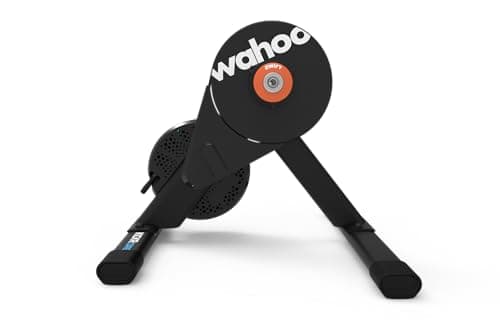
#ad We may earn a commission · Price as of October 22, 2026
The value bar for the whole category: roughly 90% of the flagship's ride for a good deal less.
- Type
- Direct drive
- Claimed accuracy
- ±2%
- Max resistance
- 1,800 W
- Max gradient
- 16%
- Flywheel
- 12 lb
- Connectivity
- BT, ANT+
- Status
- Superseded by the Kickr Core 2, which added onboard WiFi
What we'd praise
- About 90% of the flagship Kickr's ride for meaningfully less money
- ±2% claimed accuracy is plenty for training and racing by power
- The value benchmark the whole direct-drive category is measured against
What we'd flag
- No onboard WiFi — firmware and uploads route through your phone
- Needs an occasional manual spindown after big temperature swings
The Kickr Core is the trainer that answers "how little can I give up to save real money?" It runs the same Wahoo firmware and app as the flagship, pairs the same way over Bluetooth and ANT+, and puts down resistance that feels like a sibling of the v6 at the wattages an enthusiast actually rides. Wahoo claims ±2% accuracy against the flagship's ±1%, and the 12 lb flywheel is lighter than the v6's 16 lb, but for training and racing by power that's a rounding error, not a downgrade.
What you give up is convenience: no onboard WiFi, so uploads lean on your phone, and a manual spindown every few weeks. Neither is a dealbreaker. Put the saving toward a proper fanand a screen and the Core is the value pick that's hard to argue with.
One thing to know before you click through: Wahoo has replaced this trainer with the Kickr Core 2, which adds onboard WiFi, Race Mode and revised legs on the same ±2% drive unit, and that is the listing the buy link above now resolves to. Everything on this page describes the original Core, which is what you will find on the used market.
Good questions
Frequently asked questions
Is the Wahoo Kickr Core worth it in 2026?
Yes. The Kickr Core remains the value benchmark for direct-drive trainers — it runs the same firmware and app as the flagship Kickr v6 and delivers about 90% of its ride for meaningfully less. Unless onboard WiFi or auto-calibration is a specific need, it's the trainer most upgrading riders should buy.
What's the difference between the Kickr Core and the Kickr v6?
The v6 adds onboard WiFi (firmware and uploads move without your phone), auto-calibration (no manual spindown), a higher claimed accuracy (±1% vs ±2%), a higher resistance ceiling (2,200 W vs 1,800 W) and a heavier 16 lb flywheel versus 12 lb. For most riders those are conveniences and headroom rather than must-haves, which is why the Core is the value pick.
Is the Kickr Core accurate enough for structured training?
Yes. Wahoo claims ±2%, which is plenty for training and racing by power and for following structured workouts. Repeatability — reading consistently ride to ride — matters more than the absolute claimed figure. The tighter ±1% of the flagship only matters if you run formal FTP protocols where a couple of watts changes your zones.
Does the Wahoo Kickr Core have WiFi?
No. The Kickr Core connects over Bluetooth and ANT+ only. Firmware updates and ride uploads route through the Wahoo app on your phone, which needs to be present as a bridge. Onboard WiFi is one of the main features the flagship Kickr v6 adds over the Core.
Does the Kickr Core need calibration?
Occasionally. The Core uses a manual spindown calibration that the Wahoo app walks you through, recommended after big temperature swings to keep its power numbers honest. It takes about a minute. The flagship v6's advantage is that it auto-calibrates in the background, so you never do it manually.
How we sourced this
Keep going