Start Here
Cadence Sensor vs Power Meter: Which Do You Actually Need?
One counts how fast you pedal; the other measures how hard. They are not competing products, and there is a good chance your trainer already gives you both.
The short answer
Quick picks
| # | Product | Best for | Score | Price |
|---|---|---|---|---|
| 1 | 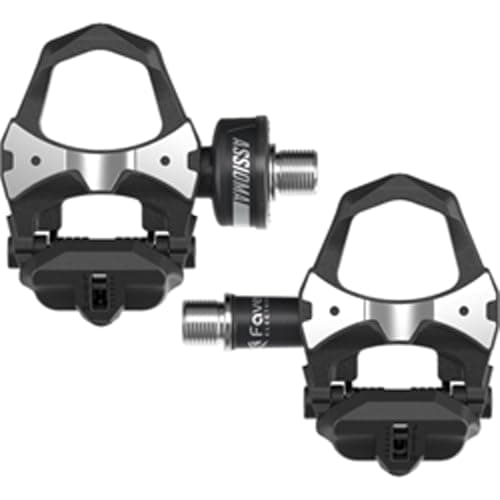 Favero Assioma Uno The upgrade that answers the question a cadence sensor cannot: how hard are you actually working, indoors and out. | If you need power | 9.29.2 out of 10 | $381.22 · View on Amazon #ad We may earn a commission · Price as of October 21, 2026 |
| 2 | 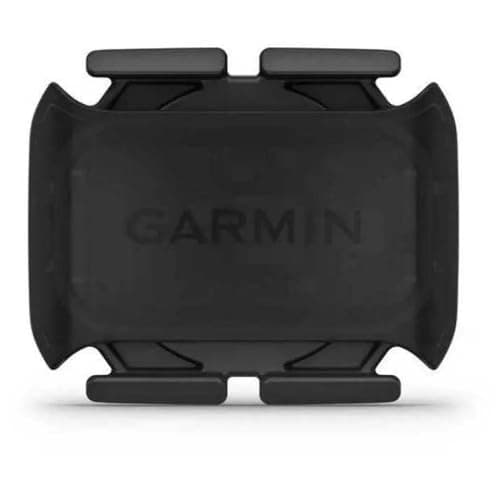 Garmin Cadence Sensor 2 Cheap, instant and useful — as long as you understand it measures how fast you pedal, not how hard. | If you need cadence | 8.38.3 out of 10 |
This question gets asked as though the two devices compete. They do not. One is a counter and one is a measurement instrument, and the reason people ask is usually a different question underneath: what is the cheapest thing I can buy that will make my training better? The honest answer depends almost entirely on what your trainer already does, so start there.
What each one actually measures
A cadence sensor detects each crank revolution and reports the rate. Modern sensors are magnet-free, using an accelerometer strapped to the crank arm, so there is nothing to align. It knows how fast your legs are going around and nothing else — it cannot tell a gentle spin from a maximal effort at the same rpm.
A power meter contains strain gauges that measure how much the crank, pedal or spider flexes under your force, combines that with rotational speed, and outputs watts. Because it has to know rotational speed to do that arithmetic, every power meter also reports cadence for free. That is the crucial detail: buying a power meter makes a cadence sensor redundant, but not the other way around.
| Cadence sensor | Power meter | |
|---|---|---|
| Measures | Pedaling rate (rpm) | Work done (watts) plus cadence |
| Tells you how hard you worked | No | Yes |
| Works outdoors | Yes | Yes |
| Typical price band | Low | Mid to high |
| Install | Strap to crank, no tools | Pedal wrench or crank swap |
| Makes the other redundant | No | Yes |
| Needed if your trainer reports both | No | Only for outdoor riding |
Check your trainer before you buy anything
This is the step that saves people money. Most controllable smart trainers measure power directly and broadcast cadence, either measured or estimated from the flywheel. If yours does, you already have both metrics for indoor riding and neither purchase adds anything in that room.
Two exceptions. Some trainers estimate cadence rather than measuring it, which is accurate enough for a steady effort and unreliable during sharp changes or high-cadence work — if your cadence trace looks stepped or lags reality, a real sensor fixes it. And non-controllable trainers report neither, so a speed sensor for virtual power and a cadence sensor are both required. Our turbo trainer roundup covers which units fall into that group.
Is cadence data worth anything on its own?
Some, but less than people assume. Cadence is a useful execution metric: workouts prescribe it, and it tells you whether you are holding a target wattage by spinning or by grinding. Those are different stresses on your legs even at identical power.
What cadence cannot do is tell you whether you are getting fitter. There is no such thing as a good cadence number in isolation — riders perform well across a wide range, and chasing a particular rpm because a magazine recommended it is one of the more durable myths in cycling. On its own, a cadence sensor makes your ride file more descriptive. It does not make your training better.
Why power is the metric that changes training
Power is the only cycling number that measures your output directly and immediately. Heart rate lags and drifts with heat, sleep and caffeine. Speed depends on wind, gradient and road surface. Perceived effort is honest but not comparable week to week. Watts are watts.
That is what makes structured training possible: a plan can prescribe an exact intensity, you can hit it precisely, and a progression across a block is visible in numbers rather than feelings. If you want the argument in full, our smart trainer vs power meter guide covers which device should provide those watts.
Whichever you buy first, it is worth knowing what the cadence number is actually for. What cadence should you ride at goes through the published research — which consistently finds around 60 rpm is the most metabolically efficient cadence, and equally consistently explains why almost nobody should ride there — and sets out the one genuinely useful application indoors, which is varying cadence deliberately at a fixed wattage.
Ready for watts?
See the best budget power meters, rankedThe decision, in order
Step one: does your trainer report power and cadence? If yes, buy neither for indoor riding. Spend the money on a fan instead — it will do more for your training than either sensor.
Step two: do you ride outdoors? If yes, a power meter is the purchase that earns its price, because it measures the rides your trainer cannot see and gives you one consistent power source across both. A cadence sensor adds nothing you will act on.
Step three: if you ride only indoors and your trainer reports power but not cadence, a cadence sensor is a sensible, cheap fix. That is the one scenario where it is clearly the right purchase.
A note on mixing power sources
If you end up owning both a smart trainer and a power meter, resist the urge to switch between them mid-training-block. Two devices measuring the same rider will disagree slightly — that is normal and does not mean either is broken. What it does mean is that your training zones, derived from one device, do not transfer cleanly to the other.
Pick one as your reference and stay with it for the block. Most riders use the power meter, because it is the source that also works outdoors. Our accuracy guide explains why repeatability matters more than which device is objectively closer to truth.
If the question is specifically about Zwift rather than about devices in general, do you need a cadence sensor for Zwift answers it platform by platform.
The full reviews
Every pick, in detail
#1 · If you need power
Favero Assioma Uno
9.29.2 out of 10#ad We may earn a commission · Price as of October 21, 2026
The upgrade that answers the question a cadence sensor cannot: how hard are you actually working, indoors and out.
- Measures
- Power and cadence
- Claimed accuracy
- ±1%
- Mounting
- Pedal wrench, minutes
- Battery
- Rechargeable, ~50 hours
- Cleat system
- Look Keo compatible
- Works with
- Zwift, head units, apps
What we'd praise
- Measures work done, which is the number training actually responds to
- Reports cadence as well, so it replaces a cadence sensor entirely
- Comes with you outdoors, unlike a smart trainer's power figure
What we'd flag
- Costs many times a cadence sensor
- Look Keo cleats only, so a shoe or cleat change may be required
A power meter measures force and turns it into watts, which is the only cycling metric that describes the work you did rather than a side effect of it. It also reports cadence, which means buying one makes a separate cadence sensor unnecessary.
The Assioma Uno is the cheapest one we recommend without caveats: ±1% claimed accuracy, rechargeable, and installed with a pedal wrench. The rest of the field is in our budget power meter roundup.
#2 · If you need cadence
Garmin Cadence Sensor 2
8.38.3 out of 10Cheap, instant and useful — as long as you understand it measures how fast you pedal, not how hard.
- Measures
- Pedaling rate only
- Mounting
- Strap to crank arm, magnet-free
- Connectivity
- Bluetooth and ANT+
- Battery
- Coin cell, long life
- Install time
- Under a minute
- Works with
- Zwift, head units, apps
What we'd praise
- Costs a small fraction of any power meter
- Magnet-free — nothing to align and nothing to knock out of position
- Moves to another bike in seconds with no tools
What we'd flag
- Tells you nothing about how hard you are working
- Redundant if your smart trainer already reports cadence
A cadence sensor counts revolutions. That is the whole job, and at this price it does it perfectly: strap it to a crank arm, pair it once, and it reports pedaling rate to Zwift and any head unit for years on a coin cell.
Its value depends entirely on what else you own. If your trainer already broadcasts cadence, this is redundant on that bike. If it does not, or you ride a second bike indoors, it fills the gap for very little. More options in our cadence sensor roundup.
Good questions
Frequently asked questions
Does a power meter measure cadence too?
Yes, all of them do. A power meter has to know rotational speed to calculate watts, so cadence comes out of the same arithmetic. That means buying a power meter makes a separate cadence sensor redundant, while buying a cadence sensor tells you nothing about power.
Do I need a cadence sensor if I have a smart trainer?
Usually not. Most controllable smart trainers broadcast cadence along with power. A separate sensor is worth adding if your trainer only estimates cadence and the trace looks stepped or lagging, or if you ride a second bike indoors that is not on the trainer.
Is a cadence sensor worth buying on its own?
It is cheap and it makes your ride files more descriptive, but it will not make you fitter. Cadence is an execution metric that tells you how you produced an effort, not how hard the effort was. On a budget, airflow and a heart rate strap deliver more useful training information.
What is a good cycling cadence?
There is no single correct number. Strong riders perform well across a wide range, and the right cadence depends on the effort, your muscle characteristics and the terrain. Chasing a specific rpm because it is often quoted is one of the more persistent myths in cycling training.
Should I buy a power meter if I only ride indoors?
Generally no. A controllable smart trainer already measures power, so a power meter adds nothing in that room. It becomes worth buying when you also ride outdoors and want one consistent power source across indoor and outdoor training.
Will my power meter and smart trainer show the same numbers?
They will be close but not identical, and that is normal rather than a fault. Two devices measuring the same rider through different parts of the drivetrain will differ slightly. Choose one as your reference for a training block and stay with it so your zones remain consistent.
How we sourced this
Keep going