Start Here
What Cadence Should You Ride At?
The research is unusually clear and unusually unhelpful: the most efficient cadence is far lower than the one you probably ride. Here is why efficiency is not the goal, and what to do with that indoors.
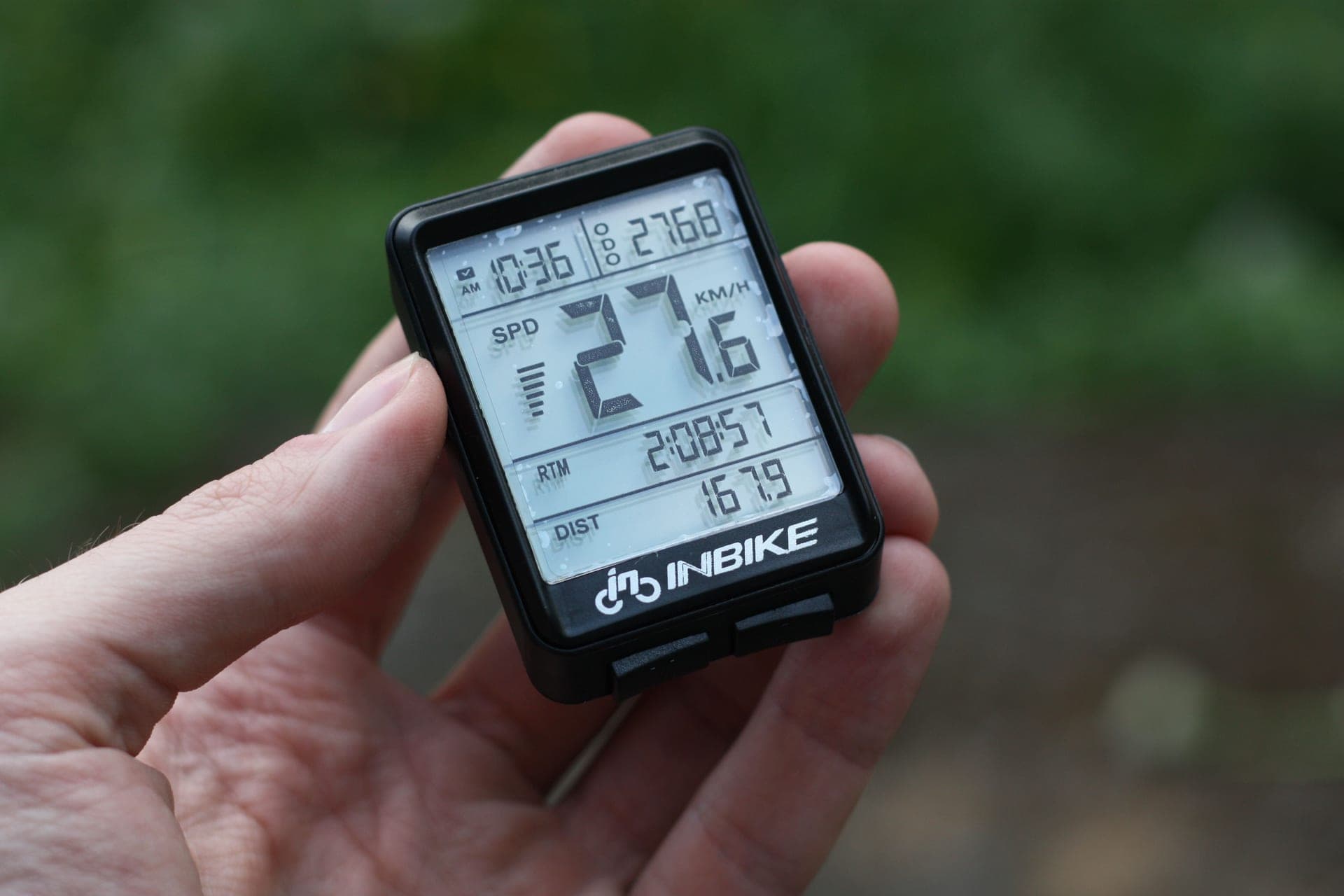
Cadence is the most over-prescribed number in cycling. "Ride at 90 rpm" is repeated so often that it reads as settled science, and the research does not support it as a rule. What the research does support is more interesting, and more useful for someone training indoors where cadence is trivially easy to control.
What the published research actually found
The efficiency studies point consistently in one direction, and it is not the direction most cyclists expect. Summarising road.cc's review of the literature:
Suzuki (1979)measured gross efficiency in endurance athletes falling from 23.3% at 60 rpm to 19.6% at 100 rpm. Coast et al (1986)found the best cadences for trained racers at 85% of VO2 max were either 60 or 80 rpm. Leirdal and Ettema (2011)found efficiency highest around 10 rpm below the athletes' own freely chosen cadence. Nimmerichter et al (2015)tested 60 against 90 rpm on level and uphill terrain in trained cyclists and found 60 rpm more efficient in both conditions.
Field data supports the same conclusion: in one study of trained cyclists, gross efficiency was significantly higher at 60 rpm (20.6% ± 1.7%) than at 90 rpm (18.1% ± 1.3%). road.cc's summary of the whole body of work is blunt: most research shows about 60 rpm as the most efficient.
We have not run any of this testing ourselves, and we are not going to pretend otherwise — every figure above is attributed to the published source it came from.
| Study, as cited by road.cc | What was compared | Finding |
|---|---|---|
| Suzuki (1979) | 60 rpm vs 100 rpm, endurance athletes | Efficiency fell from 23.3% at 60 rpm to 19.6% at 100 rpm |
| Coast et al (1986) | Range of cadences at 85% VO2 max, trained racers | Best cadences were either 60 or 80 rpm |
| Leirdal and Ettema (2011) | Freely chosen cadence vs others | Efficiency highest around 10 rpm below freely chosen cadence |
| Nimmerichter et al (2015) | 60 rpm vs 90 rpm, level and uphill | 60 rpm more efficient in both conditions |
| Field study of trained cyclists | 60 rpm vs 90 rpm gross efficiency | 20.6% ± 1.7% at 60 rpm vs 18.1% ± 1.3% at 90 rpm |
So why does nobody ride at 60 rpm?
Because efficiency measures only one cost, and it is not the cost that limits a cyclist.
Force per pedal stroke.To produce the same power at 60 rpm as at 90 rpm, you have to push roughly half again as hard on each stroke. That load is borne by muscle and connective tissue, and it accumulates. A long effort at a low cadence leaves your legs wrecked in a way that the same effort at a higher cadence does not, even though it cost less oxygen.
Substrate use. road.cc notes reduced carbohydrate oxidation at higher cadences as one of the practical advantages, which matters on long rides where glycogen is a finite resource.
Responsiveness.A lower perceived force at the pedals makes it much easier to respond to an acceleration — a bridge, a surge, a steepening gradient. In a group or a race that is not a nicety, it is the whole point. At 60 rpm you are already near your force limit, so there is nothing left to add instantly.
It is uncomfortable.road.cc's own framing is that 60 rpm is not sustainable for most cyclists because there is more to riding a bike than being efficient. Riders self-select higher cadences for a reason, and Leirdal and Ettema's finding — efficiency peaks about 10 rpm below your freely chosen cadence — suggests the body is already making a sensible trade rather than getting it wrong.
What to look for in a cadence sensor
If you want to work with cadence at all, you need to be able to see it. On a smart trainer with measured power, cadence often comes free — but not always, and not accurately, because many trainers estimate it from flywheel behaviour rather than measuring crank rotation. A dedicated sensor measures the crank.
Both wireless protocols. Bluetooth and ANT+. Bluetooth is what Apple TV, iPad and Android need; ANT+ is what lets a PC or Mac read unlimited sensors through one dongle. ANT+ vs Bluetooth for Zwift explains why that matters, and it matters especially for a cadence sensor, because on Apple TV a cadence sensor is often the device that takes you past the two-Bluetooth-connection limit.
Magnet-less. Modern sensors read crank rotation with an accelerometer, so there is no magnet to align on the frame and nothing to be knocked out of position. Every sensor we recommend is magnet-less.
A coin cell with a published life. CatEye claims about 10 months at an hour a day; Garmin claims up to around 12 months. A sensor you replace a battery in annually is a sensor you never think about.
A water or dust rating. A crank-mounted sensor on an indoor trainer sits directly under a sweating rider. IPX7 is the figure to look for.
A mount that moves. A rubber band or strap around the crank arm transfers to another bike in seconds, which matters if you have a trainer bike and an outdoor bike.
The short answer
Cadence sensors worth buying
| # | Product | Best for | Score | Price |
|---|---|---|---|---|
| 1 | 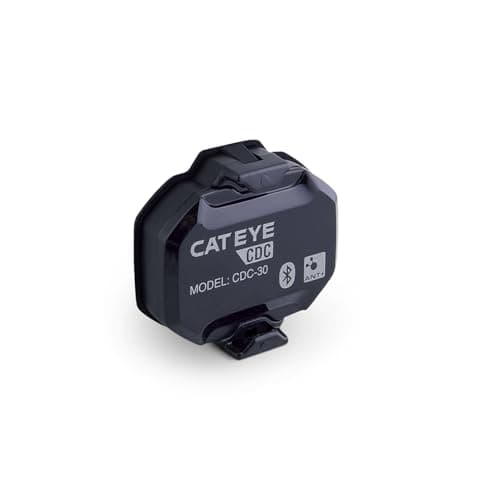 CatEye CDC-30 The cadence sensor to buy if you just want a number you can trust without thinking about it again for most of a year. | Best cadence sensor overall | 8.98.9 out of 10 | |
| 2 | 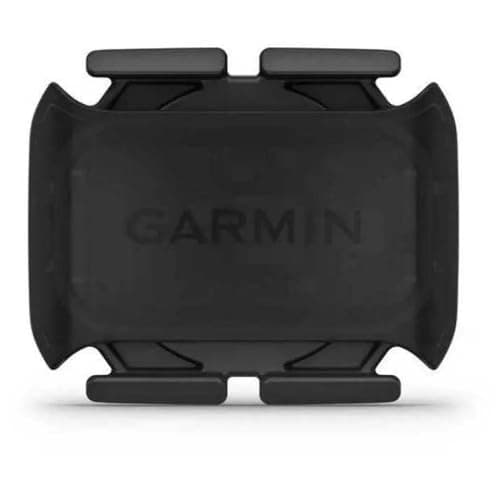 Garmin Cadence Sensor 2 Buy this if your head unit or watch is a Garmin and you want the sensor to simply appear and work. | Best for Garmin head units and watches | 8.78.7 out of 10 | $67.99 · View on Amazon #ad We may earn a commission · Price as of October 5, 2026 |
| 3 | 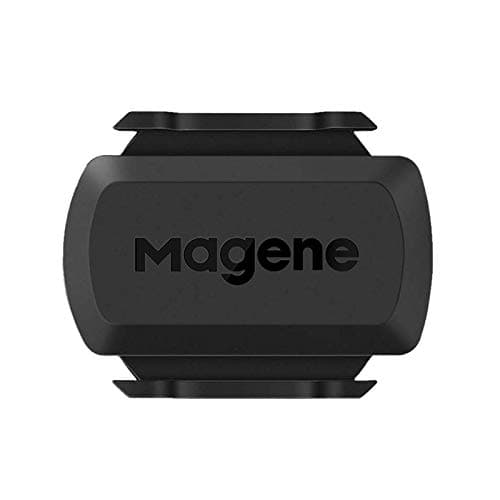 Magene S3+ The cheap way to get a cadence number, with the useful quirk that it can be a speed sensor instead. | Best value, and switchable to speed | 8.58.5 out of 10 | $16.99 · View on Amazon #ad We may earn a commission · Price as of October 5, 2026 |
What cadence to actually ride
Start from your freely chosen cadence. Ride normally for a few sessions and look at the average. That figure is the output of a long unconscious optimisation, and it is the right default. If it is somewhere in the 80s or low 90s, you are in company with most trained cyclists and there is nothing to fix.
Do not chase 90 rpm because you read it somewhere.Forcing a cadence 15 rpm above your natural one raises your heart rate for the same power and feels worse without producing anything. If you want to change your natural cadence, that is a slow adaptation, not a decision.
Vary it deliberately in training — this is the actual use.Indoors, cadence is the easiest variable in the room to control, and varying it changes what a given wattage asks of you. A sweet-spot interval at 95 rpm is an aerobic session. The same interval at 65 rpm is a muscular one. Low-cadence work at 50 to 60 rpm while holding the same power is a recognised way to load the muscle without raising the metabolic cost; high-cadence work above your natural figure trains the neuromuscular coordination that lets you spin smoothly when fatigued. Both are tools.
On climbs, cadence falls — do not fight it. On a steep gradient, gearing runs out before cadence preference does, and the research does not suggest you are losing anything by riding at 70 on a climb.
Watch cadence during intervals, not just power. A cadence that drifts down through a long interval while the wattage holds is a sign of muscular fatigue arriving. On a trainer in ERG mode this is especially worth watching, because the trainer will keep holding the wattage while your cadence collapses. ERG mode explained covers the spiral-of-death failure mode that follows.
Cadence, ERG mode and the spiral of death
This is the one cadence problem unique to indoor riding and worth knowing before it happens. In ERG mode the trainer holds a fixed wattage regardless of your gear, which means that if your cadence drops, the trainer increases resistance to maintain the target, which makes your cadence drop further. The result is a stall. The fix is to anticipate it: pick a gear that puts you at a comfortable cadence before the interval starts, and if you feel the cadence falling away, spin up rather than pushing harder.
That is also the single best argument for owning a cadence sensor rather than relying on your trainer's estimate: a real crank measurement gives you the early warning. Our cadence sensor vs power meter guide covers which to buy first, and cadence sensor for a stationary bike covers the case where the bike has no crank sensor at all.
Does cadence affect your power numbers?
It can affect what your power meter reports, slightly. Some measurement designs are more sensitive to very low or very high cadences than others, which is why comparative accuracy testing runs multiple cadences rather than one. It is a small effect and not a reason to choose a cadence, but it is a reason not to be surprised if a trainer and a power meter agree less well at 50 rpm than at 90. How accurate are power meters covers the whole picture.
Need to measure it?
See the best cadence sensors, compared on the specsThe full reviews
Every pick, in detail
Best cadence sensor overall
CatEye CDC-30
8.98.9 out of 10The cadence sensor to buy if you just want a number you can trust without thinking about it again for most of a year.
- Connectivity
- Bluetooth 4.1 + ANT+
- Mount
- Crank arm, strap or zip ties (magnet-less)
- Battery
- CR2032 coin cell
- Battery life
- About 10 months at an hour a day (claimed)
- Water resistance
- IPX7
- Why it wins
- Both protocols, no magnet, long battery
What we'd praise
- Both Bluetooth and ANT+, so it works on an Apple TV setup and on a PC with a dongle
- Magnet-less, so there is nothing to align and nothing to knock out of alignment
- CatEye claims around 10 months at an hour a day from a CR2032
- IPX7, which is what a sweaty trainer session actually requires
- Straps or zip-ties to the crank arm, so it fits anything
What we'd flag
- No speed mode — it is a cadence sensor only
- On an Apple TV setup it occupies one of only two available Bluetooth channels
- Less widely stocked than the Garmin or Magene alternatives
If you are reading a page about what cadence to ride at, the first requirement is a cadence figure you trust. The CDC-30 is the one we recommend because it carries both wireless protocols, needs no magnet to align, and CatEye claims around ten months of life from a coin cell at an hour a day. Our cadence sensors roundup compares the field properly.
Best for Garmin head units and watches
Garmin Cadence Sensor 2
8.78.7 out of 10#ad We may earn a commission · Price as of October 5, 2026
Buy this if your head unit or watch is a Garmin and you want the sensor to simply appear and work.
- Connectivity
- Bluetooth + ANT+
- Mount
- Crank arm band (magnet-less)
- Battery
- CR2032 coin cell
- Battery life
- Up to ~12 months (claimed)
- Best for
- Garmin ecosystems
- Fit
- Rubber band around the crank arm
What we'd praise
- Pairs itself into a Garmin Edge or watch with no configuration at all
- Garmin claims up to around 12 months from a coin cell
- Both protocols, so it works just as well with Zwift on a tablet
- The rubber-band mount moves between bikes in seconds
What we'd flag
- The most expensive sensor in the category for the same single data stream
- The band perishes eventually and is a consumable
- Cadence only — no speed mode
There is a straightforward argument for staying inside one ecosystem: it pairs without thought, the fields are already laid out, and nothing needs configuring. If your training record lives in Garmin Connect, this is the sensor that adds cadence with zero friction. Garmin claims up to around twelve months from a replaceable coin cell. Our Garmin Cadence Sensor 2 review covers it in detail.
Best value, and switchable to speed
Magene S3+
8.58.5 out of 10#ad We may earn a commission · Price as of October 5, 2026
The cheap way to get a cadence number, with the useful quirk that it can be a speed sensor instead.
- Connectivity
- Bluetooth + ANT+
- Mount
- Crank arm or hub (dual mode)
- Battery
- CR2032 coin cell
- Modes
- Speed or cadence (switchable)
- Best for
- Value and flexibility
- Fit
- Crank arm or wheel hub
What we'd praise
- Both protocols at the lowest sensible price in the category
- Switchable between cadence and speed, so one purchase covers two jobs
- Mounts to a crank arm or a wheel hub depending on which mode you want
- Replaceable coin cell
What we'd flag
- Build quality is not in the Garmin or CatEye class
- Switching modes is a setup step you have to remember
- No published long-term battery figure as specific as Garmin's or CatEye's
Cadence is the cheapest data stream in indoor cycling after heart rate, and the S3+ is where that gets proven. Both protocols, a coin cell, and a switch between cadence mode on the crank arm and speed mode on the hub. For a rider who wants to start paying attention to cadence without a real purchase decision, this is it.
Good questions
Frequently asked questions
What cadence should you ride at?
Start from the cadence you naturally settle at, which for most trained cyclists is somewhere in the 80s or low 90s. Published research consistently finds the most metabolically efficient cadence is much lower — around 60 rpm — but efficiency is not the limiting cost, because low cadences require far more force per pedal stroke and leave you unable to respond to a change in pace. Do not force a number you read somewhere; vary cadence deliberately in training instead.
Is 60 rpm really the most efficient cadence?
That is what the published research repeatedly finds. road.cc's review of the literature cites Suzuki (1979) measuring efficiency falling from 23.3% at 60 rpm to 19.6% at 100 rpm, Coast et al (1986) finding 60 or 80 rpm best at 85% of VO2 max, and Nimmerichter et al (2015) finding 60 rpm more efficient than 90 rpm both level and uphill. A field study of trained cyclists reported 20.6% gross efficiency at 60 rpm against 18.1% at 90 rpm.
If 60 rpm is more efficient, why does everyone ride at 90?
Because efficiency measures oxygen cost and ignores muscular cost. Producing the same power at 60 rpm requires roughly half again as much force on each pedal stroke, and that load accumulates in muscle and connective tissue. Higher cadences also reduce carbohydrate oxidation and leave you able to respond instantly to an acceleration, which at 60 rpm you cannot because you are already near your force limit.
Should I train to increase my cadence?
Not as a goal in itself. Leirdal and Ettema found efficiency peaks around 10 rpm below a rider's freely chosen cadence, which suggests the body has already made a reasonable trade. What is worth doing is varying cadence deliberately in training — low-cadence work to load the muscle at the same wattage, high-cadence work to train smooth pedalling under fatigue — rather than trying to shift your default upward.
What is low-cadence training for?
Loading the muscle without raising the metabolic cost. Holding the same wattage at 50 to 60 rpm instead of 90 roughly increases the force at each pedal stroke by half, which is a muscular stimulus at an aerobic intensity. Indoors it is easy to do precisely because the trainer holds the wattage for you. It is a tool within a block, not a way to ride all the time.
Do I need a cadence sensor if my smart trainer reports cadence?
Often yes, because many trainers estimate cadence from flywheel behaviour rather than measuring crank rotation, and estimates are noisy — especially during the accelerations and low-cadence efforts where cadence matters most. A dedicated magnet-less sensor on the crank arm measures the real thing. On an Apple TV setup, though, remember a cadence sensor usually takes you past the two-Bluetooth-device limit.
What cadence should I use in ERG mode?
Choose a gear before the interval starts that puts you at a cadence you can comfortably hold for its full length, typically your natural cadence or slightly above. ERG mode holds the wattage regardless of your gear, so if your cadence falls the trainer adds resistance, which drops your cadence further — the so-called spiral of death. Spinning up at the first sign of cadence falling away is the fix, not pushing harder.
Does cadence change my power meter reading?
Slightly, depending on the measurement design. Some meters are more sensitive to very low or very high cadences than others, which is why independent accuracy testing runs several cadences rather than one. It is a small effect and not a reason to choose a cadence, but it does explain why a trainer and a power meter may agree less well at 50 rpm than at 90.
How we sourced this
- road.cc — Cycling cadence: how fast should you pedal? (citing Suzuki 1979 23.3% at 60 rpm vs 19.6% at 100 rpm; Coast et al 1986 60 or 80 rpm at 85% VO2 max; Leirdal and Ettema 2011 10 rpm below freely chosen; Nimmerichter et al 2015 60 vs 90 rpm level and uphill; reduced carbohydrate oxidation and lower perceived pedal force at higher cadence)
- Gross efficiency during flat and uphill cycling in field conditions (60 rpm 20.6% ± 1.7% vs 90 rpm 18.1% ± 1.3%)
- CatEye — CDC-30 magnet-less cadence sensor specifications (manufacturer)
- Garmin — Cadence Sensor 2 product specifications (manufacturer)
- Magene — S3+ speed and cadence sensor product page (manufacturer)
- Zwift Insider — Zwift on Apple TV: pros, cons and quirks (two Bluetooth connections in the game)
Keep going