Start Here
How Accurate Are Power Meters?
The claims run from ±1% to ±3%, independent reviewers routinely find a few percent between two good devices, and the biggest errors in the category are not the meter's fault at all. Here is the honest picture.
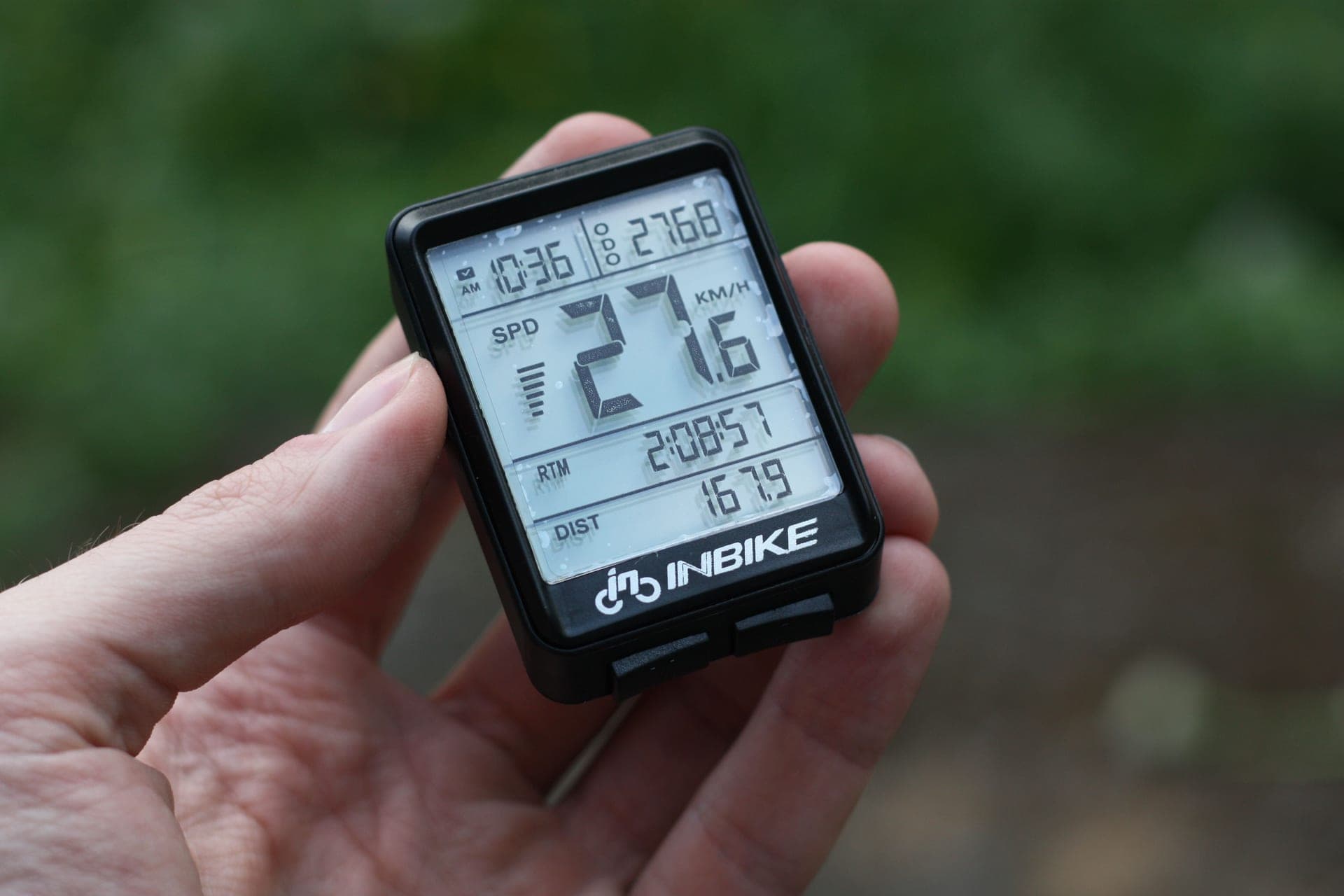
"How accurate are power meters" is a question with two honest answers depending on what you mean. If you mean "does a power meter tell me my true output in watts", the answer is: to within a few percent, and nobody can tell you which few percent, because there is no reference standard in your house. If you mean "can I train on this number", the answer is yes, confidently, provided you set it up correctly and do not change devices mid-season.
What a ±1% claim actually means
It is a percentage of the reading, not a fixed number of watts. That has a consequence worth internalising: the absolute error grows with the number. At 150 W, ±1% is ±1.5 W — invisible. At 1,200 W in a sprint, the same specification is ±12 W. So a power meter is most precise exactly where precision matters least, and loosest where riders most like to compare numbers.
It is also a claim about the measurement the device takes, which is not always the same thing as your output. 4iiii specifies ±1% for the torque passing through the left crank arm. Your total is that figure doubled, so a real left/right imbalance is added to the stated tolerance rather than being inside it. SRAM is explicit about this with the Rival AXS power meter: ±1.5% for the measurement, ±3% for the total, because the total is one leg doubled. That is the honest way to state it, and it is why single vs dual-sided power meters is an accuracy question as much as a features question.
Finally, a claimed tolerance is a laboratory figure under controlled conditions. It says nothing about how the device behaves on a cold start in a garage, with a flat battery, at 110 rpm, after being refitted.
| Power meter | Type | Sided | Claimed accuracy | What the claim covers |
|---|---|---|---|---|
| Favero Assioma Duo | Pedal | Dual-sided | ±1% | Both legs measured — no doubling |
| Favero Assioma Pro RS-2 | Pedal | Dual-sided | ±1% | Both legs measured — no doubling |
| Garmin Rally RS210 | Pedal | Dual-sensing | ±1% | Both legs measured — no doubling |
| 4iiii Precision 3+ | Bonded crank arm | Single (left) | ±1% of measured torque | The left arm only; total is doubled |
| SRAM Red / Force AXS spider | Spider | Total power | ±1.5% | Total torque into the chainrings; balance estimated |
| Magene PES P505 | Crankset | Dual | ±1.5% (P505 base) | Manufacturer figure |
| SRAM Rival AXS crankset | Spindle | Single (left) | ±3% total (±1.5% measured) | SRAM states both figures separately |
| Shimano Ultegra FC-R8100-P | Crankset | Dual-sided | Not published in an accessible spec sheet | No figure we could verify |
What independent reviewers have actually measured
Published tolerances are claims. Measured comparisons are more useful, and they are consistently messier. We have not done this testing ourselves, so every figure below is attributed to the reviewer who published it.
Several good meters on one bike disagree by a few watts.In DC Rainmaker's review of the Elite Avanti trainer, the comparison set — a Quarq RED crank-based meter, a Favero Assioma and Garmin Rally RS200 pedals — showed a 5 to 7 W spread between devices, with a concurrent sprint peak reading 915 and 922 W on two different units. All of those devices were working correctly.
The same meter can look different against different references.For Favero's Assioma Pro RS, DC Rainmaker reported it tracking within a few watts of an Elite Justo 2, around 2 W from a Muov, and half a watt apart on a roughly 700 W sprint — while road.cc, testing the same product against SRAM Rival cranks outdoors, reported it reading about 5.5% low overall and around 1.5% low in steady-state riding. Those findings are not contradictory so much as a demonstration that "accuracy" is always accuracy relative to something.
Reviewers sometimes do not agree at all.For the Magene P715, Cyclists Hub measured average deviations of roughly -2.1% to -2.8% against a Wahoo Kickr v5 with maxima near -4.8% to -6.2%; the5krunner put it around 5% from a 4iiii and 4% from a Magene P505; GPLama found it solid and within spec. We have deliberately left those unreconciled on our Magene P715 review rather than picking a favourite.
Trainers and power meters are not expected to match.DC Rainmaker's Kickr Core 2 testing found it within a 1.5% spread at worst against Garmin Rally pedals and a SRAM crankset — inside Wahoo's ±2% claim, and still not identical. How accurate are smart trainers is the companion page to this one.
Why two honest devices never read the same
They measure in different places. A pedal meter reads force at the spindle, before the chain. A crank meter reads torque at the arm. A spider reads it entering the chainrings. A trainer reads it at the far end of the drivetrain, after chain and cassette losses. Each of those is a legitimate measurement of a different point in the chain of power transmission, and drivetrain losses are real — so a trainer reading a little lower than a pedal meter is physics, not a fault.
They average differently. Devices sample at different rates and apply different smoothing before broadcasting. Over a 20-minute interval that washes out. Over a five-second sprint it does not, which is why peak-power numbers diverge far more than average numbers.
Temperature affects strain gauges. Every meter compensates for this, and every meter compensates imperfectly. A unit that has been sitting in a cold garage and is warming up under a rider is in the worst condition it will be in all ride.
Cadence changes the mechanics. Some designs are more sensitive to pedalling at very low or very high cadence than others, which is one reason comparative tests run multiple cadences. What cadence should you ride at covers the training side of that.
What to look for if accuracy is your priority
A published figure, from the manufacturer. If a maker does not publish a tolerance in a document you can find, treat that as information. One product in the table above has no figure we could verify, and we say so rather than assuming one.
Dual-sided, if the absolute number matters to you. It removes the doubling assumption, which is the single largest source of systematic error in cheap meters.
Measurement upstream of the drivetrain. A pedal or crank meter measures what you produce. A trainer measures what arrives after the chain. If you want a reference instrument, buy the upstream one.
A sane calibration routine.Automatic temperature compensation and, better, automatic zeroing — SRAM's MagicZero is the example here — remove the step riders forget.
Consistency over absolute truth. This is the one most buyers get backwards. You cannot verify your true wattage at home, so a meter that reads 3% high every single ride is more useful than one that reads correctly on average and wanders. Interval targets, FTP tracking and season-on-season comparisons all measure change, and change is what a consistent meter reports faithfully.
The short answer
Power meters worth buying for accuracy
| # | Product | Best for | Score | Price |
|---|---|---|---|---|
| 1 | 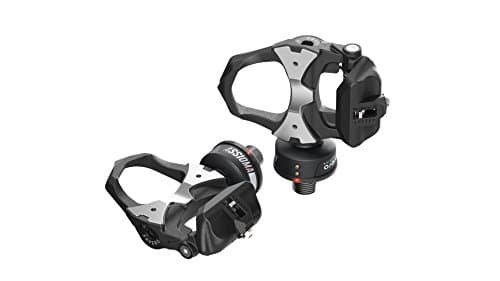 Favero Assioma Duo The sensible reference meter for most riders: ±1%, both legs measured, and a long enough testing record that its behaviour is known. | Best accuracy for the money | 9.39.3 out of 10 | $539.97 · View on Amazon #ad We may earn a commission · Price as of October 5, 2026 |
| 2 | 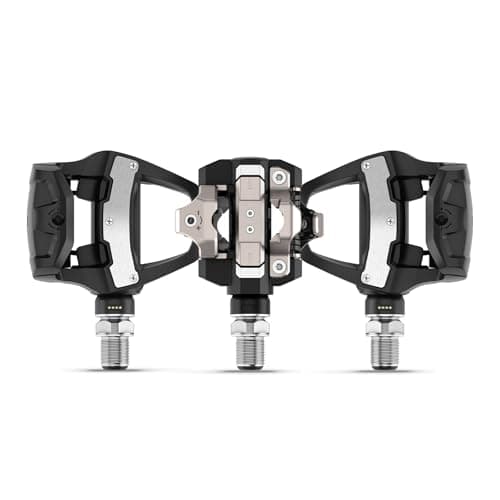 Garmin Rally RS210 Dual-sensing ±1% with a published install torque — the pick if you want balance data you can actually trust. | Best for true left/right measurement | 8.88.8 out of 10 | |
| 3 | 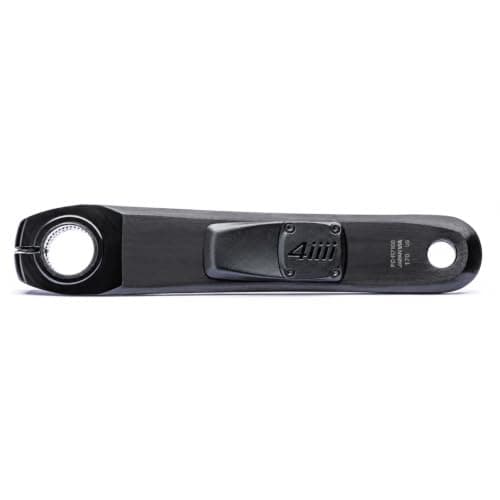 4iiii Precision 3+ Accurate on what it measures and consistent year-round — just understand that the total is one leg doubled. | Best consistency for the least money | 8.68.6 out of 10 | $437.49 · View on Amazon #ad We may earn a commission · Price as of October 5, 2026 |
The four errors that are yours, not the meter's
1. Crank length.Power is torque multiplied by angular velocity, and torque is force multiplied by the radius it acts through — your crank arm. A pedal meter does not know your crank length, so you tell it. Enter 172.5 mm when you ride 165 mm and every number is wrong by about 4.5% forever. This is the most common bad-power-data cause in the category, it takes thirty seconds to fix, and it is the first thing to check when a meter disagrees with a trainer by a consistent amount.
2. A skipped zero offset.A strain gauge has a resting value, and that value drifts with temperature, with install torque, and after knocks. A zero offset tells the meter what "no load" looks like right now. Do it when the meter is new, after refitting it, and after any significant temperature change. How to calibrate a power meter covers when it matters and when it does not.
3. Install torque.Fitting a meter changes the resting strain in it, which is exactly why makers publish torque figures. Garmin specifies 25 ft-lb (34 Nm) for Rally pedals; Favero's Pro RS manual specifies 30 to 40 Nm. Fit to spec, then zero. How to install a power meter is the full procedure.
4. Comparing numbers from two devices. If your trainer says 240 and your pedals say 248, you do not have a problem — you have two measurements of different points in a drivetrain. Pick one device as your training reference, use it consistently, and record the offset so you know what the other one means.
How much accuracy do you actually need?
For nearly all indoor training: less than you think. The purpose of the number is to set interval targets, pace long efforts, and tell you whether you are fitter in April than you were in January. All three are differential measurements, and all three are served by any consistent meter. A 2% systematic error has no effect on whether a sweet-spot interval is the right intensity, because the FTP it is calculated from came off the same device.
Accuracy becomes a real requirement in exactly two cases: when you compare your numbers with other people's — Zwift racing, team selection, published w/kg — and when you switch devices mid-season and need the two to agree. If either describes you, buy dual-sided, buy from a maker that publishes a tolerance, and use one reference device. Are power meters worth it is the prior question if you have not bought one yet.
Ready to buy?
See the best power meters, compared on the specsThe full reviews
Every pick, in detail
Best accuracy for the money
Favero Assioma Duo
9.39.3 out of 10#ad We may earn a commission · Price as of October 5, 2026
The sensible reference meter for most riders: ±1%, both legs measured, and a long enough testing record that its behaviour is known.
- Claimed accuracy
- ±1%
- Sided
- Dual-sided — both legs measured
- Temperature handling
- Automatic compensation
- Zero offset
- In the app or on the head unit
- Battery
- Rechargeable, around 50 hours
- Weather
- IP67
What we'd praise
- ±1% on a dual-sided measurement, so no doubling assumption is layered on top of the tolerance
- Measures at the pedal, upstream of every drivetrain loss, which makes it a sensible reference device
- Long enough independent testing record that its numbers are a known quantity
- Moves between bikes, so you can use one reference instrument to sanity-check two trainers
What we'd flag
- Look Keo cleats
- Still needs a correct crank length entry and an occasional zero offset — no meter is immune to user error
- Sealed battery and proprietary charger
If you want one device whose number you treat as the truth and compare everything else to, this is the usual answer. It claims ±1%, it measures both legs independently so there is no doubling assumption stacked on top of the tolerance, and it sits at the pedal — upstream of the chain, the cassette and the trainer, which is where power is actually produced. Our Assioma Duo review covers it in full.
Best for true left/right measurement
Garmin Rally RS210
8.88.8 out of 10Dual-sensing ±1% with a published install torque — the pick if you want balance data you can actually trust.
- Claimed accuracy
- ±1%
- Sided
- Dual-sensing — both legs measured
- Cleat system
- Shimano SPD-SL
- Install torque
- 25 ft-lb / 34 N-m (Garmin manual)
- Battery
- Rechargeable, up to 90 hours
- Connectivity
- ANT+, Bluetooth
What we'd praise
- True dual-sensing, so the balance figure is a measurement rather than an estimate
- Garmin publishes the install torque, which removes the most common installation-induced error
- Cycling-dynamics fields on a supporting head unit expose more about your pedal stroke than a single power number
- Up to 90 rechargeable hours
What we'd flag
- The most expensive way here to buy a ±1% claim
- Only one pedal washer per side permitted for chain clearance
- Advanced fields need a head unit that supports them
Garmin's dual-sensing design measures each pedal rather than inferring the right leg from the left, which is the difference between a balance figure that means something and one that is an artefact. Garmin also publishes the install torque — 25 ft-lb (34 Nm) — and install torque genuinely changes what a strain gauge reads at rest, so that figure is more relevant to accuracy than most spec-sheet numbers. Our Rally RS210 review has the detail.
Best consistency for the least money
4iiii Precision 3+
8.68.6 out of 10#ad We may earn a commission · Price as of October 5, 2026
Accurate on what it measures and consistent year-round — just understand that the total is one leg doubled.
- Claimed accuracy
- ±1% of the torque it measures
- Sided
- Single (left), doubled
- Power range
- 0 - 4,000 W
- Battery
- CR2032, up to 800 hours claimed
- Weight added
- 9 g
- Connectivity
- ANT+ and Bluetooth Smart
What we'd praise
- ±1% on the measurement it takes, which is a credible claim for a bonded strain gauge
- Consistent, which is the property that actually matters for tracking fitness over a season
- Nothing to charge, so there is no low-battery drift to worry about
- The cheapest way to own a power number at all, which beats owning none
What we'd flag
- The ±1% is for the left-arm torque, not your total — the total is that figure doubled, so an imbalance carries straight into it
- Must be the right arm for your crankset and crank length
- No balance data, so you cannot see the imbalance that the doubling assumes away
This pick is here to make a point about what accuracy means. 4iiii claims ±1% for the torque going through your left crank arm, and that claim is credible. What it does not claim is ±1% on your total output, because the total is that measurement doubled. If your legs are 52/48, the number is a little over. But it is over by the same amount every ride, and for interval targets and season-on-season tracking, consistency beats absolute truth. Our 4iiii Precision review goes into it.
Good questions
Frequently asked questions
How accurate are power meters?
Good ones claim ±1%, mid-tier ones ±1.5%, and single-sided units that double one leg can be specified as wide as ±3%. In practice, independent reviewers comparing several correctly working meters on one bike routinely find differences of a few watts to a few percent — DC Rainmaker reported a 5 to 7 W spread across a Quarq, a Favero Assioma and Garmin Rally pedals. That spread is normal and is not a fault.
What does a ±1% accuracy claim actually mean?
It is a percentage of the reading, so the absolute error scales with the number: ±1.5 W at 150 W, but ±12 W at 1,200 W. It is also a claim about the measurement the device takes, which is not always your total output — 4iiii's ±1% is for the torque through the left crank arm, and the total is that figure doubled. And it is a laboratory figure, so it says nothing about a cold start or a flat battery.
Why does my power meter read differently to my smart trainer?
Because they measure different points in the drivetrain. A pedal or crank meter reads what you produce; a trainer reads what arrives after the chain and cassette, so drivetrain losses mean a trainer reading slightly lower is physics rather than a fault. They also sample and smooth differently, which matters far more for sprint peaks than for 20-minute averages. Pick one device as your reference and record the offset.
Are single-sided power meters accurate?
They are accurate about what they measure and systematically off about your total. A single-sided meter reads one leg and doubles it, so a real left/right imbalance is added on top of the published tolerance. SRAM states this plainly for the Rival AXS crankset: ±1.5% for the measurement and ±3% for the doubled total. For training the number is still perfectly usable because the error is consistent.
What is the most common cause of inaccurate power data?
An incorrect crank length entry on a pedal-based meter. Power is derived from force acting through the crank radius, so telling the head unit 172.5 mm when you ride 165 mm scales every reading by about 4.5%, permanently. After that: a skipped zero offset, an install torque that was not to specification, and a big temperature change mid-ride.
Does calibrating a power meter make it more accurate?
A zero offset makes it accurate again rather than more accurate than specified. It tells the meter what no load looks like under current conditions, which corrects for temperature drift, install torque and knocks. Do it when the meter is new, after refitting, and after a significant temperature change. A full manual calibration with known weights is something most meters neither need nor support.
Is a more expensive power meter more accurate?
Not reliably. Several meters at very different prices all claim ±1%, and the measured differences between good units are smaller than the errors riders introduce themselves. What more money generally buys is dual-sided measurement, better battery life, automatic zeroing and better sealing — all of which improve the data you get in practice without changing the laboratory tolerance.
How accurate does a power meter need to be for indoor training?
Less accurate than most buyers assume, because training uses differences rather than absolutes. Interval targets come from an FTP measured on the same device, and fitness tracking compares you against your own past numbers. A meter with a 2% systematic error serves all of that perfectly. Absolute accuracy only becomes a requirement when you compare numbers with other riders, or switch devices mid-season.
How we sourced this
- DC Rainmaker — Elite Avanti in-depth review (5-7 W spread vs Quarq RED, Favero Assioma and Garmin Rally RS200; 915/922 W concurrent sprint peak)
- DC Rainmaker — Wahoo Kickr Core 2 in-depth review (within a 1.5% spread vs Garmin Rally pedals and a SRAM crankset)
- road.cc — Favero Assioma Pro RS review (about 5.5% under SRAM Rival cranks overall, around 1.5% in steady-state riding)
- DC Rainmaker — Favero Assioma Pro RS review (within a few watts of an Elite Justo 2, around 2 W from a Muov, half a watt apart on a ~700 W sprint)
- GPLama — Magene P715 SPD-SL pedal power meter review (solid and within spec, reservations on pods and price)
- Cyclists Hub — Magene P715 review (average deviations of roughly -2.1% to -2.8% against a Wahoo Kickr v5)
- the5krunner — Magene P715 first look (around 5% vs a 4iiii, around 4% vs a Magene P505)
- Favero — Assioma Duo specifications, ±1% (manufacturer)
- Favero — Assioma PRO RS specifications and user manual (±1%, 30-40 N-m install torque)
- 4iiii — Precision 3+ specifications, ±1% of measured torque (manufacturer)
- SRAM / Quarq — AXS power meter spider specifications, ±1.5%, MagicZero (manufacturer)
- Garmin — Installing Rally Pedals, owner's manual (25 ft-lb / 34 N-m)
Keep going
Read these next
- GuidesHow Accurate Are Smart Trainers?
- Power MetersHow to Calibrate a Power Meter
- GuidesHow to Install a Power Meter
- Power MetersSingle vs Dual-Sided Power Meters
- ComparisonPower Meter Pedals vs Cranks
- Power MetersThe Best Power Meters, Compared on the Specs
- GuidesAre Power Meters Worth It?
- GuidesSmart Trainer vs Power Meter