Power Meter Review
Garmin Rally RS210 Review: The Rechargeable Rally
Garmin's 210 series seals the battery door shut and puts a rechargeable cell in the spindle. Here is what that fixes, what it costs you in run time, and which version to buy.
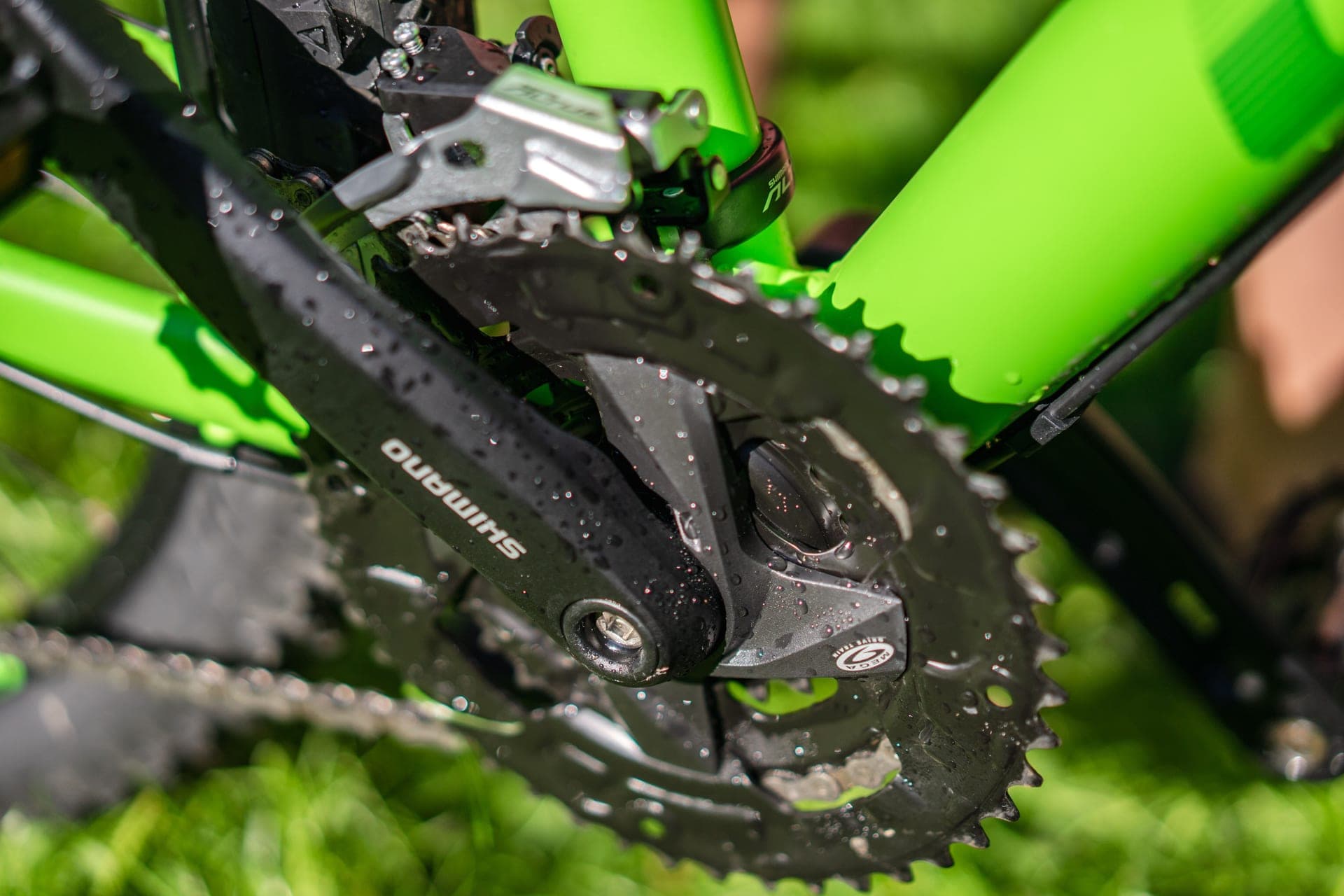
Pedal power meters occupy a specific place in a pain cave. Your trainer already measures power, so a second measuring device looks redundant until you notice what it actually does: it is the only number in your setup that follows you outdoors, onto a second bike, and into a race, which makes it the reference everything else is checked against. That is the job Garmin's Rally range has always done, and the 210 series is the first redesign of it in years.
The change is not the sensor. It is the spindle. Garmin has replaced the replaceable coin cells and their threaded battery doors with a sealed, internally rechargeable lithium-ion spindle, charged through a magnetic clip, and quotes up to 90 hours of ride time between charges with a 15-minute quick charge worth about 12 hours. Along with it comes Pedal IQ, a calibration assistant that tells you when a manual calibration is genuinely needed, and a universal spindle that moves between road and off-road pedal bodies.
What actually changed from the 200 series
Three things, and only one of them is visible on a spec sheet.
The battery is now sealed and rechargeable. The Rally 200 and the Vector pedals before it used replaceable cells behind a threaded door with a seal, and that door was the single most complained-about part of the design: cross-threading, seal wear, water finding its way past it. The 210 spindle is closed. You charge it with a magnetic clip on a USB-C cable, which road.cc found straightforward in testing. That is a durability fix, not a performance one, and it is the reason to care about this generation.
The spindle is universal. Rally was always convertible in principle — the electronics live in the axle, so a body kit changes the cleat system — but the 210 series standardizes one spindle across the RS, RK and XC bodies. Swapping bodies or moving the meter to another bike is a 15 mm pedal wrench and a hex key.
Pedal IQ arrived. Garmin's calibration assistant watches temperature change, time since the last calibration and whether the pedals have been moved between bikes, then tells you when a manual calibration is worth doing. Every power meter needs the occasional zero offset and almost nobody remembers — our calibration guide exists because of exactly that. The caveat is that the alerts want a recent Garmin Edge, so part of the feature is locked to the ecosystem.
What did not change: the ±1% accuracy claim, dual sensing on the 210, single sensing on the 110, ANT+ and Bluetooth broadcasting, and the cycling-dynamics metrics on a compatible head unit.
| Rally RS210 | Rally RK210 | Rally XC210 | Rally RS110 | Favero Assioma Duo | |
|---|---|---|---|---|---|
| Sensing | Dual | Dual | Dual | Single (left, doubled) | Dual |
| Claimed accuracy | ±1% | ±1% | ±1% | ±1% | ±1% |
| Cleat system | Shimano SPD-SL | Look Keo | Shimano SPD (two-bolt) | Shimano SPD-SL | Look Keo type |
| Battery | Rechargeable, 90 h | Rechargeable, 90 h | Rechargeable, 90 h | Rechargeable, 90 h | Rechargeable, about 50 h |
| Weight (pair) | 312 g | 312 g | 436 g | 320 g | Not published here |
| Convertible bodies | Yes | Yes | Yes | Yes | No |
| Water rating | IPX7 | IPX7 | IPX7 | IPX7 | IP67 |
| Protocols | ANT+, Bluetooth | ANT+, Bluetooth | ANT+, Bluetooth | ANT+, Bluetooth | ANT+, Bluetooth |
Why a pedal meter matters to an indoor rider
A smart trainer measures power at the flywheel, after the chain, the cassette and whatever the drivetrain is losing that day. A pedal meter measures at the point where you apply force. The two will never agree exactly, and they are not supposed to — the difference is drivetrain loss, usually a couple of percent. road.cc saw exactly that pattern testing the RS210 against a Quarq crank meter and a Kickr Core, with the pedals reading slightly higher.
What the pedal buys you is a stable reference. If your trainer drifts, you will see it. If your FTP was set outdoors and your indoor sessions feel wrong, you can find out which device is lying. And when you replace the trainer, your training history stays comparable because the measuring device did not change. That case is set out in full in smart trainer vs power meter, and how accurate are smart trainers explains why the numbers differ even when both devices are working correctly.
Ninety hours, and the routine that comes with it
This is the honest cost of the redesign. The Rally 200 ran roughly 120 hours on cells you replaced when they died; the 210 states up to 90 hours and then needs a cable. For most riders that is several months of training, and the 15-minute quick charge covers the moment you notice a low battery the night before a long ride.
Two practical notes, both from Garmin's own documentation. The pedals are rated IPX7 and will operate from -10 to 50 degrees C, but the charging window is narrower at 15 to 40 degrees C — if the bike lives in an unheated garage in winter, bring the pedals inside to charge. And the magnetic charging clips are small, proprietary and easy to mislay, which is the sort of thing that only becomes irritating in year three.
Dual-sensing or single: the 210 or the 110?
The 210 measures both legs independently. The 110 measures the left and doubles it, with a dummy right pedal. Both claim ±1%, because that figure describes how well each pedal measures what it can see, not whether doubling one leg reflects your body.
For tracking fitness, the 110 is enough. Training adaptation follows repeatability, and your left-right split is normally stable enough that a doubled number moves with the real one. The 210 earns its premium in three specific cases: rehabilitation after a one-sided injury, where watching asymmetry close is the point; riders with a known and large imbalance; and anyone whose coach or bike fitter genuinely uses the balance and cycling-dynamics data. Outside those three, it is a metric you will admire once and never act on — the same conclusion our single vs dual-sided power meters guide reaches for the category as a whole.
Which pedal body: RS, RK or XC
The 210 spindle ships in three bodies. RS takes Shimano SPD-SL road cleats, RK takes Look Keo, and XC is the two-bolt Shimano SPD mountain-bike pedal. Choose the one matching the cleats already on your shoes; there is no performance difference between them and the road versions cost the same.
For an indoor setup specifically, the XC deserves a mention. Two-bolt SPD cleats are recessed into the sole, so the shoes walk normally — which matters more than it sounds when the pain cave is at the other end of the house and you are carrying a bottle. The XC bodies are all metal and heavier at a published 436 g the pair against 312 g for the road versions, but indoors that weight is irrelevant. And because the spindle is universal, this is a choice you can reverse with a body kit rather than a new power meter.
Rally RS210 versus Favero Assioma
This is the comparison that decides most purchases, and it is not close on price. Favero's dual-sensing pedals claim the same ±1% for substantially less money, and road.cc — which scored the RS210 7 out of 10 — named price as the single reason, noting the Garmin costs a large premium over Favero's equivalent with no obvious advantage in the data. The Favero is also lighter: road.cc puts the RS210 at 312 g the pair against 247 g for the Assioma Pro RS-2. And since a February 2026 firmware update Favero states up to 160 hours per charge for the Pro RS against the Rally 210's 90 — our Favero Assioma Pro RS review covers Garmin's closest rival in full.
Garmin's answer is the parts of ownership that are not the watt. Convertible bodies, so one meter serves a road bike and a gravel bike. Pedal IQ, so calibration stops being a thing you forget. Native cycling dynamics on an Edge. And now a sealed spindle that removes the failure point owners of previous Garmin pedals will remember. If none of that is worth a premium to you, buy the Favero — that is the buyer-first answer, and our Assioma vs Rally comparison goes through it in detail.
Should you upgrade from a Rally RS200?
No, not on the data. The accuracy claim is identical, dual sensing is identical, and the metrics on your head unit are the same. Nothing about your training gets better.
Upgrade only if the battery door has become a problem — if you have had water ingress, a stripped thread, or a pedal that keeps dropping out and a new seal has not fixed it. That is a real and common failure and the 210 is the fix for it. If your RS200 is working, keep riding it and spend the money on something that changes your training instead — a proper fan does more for an indoor rider than any second power meter ever will.
Who should buy it
Buy the RS210 if you own more than one bike, or one bike and a plan to buy another, because moving the meter takes two tools and no decisions. Buy it if you might change cleat systems, because that costs a body kit and not a replacement, which among the pedals we cover only Favero's Pro range matches. Buy it if you have owned Garmin pedals before and the battery door is the reason you are shopping. And buy it if a Garmin Edge is the center of your setup, where the cycling dynamics and Pedal IQ alerts actually surface. One check before you order: the RS body takes Shimano SPD-SL cleats. If your shoes are set up for Look Keo, buy the identical Rally RK210 instead — same spindle, same claims, same price, different body.
Skip it if you want the cheapest trustworthy watt — that is the Favero Assioma Duo, or the Rally RS110 if you want to stay in the Garmin ecosystem. Skip it if you ride one bike, in one pedal system, forever, because you are paying a premium for flexibility you will never use. And skip it entirely if you do not yet own a smart trainer: indoors, the trainer measures power on its own, and a pedal meter is the second purchase, not the first.
Still deciding?
Compare the Rally against the whole power meter fieldThe full reviews
Every pick, in detail
The pick: dual-sensing pedals you never open a battery door on
Garmin Rally RS210
8.88.8 out of 10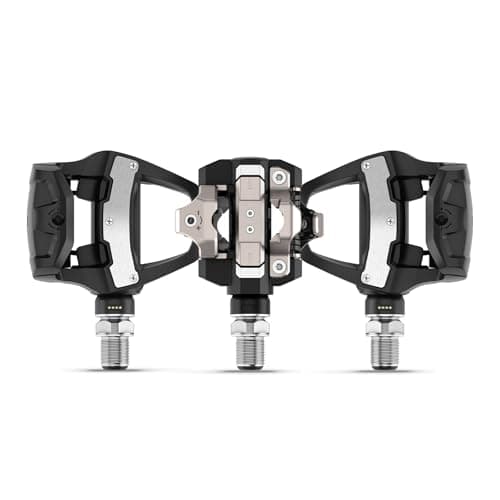
$1,199.99Save 25%
#ad We may earn a commission · Price as of October 22, 2026
The best-engineered pedal power meter you can buy, and the most expensive way to get a number that a cheaper pedal also claims to ±1%.
- Type
- Dual-sensing pedal power meter
- Claimed accuracy
- ±1%
- Battery
- Rechargeable lithium-ion, up to 90 hours
- Quick charge
- 15 minutes for about 12 hours of riding
- Cleat system
- Shimano SPD-SL (RS body)
- Weight
- 312 g the pair
- Connectivity
- ANT+, Bluetooth, Secure Bluetooth
- Water rating
- IPX7
What we'd praise
- The sealed rechargeable spindle removes the battery door, which was the Rally line's most complained-about part
- True dual-sensing: each pedal measures its own leg, so left/right balance is real rather than doubled
- Universal spindle swaps between RS, RK and XC pedal bodies and between bikes with two common tools
- Pedal IQ tells you when a manual calibration is actually needed instead of leaving you guessing
- ANT+, Bluetooth and Secure Bluetooth, so it pairs with a trainer app and a head unit at the same time
- A claimed ±1% gives you a reference number that travels between your bike and your trainer
What we'd flag
- Battery life drops to a stated 90 hours from the roughly 120 the replaceable-cell Rally 200 managed
- You now have a charging routine to remember, and the magnetic clips are one more thing to lose
- 312 g the pair is heavier than the Favero pedals it competes with, which road.cc measured at 247 g
- The price is the real objection — road.cc scored it 7/10 and named cost as the sole reason
- Pedal IQ calibration alerts need a recent Garmin Edge, so the feature is partly locked to the ecosystem
- Charging is only rated between 15 and 40 degrees C, which is worth knowing if the bike lives in a cold garage
Every generation of Garmin pedal before this one had the same weak point, and it was not the strain gauges. It was the battery door: a threaded cap with a seal, opened by hand every few months, sitting at the outboard end of a pedal that gets rained on, jet-washed and dropped. The Rally 210 deletes it. The spindle is now sealed with an internal rechargeable lithium-ion cell, charged through a magnetic clip, and Garmin quotes up to 90 hours between charges.
Everything else is the Rally formula, intact. Dual sensing, so each pedal measures its own leg. A claimed ±1%. The full cycling-dynamics set on a compatible Edge. And the universal spindle, which is the reason to buy a Rally at all: the measuring hardware lives in the axle, so the same power meter can wear a Shimano SPD-SL body today and a two-bolt SPD body when you buy a gravel bike. Favero's Assioma Pro range is the only other range we cover that does the same.
Best if your shoes are set up for Look Keo cleats
Garmin Rally RK210
8.88.8 out of 10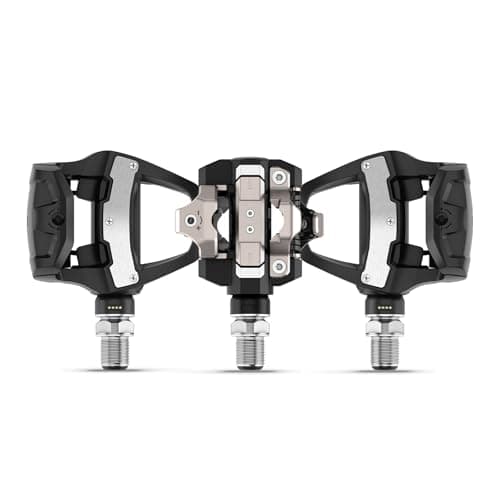
$1,199.99Save 25%
#ad We may earn a commission · Price as of October 22, 2026
The RS210 with Look Keo bodies fitted. Choose it because your shoes already have Keo cleats, not for any other reason.
- Type
- Dual-sensing pedal power meter
- Cleat system
- Look Keo (RK body)
- Claimed accuracy
- ±1%
- Battery
- Rechargeable, up to 90 hours
- Weight
- 312 g the pair
- Convertible
- Same universal spindle as the RS210
What we'd praise
- Identical internals and identical claims to the RS210 — only the pedal body differs
- Keo cleats are the other road standard, so this is the version that fits Look-equipped shoes
- Body kits mean this choice is reversible later, which among the pedals we cover only Favero's Pro range also offers
- Same 90-hour rechargeable spindle, same Pedal IQ, same ANT+ and Bluetooth
What we'd flag
- Costs the same as the RS210, so there is no saving in choosing the less common road standard
- Keo float and tension behave differently from SPD-SL — do not switch systems just to buy this
- Same weight penalty and same price objection as the rest of the 210 range
- Stock on the Keo version is consistently thinner than the SPD-SL version
There is no performance difference here at all. Garmin sells the same 210 spindle in three bodies — RS for Shimano SPD-SL, RK for Look Keo, XC for two-bolt Shimano SPD — and the choice is purely about the cleats already screwed to your shoes.
The genuinely useful part is that this decision is not permanent. Because the spindle is the power meter, a body kit converts an RK into an RS or an XC later. If you have ever sold a power meter because you changed pedal systems, that is the money this range is asking you to pay for.
Best cheaper Rally: single-sensing, same spindle
Garmin Rally RS110
8.58.5 out of 10#ad We may earn a commission · Price as of October 22, 2026
The Rally most people should actually buy: the same spindle and the same accuracy claim, measuring one leg instead of two.
- Type
- Single-sensing pedal power meter
- Measures
- Left pedal only, doubled; right pedal is a dummy
- Claimed accuracy
- ±1%
- Battery
- Rechargeable, up to 90 hours
- Weight
- 320 g the pair
- Cleat system
- Shimano SPD-SL (RS body)
What we'd praise
- A large saving over the 210 for a number that tracks your training just as reliably
- Same rechargeable sealed spindle, same claimed ±1%, same universal body swapping
- Upgrading later means buying a measuring right-side spindle, not replacing the whole meter
- The sensible choice for most riders who simply want power indoors and out
What we'd flag
- No left/right balance, and no cycling dynamics that depend on both legs
- Doubling one leg is wrong by however asymmetric you are on the day, not by a fixed amount
- Slightly heavier than the 210 because the dummy pedal is not lightened
- Still costs more than dual-sensing pedals from Favero, which is the whole argument against Rally
The 110 is the same generation with a dummy right pedal. It measures the left leg and doubles it, which is how most power meters under a certain price have always worked. Garmin still claims ±1%, because that figure describes the measurement, not the doubling assumption.
For training that is almost always enough. Fitness is tracked by repeatability, and your left-right split is usually stable enough that a doubled figure moves in step with the real one. Where it fails is rehabilitation after a one-sided injury, or any case where the asymmetry itself is the thing you are watching. Our single versus dual-sided guide works through when the upgrade is worth it and when it is a number you will never act on.
Best value alternative: dual-sensing for much less
Favero Assioma Duo
8.98.9 out of 10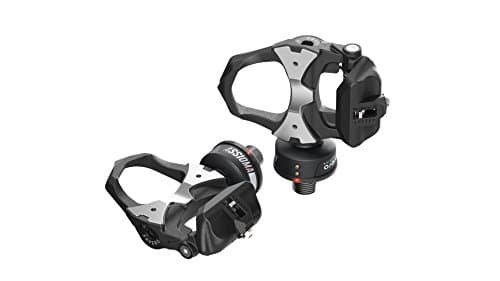
The reason the Rally has to justify itself: the same dual-sensing ±1% claim, considerably cheaper, without the convertible bodies.
- Type
- Dual-sensing pedal power meter
- Claimed accuracy
- ±1%
- Battery
- Rechargeable, about 50 hours
- Cleat system
- Look Keo compatible cleats supplied
- Convertible bodies
- No
- Connectivity
- ANT+, Bluetooth
What we'd praise
- Claims the same ±1% dual-sensing measurement for a substantially lower price
- Rechargeable long before Garmin got there, with a well-proven sealed design
- Installs with a pedal wrench and pairs with everything, indoors and out
- The default recommendation for riders who want the number and not the ecosystem
What we'd flag
- Shorter battery life than the Rally 210 — roughly 50 hours against a stated 90
- No convertible pedal bodies, so a change of cleat system means a new power meter
- Cycling dynamics are not the full Garmin set on an Edge head unit
- Stock levels move around, and the Duo is sometimes only available through the Pro versions
We would not write an honest Rally review without this pedal on the page. The Assioma Duo claims the same ±1% from the same dual-sensing architecture, has been rechargeable for years, and costs meaningfully less. If what you want is a trustworthy watt, this is the cheaper way to buy one.
What it does not do is change cleat systems. That is the entire premium case for a Rally, and it is a real one for riders who own a road bike and a gravel bike. If that is not you, buy the Favero and put the difference into the rest of the pain cave. Our Assioma versus Rally comparison takes the two apart properly.
Good questions
Frequently asked questions
What is the difference between the Garmin Rally RS210 and the RS200?
The measurement is the same — both are dual-sensing with a claimed ±1% accuracy. The 210 replaces the RS200's replaceable coin cells and threaded battery door with a sealed, internally rechargeable spindle rated at up to 90 hours, adds Pedal IQ calibration alerts, and uses one universal spindle across the RS, RK and XC pedal bodies. The RS200 quoted roughly 120 hours from its replaceable cells.
How long does the Garmin Rally RS210 battery last?
Garmin states up to 90 hours of ride time from the rechargeable lithium-ion spindle, and a 15-minute quick charge for about 12 hours of riding. The pedals are rated IPX7 and operate from -10 to 50 degrees C, but Garmin specifies a narrower charging range of 15 to 40 degrees C.
Should I buy the Rally 210 or the Rally 110?
The 210 measures both legs independently and reports left/right balance; the 110 measures the left pedal and doubles it. Both claim ±1%. For tracking fitness the 110 is enough, because training follows repeatability and most riders' balance is stable. Choose the 210 for rehabilitation from a one-sided injury, a known large imbalance, or if a coach uses the balance data.
Is the Garmin Rally RS210 worth it over a Favero Assioma?
Only for the ownership features. Favero's dual-sensing pedals claim the same ±1% for considerably less, and road.cc scored the RS210 7 out of 10 with price as the only criticism. The Garmin's case is convertible pedal bodies, Pedal IQ calibration alerts and native cycling dynamics on a Garmin Edge. If none of those matter to you, the Favero is the better buy.
Can the Garmin Rally 210 be used indoors on a smart trainer?
Yes, and it is a useful pairing. The pedals broadcast over ANT+ and Bluetooth, so a trainer app can take power from the pedals while the trainer handles resistance. That gives you one measuring device indoors and out, and it is how you check whether a trainer's power figure has drifted.
What is the difference between the RS, RK and XC pedal bodies?
Only the cleat interface. RS uses Shimano SPD-SL road cleats, RK uses Look Keo, and XC is the two-bolt Shimano SPD mountain-bike pedal. The road bodies weigh a published 312 g the pair and the all-metal XC 436 g. Because the spindle is the power meter, a body kit converts one to another later.
Do the Garmin Rally 210 pedals need calibration?
They self-calibrate, and Pedal IQ tells you when a manual calibration is genuinely needed based on temperature change, time since the last one and whether the pedals have been moved between bikes. The alerts require a recent Garmin Edge. A manual zero offset takes under a minute and is worth doing before any test effort.
How we sourced this
Keep going