Power Meter Review
Garmin Rally RS200 Review: The Convertible Power Meter
Dual-sensing, SPD-SL out of the box, and the only pedal platform that lets you change cleat systems later. We read the published specs and worked out who the premium is for.
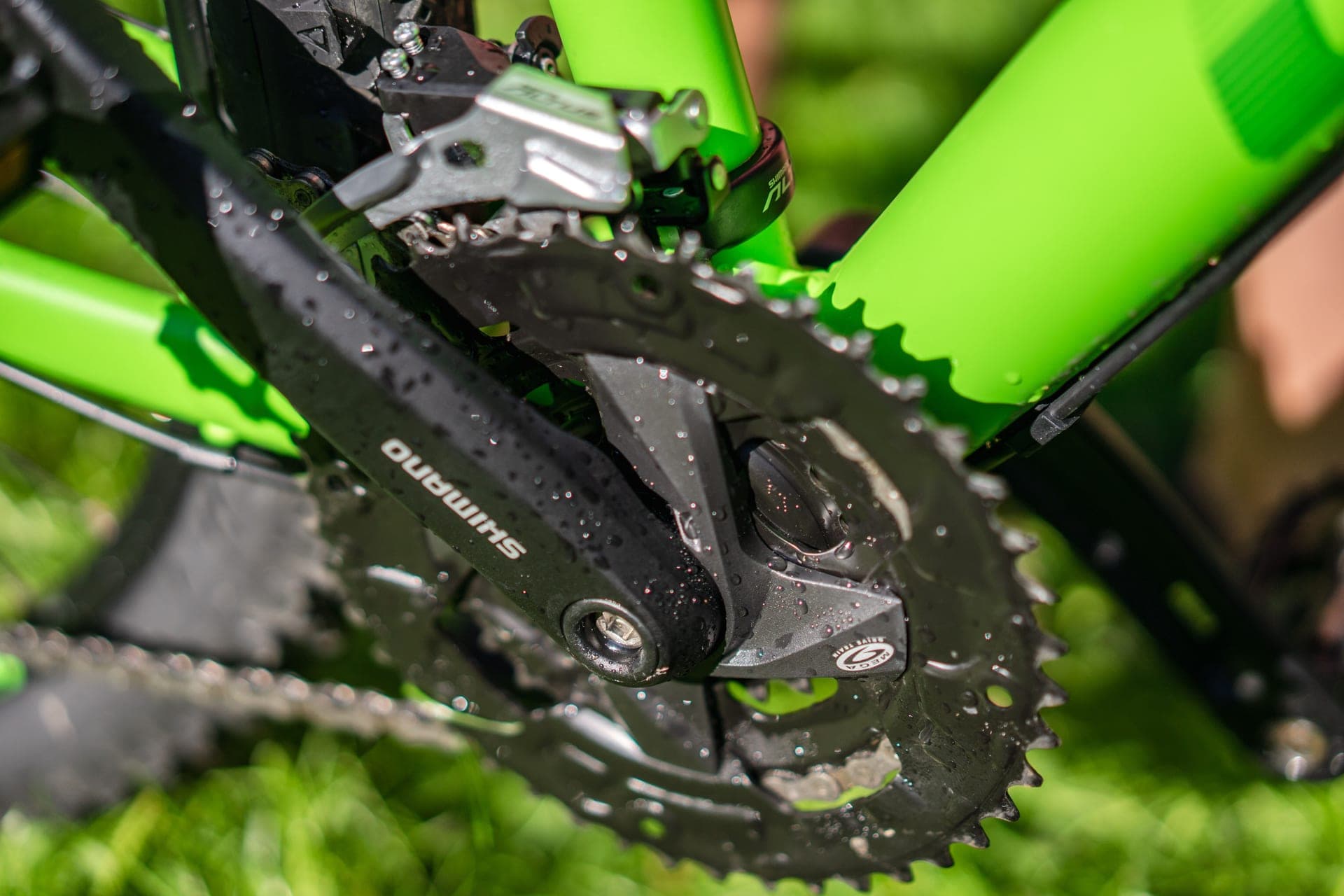
Garmin's Rally range is organized around a single good idea: put the measuring hardware in the spindle and let the pedal body be interchangeable. The RS200 is the version that ships with Shimano SPD-SL bodies and dual sensing, meaning each pedal measures its own leg rather than one pedal doubling its reading. Garmin claims ±1% accuracy, quotes roughly 120 hours from a set of replaceable cells, and supports the full cycling-dynamics metric set on compatible head units. This review covers what that buys, and the honest case for spending less.
What dual-sensing actually gives you
A dual-sensing meter measures each leg independently and adds the results. A single-sensing meter measures one leg and doubles it. The practical difference is two things: a genuinely accurate total when your legs are not contributing equally, and a left/right balance figure.
Be realistic about how much that is worth to you. Most riders sit within a few percent of balanced, and that imbalance is fairly stable, which means a single-sided meter tracks training change just as reliably. Dual-sensing earns its money in three specific cases: rehabilitation after a single-leg injury, where you need to see asymmetry shrink; riders with a known large imbalance; and anyone whose coach or fitter actually uses the data. Outside those, it is a number you will admire and never act on. Our Duo vs Uno guide makes the same argument on the Favero side of the fence.
The convertible body, and why it matters
This is the RS200's structural advantage and the reason to pay its premium. Because the electronics are in the spindle, Garmin sells body conversion kits that turn the RS (SPD-SL) pedal into an RK (Look Keo) or an XC (SPD, two-bolt) pedal. Buy the meter once; change the interface whenever your riding does.
That is not hypothetical flexibility. Riders add gravel bikes, switch to two-bolt shoes for travel and bikepacking, or simply decide after two seasons that they prefer a different float. With any other pedal power meter, those decisions mean selling the meter. With the Rally, they mean buying a body kit. If you can see any of those changes in your future, the premium buys you something concrete.
| Rally RS200 | Assioma Duo | Rally RS100 | |
|---|---|---|---|
| Sensing | Dual | Dual | Single |
| Claimed accuracy | ±1% | ±1% | ±1% |
| Cleat system | Shimano SPD-SL | Look Keo compatible | Shimano SPD-SL |
| Convertible bodies | Yes | No | Yes |
| Battery | Replaceable, ~120 h | Rechargeable, ~50 h | Replaceable, ~120 h |
| Cycling dynamics | Yes | No | Limited |
| Left/right balance | True | True | Estimated |
| Price band | High | Mid | Mid-high |
Batteries: the one thing to get right
The Rally uses replaceable coin cells rather than a rechargeable pack, and quotes around 120 hours per set. That is a genuine convenience for riders who travel — a spare cell weighs nothing and there is no charger to pack — and it means a flat pedal on a Saturday morning is a five-minute fix rather than a lost ride.
The care point is the battery door. It has a seal and a specified torque, and it is historically where pedal power meters go wrong: over-tighten and you deform the seal, under-tighten and moisture gets in. Follow Garmin's instructions exactly, keep the supplied O-rings in good condition, and this is a non-issue. Treat it casually and it becomes the failure you blame on the pedal.
Installing and living with it
Installation is a pedal wrench and the correct torque, plus telling your head unit the crank length. That last step matters more than people expect — power is force times crank length times cadence, so an incorrect crank length quietly scales every number you record.
Day to day, the Garmin integration is the smoothest in the category if you are already in that ecosystem. Pedals appear on an Edge without ceremony, the cycling-dynamics fields are there if you want them, and firmware updates arrive through Garmin Connect. Outside the ecosystem nothing is lost: standard Bluetooth and ANT+ mean Zwift, TrainerRoad and a Wahoo head unit all read it normally.
The value question, stated plainly
The Favero Assioma Duo claims the same ±1% accuracy, is also dual-sensing, also installs with a pedal wrench, and costs meaningfully less. That is the whole counter-argument, and it is a strong one. What Favero cannot do is change cleat systems, and it uses Look Keo rather than SPD-SL.
So the decision is genuinely simple. If you are SPD-SL and staying SPD-SL, or you want the option to convert, the Rally is worth its premium. If you are cleat-agnostic or already on Keo, the Assioma is the better value and we would take the saving. Both are recommended in our best power meter pedals roundup.
Who should buy it
Buy the Rally RS200 if you ride Shimano road shoes and do not want to change cleats, if a gravel or off-road bike is in your future and you want one meter to serve both, if you need true dual-sided balance for rehabilitation or coaching, or if your training runs through Garmin hardware.
Consider the single-sensing RS100 instead if the balance data is not the point and you just want accurate watts on SPD-SL for less. Consider the Assioma Duo if the cleat system is not a constraint. And if you are still deciding whether a power meter is the right next purchase at all, our smart trainer vs power meter guide settles that first.
Comparing power meters?
See the Rally RS200 against the full fieldThe full reviews
Every pick, in detail
Best convertible power meter pedals
Garmin Rally RS200
9.19.1 out of 10The most flexible power meter you can buy: dual-sensing, a claimed ±1%, and the only pedal platform that changes cleat systems.
- Type
- Dual-sensing pedal
- Claimed accuracy
- ±1%
- Battery
- Replaceable cells, ~120 hours
- Cleat system
- Shimano SPD-SL
- Convertible
- RK (Keo) and XC (SPD) body kits
- Connectivity
- BT, ANT+
What we'd praise
- True dual-sensing — each pedal measures independently for real left/right balance
- Convertible pedal bodies mean a cleat change later does not mean a new power meter
- Around 120 hours per set of replaceable cells, with no charging routine to remember
- Cycling-dynamics data and instant recognition on Garmin Edge units and watches
What we'd flag
- Costs a clear premium over the Favero Assioma Duo for the same ±1% accuracy claim
- Battery doors and their seals are the part of the pedal most easily got wrong
- Cycling dynamics are interesting rather than actionable for most riders
The RS200 is the Shimano SPD-SL, dual-sensing member of Garmin's Rally family. The numbers are exactly what you expect at this level — ±1% claimed accuracy, independent measurement in each pedal, standard Bluetooth and ANT+ broadcasting — and installation is a pedal wrench and a torque check.
What makes it different is the architecture. The strain gauges and electronics live in the spindle, so the pedal body is just an interface. Change the body, change the cleat system, keep the meter. Nothing else in the category does that. Compared head to head with the value benchmark in Assioma vs Rally.
Good questions
Frequently asked questions
Is the Garmin Rally RS200 dual-sided?
Yes. The RS200 is dual-sensing, meaning each pedal measures its own leg independently rather than one pedal measuring and doubling. That gives a genuinely accurate total when your legs contribute unequally, plus a true left/right balance figure.
Can I change the Rally RS200 to Look Keo or SPD cleats?
Yes. Because the electronics are in the spindle rather than the body, Garmin sells conversion kits that turn an RS body into an RK (Look Keo) or XC (SPD, two-bolt) body. You keep the power meter and change only the pedal interface, which is unique to the Rally platform.
How long does the Rally RS200 battery last?
Garmin quotes around 120 hours from a set of replaceable coin cells. There is no charging routine; when the cells run down you replace them. The battery door has a seal and a specified torque, and following that specification carefully is the single most important maintenance point on the pedal.
Is the Rally RS200 worth it over the Favero Assioma Duo?
It is if you ride Shimano SPD-SL, if you want the option to convert to another cleat system later, or if Garmin ecosystem integration matters to you. Both claim ±1% accuracy and both are dual-sensing, so if the cleat system is not a constraint the Assioma Duo is the better value.
Do I need to set crank length for the Rally pedals?
Yes, and it matters. Power is calculated from force, crank length and cadence, so entering an incorrect crank length on your head unit scales every power number you record. Set it once during installation and confirm it if you move the pedals to another bike.
Do Garmin Rally pedals work with Zwift?
Yes. They broadcast standard power and cadence over Bluetooth and ANT+, so Zwift, TrainerRoad and non-Garmin head units all pair with them normally. If you also own a smart trainer, you can use the pedals as the power source while the trainer handles resistance control.
How we sourced this
Keep going