Head to Head
Garmin Rally RS200 vs RK200
Same power meter, different pedal body. The letters are a cleat system, not a performance tier — here is how to pick, and how to change your mind later.
The short answer
Quick picks
| # | Product | Best for | Score | Price |
|---|---|---|---|---|
| 1 | Garmin Rally RS200 The Rally to buy if your shoes are already set up for Shimano SPD-SL — identical internals, familiar cleats. | For Shimano SPD-SL riders | 9.19.1 out of 10 | |
| 2 | 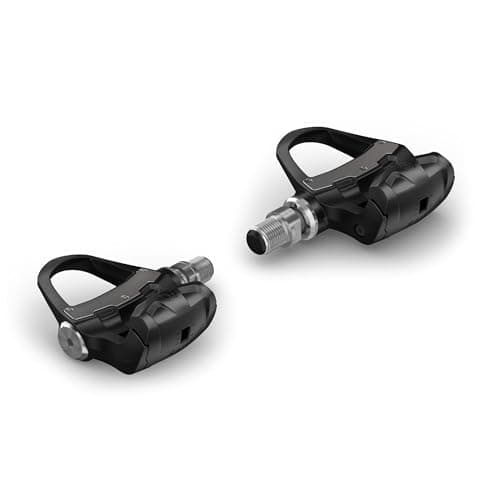 Garmin Rally RK200 The Rally to buy if you ride Look Keo — identical internals to the RS200, and the same cleats as a Favero Assioma. | For Look Keo riders | 9.19.1 out of 10 | $649.99 · View on Amazon #ad We may earn a commission · Price as of October 21, 2026 |
Garmin's Rally naming trips up more buyers than it should, and the confusion costs people money. The two letters describe the pedal body, and the number describes the sensing: 200 means dual-sensing, 100 means single-sensing. So RS200 and RK200 are the same dual-sensing power meter with different cleat interfaces, and RS100 and RK100 are the same single-sensing meter with different cleat interfaces. Nothing in the letters implies better or worse.
| Rally RS200 | Rally RK200 | |
|---|---|---|
| Pedal body | Shimano SPD-SL | Look Keo compatible |
| Sensing | Dual | Dual |
| Claimed accuracy | ±1% | ±1% |
| Battery | Replaceable cells, ~120 h | Replaceable cells, ~120 h |
| Cycling dynamics | Yes | Yes |
| Convertible to the other body | Yes, via kit | Yes, via kit |
| Same cleats as Favero Assioma | No | Yes |
SPD-SL vs Keo, honestly
These are the two dominant three-bolt road cleat systems, and they are far more alike than partisans admit. Both bolt to the same three-hole road shoe pattern. Both come in float options marked by cleat color. Both engage and release the same way.
The genuine differences are small. SPD-SL cleats are physically larger, which spreads load slightly more and makes them a little more stable to stand on, but also makes them more awkward to walk in. Keocleats are slimmer and lighter, easier to walk on, and — in most riders' experience — wear out faster, especially the softer high-float versions. Availability favors SPD-SL slightly in most bike shops.
Neither is faster. Neither is more efficient. If somebody tells you otherwise, they are selling something. Pick the one your shoes already have cleats for and spend the mental energy on your training instead.
The case for buying the RK200 if you are undecided
If you are starting fresh — new shoes, no cleats, no loyalty — there is a mild argument for the Keo-bodied RK200. Look Keo is the cleat system Favero Assioma pedals use, which is the other power meter most riders cross-shop. Buying into Keo means that if you ever sell the Rally and move to an Assioma, or vice versa, your shoes stay exactly as they are.
That is worth a small amount, not a large one. It is a tiebreaker, not a reason to re-cleat shoes you already own. Our Assioma vs Rally comparison covers the wider brand decision.
You can change your mind later
This is the part that defuses the whole question. Because Rally's electronics live in the spindle, Garmin sells body conversion kits: an RS can become an RK, and either can become an XC (two-bolt SPD) for gravel and mountain use. You are not locked in.
The practical implication is that this decision does not deserve agonizing. Buy the body that matches your current shoes, ride it, and if your riding changes in two years, buy a kit rather than a new power meter. That optionality is the single strongest reason to choose the Rally platform over its rivals in the first place.
Not settled on Garmin?
See the Rally against every other pedal meterShould you buy the 100 instead of the 200?
Worth asking, because it saves real money. The RS100 and RK100 are single-sensing: they measure the left pedal and double it. For the majority of riders, that tracks training change just as reliably, because left/right imbalance is usually small and stable.
Take the dual-sensing 200 if you are rehabilitating a single-leg injury, if you know you have a significant imbalance, or if a coach genuinely uses the balance data. Otherwise the 100 is the smarter purchase, and the difference funds a good heart rate monitor and then some. The same logic applies across brands, and we lay it out in best budget power meters.
The verdict
There is no better or worse model here — only a better or worse match to your shoes. Buy the RS200 if you ride Shimano SPD-SL. Buy the RK200 if you ride Look Keo, or if you are starting from scratch and want cleat compatibility with the wider pedal-meter market. Then stop thinking about it: the meter inside is the same either way, and a conversion kit exists if your riding changes.
The full reviews
Head to head
#1 · For Shimano SPD-SL riders
Garmin Rally RS200
9.19.1 out of 10The Rally to buy if your shoes are already set up for Shimano SPD-SL — identical internals, familiar cleats.
- Pedal body
- Shimano SPD-SL
- Sensing
- Dual — both pedals
- Claimed accuracy
- ±1%
- Battery
- Replaceable cells, ~120 hours
- Float
- Set by SPD-SL cleat choice
- Connectivity
- BT, ANT+
What we'd praise
- Uses the cleats already on most road shoes sold in the US
- Shimano's color-coded cleats make float choice simple and cheap to change
- Identical electronics, accuracy claim and battery life to the RK200
What we'd flag
- SPD-SL cleats are bulkier and more slippery to walk on than Keo
- No advantage over the RK200 if you do not already own Shimano-compatible shoes
The RS in RS200 stands for the Shimano SPD-SL pedal body. Everything inside the spindle is the same as the RK200: the same strain gauges, the same ±1% claim, the same dual sensing, the same battery life. The only thing that differs is the plastic your cleat clicks into.
Choose it because SPD-SL is what your shoes are already drilled and cleated for. Shimano cleats are widely stocked, color-coded by float, and cheap to replace. Our full Rally RS200 review covers the platform in depth.
#2 · For Look Keo riders
Garmin Rally RK200
9.19.1 out of 10#ad We may earn a commission · Price as of October 21, 2026
The Rally to buy if you ride Look Keo — identical internals to the RS200, and the same cleats as a Favero Assioma.
- Pedal body
- Look Keo compatible
- Sensing
- Dual — both pedals
- Claimed accuracy
- ±1%
- Battery
- Replaceable cells, ~120 hours
- Float
- Set by Keo cleat choice
- Connectivity
- BT, ANT+
What we'd praise
- Keo cleats are slimmer and a little easier to walk on than SPD-SL
- Matches the cleat system used by Favero Assioma, so switching brands later is painless
- Identical electronics, accuracy claim and battery life to the RS200
What we'd flag
- Keo cleats wear faster than SPD-SL in most riders' experience
- No advantage over the RS200 if your shoes already run Shimano cleats
The RK200 is the Look Keo version, and it is the same power meter. Same spindle electronics, same ±1% claim, same dual sensing, same replaceable cells. If you already run Keo cleats, this is your model and there is nothing else to weigh.
It has one subtle advantage worth naming: Keo is also the system Favero Assioma pedals use, so a rider on Keo can move between the two brands without touching their shoes. If you ever think you might switch, that flexibility is free. Compared in Assioma vs Rally.
Good questions
Frequently asked questions
What is the difference between the Garmin Rally RS200 and RK200?
Only the pedal body. RS uses Shimano SPD-SL cleats and RK uses Look Keo compatible cleats. The spindle electronics, the ±1% accuracy claim, the dual sensing, the battery life and the cycling-dynamics support are identical between the two models.
What do the numbers in the Garmin Rally names mean?
The number describes the sensing. A 200 model is dual-sensing, measuring each pedal independently for true left/right balance. A 100 model is single-sensing, measuring the left pedal and doubling it. The letters before the number describe the pedal body and cleat system.
Can I convert a Rally RS200 to Look Keo later?
Yes. Garmin sells body conversion kits because the measuring hardware is in the spindle rather than the body. An RS can be converted to RK, and either can be converted to XC for two-bolt SPD cleats, which is useful if you add a gravel or mountain bike.
Is SPD-SL or Look Keo better for road cycling?
Neither is faster or more efficient. SPD-SL cleats are larger and a little more stable to stand on but more awkward to walk in, while Keo cleats are slimmer and lighter but tend to wear faster. Choose the system your shoes already have cleats for.
Should I buy the RS100 instead of the RS200?
For most riders, yes. Single-sensing measures the left leg and doubles it, which tracks training change just as reliably because imbalances are usually small and stable. Choose dual-sensing if you are rehabilitating a single-leg injury, have a known large imbalance, or a coach uses the balance data.
Do Rally pedals need Garmin head units?
No. They broadcast standard power and cadence over Bluetooth and ANT+, so Zwift, TrainerRoad, Wahoo head units and third-party apps all read them. Garmin head units add the cycling-dynamics fields and slightly smoother pairing, but nothing essential is lost outside the ecosystem.
How we sourced this
Keep going