Power Meters
Single vs Dual-Sided Power Meters
One leg doubled, or both legs measured. The premium is real and so are the reasons to pay it — but there are only four of them, and most riders are in none.
The short answer
Quick picks
| # | Product | Best for | Score | Price |
|---|---|---|---|---|
| 1 | 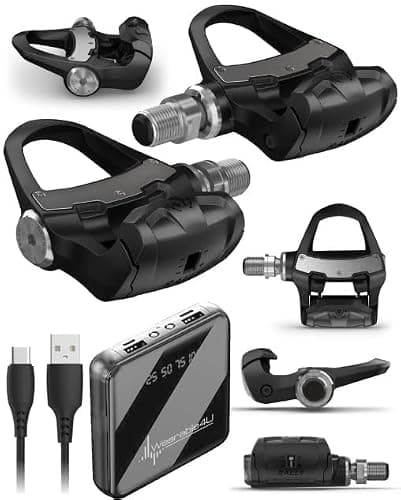 Garmin Rally RK100 The right default for most riders: the same measurement quality where it counts, without paying for a number you will glance at twice. | Best single-sided pick | 8.58.5 out of 10 | $499.99 · View on Amazon #ad We may earn a commission · Price as of October 22, 2026 |
| 2 | 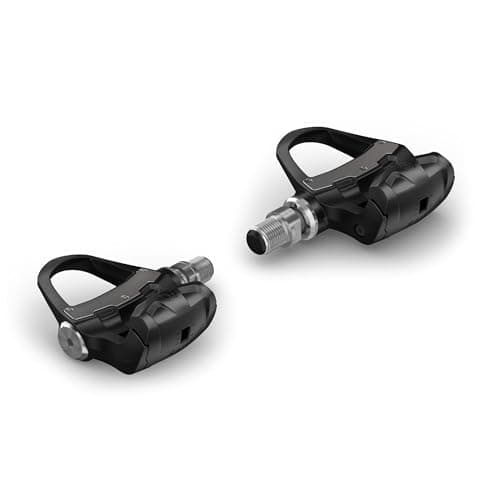 Garmin Rally RK200 Buy dual-sided when you have a specific reason to need the balance number — not because more data sounds better. | Best dual-sided pick | 9.19.1 out of 10 | $649.99 · View on Amazon #ad We may earn a commission · Price as of October 22, 2026 |
Almost every power meter family sells the same product twice: once measuring one leg, once measuring both, with a meaningful price gap between them. Favero does it with the Assioma Uno and Duo. Garmin does it with the Rally 100 and 200 series. 4iiii does it with the Precision and the Precision Pro. The marketing implies that the dual version is the accurate one and the single version is a compromise, and that is not what is going on.
This page is about what actually differs, what balance data is really telling you, and the small number of situations where paying up is the right call.
What single-sided actually does
A single-sided meter measures the force applied by your left leg, then multiplies by two. That is the whole mechanism. It does not estimate your right leg from anything clever — it simply assumes the two are equal.
So if your legs split 50/50, the number is right. If they split 52/48 in favor of the measured leg, the reported total is roughly 4% high. If they split 48/52 the other way, it reads roughly 4% low. Notice that this error is a bias, not noise: it does not wander from ride to ride, it sits in the same place every time.
That distinction is why single-sided works. A training plan is built on repeatability. Do an FTP test on a single-sided meter and every zone derived from it inherits the same bias, so your threshold intervals are still at threshold, your endurance rides are still endurance, and your month-on-month progression is still real. The bias cancels out of every comparison you actually make.
| Single-sided | Dual-sided | |
|---|---|---|
| Legs measured | One, doubled | Both, independently |
| Typical accuracy claim | Same as dual on the measured leg | Same as single |
| Balance data | Estimated (always 50/50) | Measured |
| Effect of asymmetry | Consistent bias in the total | None |
| Good for training zones | Yes | Yes |
| Good for injury rehab | No | Yes |
| Comparison to a trainer | Looser | Closer |
| Batteries to manage | One | Two |
| Price | Lower | Higher |
Is your asymmetry actually big?
The honest answer for most riders is no, and it is worth knowing that most people who assume they are lopsided are not. Small differences are normal and are not something to fix. Balance also shifts within a ride — most riders drift toward their stronger leg as they fatigue, and again during very hard efforts — so a single reading tells you very little.
There is also a way to find out before you spend: if you ride a smart trainer and you can borrow a dual-sided meter for a week, you will know. Failing that, the practical signal is symptomatic rather than numeric — one-sided knee pain, a saddle you keep sliding to one side of, or a history of a one-leg injury are all better reasons to want balance data than curiosity is.
The four cases where dual-sided is worth it
1. Single-leg injury rehabilitation.This is the strongest case by a distance. After a knee, hip or ankle injury, riders guard the affected leg without noticing. Balance data is the only way to see it, and it turns a vague "does it feel okay?" into a measurable return-to-load progression. If this is you, buy dual-sided.
2. Active bike-fit work. A persistent asymmetry can come from a leg-length discrepancy, a cleat position, or a saddle that is fractionally off center — all fixable. You cannot chase what you cannot see, and a fitter with balance data is working with evidence.
3. Cross-device consistency. If you need your outdoor power meter to agree closely with your indoor trainer — because you race online, because a coach is prescribing from one and you are executing on the other, or because you are simply the sort of person who will be annoyed forever — dual-sided removes one whole source of disagreement. Some of the remaining gap is drivetrain loss, which our accuracy guide explains.
4. You already know you are asymmetric. If a fit study or a previous meter has shown you a genuine, persistent imbalance beyond a few percent, a single-sided meter will report a total that is meaningfully wrong, and you will know it is wrong every time you look at it.
What dual-sided will not do
It will not make you faster. It will not correct an imbalance — knowing about one does not fix it, and most attempts to consciously even out a pedal stroke reduce efficiency rather than improve it. And it will not make your training more precise in any way you can act on, because the interval you are prescribed is a total wattage regardless of which leg produced it.
The most common outcome of buying dual-sided without one of the four reasons above is that you watch the balance field for three weeks, conclude that you are 49/51, and never open it again. That is a lot of money for a fact.
The upgrade path matters more than the decision
Here is the argument that resolves most of this. Several platforms let you start single and add the second sensing side later — Garmin's Rally range is built that way, and Favero's Assioma has the same structure. That converts a permanent decision into a reversible one.
So: buy single-sided now, ride it for a season, and if you find yourself genuinely wanting the balance figure — or if you pick up an injury and suddenly need it — add the second side then. You will have had a power meter for the whole intervening period, which is worth vastly more than having a better power meter three months later. The specific Favero version of this decision is in Assioma Duo vs Uno.
Where the saved money should go
If you take the single-sided route, the difference is not small, and it buys things that will change your riding more than a balance field ever will. A proper fan is the highest-return purchase in an indoor setup, because heat ends more sessions than anything else. A heart-rate strap adds a second, independent view of your effort for a fraction of the cost. And a mat solves noise, sweat and floor protection at once.
The full field, single and dual, is ranked in best power meters, with the pedal-specific options in best power meter pedals and the cheaper crank route in best crank power meters.
Two related pages are worth reading alongside this one. Power meter pedals vs cranks matters here because the format largely determines whether dual-sided is affordable at all — pedals already have hardware on both sides of the bike, so measuring both legs is cheap, while crank meters at the same money are nearly always single-sided. And how accurate are power meters explains why the doubling assumption is added on top of a published tolerance rather than contained within it.
Decided which side you need?
See the best power meters, rankedIf this page has convinced you that single-sided is enough — and for most riders it is — the best single-sided power meters ranks the field with that decision already made, and the best dual-sided power meters does the same for the other answer — including the units where the second sensor now costs far less than it used to. The same argument plays out inside one product family in Assioma Pro MX-1 vs MX-2, where the two pedals are identical apart from the second sensor.
The full reviews
Head to head
#1 · Best single-sided pick
Garmin Rally RK100
8.58.5 out of 10#ad We may earn a commission · Price as of October 22, 2026
The right default for most riders: the same measurement quality where it counts, without paying for a number you will glance at twice.
- Sensing
- Single — left pedal, doubled
- Claimed accuracy
- ±1%
- Balance data
- Estimated, not measured
- Battery
- Replaceable cells, around 120 hours
- Pedal body
- Look Keo compatible
- Upgrade path
- Second sensing pedal can be added later
What we'd praise
- Same ±1% accuracy claim on the leg it does measure, for substantially less money
- One set of electronics means one battery to manage and one thing to fail
- Perfectly adequate for building zones, executing intervals and tracking fitness over time
- Garmin's platform lets you add the second sensing pedal later rather than replacing the pair
What we'd flag
- Doubles one leg, so a genuine asymmetry shows up as a systematically wrong total
- Gives you no usable information during single-leg injury rehabilitation
- Compares less cleanly against a smart trainer or a friend's dual-sided meter
Single-sensing does not mean less accurate — Garmin claims the same ±1% on the pedal that is doing the measuring. It means the total is calculated by doubling one leg. If your legs are within a few percent of each other, and most riders' are, that produces a number that is consistently slightly off in the same direction every single ride.
Consistently slightly off is exactly what a training plan can work with, because zones, intervals and progress are all relative to the same meter. Where it fails is any comparison against a different device, and any question about the legs themselves. Our budget power meters roundup covers the cheaper single-sided options if the Garmin ecosystem is not a requirement.
#2 · Best dual-sided pick
Garmin Rally RK200
9.19.1 out of 10#ad We may earn a commission · Price as of October 22, 2026
Buy dual-sided when you have a specific reason to need the balance number — not because more data sounds better.
- Sensing
- Dual — both pedals measure
- Claimed accuracy
- ±1%
- Balance data
- Measured
- Battery
- Replaceable cells, around 120 hours
- Pedal body
- Look Keo compatible
- Connectivity
- Bluetooth and ANT+
What we'd praise
- Both legs measured independently, so balance is a fact rather than an assumption
- The only configuration that helps during single-leg injury rehabilitation
- Matches a trainer or spider meter more closely than a doubled single-leg estimate does
- Unlocks the full Cycling Dynamics metric set rather than a subset
What we'd flag
- Costs meaningfully more than the otherwise identical single-sensing version
- Two sets of electronics means two batteries and two things that can fail
- For most riders the balance figure is watched for a month and never opened again
The RK200 measures both legs independently, which means the left/right balance figure it reports is a measurement rather than a calculation. That matters in a small number of situations and does very little in the rest, so the honest way to buy it is to check whether you are in one of those situations first.
It is otherwise the same product as the single-sensing version: same ±1% accuracy claim, same replaceable cells, same pedal bodies, same installation with a pedal wrench. Full detail is in our Rally RK200 review.
Good questions
Frequently asked questions
Is a single-sided power meter accurate?
On the leg it measures, yes — manufacturers typically publish the same accuracy claim for their single and dual versions. The total is produced by doubling that leg, so any real asymmetry shows up as a consistent bias rather than random error, which a training plan built on the same meter absorbs without difficulty.
How much difference does left/right imbalance actually make?
Usually a few percent, and consistently in the same direction. Because it is a stable bias rather than noise, it does not affect your zones, your interval execution or your ability to see fitness improving. It matters when your numbers have to be compared against a different device or a different rider.
When should I buy a dual-sided power meter?
In four situations: rehabilitating a single-leg injury, doing active bike-fit work, needing your numbers to line up closely with a smart trainer or another meter, or already knowing you have a significant asymmetry. Outside of those, single-sided is the better use of the money.
Can I upgrade a single-sided power meter to dual-sided later?
On several platforms, yes. Garmin's Rally range and Favero's Assioma are both designed so a second sensing pedal can be added rather than replacing the pair. That makes buying single-sided first a low-risk decision, since you can pay the difference later if you find you need it.
Will dual-sided data help me fix my pedal stroke?
Rarely. Knowing you are 48/52 does not fix it, and consciously trying to even out a pedal stroke usually reduces efficiency rather than improving it. Where balance data does help is flagging a mechanical cause worth investigating, such as cleat position, saddle position or a leg-length difference.
Does a smart trainer measure single or dual-sided?
Neither, in the sense that matters here. A trainer measures total power after the drivetrain, so it captures both legs combined but cannot separate them. That is also why trainer and power-meter numbers differ slightly: the trainer sees the power that survived the chain.
How we sourced this
Keep going