Head to Head
Favero Assioma Pro MX-1 vs MX-2
Identical pedals, one sensor apart. The MX-1 wins for most riders, and the reason has nothing to do with accuracy.
The short answer
Quick picks
| # | Product | Best for | Score | Price |
|---|---|---|---|---|
| 1 | 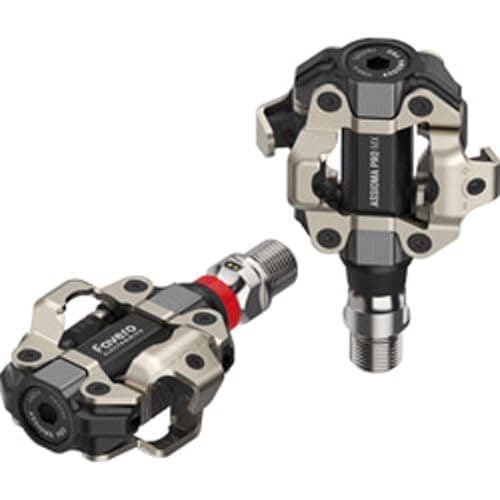 Favero Assioma Pro MX-1 The sensible buy for most riders: the same SPD pedal and the same measurement principle, one side, with the second side available whenever you want it. | The one most riders should buy | 8.68.6 out of 10 | $499.00 · View on Amazon #ad We may earn a commission · Price as of October 21, 2026 |
| 2 | 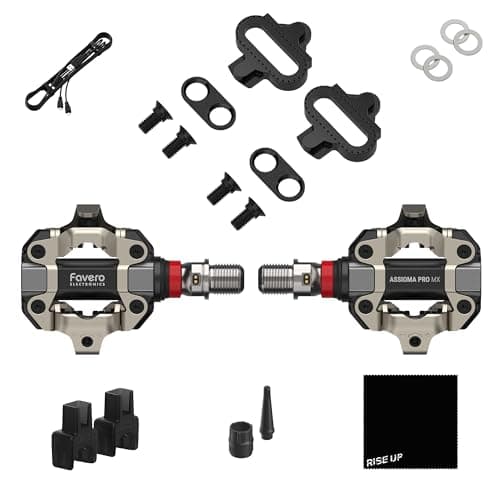 Favero Assioma Pro MX-2 Worth the premium only if the balance number is information you will actually act on — for everything else, the MX-1 produces the same training. | If you specifically want balance data | 8.98.9 out of 10 | $804.99 · View on Amazon #ad We may earn a commission · Price as of October 21, 2026 |
| 3 | 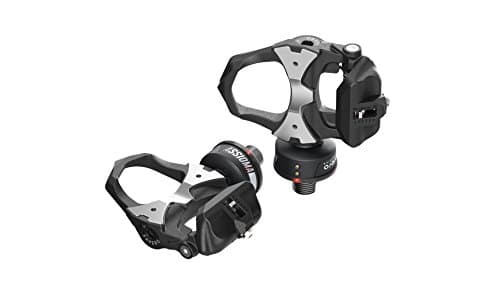 Favero Assioma Duo The cross-shop worth making before you commit: if your riding is road and indoor rather than off-road, the Duo gives you the same measurement for less. | If you ride road cleats, not SPD | 9.09.0 out of 10 | $539.93 · View on Amazon #ad We may earn a commission · Price as of October 21, 2026 |
Favero sells these two as separate products, but they are one product with a different number of sensors. Everything you can see, touch or stand on is the same. That makes this a cleaner comparison than most head-to-heads, because there is exactly one variable.
What is identical
Both pedals use the same hardened 6061-T6 aluminum body on a Shimano SPD two-bolt cleat interface. Both weigh 199 g per pedal with the sensor fitted. Both sit at an 11.2 mm stack height with a 54 mm Q-factor — unusually low and narrow for an off-road pedal, and the reason neither forces a saddle height change. Both use the IAV Power System and both carry Favero's ±1% accuracy claim.
Both also share the same fitting restrictions: no pedal extenders, no crank shorteners, and no cranks thicker than 15 mm at the pedal thread. If your bike falls foul of any of those, neither pedal is an option and you should read best crank power meters instead.
What is different, in order of how much it matters
1. Balance data. The MX-2 measures both legs; the MX-1 measures the left one and doubles it. This is the whole product difference, and it determines the other two.
2. What the ±1% claim describes. On the MX-2, ±1% is the tolerance on your total power. On the MX-1, ±1% is the tolerance on the measurement of one leg — the doubling adds an error on top that no manufacturer can publish, because it is a property of your body rather than the pedal. If you are 50/50 it is zero; if you are 48/52 it is around 4%.
3. Battery life. Favero quotes at least 60 hours per charge for the dual-sided MX-2, the shortest figure in the Assioma family, because two sensors draw from two batteries. The MX-1 runs longer for the opposite reason. On a long off-road day with nowhere to charge, that is a real difference.
| Specification | Assioma Pro MX-1 | Assioma Pro MX-2 |
|---|---|---|
| Sensing | Left pedal only, doubled | Both pedals |
| Claimed accuracy | ±1% (on the leg it reads) | ±1% (total) |
| Left/right balance | Not measured | Measured |
| Cleat system | Shimano SPD (two-bolt) | Shimano SPD (two-bolt) |
| Stack height | 11.2 mm | 11.2 mm |
| Q-factor | 54 mm | 54 mm |
| Weight per pedal | 199 g with sensor | 199 g with sensor |
| Battery | Longer — one sensor | At least 60 h per Favero |
| Upgrade path | Add sensing right pedal | Already dual-sided |
The upgrade path changes the maths
Favero sells the sensing right-hand pedal separately, so an MX-1 bought today becomes an MX-2 whenever you decide you want it. That removes most of the risk from choosing the cheaper option, and it is the single strongest argument for starting at MX-1.
It also means the real question is not "which is better" but "do I want to pay for balance data now or later, if ever". Most riders who buy dual-sided discover that their balance is roughly where they expected, stop looking at it inside a month, and would not have missed it.
Who should ignore both
If your shoes take three-bolt road cleats, you are in the wrong product family. The MX line exists to put this measurement on an SPD cleat; the Assioma Duo does the same job for Look Keo and usually costs less than the MX-2. If your riding is entirely indoors, smart trainer vs power meter is the decision to make before this one, because a trainer already reports power.
And if the problem is that no pedal fits your bike — extenders, shorteners or a thick crank — then the honest answer is a crank-based meter. Our best power meters for mountain bikes page ranks the alternatives with that constraint in mind.
Still comparing?
See the full off-road power meter rankingThe full reviews
Head to head
#1 · The one most riders should buy
Favero Assioma Pro MX-1
8.68.6 out of 10#ad We may earn a commission · Price as of October 21, 2026
The sensible buy for most riders: the same SPD pedal and the same measurement principle, one side, with the second side available whenever you want it.
- Type
- Pedal-based, single-sided
- Cleat system
- Shimano SPD (two-bolt)
- Claimed accuracy
- ±1% (IAV Power System)
- Weight
- 199 g per pedal with sensor
- Stack height
- 11.2 mm
- Upgrade path
- Add the second sensor pedal later
What we'd praise
- Same body, same cleat, same stack, same Q-factor and the same ±1% claim on the leg it reads
- Longer runtime than the MX-2, because only one pedal carries a sensor and a battery
- Upgradeable: add the sensing right-hand pedal later and you have an MX-2
- Substantially cheaper, and the saving buys a lot of other useful equipment
- Only one pedal to charge
What we'd flag
- Single-sided: your left leg, doubled, so any imbalance you have is in the number
- No left/right balance, torque effectiveness or pedaling-smoothness data
- No fitting restrictions relief — same no-extenders, no-shorteners, 15 mm crank-thread limit as the MX-2
The MX-1 is an MX-2 with one sensor. The body, the cleat interface, the 11.2 mm stack, the 54 mm Q-factor and the IAV measurement principle are identical. What you are not buying is the second strain-gauge spindle.
That buys you two things besides money. The first is runtime: with only one pedal drawing power, the MX-1 runs longer per charge than the MX-2, which matters on long off-road days where you cannot charge anything. The second is simplicity — one pedal to think about.
What you give up is balance. The meter reads your left leg and doubles it, so if you are asymmetric the total is wrong by that amount, and it changes with fatigue. Single vs dual-sided power meters goes through exactly what that costs in practice.
#2 · If you specifically want balance data
Favero Assioma Pro MX-2
8.98.9 out of 10#ad We may earn a commission · Price as of October 21, 2026
Worth the premium only if the balance number is information you will actually act on — for everything else, the MX-1 produces the same training.
- Type
- Pedal-based, dual-sided
- Cleat system
- Shimano SPD (two-bolt)
- Claimed accuracy
- ±1% (IAV Power System)
- Weight
- 199 g per pedal with sensor
- Stack height
- 11.2 mm
- Q-factor
- 54 mm
What we'd praise
- Measures both legs, so left/right balance is a measurement rather than an assumption
- The ±1% claim describes the total, not one leg doubled into a total
- Identical fit, stack and Q-factor to the MX-1 — no position consequence for upgrading
- Pedaling dynamics that depend on both legs become available
- Drivetrain-agnostic, like every pedal meter
What we'd flag
- Favero quotes at least 60 hours per charge, the shortest runtime in the Assioma family
- Two pedals to charge rather than one
- Meaningfully more expensive for data most riders will look at twice and never again
- Two sensing pedals means two expensive things to strike a rock with
The MX-2 adds a second sensing pedal, and with it genuine left/right balance. The distinction matters more than marketing usually makes it sound: on the MX-1, the ±1% claim describes the measurement of one leg. On the MX-2, it describes the total, because nothing is being doubled.
For a rider coming back from a knee operation, a broken leg or a long layoff, that is clinical information. For a rider chasing a known asymmetry with a coach, likewise. For most riders it is a number they check during the first week and then ignore.
The cost beyond money is runtime. Favero quotes at least 60 hours per charge for the MX-2, the shortest figure in the Assioma family, because two sensors draw from two batteries. Our Assioma Pro MX review covers the platform in detail.
#3 · If you ride road cleats, not SPD
Favero Assioma Duo
9.09.0 out of 10#ad We may earn a commission · Price as of October 21, 2026
The cross-shop worth making before you commit: if your riding is road and indoor rather than off-road, the Duo gives you the same measurement for less.
- Type
- Dual-sided power meter pedals
- Claimed accuracy
- ±1%
- Cleat system
- Look Keo compatible
- Power
- Rechargeable, magnetic charging
- Connectivity
- Bluetooth and ANT+
- Install time
- Minutes, with a pedal wrench
What we'd praise
- The road-cleat version of the same argument, usually at a lower price than the MX pedals
- Dual-sided ±1% from the same IAV system
- The most widely independently tested power meter Favero makes
- Ideal for a rider whose bike lives on a trainer rather than on trails
What we'd flag
- Look Keo cleats, so it is no use at all with mountain bike shoes
- A road pedal body is not built for rock strikes or for walking
- No SPD conversion — this is a different pedal, not a different body on the same spindle
The reason the Duo is on this page is that a lot of people arrive at the MX pedals without needing them. The MX line exists to put Favero's measurement on a two-bolt SPD cleat. If your shoes take three-bolt road cleats and your bike spends its winter on a trainer, you are paying an off-road premium for nothing.
The Duo is dual-sided, claims the same ±1% from the same IAV principle, and is usually cheaper than the MX-2. For an indoor-focused rider that is the better buy by a clear margin — see our Assioma Duo review.
Be honest about which rider you are before you spend. If you walk your bike over rocks, buy MX. If you clip in on a trainer in a garage, buy Duo.
Good questions
Frequently asked questions
What is the difference between the Assioma Pro MX-1 and MX-2?
The MX-2 has a sensor in both pedals and measures left/right balance. The MX-1 has a sensor in the left pedal only and doubles that figure. Everything else is identical: the same hardened aluminum body, the same Shimano SPD cleat interface, the same 11.2 mm stack height, the same 54 mm Q-factor, the same 199 g per pedal and the same plus or minus 1% IAV accuracy claim.
Should I buy the MX-1 or the MX-2?
The MX-1, unless left/right balance is information you will act on. For pacing, intervals, FTP testing and comparing sessions, the single-sided pedal produces identical training at a lower price with longer battery life. Buy the MX-2 if you are returning from a leg injury, working on a known asymmetry, or testing a bike fit change.
Can you upgrade the Assioma Pro MX-1 to an MX-2?
Yes. Favero sells the sensing right-hand pedal separately, so an MX-1 becomes an MX-2 by adding it. That is why starting with the MX-1 carries so little risk - you are not locked out of balance data, you are deferring the decision.
Does the MX-1 have worse accuracy than the MX-2?
Not at the sensor. Both carry Favero's plus or minus 1% claim, but they describe different things: on the MX-2 it is the tolerance on your total power, and on the MX-1 it is the tolerance on the one leg it measures. The doubling adds an error on top that depends on your own balance, which no manufacturer can publish.
Which has better battery life, the MX-1 or MX-2?
The MX-1. Favero quotes at least 60 hours per charge for the dual-sided MX-2, the shortest runtime in the Assioma family, because two sensing pedals draw from two batteries. The single-sided MX-1 runs longer because only one pedal carries a sensor.
Are the Assioma Pro MX pedals only for mountain bikes?
They are built around the Shimano SPD two-bolt cleat, which is what mountain bike, gravel and commuting shoes use. If your shoes take three-bolt road cleats, the Assioma Duo or Uno is the correct product instead - the MX pedals are not convertible to a road cleat.
How we sourced this
Keep going
Read these next
- Power MetersFavero Assioma Pro MX Review
- Power MetersThe Best Power Meters for Mountain Bikes
- Power MetersSingle vs Dual-Sided Power Meters
- Power MetersThe Best Single-Sided Power Meters
- Power MetersFavero Assioma Duo vs Uno
- Power MetersThe Best Power Meters for Gravel Bikes
- GuidesPower Meter Pedals and Cleat Compatibility
- Power MetersThe Best Power Meter Pedals