Power Meter Review
Favero Assioma Pro MX Review
Favero put its reference road sensor inside an SPD body. It was built for gravel and mountain bikes — and it quietly solves a problem a lot of indoor riders have.
The short answer
Quick picks
| # | Product | Best for | Score | Price |
|---|---|---|---|---|
| 1 | 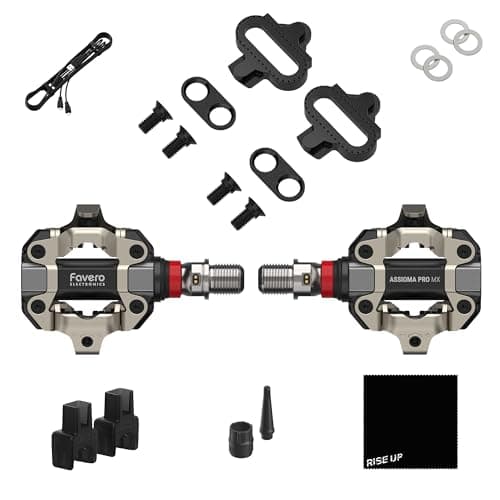 Favero Assioma Pro MX-2 The best power meter for anyone who clips in with SPD — including a surprising number of people whose only SPD shoes live in the pain cave. | Best SPD power meter | 8.98.9 out of 10 | $804.99 · View on Amazon #ad We may earn a commission · Price as of October 22, 2026 |
| 2 | 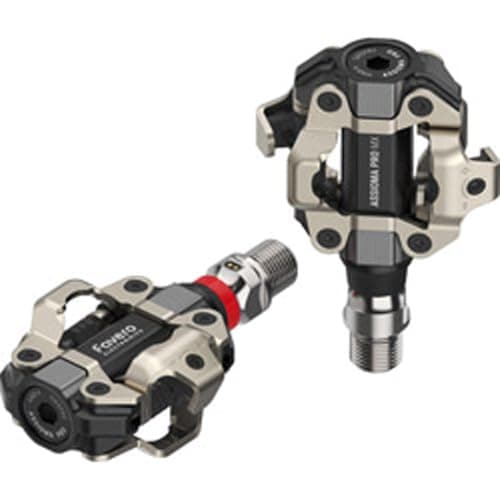 Favero Assioma Pro MX-1 The version most people should buy: the same pedal and the same accuracy claim, minus a balance figure most riders never act on. | Best value SPD power meter | 8.68.6 out of 10 | $499.00 · View on Amazon #ad We may earn a commission · Price as of October 22, 2026 |
Every pedal power meter until recently made the same assumption: that you ride a road pedal. Look Keo, SPD-SL, and latterly Speedplay — all single-sided entry, all designed for a stiff road shoe you cannot comfortably walk in. If you clipped in with SPD, your options were a crank meter or nothing.
The Assioma Pro MX ends that. It takes the sensor architecture from Favero's road pedals — the reference product in this category — and builds it into a double-sided SPD platform: 199 g per pedal, an 11.2 mm stack height, a 54 mm Q-factor, and a hardened 6061-T6 aluminum body designed for rock strikes.
It was made for gravel and mountain bikes. The reason it belongs on a site about indoor training is that SPD is what an enormous number of people actually wear in the pain cave, and until now that was a reason they could not have pedal power.
Why an SPD power meter matters indoors
Walk into any well-used pain cave and look at the shoes. A large share of indoor riders use mountain bike shoes with recessed SPD cleats, and the reasons are entirely practical: you can walk to the kitchen mid-ride without clacking across a wooden floor, the uppers are more breathable than a stiff road shoe, and if the same shoes go on a commuter or a gravel bike, that is one pair instead of two.
The problem was that pedal-based power — the easiest kind to own, because it moves between bikes in five minutes and needs no drivetrain research — did not exist on that interface. Riders who wanted power indoors were pushed either to a crank meter with its compatibility matrix, or to changing shoes.
The Pro MX removes the choice. Fit it to the bike that lives on the trainer, ride it, and if you take the bike outdoors the meter goes with it. And because the power comes from the pedals rather than the trainer, your indoor and outdoor numbers come from the same device — which is the cleanest possible answer to the argument our smart trainer vs power meter guide exists to referee.
IAV, and why it is not marketing
Most power meters measure torque and multiply it by an assumed constant angular velocity. That assumption is fine when you are turning smooth circles at a steady cadence and progressively less true the harder you ride — a sprint, a steep out-of-the-saddle effort, or an oval chainring all involve the crank speeding up and slowing down within a single revolution.
Favero's IAV Power System uses a three-axis gyroscope to measure the instantaneous angular velocity rather than assume it, and factors that into every calculation. It is the reason Favero can claim ±1% "in any situation" rather than under ideal conditions, and it is why their pedals became the reference against which others are measured.
Indoors this matters less than outdoors, because trainer riding tends to be smoother than road riding. It matters most in exactly the situations the MX was built for — standing on a loose climb, short surges, oval rings.
| Assioma Pro MX-2 | Assioma Pro MX-1 | Assioma Duo | Garmin Rally RS200 | |
|---|---|---|---|---|
| Cleat system | Shimano SPD | Shimano SPD | Look Keo compatible | Shimano SPD-SL |
| Sided | Dual | Single, doubled | Dual | Dual |
| Claimed accuracy | ±1% | ±1% | ±1% | ±1% |
| Weight per pedal | 199 g | 199 g | Road pedal weight | Road pedal weight |
| Stack height | 11.2 mm | 11.2 mm | Higher | Higher |
| Q-factor | 54 mm | 54 mm | Standard road | Standard road |
| Battery | Rechargeable, 60 h+ | Rechargeable, longer | Rechargeable | Replaceable coin cells |
| Entry | Double-sided | Double-sided | Single-sided | Single-sided |
| Connectivity | ANT+, Bluetooth | ANT+, Bluetooth | ANT+, Bluetooth | ANT+, Bluetooth |
The fit numbers are the quiet headline
An 11.2 mm stack height and a 54 mm Q-factor are unusual figures for an off-road pedal and they are worth understanding because they affect your position.
Stackis the distance from the pedal axle to the sole of your shoe. Lower stack puts your foot closer to the axle, which most riders describe as feeling more connected and which marginally changes your effective saddle height. At 11.2 mm the MX is low even by road pedal standards, let alone against the tall platforms typical of off-road pedals.
Q-factor is how far apart the pedals hold your feet. Fifty-four millimeters is narrow — closer to a road pedal than to a typical mountain bike pedal, which suits riders whose natural stance is narrow and who find wide off-road pedals uncomfortable on long efforts.
If you are switching to these from a chunky off-road pedal, expect to revisit your saddle height slightly. If you are switching from a road pedal, the change is small.
The battery is the compromise
Favero quotes at least 60 hours per charge for the dual-sided MX-2. That is the shortest runtime in the Assioma family, and it is short next to a coin-cell meter like the 4iiii Precision 3+, which runs for hundreds of hours on a battery you buy in a supermarket.
Sixty hours is somewhere between three and eight weeks of riding depending on your volume, so charging becomes a habit rather than an afterthought — and the charging clip becomes a thing you need to not lose. For an indoor-focused rider this is genuinely easier than for a bikepacker, because the bike is already next to a plug socket.
Living with them
Installation is a pedal wrench and nothing else. No crank compatibility question, no bottom bracket, no torque procedure — which remains the fundamental advantage of pedal-based power over every other kind. Moving them to a different bike takes about five minutes.
Double-sided entry means you never fumble for the right face, which on a trainer is a small pleasure and on a technical climb is a real one. The clip-in surface is hardened, which is Favero's answer to the fact that off-road pedals get hit.
Run a zero-offset after installation and occasionally afterwards, especially following a big temperature change — our calibration guide covers when it actually matters. Indoors, pair them as the power source and let the trainer handle resistance; our Zwift setup guide walks through that pairing.
Who should buy it
Buy the Pro MX if you ride SPD. That is the whole case and it is a strong one: there is no other pedal meter on that interface with this measurement quality, and the fit numbers are better than the off-road category norm.
Buy the road Assioma Duo if you ride Look Keo, the Garmin Rally RS200 if you ride SPD-SL, or the 4iiii Precision 3+ if price is the binding constraint and you only need one bike covered. Our power meter pedal roundup ranks the whole field.
Because the Pro MX is the SPD option in this category, it is also the pick that anchors our best power meters for gravel bikes roundup — most gravel riders run two-bolt cleats, which rules out almost every other pedal-based meter on the market. If you are weighing it against a crank-based alternative instead, power meter pedals vs cranks covers that trade, including the argument that a gravel pedal is the part most likely to meet a rock.
Still comparing?
See every power meter rankedTwo pages take this further. If you are choosing between the two sensing options rather than between brands, Assioma Pro MX-1 vs MX-2 compares them specification by specification. And if you want to see the MX pedals ranked against the crank-based alternatives, best power meters for mountain bikes is the roundup.
The full reviews
Every pick, in detail
#1 · Best SPD power meter
Favero Assioma Pro MX-2
8.98.9 out of 10#ad We may earn a commission · Price as of October 22, 2026
The best power meter for anyone who clips in with SPD — including a surprising number of people whose only SPD shoes live in the pain cave.
- Type
- Pedal-based, dual-sided
- Claimed accuracy
- ±1% (IAV Power System)
- Cleat system
- Shimano SPD
- Weight
- 199 g per pedal with sensor
- Stack height
- 11.2 mm
- Q-factor
- 54 mm
What we'd praise
- True dual-sided measurement with left/right balance, on an SPD interface nothing else offers at this level
- 11.2 mm stack height and a 54 mm Q-factor — unusually low and narrow for an off-road pedal
- IAV Power System uses a three-axis gyroscope to handle irregular pedaling and oval chainrings
- 6061-T6 aluminum body with a hardened clip-in surface, built for rock strikes rather than tarmac
- The same sensor family and app as the road Assiomas, which are the reference in this category
What we'd flag
- Battery life is the shortest of any Assioma — Favero quotes at least 60 hours per charge
- Rechargeable, so a proprietary charging clip becomes part of your kit
- SPD cleats are excellent but the pedal is a double-sided platform, not a road pedal
- Costs more than a dual-sided road pedal meter for the same measurement
The Pro MX is Favero's road Assioma sensor moved into an SPD body: 199 g per pedal, an 11.2 mm stack, a 54 mm Q-factor, a hardened 6061-T6 aluminum platform, and the same IAV measurement that made the road pedals the default recommendation.
It exists for mountain and gravel riders, but the second audience is indoor: SPD is what a very large number of people actually wear on a trainer, because the shoes walk and breathe.
#2 · Best value SPD power meter
Favero Assioma Pro MX-1
8.68.6 out of 10#ad We may earn a commission · Price as of October 22, 2026
The version most people should buy: the same pedal and the same accuracy claim, minus a balance figure most riders never act on.
- Type
- Pedal-based, single-sided
- Claimed accuracy
- ±1% (IAV Power System)
- Cleat system
- Shimano SPD
- Weight
- 199 g per pedal with sensor
- Stack height
- 11.2 mm
- Upgrade path
- Add the second sensor pedal later
What we'd praise
- Same body, same measurement principle and same fit numbers as the MX-2, for a lot less money
- Upgradeable to dual-sided later by buying the second pedal rather than replacing the pair
- For most riders, single-sided data is all their training will ever use
- Identical SPD interface and rock-resistant construction
What we'd flag
- Measures the left leg and doubles it, so any imbalance you have carries into the number
- No left/right balance data at all
- Still costs more than a crank-arm meter delivering similar single-sided data
The MX-1 is the MX-2 with a sensor in one pedal instead of two. Everything you touch is identical — the body, the stack, the Q-factor, the cleat, the app — and the power figure is your left leg doubled.
Our single vs dual-sided guide covers what that costs in practice, and for most riders the honest answer is: not much.
Good questions
Frequently asked questions
What is the difference between the Assioma Pro MX-1 and MX-2?
The number of sensors. The MX-2 measures both legs independently and reports left/right balance; the MX-1 measures the left leg and doubles it. Body, cleat interface, 199 g weight, 11.2 mm stack, 54 mm Q-factor and the ±1% claim are otherwise identical, and the MX-1 can be upgraded later by adding the second sensor pedal.
Can you use the Assioma Pro MX indoors on a smart trainer?
Yes, and it is a tidy arrangement. Most platforms let you select the pedals as the power source while the trainer handles resistance control, so your indoor and outdoor numbers come from the same device. That removes the usual argument about why a trainer and a power meter disagree.
What cleats do the Favero Assioma Pro MX use?
Standard Shimano SPD cleats, the recessed two-bolt system used on mountain bike and gravel shoes. That means shoes you can walk in, which is why a lot of indoor riders use SPD in the first place, and it is the interface no other serious pedal power meter offers.
How long does the Assioma Pro MX battery last?
Favero quotes at least 60 hours per charge for the dual-sided MX-2, with the single-sided MX-1 running longer. That is the shortest runtime in the Assioma family and much shorter than a coin-cell crank meter, so charging becomes a routine — easier if the bike lives near a plug socket anyway.
What is Favero's IAV Power System?
A measurement method that uses a three-axis gyroscope to track the crank's instantaneous angular velocity rather than assuming it is constant through the revolution. That is what lets Favero claim ±1% during irregular pedaling — sprints, standing efforts and oval chainrings — rather than only under smooth, steady conditions.
Is the Assioma Pro MX worth it over a crank power meter?
It depends on how many bikes you have and how much you value not researching compatibility. Pedals move between bikes in five minutes and fit any standard crank; a crank meter is cheaper but must match your exact crank model and length. If your SPD shoes are the constant in your setup, the pedals are the more flexible purchase.
How we sourced this
- Favero Assioma PRO MX MTB power meter pedals, specifications (manufacturer)
- Favero Assioma Pro MX MTB (SPD) power meter in-depth review (DC Rainmaker)
- Favero Assioma PRO MX-2 power pedals review (Cycling Weekly)
- Favero Assioma PRO MX power meter pedals review (BikeRadar)
- Favero Assioma PRO MX-1 and MX-2 specifications (Power Meter City)
Keep going