Power Meters
The Best Power Meters for Gravel Bikes
Most power meter pedals are road cleats, and most gravel riders are not. Here is what actually fits a gravel bike — SPD pedals, bonded crank arms and SRAM AXS cranksets — ranked on the specifications the makers publish.
The short answer
Quick picks
| # | Product | Best for | Score | Price |
|---|---|---|---|---|
| 1 | 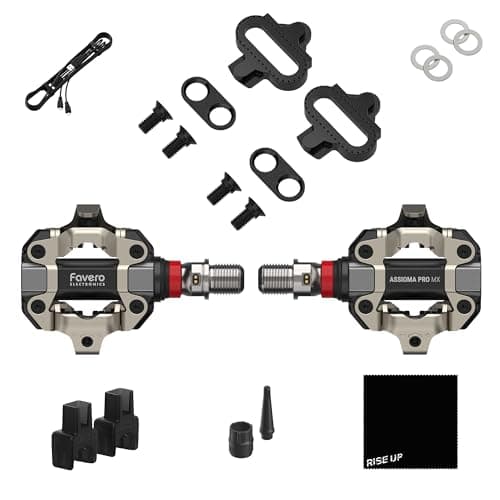 Favero Assioma Pro MX-2 The gravel power meter: dual-sided ±1% measurement on an SPD cleat, with no drivetrain compatibility question to answer at all. | Best for gravel overall | 8.98.9 out of 10 | $819.99 · View on Amazon #ad We may earn a commission · Price as of October 5, 2026 |
| 2 | 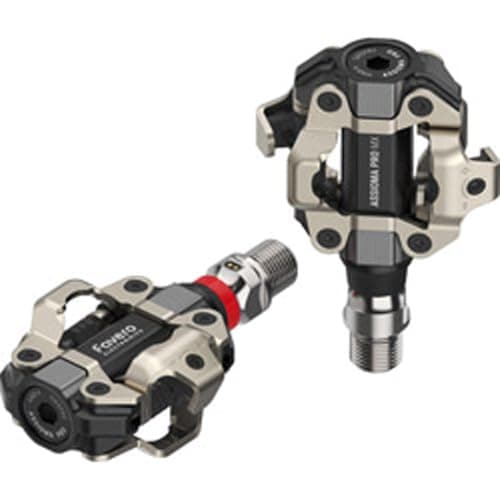 Favero Assioma Pro MX-1 The sensible gravel buy for most riders: the same SPD pedal and the same measurement, one side, with the second side available later. | Best value SPD power meter | 8.68.6 out of 10 | $499.00 · View on Amazon #ad We may earn a commission · Price as of October 5, 2026 |
| 3 | 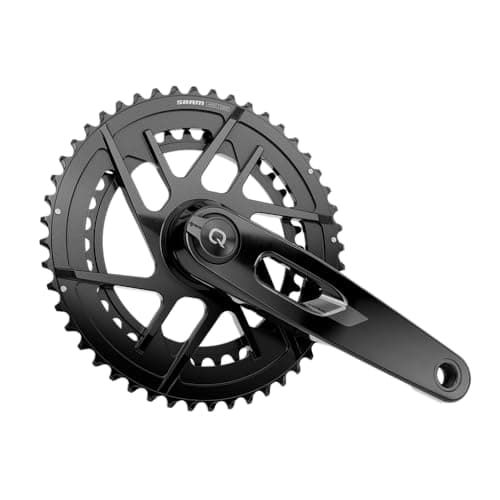 SRAM Rival AXS Power Meter Crankset Good value and well protected from rock strikes, as long as your bike is SRAM DUB 12-speed and you accept a ±3% total figure. | Cheapest power on a SRAM AXS gravel bike | 7.77.7 out of 10 | $385.00 · View on Amazon #ad We may earn a commission · Price as of October 5, 2026 |
| 4 | 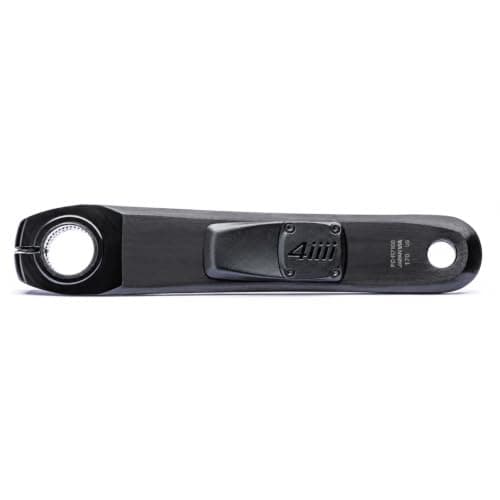 4iiii Precision 3+ The budget answer when your gravel pedals are already chosen and your crankset is on 4iiii's supported list. | Cheapest way to keep the pedals you ride | 8.68.6 out of 10 | $437.49 · View on Amazon #ad We may earn a commission · Price as of October 5, 2026 |
| 5 | 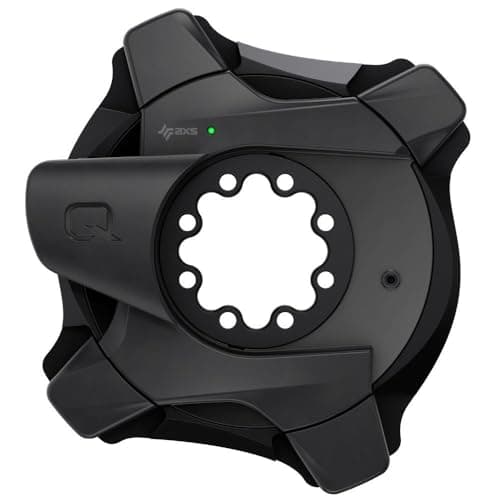 SRAM Red / Force AXS Power Meter Spider The pick for a 1x SRAM AXS gravel bike whose chainring changes with the season, thanks to OmniCal and automatic zeroing. | Best for 1x gravel setups that change chainrings | 8.58.5 out of 10 | $436.93 · View on Amazon #ad We may earn a commission · Price as of October 5, 2026 |
Gravel power meters are a harder shopping problem than road power meters for one reason that has nothing to do with power: the cleat. The pedal-based meters that dominate road buying guides — Garmin Rally RS and RK, Favero Assioma Duo, Wahoo Powrlink Zero — are all three-bolt road cleats. A large share of gravel riders run SPD two-bolt, because it clears mud, because the shoes walk, and because clipping in on a loose surface with a road cleat is a worse experience. So the first question is not "which power meter is most accurate"; it is "which of these will work with the shoes I own".
What matters on a gravel bike
Your cleat standard. If you ride SPD, there is exactly one dual-sided ±1% pedal meter built for it, and that is why the Pro MX-2 is first on this page. If you ride road cleats on your gravel bike — plenty of people do — then the road pedal meters in our power meter pedals roundup are all available to you too.
Where the electronics sit. A gravel pedal gets struck. Not often, but it happens, and a pedal with a strain gauge in it is a more expensive thing to strike than a pedal without one. Crank-arm, spindle and spider meters all move the electronics inboard, which is a real argument in this discipline that barely registers on the road.
Battery format, not just battery life. Favero quotes at least 60 hours per charge for the MX-2 — fine for most riding, awkward for a multi-day bikepacking trip with no plug socket. A coin-cell meter runs for hundreds of hours and takes a spare battery in a saddle bag. For long unsupported days, the coin cell wins on format rather than on numbers.
Chainring changes.1x gravel bikes get their gearing re-thought for different events. Most meters do not care, but a spider meter measures through the chainring interface, which is why SRAM's OmniCal — change rings without recalibrating — is on this page as a feature rather than a footnote.
Drivetrain compatibility, only where it applies. The two pedal meters here fit any bike with standard pedal threads. The SRAM crankset is DUB 12-speed only. The 4iiii must be the right arm for your specific crankset and crank length. The SRAM spider must match your AXS crank. Decide the cleat first, then let that narrow the compatibility work.
| Power meter | Type | Cleat / fitment | Sided | Claimed accuracy | Battery |
|---|---|---|---|---|---|
| Favero Assioma Pro MX-2 | Pedal | Shimano SPD; any pedal thread | Dual-sided | ±1% | At least 60 h per charge |
| Favero Assioma Pro MX-1 | Pedal | Shimano SPD; any pedal thread | Single (left), doubled | ±1% | Longer than the MX-2 |
| SRAM Rival AXS crankset | Crankset, spindle-based | SRAM DUB 12-speed | Single (left), doubled | ±3% total (±1.5% measured) | Coin cell |
| 4iiii Precision 3+ | Bonded crank arm | Must match your crankset and length | Single (left), doubled | ±1% of measured torque | CR2032, up to 800 h |
| SRAM Red / Force AXS spider | Spider | SRAM AXS cranks | Total power, estimated balance | ±1.5% | CR2032, around 200 h |
GRX, SRAM AXS and 1x: does the drivetrain change the answer?
For the two Favero pedals, no — a pedal thread is a pedal thread, and a GRX 2x bike and a SRAM AXS 1x bike take the identical product. For the SRAM crankset, yes: it is DUB 12-speed, so a GRX bike is out. For the 4iiii, yes: you order the arm that matches your crankset, and a GRX arm and a SRAM arm are different parts. For the SRAM spider, yes: AXS cranks only.
If you are shopping for a Shimano drivetrain more generally — including GRX bikes running road cleats — our best power meters for Shimano bikes page covers the same ground from the groupset side, and power meter pedals vs cranks is the format argument on its own.
The indoor half of a gravel season
Most gravel riders spend the dark months on a trainer, and that changes the calculation in one useful way: a pedal meter can be the same instrument indoors and out, while a crank or spider meter cannot follow you to a second bike. If your trainer bike is a different frame, that portability is worth real money over a few seasons.
It also pays to know that your trainer and your power meter will not agree exactly — a few percent of consistent offset between two honest devices is normal, not a fault. How accurate are power meters explains why, and smart trainer vs power meter covers which to buy first if you only want one. Once it is fitted, how to install a power meter and how to calibrate a power meter are the two pages that keep the number trustworthy.
Riding road cleats instead?
See the full power meter rankingsThe full reviews
Every pick, in detail
#1 · Best for gravel overall
Favero Assioma Pro MX-2
8.98.9 out of 10#ad We may earn a commission · Price as of October 5, 2026
The gravel power meter: dual-sided ±1% measurement on an SPD cleat, with no drivetrain compatibility question to answer at all.
- Type
- Pedal-based, dual-sided
- Cleat system
- Shimano SPD (two-bolt)
- Claimed accuracy
- ±1% (IAV Power System)
- Weight
- 199 g per pedal with sensor
- Stack height
- 11.2 mm
- Q-factor
- 54 mm
What we'd praise
- The only dual-sided ±1% power meter here that uses the SPD two-bolt cleat most gravel riders actually run
- 11.2 mm stack and a 54 mm Q-factor — unusually low and narrow for an off-road pedal, so it does not change your fit
- Completely drivetrain-agnostic: 1x or 2x, SRAM AXS or Shimano GRX, 11-speed or 12-speed, it does not care
- Moves to your trainer bike for the winter and back to the gravel bike in spring
- A hardened 6061-T6 aluminium platform rather than a road pedal with an SPD sticker
What we'd flag
- Favero quotes at least 60 hours per charge — the shortest runtime in the Assioma family and far short of a coin-cell crank meter
- A pedal is the part of a gravel bike most likely to meet a rock
- Not compatible with pedal extenders, crank shorteners, or cranks thicker than 15 mm at the thread
- The most expensive pick on this page
Gravel is the one discipline where the pedal is the hard part of the power meter decision. Most gravel riders run SPD two-bolt cleats — for walkable shoes, for mud clearance, for getting in and out quickly on a loose surface — and until Favero built the Pro MX, almost every pedal-based power meter was a road cleat. That is the gap this product fills and the reason it tops the page.
The engineering case is that Favero put its existing ±1% IAV sensor into a proper off-road body: 199 g per pedal with the sensor, an 11.2 mm stack height, a 54 mm Q-factor and a hardened 6061-T6 aluminium platform. Those stack and Q-factor figures are unusually low and narrow for an SPD pedal, which matters because a power meter that changes your fit has cost you something to gain a number. The real trade is battery: Favero quotes at least 60 hours per charge for the MX-2, the shortest in its range. Our Assioma Pro MX review covers both versions in full.
#2 · Best value SPD power meter
Favero Assioma Pro MX-1
8.68.6 out of 10#ad We may earn a commission · Price as of October 5, 2026
The sensible gravel buy for most riders: the same SPD pedal and the same measurement, one side, with the second side available later.
- Type
- Pedal-based, single-sided
- Cleat system
- Shimano SPD (two-bolt)
- Claimed accuracy
- ±1% (IAV Power System)
- Weight
- 199 g per pedal with sensor
- Stack height
- 11.2 mm
- Upgrade path
- Add the second sensor pedal later
What we'd praise
- Same body, same cleat, same stack, same Q-factor and the same ±1% claim on the leg it reads — for considerably less
- Upgradeable: add the right-hand sensor pedal later and you have an MX-2
- Longer runtime than the dual-sided MX-2, because only one pedal carries a sensor
- The cheapest way onto an SPD pedal power meter from a maker with a real independent testing record
What we'd flag
- Single-sided: your left leg, doubled, so any imbalance you have is in the number
- No left/right balance, torque effectiveness or pedalling-smoothness data
- Same fitting restrictions as the MX-2 — no extenders, no shorteners, 15 mm crank-thread limit
The MX-1 and MX-2 are the same product with a different number of sensors. Body, cleat interface, 199 g weight, 11.2 mm stack, 54 mm Q-factor, the app and the ±1% claim are identical; the MX-1 measures the left leg and doubles it. For a rider who wants power on a gravel bike primarily to pace long days and to train to an FTP figure, that is a perfectly honest instrument, and it costs meaningfully less.
It also has the best upgrade path in the category: Favero sells the second sensor pedal separately, so an MX-1 becomes an MX-2 later without replacing anything you already own. If you are unsure whether balance data will matter to you, start here. Single vs dual-sided power meters is the full version of that decision.
#3 · Cheapest power on a SRAM AXS gravel bike
SRAM Rival AXS Power Meter Crankset
7.77.7 out of 10#ad We may earn a commission · Price as of October 5, 2026
Good value and well protected from rock strikes, as long as your bike is SRAM DUB 12-speed and you accept a ±3% total figure.
- Type
- Spindle-based, left leg doubled
- Claimed accuracy
- ±3% total (±1.5% measurement, doubled)
- Battery
- Coin cell
- Fitment
- SRAM DUB, 12-speed
- Sold as
- Complete crankset
- Connectivity
- ANT+, Bluetooth
What we'd praise
- The cheapest route into power on the drivetrain a very large share of gravel bikes ship with
- Electronics live in the bottom bracket area, not out on a pedal where rocks are
- Coin cell — nothing to charge before a long day out
- Comes as a complete crankset, so there is no arm-matching exercise
- Your pedal and cleat choice stays entirely yours
What we'd flag
- SRAM states ±3% for the total figure because the ±1.5% measurement is doubled from one leg
- SRAM DUB 12-speed only — this is the compatibility question this page otherwise avoids
- Does not move to your trainer bike unless that bike also runs DUB 12-speed
- No true left/right balance
SRAM's AXS groupsets are everywhere on gravel bikes, and the Rival power meter crankset is the cheap way to add power to one. It is a complete crankset with the measurement in the spindle, so there is no crank-arm part number to match and nothing bonded to the outside of an arm. For a gravel rider, the position of the electronics is a genuine advantage: the bottom bracket area sees mud and water but not the direct rock strikes a pedal takes.
Be clear about the accuracy claim. SRAM specifies ±1.5% for the measurement it takes and ±3% for the total, because the total is one leg doubled. That is a wider tolerance than anything else here, and it is the honest number to plan around. Fitment is the other constraint: SRAM DUB, 12-speed, and nothing else. Our Quarq power meter reviewcovers SRAM's range, and best crank power meters puts it against the alternatives.
#4 · Cheapest way to keep the pedals you ride
4iiii Precision 3+
8.68.6 out of 10#ad We may earn a commission · Price as of October 5, 2026
The budget answer when your gravel pedals are already chosen and your crankset is on 4iiii's supported list.
- Type
- Non-drive-side crank arm, strain gauge bonded on
- Sided
- Single (left), doubled
- Claimed accuracy
- ±1% of the torque it measures
- Battery
- CR2032, up to 800 hours claimed
- Power range
- 0 - 4,000 W
- Weight added
- 9 g
What we'd praise
- Keeps whatever pedals and cleats you already ride, which on a gravel bike is often a settled decision
- Up to 800 claimed hours on a CR2032 — nothing to charge, ever
- Adds 9 g and sits inside the crank arm where it is reasonably sheltered
- The cheapest credible power on this page if your crankset is one 4iiii supports
What we'd flag
- Must be the correct arm for your exact crankset and crank length — the compatibility risk is all here
- Single-sided and doubled, with no balance data
- Bonded to that crankset, so it does not follow you to another bike
- A pod on the inside of the arm is one more thing to catch on a rock or a frame bag strap
Plenty of gravel riders have already settled their pedal: a specific SPD body for mud clearance, or a flat-and-clip hybrid, or something chosen to match a pair of shoes they walk in. For those riders a pedal-based meter is the wrong shape of product, and a bonded crank-arm unit is the right one. The Precision 3+ is a strain gauge bonded to the inside of a non-drive-side arm, adds 9 g, measures 0 to 4,000 W, and runs for up to 800 claimed hours on a coin cell.
The compatibility exercise is the whole job: you order the arm that matches your crankset model and your crank length, which on a gravel bike may be a GRX, a SRAM or a third-party crank. Get that right and installation is around ten minutes with a hex key and a torque wrench. 4iiii claims ±1% for the torque it measures — the left-arm figure, not your total, which is that number doubled. Our 4iiii Precision review goes through what that means in practice.
#5 · Best for 1x gravel setups that change chainrings
SRAM Red / Force AXS Power Meter Spider
8.58.5 out of 10#ad We may earn a commission · Price as of October 5, 2026
The pick for a 1x SRAM AXS gravel bike whose chainring changes with the season, thanks to OmniCal and automatic zeroing.
- Type
- Spider-based, total power
- Claimed accuracy
- ±1.5%
- Battery
- CR2032, around 200 hours
- Calibration
- MagicZero automatic recalibration
- Chainrings
- OmniCal — swap rings without recalibrating
- Connectivity
- ANT+, Bluetooth
What we'd praise
- OmniCal means you can change a 1x chainring for a hillier route without recalibrating, which is a genuinely gravel-shaped feature
- MagicZero recalibrates on its own, so a cold start at a trailhead is not a calibration task
- ±1.5% on a true total-power measurement rather than a doubled single side
- Around 200 hours on a CR2032
- Pedal choice stays entirely open
What we'd flag
- Total power with an estimated balance, not a true per-leg measurement
- Fits SRAM AXS cranks only, and the spider has to match
- Stays on the bike it fits — no winter move to the trainer bike
- A spider is a more involved install than a pedal
Two features here are unusually well matched to gravel riding. OmniCal lets you swap chainrings without recalibrating the meter, which matters on a 1x bike where the ring is a gearing decision you may revisit for a hillier event. MagicZero recalibrates automatically, which removes the one maintenance habit riders forget when they start a ride from a car park in the cold.
It measures total power at the spider and claims ±1.5%, reporting an estimated balance rather than a measured one. The limits are fitment and portability: it is a SRAM AXS part, it has to match your crank, and it stays on that bike. If your gravel bike is also your winter trainer bike, that is fine; if they are two different bikes, a pedal meter is the better architecture.
Good questions
Frequently asked questions
What is the best power meter for a gravel bike?
The Favero Assioma Pro MX-2 for most gravel riders: it is the only dual-sided ±1% pedal power meter built around the Shimano SPD two-bolt cleat that gravel riders typically use, and because it is a pedal it fits any drivetrain. The single-sided Assioma Pro MX-1 is the same pedal for less and can be upgraded later by adding the second sensor pedal.
Can I get an SPD power meter pedal?
Yes. Favero's Assioma Pro MX-1 and MX-2 use a Shimano SPD two-bolt cleat in a hardened 6061-T6 aluminium body, at 199 g per pedal with an 11.2 mm stack height and a 54 mm Q-factor. They are the SPD option in this category.
Is a crank power meter better than pedals for gravel?
It depends on what you value. A crank, spindle or spider meter puts the electronics inboard, away from the rock strikes a gravel pedal occasionally takes, and coin-cell versions run for hundreds of hours. A pedal meter fits any drivetrain, moves between your gravel bike and your trainer bike, and in the MX-2's case measures both legs at ±1%. If your pedals are already chosen, go crank; if your bikes are more than one, go pedal.
What power meter works with Shimano GRX?
Both Favero Assioma Pro MX pedals, because a pedal thread is the same on every crank. A 4iiii Precision 3+ also works if you order the crank arm that matches your specific GRX crankset and crank length. SRAM's Rival AXS crankset and AXS spider do not fit GRX — they are SRAM DUB and SRAM AXS parts respectively.
How accurate is the SRAM Rival AXS power meter crankset?
SRAM specifies ±1.5% for the measurement it takes and ±3% for the total power figure, because the total is the left leg doubled rather than both legs measured. That is the widest published tolerance of the meters on this page, and it is the figure to plan around.
Does changing a 1x chainring affect my power meter?
Only on a spider-based meter, where the measurement passes through the chainring interface. SRAM's OmniCal is designed for exactly this case and lets you swap rings without recalibrating. Pedal meters, bonded crank-arm meters and spindle meters are unaffected by a chainring change.
How long does the Favero Assioma Pro MX battery last?
Favero quotes at least 60 hours per charge for the dual-sided MX-2, with the single-sided MX-1 running longer because only one pedal carries a sensor. That is the shortest runtime in the Assioma family and much shorter than a coin-cell crank meter, so for multi-day unsupported riding a coin-cell meter is the more practical format.
How we sourced this
- Favero — Assioma PRO MX MTB power meter pedals, specifications (199 g per pedal, 11.2 mm stack, 54 mm Q-factor, 6061-T6 body, at least 60 h)
- Favero — Assioma Pro MX MTB (SPD) power meter in-depth review (DC Rainmaker)
- Favero — Assioma PRO MX power meter pedals review (BikeRadar)
- SRAM — road power meters range and specifications (manufacturer)
- SRAM / Quarq — AXS power meter spider specifications, MagicZero and OmniCal (manufacturer)
- SRAM Rival AXS power meter: hands-on and first rides (DC Rainmaker)
- 4iiii — Precision 3+ specifications (manufacturer)
Keep going
Read these next
- Power MetersThe Best Power Meters for Shimano Bikes
- ComparisonPower Meter Pedals vs Cranks
- ReviewFavero Assioma Pro MX Review
- Power MetersThe Best Crank Power Meters, Ranked
- Power MetersThe Best Power Meter Pedals, Compared
- GuidesHow Accurate Are Power Meters?
- GuidesHow to Install a Power Meter
- TrainersThe Best Smart Trainers for Mountain Bikes