Power Meters
The Best Power Meters for Shimano Bikes
The question behind the search is a compatibility question, and the answer is simpler than it looks: a pedal-based meter does not care what groupset you run. Here is what fits a Shimano bike, ranked, and where the compatibility traps actually are.
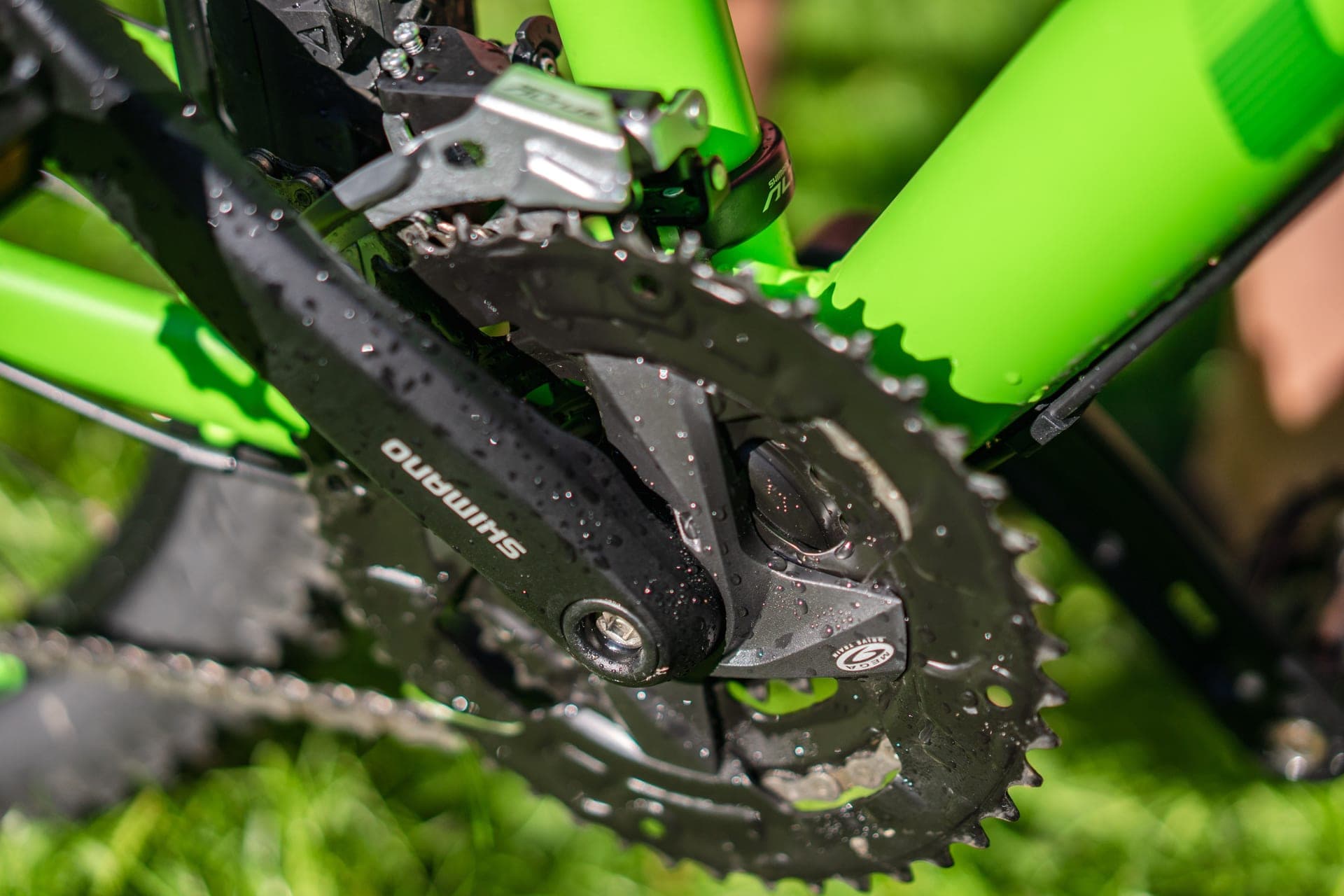
The short answer
Quick picks
| # | Product | Best for | Score | Price |
|---|---|---|---|---|
| 1 | 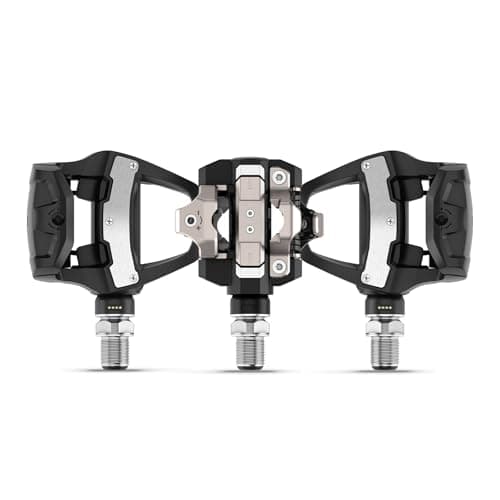 Garmin Rally RS210 If you ride Shimano shoes and cleats, this is the power meter that asks nothing of your drivetrain and nothing of your feet. | Best for Shimano riders overall | 8.88.8 out of 10 | |
| 2 | 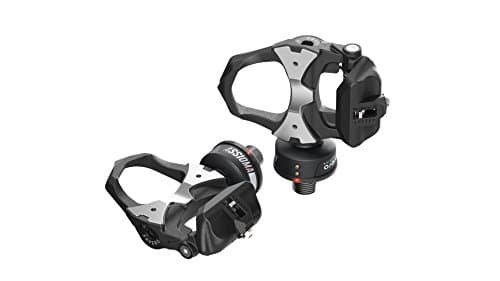 Favero Assioma Duo The best dual-sided pedal meter on price, and the right answer for a Shimano-drivetrain rider who does not mind moving to Look Keo cleats. | Best value dual-sided, if you will change cleats | 9.39.3 out of 10 | $539.97 · View on Amazon #ad We may earn a commission · Price as of October 5, 2026 |
| 3 | 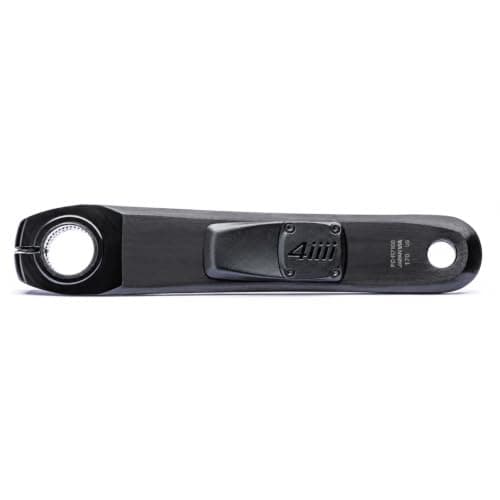 4iiii Precision 3+ Pick this if your Shimano crankset is on 4iiii's supported list and you want power for the least money, and accept a doubled left-leg number. | Cheapest power on a Shimano crank you already own | 8.68.6 out of 10 | $437.49 · View on Amazon #ad We may earn a commission · Price as of October 5, 2026 |
| 4 | 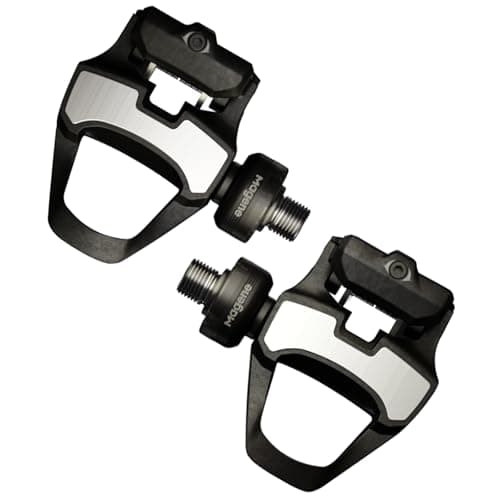 Magene P715 S The cheap way to get dual-sided power without leaving SPD-SL — as long as you can live with reviewers who have not agreed on its accuracy. | Cheapest dual-sided meter that keeps SPD-SL cleats | 8.38.3 out of 10 | $499.99 · View on Amazon #ad We may earn a commission · Price as of October 5, 2026 |
| 5 | 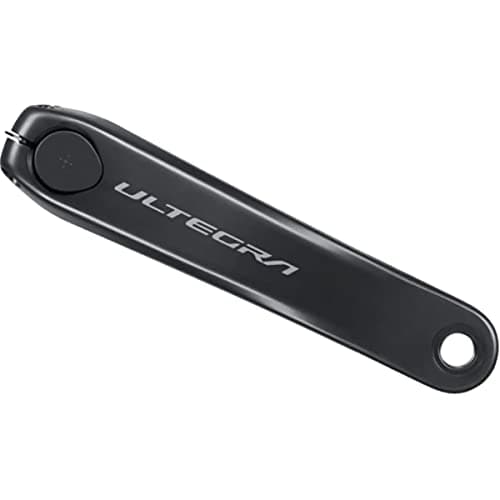 Shimano Ultegra FC-R8100-P The right answer only if you specifically want Shimano's own dual-sided crank on a 12-speed Shimano bike and will never move the meter to another frame. | Shimano's own dual-sided crank, for 12-speed road | 7.07.0 out of 10 | $899.00 · View on Amazon #ad We may earn a commission · Price as of October 5, 2026 |
"Best power meter for Shimano" is not really a question about power meters. It is a question about whether a power meter will fit, and it gets asked because crank-based meters made compatibility feel like the hard part of the purchase. For riders searching the narrower versions of this — best power meter for Shimano 105, for Ultegra Di2, for GRX, for a Shimano crankset — the useful thing to know first is that most of the products on this page have no relationship with your drivetrain at all.
Why most of this is simpler than the search suggests
A pedal-based power meter measures force at the pedal spindle. Its only mechanical interface with your bike is the pedal thread, and every road crank arm in current production uses the same one. That means a Garmin Rally, a Favero Assioma or a Magene P715 is equally at home on a 105 R7000 11-speed bike, an Ultegra R8100 12-speed bike, a GRX gravel build or a Dura-Ace Di2 race bike. Mechanical versus electronic shifting is irrelevant. Chainring sizes are irrelevant. Bottom bracket standard is irrelevant.
Crank-based meters are the opposite. A bonded crank-arm unit like the 4iiii Precision 3+ is sold as a specific crank arm, so it must match your crankset model andyour crank length. Shimano's own FC-R8100-P is a complete 12-speed Ultegra crankset, so it fits Shimano 12-speed road drivetrains and nothing else. Those are the two picks where the search term's compatibility anxiety is justified — and they are also the cheapest and the tidiest options respectively, which is why they stay on the page.
What to look for on a Shimano bike
Your cleat system, not your groupset. This is the decision that actually costs you money or saves it. If you ride SPD-SL — which most Shimano-shod riders do — then a Garmin Rally RS pedal or a Magene P715 S keeps your shoes and cleats exactly as they are. The Favero Assioma Duo is cheaper but uses a Look Keo cleat, so budget for cleats and an evening re-setting your position.
One side or two. Single-sided meters measure your left leg and double it. That is a consistent number and perfectly good for training, but it is not a balance measurement, and if your legs are genuinely uneven the absolute figure is wrong by that amount. Dual-sided meters measure both. Single vs dual-sided power meters is the longer version of that argument.
Whether the meter needs to move. If you have a trainer bike and an outdoor bike, a pedal meter follows you between the two and a crank meter does not. That is worth real money over a few seasons and it is the single most under-weighted factor in this category.
Crank length entry.Every pedal meter needs to be told your crank length, in the head unit or the maker's app. Get it wrong and every number the meter produces is wrong by a proportional amount. It takes thirty seconds and it is the most common self-inflicted accuracy problem in the category.
A published accuracy figure. Four of the five picks here publish one. One does not, and we say so in the table rather than inventing a number for it.
| Power meter | Type | Cleat / crank interface | Sided | Claimed accuracy | Drivetrain dependency |
|---|---|---|---|---|---|
| Garmin Rally RS210 | Pedal | Shimano SPD-SL cleats | Dual-sensing | ±1% | None — pedal thread only |
| Favero Assioma Duo | Pedal | Look Keo compatible cleats | Dual-sided | ±1% | None — pedal thread only |
| Magene P715 S | Pedal | Shimano SPD-SL cleats | Dual-sided | ±1% | None — pedal thread only |
| 4iiii Precision 3+ | Bonded crank arm | Must match your crankset and crank length | Single (left), doubled | ±1% of measured torque | High — crankset-specific part |
| Shimano Ultegra FC-R8100-P | Crankset | Shimano 12-speed road | Dual-sided | Not published in an accessible spec sheet | High — 12-speed Shimano road only |
Shimano 105, Ultegra, Dura-Ace, GRX: does it change the answer?
For the three pedal meters, no. The pedal thread is the same across all of them, so a rider on 105 R7000 and a rider on Dura-Ace R9200 buy the same product. For the 4iiii, yes: you order the arm for your specific crankset, and 105, Ultegra and GRX arms are different parts. For Shimano's own FC-R8100-P, it is an Ultegra R8100 12-speed crankset — so it suits a 12-speed Ultegra or 105 Di2 bike and does not suit an 11-speed build.
GRX deserves one extra note. A gravel bike running GRX with an SPD (two-bolt) pedal rather than a road cleat is not served by the three road pedals on this page. The SPD answer is Favero's Pro MX range, which our gravel power meters roundup covers properly.
What you are actually buying this for
A power meter is not a speed upgrade; it is a measurement instrument, and the value arrives when you start training to the number rather than to feel. That means an FTP figure you trust and intervals pinned to it. How to do an FTP test covers getting the number, how to improve your FTP covers what to do with it, and are power meters worth it is the honest version of the question if you are not sure yet.
One practical point for indoor riders specifically: if you already own a smart trainer with measured power, a power meter is not a replacement for it — it is a second, portable source that follows you outdoors. Smart trainer vs power meter explains which to buy first, and how accurate are power meters explains why two honest devices on the same bike will never read identically.
Not tied to Shimano?
See the full power meter rankingsThe full reviews
Every pick, in detail
#1 · Best for Shimano riders overall
Garmin Rally RS210
8.88.8 out of 10If you ride Shimano shoes and cleats, this is the power meter that asks nothing of your drivetrain and nothing of your feet.
- Type
- Pedal-based, dual-sensing
- Cleat system
- Shimano SPD-SL
- Claimed accuracy
- ±1%
- Battery
- Rechargeable, up to 90 hours
- Drivetrain fit
- Any — the pedal thread is the only interface
- Connectivity
- ANT+, Bluetooth
What we'd praise
- Keeps your Shimano SPD-SL cleats and shoes exactly as they are — no cleat change, no new shoes
- Completely indifferent to your drivetrain: 105, Ultegra, Dura-Ace, GRX, 11-speed, 12-speed, mechanical or Di2 all take the same pedal thread
- True dual-sensing, so left/right balance is measured on both sides rather than doubled from one
- Moves to a second bike in the time it takes to find a pedal wrench
- Garmin publishes the install procedure and a torque figure in the owner's manual, so there is no guesswork
What we'd flag
- The most expensive pick here by a clear margin
- A pedal is the most exposed place on a bike to put electronics
- Garmin's manual allows only one pedal washer per side for chain clearance, which is a real constraint on some frames
The reason this pick sits first is narrow and specific: a pedal-based meter has no relationship with your drivetrain at all. A Shimano crankset, a Shimano bottom bracket, a Shimano chainring bolt pattern, 11-speed or 12-speed, mechanical or Di2 — none of it is relevant, because the only interface is a pedal thread, and every road crank in production has the same one. For a rider who already uses SPD-SL cleats, the RS210 also means no shoe change and no cleat change. That combination is why we rank it above Shimano's own crank-based meter on a page about Shimano bikes.
Garmin specifies dual-sensing rather than left-side doubling, so the balance figure is a measurement rather than an assumption, and it claims ±1%. Installation is the one place to be careful: Garmin's owner's manual says to fit the right pedal first, grease the spindle, and tighten to 25 ft-lb (34 Nm) with a torque wrench, or as tight as possible with a pedal wrench if you do not have one. Our Rally RS210 review covers the rest of the range, and how to install a power meter walks the fitting job end to end.
#2 · Best value dual-sided, if you will change cleats
Favero Assioma Duo
9.39.3 out of 10#ad We may earn a commission · Price as of October 5, 2026
The best dual-sided pedal meter on price, and the right answer for a Shimano-drivetrain rider who does not mind moving to Look Keo cleats.
- Type
- Pedal-based, dual-sided
- Cleat system
- Look Keo compatible
- Claimed accuracy
- ±1%
- Battery
- Rechargeable, around 50 hours
- Drivetrain fit
- Any — pedal thread only
- Weather
- IP67 rated
What we'd praise
- Same drivetrain indifference as the Garmin, for meaningfully less money
- Dual-sided ±1% measurement with a rechargeable battery and no coin cells to carry
- Favero publishes its install torque, and the long 8 mm hex key is in the box
- Favero's Pro range shares one spindle across cleat systems, so the platform has an upgrade path
What we'd flag
- Look Keo cleats, not SPD-SL — a Shimano-shod rider has to buy and set up new cleats
- The battery is sealed and charges through a proprietary magnetic connector
- Favero's manual rules out pedal extenders, crank shorteners and cranks thicker than 15 mm at the thread
Everything that makes the Garmin a good answer for a Shimano bike is true of the Assioma Duo as well, at a lower price, with one difference that decides it: the cleat. The Assioma Duo uses a Look Keo compatible cleat, so if your shoes are currently set up for SPD-SL you are buying cleats and re-setting your position. That is a one-evening job, not a deal-breaker, and plenty of riders make the swap for the money saved.
Favero is also unusually clear about the fitting constraints. The Pro RS manual — the same spindle platform across Favero's current Pro range — specifies 30 to 40 Nm, rules out pedal extenders and crank shorteners, and requires the spindle to protrude at least 1 mm past the crank thread, which excludes cranks thicker than 15 mm at the threaded area. That matters on a Shimano bike only if you run something unusual, but it is worth checking before you order. Our Assioma Duo review covers the pedal in full, and Assioma vs Garmin Rally is the direct comparison.
#3 · Cheapest power on a Shimano crank you already own
4iiii Precision 3+
8.68.6 out of 10#ad We may earn a commission · Price as of October 5, 2026
Pick this if your Shimano crankset is on 4iiii's supported list and you want power for the least money, and accept a doubled left-leg number.
- Type
- Non-drive-side crank arm, strain gauge bonded on
- Sided
- Single (left), doubled
- Claimed accuracy
- ±1% of the torque it measures
- Battery
- CR2032, up to 800 hours claimed
- Weight added
- 9 g
- Connectivity
- ANT+ and Bluetooth Smart
What we'd praise
- The cheapest credible route to real power data if your crankset is one 4iiii supports
- A pod bonded to the arm adds 9 g and changes nothing about how the bike rides
- No pedal change, no cleat change, no shoes to re-set
- CR2032 for up to 800 claimed hours — nothing to charge
What we'd flag
- Single-sided: the number is your left leg doubled, so any imbalance you have is baked into it
- You must order the arm that matches your exact Shimano crankset and crank length, which is the whole compatibility risk on this page
- No left/right balance, no torque effectiveness, no pedalling-smoothness metrics
- It belongs to that crankset — it does not move to another bike
The Precision 3+ is a strain gauge bonded to the inside of a non-drive-side crank arm. You buy the arm that matches your crankset — the right model, the right crank length — and swap your existing left arm for it. On a Shimano Hollowtech II crank that is a crank bolt and two pinch bolts with a hex key and a torque wrench, no bottom bracket removal, and about ten minutes. Run a zero-offset afterwards and you are done.
The catch is the thing to understand before you order rather than after: this is the only pick here where your specific Shimano crankset decides whether the product fits. Get the model or the length wrong and you have the wrong part. 4iiii claims ±1% for the torque it measures, which is the left-arm measurement, not your total output — the total is that figure doubled. The error is consistent, which is what actually matters for training, but it is not a balance measurement. Single vs dual-sided power meters explains what you give up, and our 4iiii Precision review covers the unit.
#4 · Cheapest dual-sided meter that keeps SPD-SL cleats
Magene P715 S
8.38.3 out of 10#ad We may earn a commission · Price as of October 5, 2026
The cheap way to get dual-sided power without leaving SPD-SL — as long as you can live with reviewers who have not agreed on its accuracy.
- Type
- Pedal-based, dual-sided
- Cleat system
- Shimano SPD-SL (S version)
- Claimed accuracy
- ±1%
- Weight / stack
- 159 g per pedal, 13 mm stack
- Battery
- 120 hours claimed, magnetic charge in about 3 hours
- Connectivity
- One Bluetooth connection plus unlimited ANT+, IPX7
What we'd praise
- Dual-sided measurement on an SPD-SL cleat for less than the Garmin, which is the specific gap this fills
- Full advanced metric set on a head unit that supports it — balance, torque effectiveness, pedalling smoothness
- Magene claims 120 hours and recharges magnetically in around three hours
- the5krunner put the fitting job at two to three minutes with an 8 mm hex key
What we'd flag
- Independent accuracy findings disagree and we have not reconciled them: Cyclists Hub measured roughly -2.1% to -2.8% average against a Wahoo Kickr v5, the5krunner saw around 5% against a 4iiii, and GPLama found it within spec
- External sensor pods rather than fully internal electronics
- No cleats in the box, and only one simultaneous Bluetooth connection
- Magene publishes no crank-thickness limit the way Favero does, so unusual cranks are a question you have to ask first
The P715 S is the one product here that is both dual-sided and SPD-SL and still costs less than the Garmin. That is a genuinely useful position, and for a Shimano-shod rider who wants balance data without buying new cleats it is the obvious value pick. Magene claims ±1%, a 0 to 2,500 W range, 20 to 240 rpm, 159 g per pedal with a 13 mm stack on the S version, and 120 hours from a 140 mAh cell.
We rank it fourth rather than second because the independent accuracy picture is unsettled. Cyclists Hub's comparison against a Wahoo Kickr v5 reported average deviations around -2.1% to -2.8% with maxima near -4.8% to -6.2%; the5krunner's first look put it roughly 5% from a 4iiii and 4% from a Magene P505; GPLama found it solid and within spec with reservations about the pods and the price. We are not going to pretend those findings reconcile. Our Magene P715 review lays them out in full.
#5 · Shimano's own dual-sided crank, for 12-speed road
Shimano Ultegra FC-R8100-P
7.07.0 out of 10#ad We may earn a commission · Price as of October 5, 2026
The right answer only if you specifically want Shimano's own dual-sided crank on a 12-speed Shimano bike and will never move the meter to another frame.
- Type
- Dual-sided crank arms
- Group level
- Ultegra R8100, 12-speed
- Crank length
- 175 mm as listed
- Balance data
- True left/right
- Drivetrain fit
- Shimano 12-speed road drivetrains
- Published tolerance
- Not verifiable in an accessible spec sheet
What we'd praise
- Shimano's own part, built into a Shimano crankset rather than bonded onto one
- True dual-sided measurement with nothing hanging off the arm to catch on a frame
- The cleanest-looking answer on a 12-speed Ultegra or 105 Di2 bike
- No pedal or cleat decision at all — your existing pedals carry over
What we'd flag
- We could not verify a published accuracy tolerance in an accessible Shimano spec sheet, and we are not going to assume one
- Listed at 175 mm, so riders on other crank lengths need a different part number
- Priced level with the Garmin without the Garmin's ability to move between bikes
- Fits Shimano 12-speed road only — it is the least flexible pick here
There is a real argument for buying the drivetrain maker's own power meter: it is one part, from one company, designed as a crankset rather than retrofitted to one, with true left/right measurement and no pod bonded to the outside. On a 12-speed Ultegra or 105 Di2 build it is the tidiest installation on this page, and your pedals and cleats are not part of the conversation.
Two things keep it last. The first is that we could not find a published accuracy tolerance for it in an accessible Shimano specification document, and this site does not fill that kind of gap from memory — so the honest entry in the table is "not published". The second is cost of ownership: it is priced alongside the Garmin while being the least portable option here, tied to one crankset on one bike. Our crank power meters roundup puts it against the other crank-based options.
Good questions
Frequently asked questions
Does a power meter need to match my Shimano groupset?
Only if it is crank-based. Pedal-based meters — Garmin Rally, Favero Assioma, Magene P715 — attach to the pedal thread, which is the same on every road crank, so 105, Ultegra, Dura-Ace, GRX, 11-speed, 12-speed, mechanical and Di2 all take the same product. A bonded crank-arm meter like the 4iiii Precision 3+ must be the correct arm for your specific crankset and crank length, and Shimano's own FC-R8100-P is a 12-speed Ultegra crankset that fits Shimano 12-speed road drivetrains only.
What is the best power meter for Shimano 105?
The Garmin Rally RS210 if you ride SPD-SL cleats, because it keeps your shoes and ignores your drivetrain entirely. The Favero Assioma Duo is the better value if you will move to Look Keo cleats. If you want the cheapest route and your 105 crankset is on 4iiii's supported list, the Precision 3+ bonds to a matching replacement left arm.
Can I use a Favero Assioma with Shimano shoes?
Yes, but you need Look Keo compatible cleats on them. The Assioma Duo's pedal body takes a Look Keo cleat, not SPD-SL. The shoes themselves are fine — three-bolt road shoes accept either cleat — so it is a cleat purchase and a position re-set, not a shoe purchase.
Is Shimano's own power meter crank worth it?
Only in a narrow case: you run a 12-speed Shimano road drivetrain, you want Shimano's own dual-sided crankset rather than a retrofit, and you will never move the meter to another bike. It is priced alongside the Garmin Rally RS210 while being the least portable option, and we could not verify a published accuracy tolerance for it in an accessible Shimano specification document.
Will a power meter work with Shimano Di2?
Yes. Electronic shifting has no bearing on a power meter. Di2 and mechanical bikes use the same pedal threads and the same crankset interfaces, and power meters broadcast over ANT+ and Bluetooth to your head unit independently of the shifting system.
What is the best power meter for Shimano GRX on a gravel bike?
It depends on your pedal. GRX bikes set up with road cleats can use any of the three road pedal meters here. GRX bikes on SPD two-bolt pedals need an SPD power meter — Favero's Assioma Pro MX-1 or MX-2 — or a crank-based meter instead. Our gravel power meters roundup covers that case.
Do I have to tell my head unit the crank length?
For any pedal-based meter, yes, and it matters. Power is calculated from force and the radius it acts through, so an incorrect crank length scales every reading proportionally. Set it in the head unit or the maker's app during setup. It is the single most common self-inflicted accuracy error in the category.
How we sourced this
- Garmin — Installing Rally Pedals, owner's manual (right pedal first, grease, 25 ft-lb / 34 N-m, one washer maximum)
- Garmin — cycling power meters range and specifications (manufacturer)
- Favero — Assioma Duo specifications (manufacturer)
- Favero — Assioma PRO RS specifications and user manual (30-40 N-m, no extenders or shorteners, 15 mm crank-thread limit)
- 4iiii — Precision 3+ specifications (manufacturer)
- Magene — P715 power meter pedal specifications (manufacturer)
- Shimano — product information portal (manufacturer)
- Cyclists Hub — Magene P715 accuracy comparison against a Wahoo Kickr v5
- the5krunner — Magene P715 first look (comparison against 4iiii and Magene P505)
Keep going
Read these next
- Power MetersThe Best Power Meters, Compared on the Specs
- Power MetersThe Best Power Meter Pedals, Compared
- Power MetersThe Best Crank Power Meters, Ranked
- ComparisonPower Meter Pedals vs Cranks
- Power MetersThe Best Power Meters for Gravel Bikes
- GuidesHow to Install a Power Meter
- GuidesHow Accurate Are Power Meters?
- ReviewGarmin Rally RS210 Review