Power Meters
The Best Power Meter Pedals for Shimano Cleats
"Shimano" in this search almost never means the groupset — it means SPD-SL cleats already bolted to your shoes. Here are the pedals that take them natively, the one that converts, and what each costs you in stack height and runtime.
The short answer
Quick picks
| # | Product | Best for | Score | Price |
|---|---|---|---|---|
| 1 | 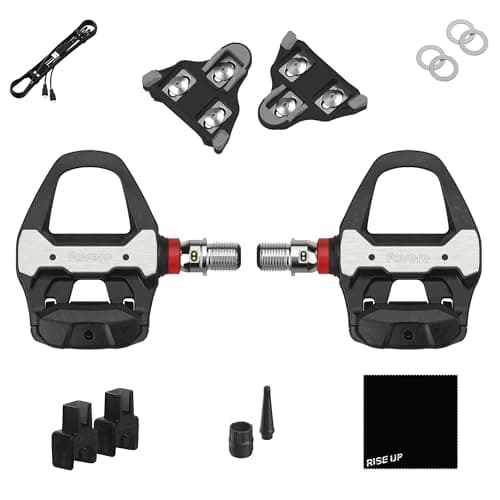 Favero Assioma Pro RS-2 Best for the rider already on SPD-SL who wants measured dual-sided power and the longest runtime on the market. | Best overall SPD-SL power meter pedal | 9.09.0 out of 10 | $804.99 · View on Amazon #ad We may earn a commission · Price as of November 22, 2026 |
| 2 | 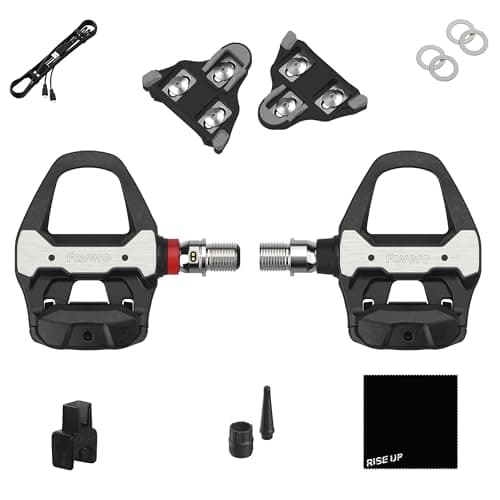 Favero Assioma Pro RS-1 Best for the rider who wants Favero's SPD-SL hardware now and can decide about the second sensor later. | Budget pick: cheapest SPD-SL meter worth owning | 8.78.7 out of 10 | $494.99 · View on Amazon #ad We may earn a commission · Price as of November 22, 2026 |
| 3 | 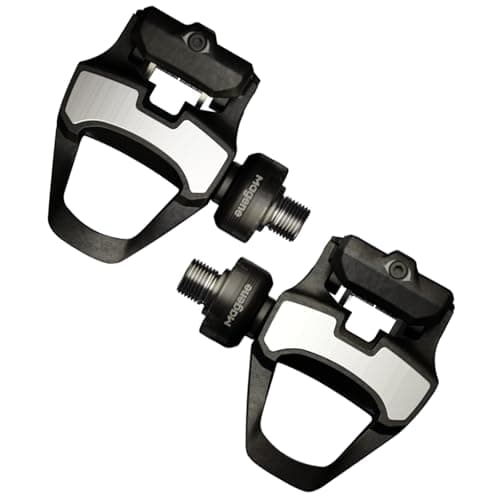 Magene P715 S Best for the rider who wants real left/right numbers in SPD-SL without paying flagship money for them. | Best dual-sided value in SPD-SL | 8.58.5 out of 10 | |
| 4 | 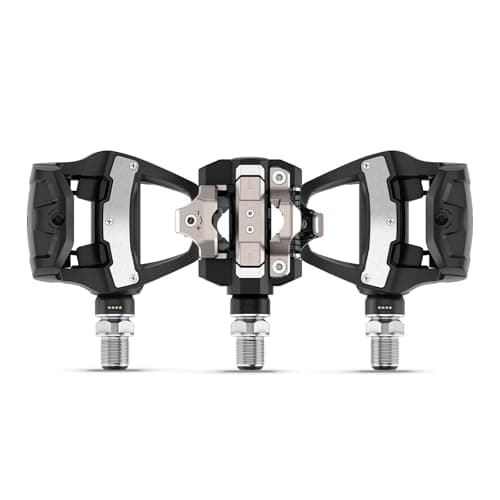 Garmin Rally RS210 Best for riders inside the Garmin ecosystem, and for anyone who might want to change cleat system later. | Best for Garmin head units and quick charging | 8.68.6 out of 10 | $799.99 · View on Amazon $1,199.99Save 33% #ad We may earn a commission · Price as of November 22, 2026 |
| 5 | 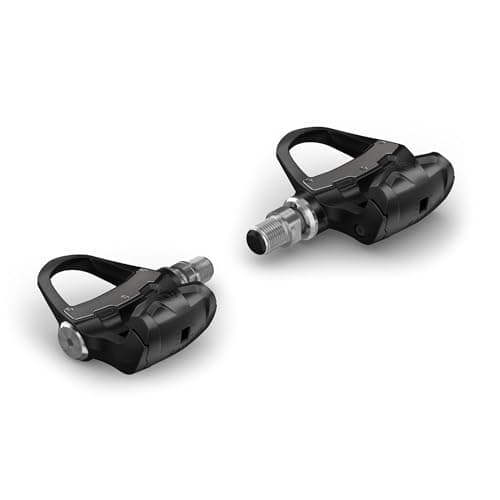 Garmin Rally RK200 Best for the rider who is between cleat systems — it starts as Look Keo and becomes Shimano SPD-SL with a body kit. | Best if you are switching to Shimano cleats later | 8.48.4 out of 10 | $649.99 · View on Amazon #ad We may earn a commission · Price as of November 22, 2026 |
Almost everyone who searches for a Shimano power meter pedal means one thing: the SPD-SL cleats already bolted to the bottom of their shoes. It is worth saying plainly, because the word "Shimano" in power meter shopping usually points at a groupset, and pedals do not care what groupset you run — if that is your question, the best power meters for Shimano bikes is the page you want, because it ranks cranks and spiders against Shimano's own drivetrain standards.
This page answers the narrower and more common question: which power meter pedals accept Shimano SPD-SL cleats, and what does each one cost you in stack height, runtime and measurement honesty. Every pick below is in the registry with a live price in the table above, and the ranking is built on published specifications rather than on anything we have bench tested.
Native SPD-SL, or converted?
There are two ways a pedal ends up taking a Shimano cleat. The first is native: Favero's Pro RS line and Garmin's RS bodies are built around the SPD-SL interface, and Magene sells the P715 in an S variant for the same reason. The second is conversion: Garmin's Rally is a sensing spindle inside an interchangeable body, so an RK200 bought as a Look Keo pedal becomes an SPD-SL pedal with a body kit. Nothing else here converts.
If you are settled on SPD-SL, buy native. The conversion route exists for one specific rider — the one who is mid-migration between cleat systems, or who shares a meter between two bikes with different pedals — and for that rider it is genuinely the only option on the market.
The three specifications that separate them
Stack height.Every pedal-based meter sits your foot slightly further from the crank than a plain pedal, which lowers your effective saddle height by the same amount. The Pro RS-2 publishes 10.5 mm, the Assioma Pro MX line 11.2 mm. These are small numbers that matter if you are precise about fit; re-check saddle height after fitting whatever you buy.
Runtime, and what kind. Favero publishes up to 160 hours with a 15-minute fast charge. Garmin publishes 90 hours on the RS210 with 15 minutes buying about 12 hours of riding. Magene publishes 120 hours with a roughly three-hour magnetic charge. The RK200 is the odd one out: replaceable LR44 coin cells, which some riders prefer precisely because there is nothing to charge. How long power meter batteries last collects every published figure in one place.
Measured balance, or doubled. Dual-sided meters read both legs. Single-sensing meters read one and double it, which is accurate to the degree that your legs are even — a property of you, not of the pedal, which is why no manufacturer publishes an error figure for it. The RS-1 is the single-sensing option here; everything else measures both sides.
| Pedal | Cleat | Sided | Claimed accuracy | Published battery |
|---|---|---|---|---|
| Favero Assioma Pro RS-2 | SPD-SL, native | Dual | ±1% | Up to 160 h, 15-min fast charge |
| Favero Assioma Pro RS-1 | SPD-SL, native | Single-sensing | ±1% | Up to 160 h |
| Magene P715 S | SPD-SL, native | Dual | ±1% | 120 h, ~3 h magnetic charge |
| Garmin Rally RS210 | SPD-SL, native | Dual-sensing | ±1% | Up to 90 h, 15 min ≈ 12 h riding |
| Garmin Rally RK200 | Look Keo; converts to SPD-SL | Dual | ±1% | LR44 coin cells |
What this buys you in the pain cave
On a smart trainer you already have a power number, so the reason to add pedals is that they are the one power source that exists indoors andoutdoors. Pair the pedals in Zwift's Power Source slot and leave the trainer as Controllable, and you ride to the meter's watts while the trainer still applies resistance and holds ERG targets. That one pairing choice is what makes an indoor FTP and an outdoor FTP the same number. How to connect a power meter to Zwift has the pairing order.
It is also the reason to care about a pedal's water rating. The Rally RS210 and the P715 both publish IPX7. Outdoors that is about rain; in a closed room with a fan pointed at you it is about sweat running down the crank for an hour at a time, which is a harsher test than most rain.
The verdict
Buy the Favero Assioma Pro RS-2 if you are staying on SPD-SL and want the best combination of native fit, measured balance, low stack and runtime. Buy the Assioma Pro RS-1 if that is more than you want to spend — it is the budget pick and it upgrades. Buy the Magene P715 S if measured left/right balance matters more to you than brand service network. Buy a Garmin Rally if you ride an Edge and want cycling dynamics, or if there is any chance you change cleat system — the interchangeable body is a real advantage nobody else offers.
Not on Shimano cleats?
See every power meter pedal, rankedThe full reviews
Every pick, in detail
#1 · Best overall SPD-SL power meter pedal
Favero Assioma Pro RS-2
9.09.0 out of 10#ad We may earn a commission · Price as of November 22, 2026
Best for the rider already on SPD-SL who wants measured dual-sided power and the longest runtime on the market.
- Cleat system
- Shimano SPD-SL, native
- Sided
- Dual-sided
- Claimed accuracy
- ±1% (IAV Power System)
- Battery
- Up to 160 hours, 15-minute fast charge
- Weight / stack
- 124.8 g per pedal, 10.5 mm stack
- Connectivity
- ANT+, Bluetooth
What we'd praise
- Takes Shimano SPD-SL cleats natively — no adapter, no conversion kit, no compromise
- The longest published runtime of any pedal here at up to 160 hours, with a 15-minute fast charge
- 10.5 mm stack height, the lowest on this page, so your saddle height barely moves
- True dual-sided measurement, so left/right balance is measured rather than assumed
What we'd flag
- The most expensive pedal here other than the Garmin
- Favero publishes fitting restrictions: no pedal extenders, no shorteners, 15 mm crank thread limit
- Rechargeable rather than coin cell, so a flat pedal means a cable rather than a spare battery
If you are searching for a Shimano power meter pedal, this is the one the rest of the page is measured against. The Pro RS-2 is built around the SPD-SL cleat rather than converted to it, which means your existing shoes and cleats go straight on. Favero claims ±1% from its IAV Power System, up to 160 hours of riding per charge, and a 15-minute fast charge for the ride you forgot to plug in.
The specification that matters most and gets discussed least is the 10.5 mm stack height. Every pedal-based meter raises your foot slightly relative to a standard pedal, and that changes effective saddle height; the RS-2 raises it less than anything else here. Favero also publishes real fitting restrictions — no extenders, no shorteners, a 15 mm limit on crank thread length — and those are worth checking before you order rather than after. Our Assioma Pro RS review covers the family in full.
#2 · Budget pick: cheapest SPD-SL meter worth owning
Favero Assioma Pro RS-1
8.78.7 out of 10#ad We may earn a commission · Price as of November 22, 2026
Best for the rider who wants Favero's SPD-SL hardware now and can decide about the second sensor later.
- Cleat system
- Shimano SPD-SL, native
- Sided
- Single-sensing (left, doubled)
- Claimed accuracy
- ±1% (IAV Power System)
- Battery
- Sealed rechargeable, up to 160 h
- Upgrade path
- Add a right sensor pedal (RS-UP) later
- Connectivity
- ANT+, Bluetooth
What we'd praise
- The same pedal body, cleat interface, stack height and battery claim as the RS-2 for a lot less
- Favero sells the sensing right pedal separately, so dual-sided is a later purchase rather than a lost option
- ±1% applies to the leg it measures — the error people attribute to single-sided is their own imbalance
- Native SPD-SL, so no body kit and no conversion
What we'd flag
- Doubles one leg, so left/right balance is an assumption rather than a measurement
- If your imbalance is real and large, your total power reading inherits it
- Costs more than a single-sided crank or spindle meter
The budget pick, and the most sensible first purchase on this page. The RS-1 is the RS-2 with one sensor instead of two: same body, same SPD-SL interface, same 160-hour battery claim, same ±1% figure applied to the leg it reads. Favero then sells the sensing right pedal separately, so the upgrade to true dual-sided is a decision you can postpone rather than one you have to get right today.
The honest caveat on any single-sensing meter is that doubling one leg assumes your legs are even. They are usually close and the difference is a property of you rather than of the pedal, which is why no manufacturer can publish an error figure for it. Single vs dual-sided power meters explains when that assumption is worth paying to remove.
#3 · Best dual-sided value in SPD-SL
Magene P715 S
8.58.5 out of 10Best for the rider who wants real left/right numbers in SPD-SL without paying flagship money for them.
- Cleat system
- Shimano SPD-SL (S version)
- Sided
- Dual-sided
- Claimed accuracy
- ±1%
- Battery
- 120 hours claimed, magnetic charge in about 3 hours
- Connectivity
- One Bluetooth connection plus unlimited ANT+, IPX7
- Charging
- Magnetic
What we'd praise
- True dual-sided measurement at close to single-sided money
- 120-hour published battery claim and a magnetic charger that takes about three hours
- IPX7, which is the specification to read if the pedals live in a sweaty pain cave
- The S version is the Shimano SPD-SL build — pick the K version for Look Keo
What we'd flag
- Only one simultaneous Bluetooth connection, so a head unit and an app cannot both hold it
- Shorter battery claim than either Favero
- Less of a service and spares network than Favero or Garmin in the US
The P715 is sold in two cleat variants and the S is the Shimano SPD-SL one, which is the whole reason it belongs on this page. It is genuinely dual-sided, claims ±1%, publishes a 120-hour runtime and charges magnetically in about three hours. For a rider who wants measured balance rather than a doubled leg, it is the cheapest honest route there.
One specification deserves attention before you buy: Magene publishes one simultaneous Bluetooth connection alongside unlimited ANT+. Indoors that is usually fine — but if you want the pedals in Zwift over Bluetooth while a phone app also watches them, something gets dropped. On a PC with an ANT+ stick the limit is irrelevant. Our Magene P715 review goes deeper, and Magene P715 vs Favero Assioma is the head-to-head.
#4 · Best for Garmin head units and quick charging
Garmin Rally RS210
8.68.6 out of 10$1,199.99Save 33%
#ad We may earn a commission · Price as of November 22, 2026
Best for riders inside the Garmin ecosystem, and for anyone who might want to change cleat system later.
- Cleat system
- Shimano SPD-SL (RS body)
- Sided
- Dual-sensing
- Claimed accuracy
- ±1%
- Battery
- Rechargeable lithium-ion, up to 90 hours
- Quick charge
- 15 minutes for about 12 hours of riding
- Weight
- 312 g the pair
- Connectivity
- ANT+, Bluetooth, Secure Bluetooth
- Water rating
- IPX7
What we'd praise
- RS body is Shimano SPD-SL out of the box, and Garmin sells body kits to convert to Look Keo or SPD later
- 15 minutes on the charger buys about 12 hours of riding
- Cycling dynamics and Garmin ecosystem integration if you ride an Edge
- Secure Bluetooth alongside standard ANT+ and Bluetooth
What we'd flag
- The most expensive pedal on this page
- 90-hour battery claim is well short of Favero's 160
- Cycling dynamics data is only useful if you have a Garmin head unit to read it
The Rally is the answer to a question none of the Faveros can answer: what if you are not certain you will stay on SPD-SL? Garmin sells the Rally as a sensor spindle inside interchangeable pedal bodies, and the RS body is Shimano SPD-SL. Buy a body kit later and the same meter becomes a Look Keo or an SPD pedal without buying a second power meter. No other brand here offers that.
The trade is runtime and price: 90 hours against Favero's 160, at the top of this page's price range. The 15-minute quick charge for about 12 hours of riding takes some of the sting out of the first number. Our Garmin Rally RS210 review covers it alone, and Favero Assioma vs Garmin Rally is the brand-level comparison.
#5 · Best if you are switching to Shimano cleats later
Garmin Rally RK200
8.48.4 out of 10#ad We may earn a commission · Price as of November 22, 2026
Best for the rider who is between cleat systems — it starts as Look Keo and becomes Shimano SPD-SL with a body kit.
- Cleat system
- Look Keo (RK body)
- Sided
- Dual-sided
- Claimed accuracy
- ±1%
- Battery
- Coin cell (LR44)
- Convertible
- To SPD-SL or SPD via a body kit
- Connectivity
- Bluetooth, ANT+
What we'd praise
- Replaceable coin cells, so a flat pedal is a two-minute fix at a gas station rather than a charging session
- Converts to Shimano SPD-SL with a Garmin body kit — the only pedal here that works in both directions
- Dual-sided ±1% measurement
- Often the cheapest route into the Garmin Rally platform
What we'd flag
- Ships as a Look Keo pedal, so SPD-SL riders need the conversion kit as a second purchase
- Coin cells mean periodic buying rather than periodic charging
- Conversion costs money and is an extra step on arrival
Included deliberately as the hedge. The RK200 is the Look Keo version of the Rally, which means it is not an SPD-SL pedal as shipped. It is on this page because the Rally's interchangeable bodies mean a rider who is mid-migration — Keo shoes now, Shimano shoes next season — can buy one power meter instead of two.
It also uses replaceable LR44 coin cells rather than a rechargeable pack, which some riders strongly prefer: no charger, no cable, and no ride cut short because you forgot. If you are already firmly on SPD-SL and intend to stay there, buy a native SPD-SL pedal from higher up this page instead and skip the conversion. Power meter pedals and cleats is the compatibility check to run first.
Good questions
Frequently asked questions
What are the best power meter pedals for Shimano cleats?
The Favero Assioma Pro RS-2. It takes Shimano SPD-SL cleats natively, measures both legs, claims ±1% accuracy, publishes the lowest stack height here at 10.5 mm and the longest runtime at up to 160 hours with a 15-minute fast charge. The Assioma Pro RS-1 is the same hardware with one sensor for less, and is the budget pick.
Do power meter pedals work with Shimano SPD-SL cleats?
Several do, natively: Favero's Assioma Pro RS-1 and RS-2, Garmin's Rally RS bodies and the Magene P715 S. Garmin's Rally is also the only platform here that converts — an RK200 bought as a Look Keo pedal becomes SPD-SL with a body kit. Favero's Keo-compatible Assioma Duo and Uno do not take SPD-SL cleats.
Are power meter pedals compatible with Shimano groupsets?
Yes, all of them. A pedal-based power meter threads into the crank arm and never touches the drivetrain, so 105, Ultegra, Dura-Ace, GRX and Di2 are all irrelevant to it. The only Shimano compatibility question for pedals is the cleat on your shoe. If you want a crank or spider meter for a Shimano bike instead, that is a drivetrain question with real traps in it.
Does a power meter pedal change my saddle height?
Effectively, yes, by its stack height. A pedal meter sits your foot further from the crank than a plain pedal, which lowers your position relative to the saddle by the same amount. Favero publishes 10.5 mm for the Pro RS-2 and 11.2 mm for the Pro MX line. Re-check saddle height after fitting any of them.
Is single-sided good enough, or do I need dual-sided SPD-SL pedals?
Single-sensing is good enough for training that is compared only with itself, because it is consistent even when it is not perfectly correct. It doubles one leg, so its total depends on your own left/right balance, which no manufacturer can publish a figure for. Buy dual-sided if you are returning from an injury, chasing a pedaling asymmetry, or want balance data you can act on.
How we sourced this
- Favero — Assioma PRO RS specifications (SPD-SL, ±1% IAV, 160 h battery, 10.5 mm stack, fitting restrictions)
- Garmin — Rally RS200/RS210 series specifications (interchangeable bodies, 90 h battery, IPX7)
- Garmin — Rally power meter pedal body conversion kits
- Magene — P715 power meter pedal specifications (S and K variants, 120 h, one Bluetooth connection, IPX7)
- Zwift Support — Pairing a power meter as Power Source with the trainer as Controllable
Keep going