Start Here
How Long Do Power Meter Batteries Last?
Coin cell or rechargeable is a bigger day-to-day decision than most buyers realize. Here are the published numbers, and what actually goes wrong.
Every figure on this page is the manufacturer's own published claim, measured under their conditions. We have not run these batteries down ourselves, and nobody should treat a claimed figure as a guarantee — but the differences between them are large enough that the ranking is useful even if the absolute numbers move.
| Power meter | Battery type | Claimed runtime | Top-up |
|---|---|---|---|
| 4iiii Precision 3+ | CR2032 coin cell | Up to 800 hours | Replace the cell |
| Favero Assioma Pro RS-2 | Rechargeable | Up to 160 hours | 15-minute fast charge |
| Magene P715 S | Rechargeable, magnetic | 120 hours | About 3 hours to full |
| Garmin Rally RS210 | Rechargeable lithium-ion | Up to 90 hours | 15 min ≈ 12 h riding |
| Favero Assioma Pro MX-2 | Rechargeable | At least 60 hours | Fast charge |
| Garmin Rally RK200 | LR44 coin cells | Not quoted in hours here | Replace the cells |
Coin cell vs rechargeable, honestly
Coin cell wins on runtime and loses on warning. A claimed 800 hours is several seasons for most riders, and a CR2032 costs almost nothing and is sold everywhere. What you do not get is a percentage. The first sign of a fading cell is usually intermittent dropouts — power that cuts out during hard efforts and comes back — which looks exactly like a connection problem and sends people down the wrong troubleshooting path.
Rechargeable wins on information and loses on planning. You can see the state of charge in the app and on your head unit, so you are never surprised. But you do have to charge it, and a 90-hour pedal that you ride ten hours a week needs attention every couple of months.
There is a third consideration for indoor riders specifically. A charging port is a hole, and sweat finds holes. Favero and Magene both use magnetic charging contacts rather than a socket, which is the better design for a bike that lives on a trainer — bike trainer sweat protection covers the wider problem.
What actually shortens battery life
Dual-sided measurement. Two sensing units draw from two batteries, and Favero quotes at least 60 hours for the dual-sided Assioma Pro MX-2 against longer figures for single-sided units. If runtime is your priority, single-sided helps — best single-sided power meters ranks those.
Cold. Coin cells lose capacity in the cold, which is why a meter that was fine in September starts dropping out in January. If your power disappears on winter rides and returns indoors, suspect the cell before the software.
Leaving it awake. Power meters sleep when they stop rotating. A bike stored with the pedals being nudged — in a car, on a roof rack, in a busy hallway — can keep waking the meter up. It is a small effect, but it is real.
Broadcasting on both protocols. A meter transmitting ANT+ and Bluetooth simultaneously uses more power than one doing a single job. This is rarely worth optimising, but it explains some of the gap between a published figure and your own experience.
Telling a dying battery from a connection problem
These look identical from the saddle, and people regularly replace a perfectly good power meter over what was a two-pound coin cell. Three tests separate them.
Does it fail under load? A fading cell often holds up at easy power and drops out during sprints or hard efforts, because the draw is higher. A connection problem is more likely to be distance- or interference-related and fails regardless of effort.
Does it fail on both protocols? If the meter drops on Bluetooth but holds on ANT+, that is a connection problem, not a battery. Our ANT+ vs Bluetooth guide explains how to test that properly.
Does it fail everywhere? A meter that works on a head unit on the bike but not on a computer across the room has a range problem. A meter that fails on everything has a power problem.
The short answer
Power meters ranked by published runtime
| # | Product | Best for | Score | Price |
|---|---|---|---|---|
| 1 | 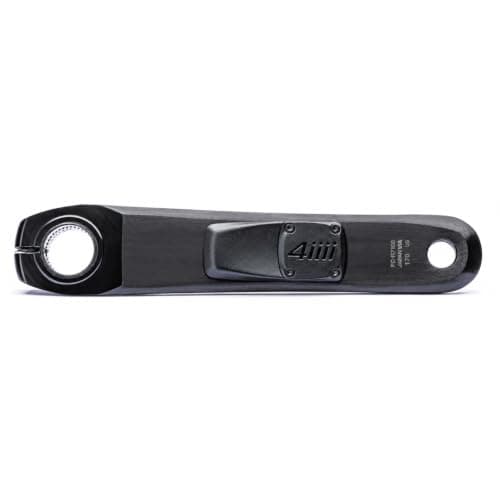 4iiii Precision 3+ The pick if you never want to think about charging: a claimed 800 hours from a coin cell you can buy anywhere. | Longest claimed runtime: up to 800 hours | 8.88.8 out of 10 | $437.49 · View on Amazon #ad We may earn a commission · Price as of October 21, 2026 |
| 2 | 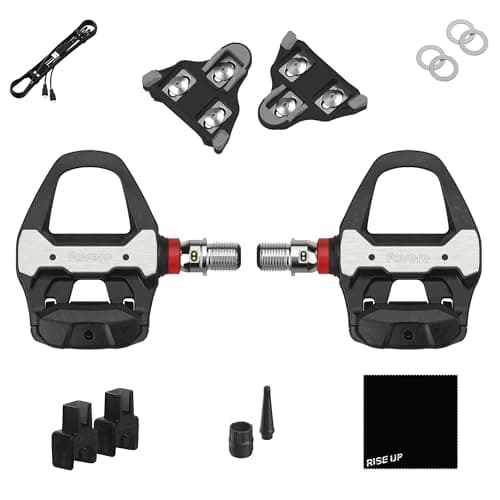 Favero Assioma Pro RS-2 The best of the rechargeables: 160 hours per charge and a 15-minute top-up that rescues the ride you forgot to plan for. | Best rechargeable runtime, with a fast charge | 8.78.7 out of 10 | $809.99 · View on Amazon #ad We may earn a commission · Price as of October 21, 2026 |
| 3 | 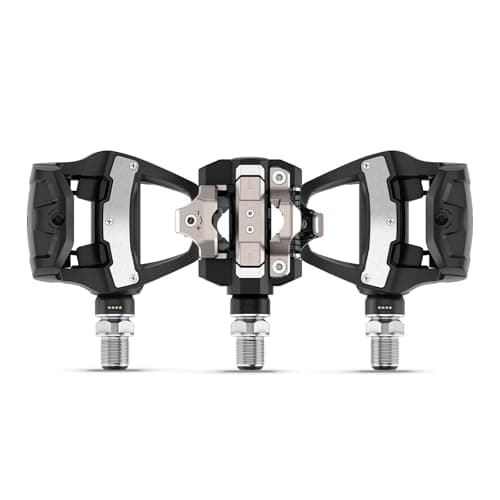 Garmin Rally RS210 The shortest runtime here, but the best information about it — if you live inside Garmin Connect, you will never be caught out. | Rechargeable with a visible battery percentage | 8.18.1 out of 10 | $899.99 · View on Amazon $1,199.99Save 25% #ad We may earn a commission · Price as of October 21, 2026 |
| 4 | 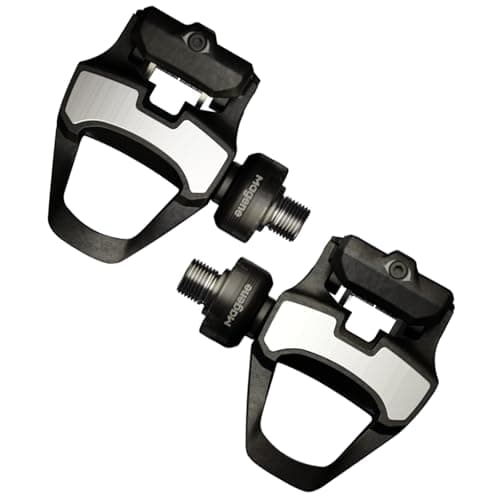 Magene P715 S The value answer on runtime: 120 claimed hours and magnetic charging for less than the pedals above it. | Best runtime per pound at the budget end | 8.38.3 out of 10 | $499.99 · View on Amazon #ad We may earn a commission · Price as of October 21, 2026 |
Changing a coin cell without breaking anything
Note the orientation of the old cell before you lift it out. Handle the new one by the edges, because fingerprints on the contact face are a genuine cause of intermittent connection. Check the rubber gasket is seated in its groove before you close the cover, and do not over-tighten — a crushed gasket seals worse than a properly seated one.
Then zero the meter before your first ride. Most manufacturers recommend a zero-offset after a battery change, and it takes ten seconds.
What to buy if this is your deciding factor
If the battery really is the thing you care most about, buy a coin-cell crank meter and stop thinking about it. If you want the data a pedal gives and the ability to move it between bikes, buy the longest-running rechargeable you can — which on current published figures is Favero's. Either way it is worth reading the full roundup before deciding, because battery life is rarely the most important specification once you start riding.
Ready to choose?
See every power meter rankedThe full reviews
Every pick, in detail
Longest claimed runtime: up to 800 hours
4iiii Precision 3+
8.88.8 out of 10#ad We may earn a commission · Price as of October 21, 2026
The pick if you never want to think about charging: a claimed 800 hours from a coin cell you can buy anywhere.
- Battery
- CR2032, up to 800 hours claimed
- Type
- Non-drive-side crank arm
- Claimed accuracy
- ±1%
- Weight added
- 9 g
- Connectivity
- ANT+ and Bluetooth Smart
What we'd praise
- Up to 800 hours claimed is the longest figure on this page by a wide margin
- A CR2032 costs almost nothing and is sold everywhere, including petrol stations
- Nothing to plug in, ever — the failure mode is a battery change, not a dead ride
- The crank arm is sealed, so there is no charging port to corrode with sweat
What we'd flag
- Must match your specific crank model and length
- A coin cell gives little warning before it goes, so keep a spare
- Single-sided, which is a separate decision from battery format
800 hours is roughly four seasons of riding for most people, which in practice means you change the cell when you remember rather than when you have to. That is the genuine advantage of the coin-cell format, and it is why crank-based meters still appeal to riders who hate maintenance.
The trade is warning. A rechargeable meter tells you its percentage; a coin cell gives you intermittent dropouts and then nothing. Keep a spare CR2032 in your toolbox and the problem disappears. Our 4iiii Precision review covers the rest of the product.
Best rechargeable runtime, with a fast charge
Favero Assioma Pro RS-2
8.78.7 out of 10#ad We may earn a commission · Price as of October 21, 2026
The best of the rechargeables: 160 hours per charge and a 15-minute top-up that rescues the ride you forgot to plan for.
- Battery
- Up to 160 hours, 15-minute fast charge
- Type
- Pedal-based, dual-sided
- Cleat system
- Shimano SPD-SL
- Claimed accuracy
- ±1% (IAV Power System)
- Weight / stack
- 124.8 g per pedal, 10.5 mm stack
What we'd praise
- Up to 160 hours is the longest rechargeable figure in the Assioma family
- A 15-minute fast charge covers a forgotten evening before a long ride
- Magnetic charging contacts rather than a port, so there is nothing to seal
- You can see the charge state rather than guessing at it
What we'd flag
- Still something to remember before a long event
- Two pedals means two things to charge
- A charger is one more item to lose when traveling
The argument against rechargeable power meters is that you have to remember. Favero's answer is to make both numbers good: up to 160 hours per charge, which for most riders is a season of outdoor riding, plus a 15-minute fast charge for the morning you forgot.
The magnetic charging contacts matter on an indoor bike specifically, because there is no socket for sweat to find. See sweat protection for why that is not a trivial concern.
Rechargeable with a visible battery percentage
Garmin Rally RS210
8.18.1 out of 10$1,199.99Save 25%
#ad We may earn a commission · Price as of October 21, 2026
The shortest runtime here, but the best information about it — if you live inside Garmin Connect, you will never be caught out.
- Battery
- Rechargeable lithium-ion, up to 90 hours
- Quick charge
- 15 minutes for about 12 hours of riding
- Type
- Dual-sensing pedal power meter
- Claimed accuracy
- ±1%
- Water rating
- IPX7
What we'd praise
- Battery state is visible in Garmin Connect and on the head unit, so it never surprises you
- A 15-minute charge buys about 12 hours of riding, per Garmin
- IPX7, which is a published water rating rather than a vague claim
- Convertible pedal bodies, so the same batteries follow you across cleat systems
What we'd flag
- 90 hours is well short of the Favero figure and nowhere near a coin cell
- Rally pedals cost more than the Favero equivalents to begin with
- Another proprietary charger to keep track of
90 hours is the lowest rechargeable figure on this page, and in isolation that looks like a weakness. In practice it rarely is, because Garmin surfaces the battery state everywhere you already look: the head unit, the app, and the sensor list.
The 15-minute quick charge is the safety net, and Garmin quotes it as buying about twelve hours of riding. Our Rally RS210 review has the full specification.
Best runtime per pound at the budget end
Magene P715 S
8.38.3 out of 10#ad We may earn a commission · Price as of October 21, 2026
The value answer on runtime: 120 claimed hours and magnetic charging for less than the pedals above it.
- Battery
- 120 hours claimed, magnetic charge in about 3 hours
- Type
- Pedal-based, dual-sided
- Cleat system
- Shimano SPD-SL (S version)
- Claimed accuracy
- ±1%
- Connectivity
- One Bluetooth connection plus unlimited ANT+, IPX7
What we'd praise
- 120 hours claimed, which beats the Garmin figure at a much lower price
- Magnetic charging, so there is no port for sweat to reach
- Dual-sided measurement at a price normally associated with single-sided
- Unlimited ANT+ connections, which matters if your setup is sensor-heavy
What we'd flag
- Only one simultaneous Bluetooth connection, which is a real constraint on Apple TV
- Three hours to charge is slower than the fast-charge options above
- Less independent testing history than Favero or Garmin
On the battery question specifically, the P715 S does well: 120 claimed hours is between the Garmin and the Favero figures, at a lower price than either, and it charges magnetically rather than through a port.
The caveat is connectivity rather than battery. Magene publishes one simultaneous Bluetooth connection, which becomes a real constraint on a two-connection platform like Apple TV — see our P715 review and Zwift on Apple TV.
Good questions
Frequently asked questions
How long do power meter batteries last?
It depends on the format. 4iiii claims up to 800 hours from a CR2032 coin cell on the Precision 3+. Rechargeable pedals claim far less: Favero quotes up to 160 hours for the Assioma Pro RS-2, Magene 120 hours for the P715 S, and Garmin up to 90 hours for the Rally RS210. All of these are manufacturer claims.
Is a coin cell or a rechargeable power meter better?
Coin cell for runtime and simplicity, rechargeable for information. A coin cell runs for seasons and then dies with little warning, while a rechargeable shows you a percentage but has to be charged before long rides. For a bike that lives on an indoor trainer, magnetic charging contacts are better than a socket because there is nothing for sweat to get into.
Why does my power meter keep dropping out?
A fading coin cell is the most common cause, and the tell is that it fails under load - power cuts out during hard efforts and recovers afterwards. If it drops on Bluetooth but holds on ANT+, or only fails at distance, the problem is the connection rather than the battery.
Does cold weather affect power meter battery life?
Yes. Coin cells lose capacity in the cold, which is why a meter that behaved all summer can start dropping out in winter. If your power disappears outdoors in the cold and is fine indoors, replace the cell before troubleshooting anything else.
Do I need to calibrate after changing a power meter battery?
Most manufacturers recommend performing a zero offset after a battery change, and it takes about ten seconds on a head unit or in the app. It is worth doing as a habit at the start of any ride where the numbers matter.
Do dual-sided power meters have shorter battery life?
Generally yes, because two sensing units draw from two batteries. Favero quotes at least 60 hours per charge for the dual-sided Assioma Pro MX-2, the shortest figure in its family, while single-sided versions of the same pedal run longer.
How we sourced this
Keep going
Read these next
- Power MetersThe Best Power Meters
- Power MetersHow to Calibrate a Power Meter
- Power MetersThe Best Single-Sided Power Meters
- GuidesHow Accurate Are Power Meters?
- Power MetersThe Best Power Meter Pedals
- GuidesANT+ vs Bluetooth for Zwift
- AccessoriesBike Trainer Sweat Protection
- GuidesHow to Install a Power Meter