Power Meters
The Best Single-Sided Power Meters
One leg, doubled. For most riders that is all the accuracy training actually needs — here is which one to buy, and the one case where it is the wrong call.
The short answer
Quick picks
| # | Product | Best for | Score | Price |
|---|---|---|---|---|
| 1 | 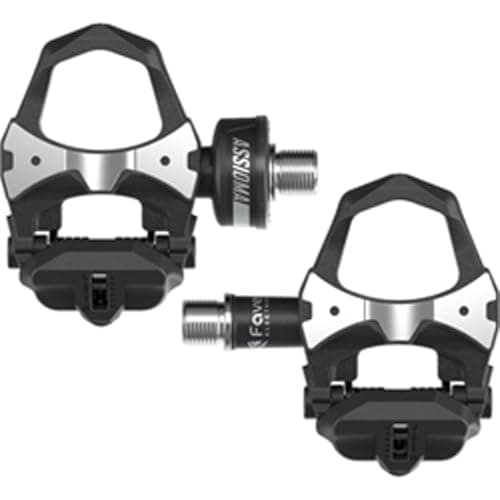 Favero Assioma Uno The default single-sided buy: the same measurement principle as Favero's dual-sided pedals, on one side, with a real upgrade path if you change your mind. | Best single-sided power meter overall | 9.09.0 out of 10 | $381.22 · View on Amazon #ad We may earn a commission · Price as of October 21, 2026 |
| 2 | 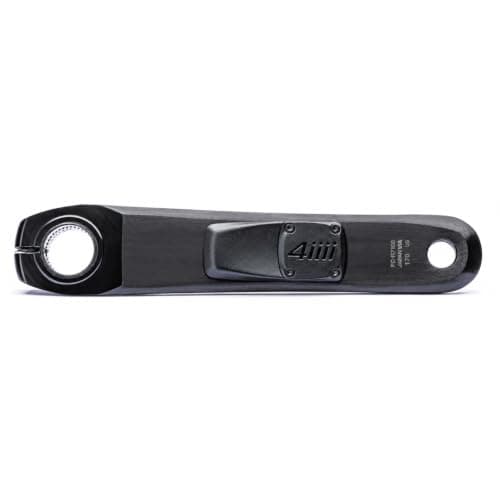 4iiii Precision 3+ The best choice for a one-bike rider who wants to keep their own pedals: the same ±1% claim, bonded out of harm's way, for less money. | Best single-sided crank meter | 8.48.4 out of 10 | $437.49 · View on Amazon #ad We may earn a commission · Price as of October 21, 2026 |
| 3 | 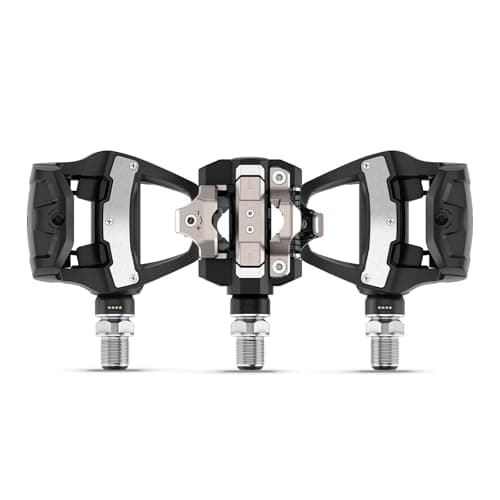 Garmin Rally RS110 The SPD-SL answer: the same spindle and accuracy claim as the dual-sensing Rally, measuring one leg instead of two. | Best for Shimano SPD-SL cleats and Garmin head units | 8.38.3 out of 10 | $599.99 · View on Amazon #ad We may earn a commission · Price as of October 21, 2026 |
| 4 | 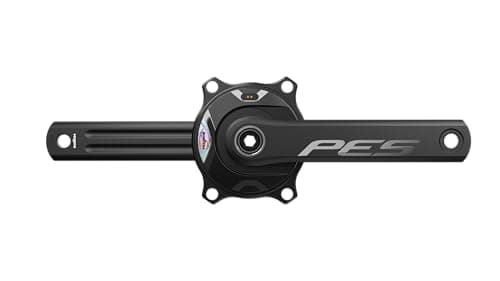 Magene PES P505 The escape hatch when the crank-based idea appeals but 4iiii does not support your crankset — and the only pick here that reports real balance. | Best complete crankset alternative | 7.97.9 out of 10 | $299.99 · View on Amazon #ad We may earn a commission · Price as of October 21, 2026 |
| 5 | 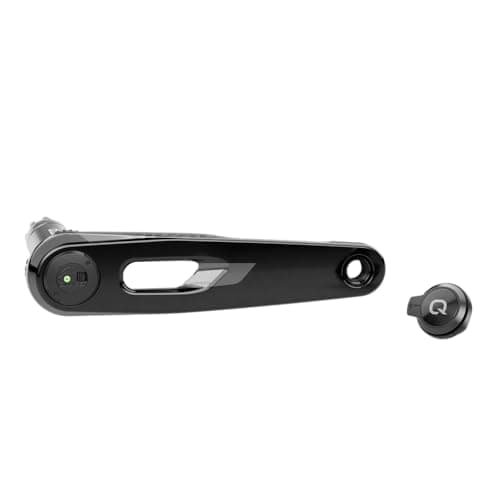 SRAM Rival Power Meter Spindle The obvious pick if your bike is already SRAM DUB — with the same accuracy caveat we apply to any unpublished tolerance. | Best for an existing SRAM DUB drivetrain | 7.17.1 out of 10 | $195.00 · View on Amazon #ad We may earn a commission · Price as of October 21, 2026 |
A single-sided power meter measures the torque your left leg puts through one crank or one pedal, then doubles it. Everything interesting about this category follows from that one sentence, including the objection — your legs are not identical — and the answer, which is that for training purposes it usually does not matter.
What the doubling actually costs you
The error is not a fixed percentage. If you are perfectly balanced, a single-sided meter is exactly as accurate as its sensor. If you are 48/52, it reads low by about 4%. The number is wrong by however asymmetric you are on that day, which is the part most buyers miss: balance shifts with fatigue, with cadence, with how hard you are going and with whether you are out of the saddle.
That sounds damning until you ask what you use power for. Pacing an interval, holding a target on a climb, comparing this week to last week and running an FTP test are all internally consistent exercises: the same meter, the same leg, the same error, every time. Consistency is what training needs, and a single-sided meter has it.
Where it genuinely fails is anything cross-device. If you want to compare your outdoor numbers to a smart trainer, or hand data to a coach who is also reading someone else's file, the doubled figure introduces an offset nobody can see. Single vs dual-sided power meters goes deeper on where the line sits.
| Pick | Where it mounts | Battery | Moves between bikes? |
|---|---|---|---|
| Favero Assioma Uno | Left pedal (Look Keo) | Rechargeable | Yes — minutes |
| 4iiii Precision 3+ | Left crank arm | CR2032, up to 800 h | No |
| Garmin Rally RS110 | Left pedal (SPD-SL) | Rechargeable, up to 90 h | Yes — minutes |
| Magene PES P505 | Complete crankset | Rechargeable | No |
| SRAM Rival spindle | Left arm + DUB spindle | Coin cell | No |
What to look for
A published tolerance. Favero, 4iiii and Garmin all publish ±1%. Magene publishes ±1.5%. For the SRAM Rival spindle we could not find an accessible published figure, and we say so rather than assuming one. Treat an unpublished tolerance as unknown.
Whether it moves. This is the biggest practical split in the category. A pedal follows you from the road bike to the trainer bike and back; a crank meter lives on one bike for its life. If you own two bikes, that single fact should probably decide the purchase.
The upgrade path. The Assioma Uno and the Rally RS110 can both become dual-sided by buying the second sensing half. The crank-based picks cannot — upgrading means selling and starting again.
Cleat compatibility. The Uno is Look Keo, the RS110 is Shimano SPD-SL. If your shoes are already set up, that answers the question for you; our cleat guide covers the whole field. A crank meter dodges this entirely, which is a real advantage if you ride something unusual.
Battery format. Rechargeable units need planning before a long day; coin cells run for hundreds of hours and then need replacing at the worst possible moment unless you keep a spare. How long power meter batteries last has the published figures side by side.
When to buy dual-sided instead
Three cases. If you are returning from an injury or a surgery and the balance figure is the clinical information you actually want. If you race and compare files with teammates on a shared platform. And if the price gap is small — Favero has narrowed it enough that for some riders the Duo is only a modest step up, which is the whole argument in Assioma Duo vs Uno. If that is where you are landing, best dual-sided power meters ranks that field the same way this page ranks this one.
Everyone else is better served buying single-sided and spending the difference on something that will make more difference to their riding — a decent fan, a cadence sensor, or simply a better trainer.
Want the whole field?
See every power meter rankedThe full reviews
Every pick, in detail
#1 · Best single-sided power meter overall
Favero Assioma Uno
9.09.0 out of 10#ad We may earn a commission · Price as of October 21, 2026
The default single-sided buy: the same measurement principle as Favero's dual-sided pedals, on one side, with a real upgrade path if you change your mind.
- Type
- Pedal-based, single-sided
- Claimed accuracy
- ±1%
- Cleat system
- Look Keo compatible
- Power
- Rechargeable, magnetic charging
- Upgrade path
- Add the second pedal for dual-sided
- Connectivity
- ANT+, Bluetooth
What we'd praise
- The ±1% claim here is Favero's own IAV figure, the same system used in the dual-sided Duo
- Pedals swap between bikes in minutes — no crank model, crank length or bottom bracket to research
- Genuinely upgradeable: buy the sensing right pedal later and you have an Assioma Duo
- Rechargeable with a magnetic cable, so there is no coin cell to source mid-season
- The single most widely independently tested power meter in this price range
What we'd flag
- Look Keo-style cleats only — an SPD-SL rider needs different shoes or a different pedal
- Rechargeable means remembering to charge it before a long event
- A pedal is exposed: curbs, bike racks and car boots all find them
The Uno is the Assioma Duo with one sensing pedal instead of two. Same body, same spindle, same IAV measurement principle, same ±1% claim on the leg it reads. That shared lineage is why it sits first: you are not buying a cheaper design, you are buying half of a good one.
The practical advantage over every crank-based pick below is that it has no compatibility question at all. If your bike takes pedals, it takes these. That matters most for riders who own more than one bike, because the meter follows you from the summer bike to the trainer bike in about five minutes.
The constraint is the cleat. The Uno is a Look Keo-pattern pedal, so Shimano SPD-SL riders either change shoes or buy something else — our cleat compatibility guide maps the whole field. If you want the dual-sided version of this argument, read Assioma Duo vs Uno.
#2 · Best single-sided crank meter
4iiii Precision 3+
8.48.4 out of 10#ad We may earn a commission · Price as of October 21, 2026
The best choice for a one-bike rider who wants to keep their own pedals: the same ±1% claim, bonded out of harm's way, for less money.
- Type
- Non-drive-side crank arm
- Claimed accuracy
- ±1%
- Battery
- CR2032, up to 800 hours claimed
- Weight added
- 9 g
- Power range
- 0 - 4,000 W
- Connectivity
- ANT+ and Bluetooth Smart
What we'd praise
- Up to 800 hours from a coin cell — roughly a season per battery, and nothing to charge
- Adds 9 g and sits 5.5 mm proud, so it is invisible on the bike
- Lets you keep the pedals and cleats you already own, whatever they are
- Cheaper than a pedal meter, and protected from curb and rack damage
What we'd flag
- Must match your specific crank model and length — the main reason orders go wrong
- Effectively permanent on that bike; moving it is a workshop job, not a five-minute one
- No upgrade path to dual-sided measurement
A bonded crank-arm meter is the quietest way to own power. It weighs 9 g, sits 5.5 mm proud of the arm, runs for a claimed 800 hours on a coin cell and never asks you to think about it again. For a rider with one bike and pedals they like, that is a better life than a rechargeable pedal.
The price of that is the order form. 4iiii bonds the sensor to a specific crank arm, so you are buying a crank: wrong model or wrong length and it does not fit. Check both carefully, and check frame clearance if your bike has short chainstays.
It is the natural comparison point for the Assioma Uno, and we have run that comparison in full in 4iiii Precision vs Favero Assioma.
#3 · Best for Shimano SPD-SL cleats and Garmin head units
Garmin Rally RS110
8.38.3 out of 10#ad We may earn a commission · Price as of October 21, 2026
The SPD-SL answer: the same spindle and accuracy claim as the dual-sensing Rally, measuring one leg instead of two.
- Type
- Single-sensing pedal power meter
- Measures
- Left pedal only, doubled; right pedal is a dummy
- Claimed accuracy
- ±1%
- Battery
- Rechargeable, up to 90 hours
- Weight
- 320 g the pair
- Cleat system
- Shimano SPD-SL (RS body)
What we'd praise
- The single-sided pedal for riders who ride Shimano SPD-SL cleats and do not want to change shoes
- Same sealed rechargeable spindle and the same ±1% claim as the dual-sensing RS210
- Upgrading means buying a measuring right-side spindle rather than replacing the whole meter
- Zero-friction pairing with a Garmin Edge or Forerunner, and full Garmin Connect support
What we'd flag
- Costs more than dual-sensing pedals from Favero, which is the standing argument against Rally
- Slightly heavier than the dual-sensing 210 because the dummy pedal is not lightened
- No left/right balance and no cycling dynamics that depend on both legs
Garmin sells the Rally in bodies rather than in systems, so the RS110 is the single-sensing version with a Shimano SPD-SL body. For a rider whose shoes are already set up for SPD-SL, that removes the one objection to the Assioma Uno.
The internals are the interesting part: Garmin uses the same sealed rechargeable spindle across the range, so the measurement and the claimed ±1% do not change between the 110 and the 210. You are paying for a second sensing spindle, and you can buy that later instead.
The counter-argument is price. A dual-sided Favero pedal often costs less than this single-sided Garmin, and that is the trade you are making for ecosystem fit — see Favero Assioma vs Garmin Rally for the full version.
#4 · Best complete crankset alternative
Magene PES P505
7.97.9 out of 10#ad We may earn a commission · Price as of October 21, 2026
The escape hatch when the crank-based idea appeals but 4iiii does not support your crankset — and the only pick here that reports real balance.
- Type
- Complete crankset with integrated meter
- Claimed accuracy
- ±1.5% (P505 base)
- Weight
- 650 g average
- Power range
- 0 - 2,500 W
- Data
- Power, cadence, L/R balance, pedaling smoothness
- Connectivity
- ANT+ and Bluetooth, IPX7
What we'd praise
- Arrives as a complete crankset, so there is no supported-arm list to satisfy
- Actually reports left/right balance, which nothing else on this page can
- Cheaper than every pedal pick here
- Keeps the electronics inboard where they are protected
What we'd flag
- ±1.5% claimed, wider than the ±1% claims above it
- Replacing a working crankset is a lot of parts to change for one sensor
- Bottom bracket standard and chainring choice become part of the purchase
- Does not transfer between bikes
The P505 belongs on a single-sided page for an awkward reason: it is not single-sided, and that is exactly why it is useful here. A complete crankset carries gauges on both arms, so it reports genuine left/right balance — the one thing every other pick on this page estimates by doubling.
The tolerance is wider, at a published ±1.5%, and for most training purposes that is a smaller problem than the doubling error it removes. If you specifically want balance data without paying dual-sided pedal money, this is the route.
The cost is a crankset swap and a bottom bracket conversation. If that sounds like more than you want to take on, buy the Uno and accept the doubled number.
#5 · Best for an existing SRAM DUB drivetrain
SRAM Rival Power Meter Spindle
7.17.1 out of 10#ad We may earn a commission · Price as of October 21, 2026
The obvious pick if your bike is already SRAM DUB — with the same accuracy caveat we apply to any unpublished tolerance.
- Type
- Left crank arm with power meter spindle
- Interface
- DUB spindle
- Crank length
- 165 mm as listed
- Measurement
- Single-sided, doubled
- Fit
- SRAM DUB cranksets
- Published tolerance
- Not verifiable in an accessible spec sheet
What we'd praise
- The tidiest way to add power to an existing SRAM DUB drivetrain — one arm, not a whole crankset
- Cheapest branded, drivetrain-matched route onto this page
- No bonded pod on the arm, so there is nothing to catch on a frame or a bag
- Stays inside the SRAM AXS ecosystem for firmware and app support
What we'd flag
- SRAM's model pages render specifications through scripts and we could not verify a published accuracy tolerance to cite
- DUB-only: no use on a Shimano or non-DUB bottom bracket without a wider rebuild
- Listed at 165 mm, which is shorter than most riders run — check the length carefully
- No upgrade path to dual-sided
If your bike already runs SRAM DUB, this replaces one crank arm and the spindle and leaves everything else alone. It is the least invasive crank-side installation on this page, and the cheapest branded one.
We rank it last on measurement for a specific reason rather than a vague one: we could not find an accessible published accuracy tolerance for this unit. That is not the same as saying it is inaccurate, but a number we cannot cite is a number we will not quote, and every pick above it publishes one.
Check the crank length before ordering. The listing is 165 mm, which is shorter than most riders run, and crank length is not a spec you can adjust later. Best power meters for SRAM bikes covers the rest of the range.
Good questions
Frequently asked questions
What is the best single-sided power meter?
The Favero Assioma Uno. It uses the same IAV measurement system and claims the same plus or minus 1% as Favero's dual-sided Duo, it swaps between bikes in minutes because it is a pedal, and you can buy the second sensing pedal later to turn it into a Duo. The 4iiii Precision 3+ is the better pick if you want to keep your existing pedals.
Are single-sided power meters accurate enough?
For training, yes. A single-sided meter measures one leg and doubles it, so the figure is wrong by however asymmetric you are that day. But the error is consistent across your own sessions, which is what pacing, intervals and FTP testing actually need. It is a problem only when you compare your numbers to a different device or a different rider.
How much power do single-sided meters miss?
It depends entirely on your own balance, and it changes with fatigue, cadence and effort. A rider at 50/50 loses nothing. A rider at 48/52 reads roughly 4% low. No manufacturer can publish a figure for this because it is a property of the rider, not the product.
Can you upgrade a single-sided power meter to dual-sided?
Sometimes. The Favero Assioma Uno upgrades by adding the second sensing pedal, and the Garmin Rally RS110 upgrades by buying a measuring right-side spindle. Crank-based meters like the 4iiii Precision 3+ and the SRAM Rival spindle cannot be upgraded — adding the second side means buying a different product.
Is a single-sided power meter better than a smart trainer?
They do different jobs. A smart trainer gives you power and control indoors only; a single-sided power meter gives you power on every ride, indoors and out, on the bike it is fitted to. If you only train indoors, buy the trainer first. If you ride outside and want the numbers to follow you, buy the power meter.
Do single-sided power meters show left/right balance?
No. They measure one leg, so any balance figure they display is an assumption rather than a measurement. The only pick on this page that reports real balance is the Magene PES P505, because a complete crankset carries gauges on both arms.
How we sourced this
Keep going
Read these next
- Power MetersSingle vs Dual-Sided Power Meters
- Power MetersFavero Assioma Duo vs Uno
- Power MetersThe Best Budget Power Meters
- Power MetersThe Best Power Meter Pedals
- Power Meters4iiii Precision vs Favero Assioma
- GuidesPower Meter Pedals and Cleat Compatibility
- GuidesHow Accurate Are Power Meters?
- GuidesHow Long Do Power Meter Batteries Last?