Start Here
Power Meter Pedals and Cleat Compatibility
The question that decides this purchase is not accuracy or price. It is what is bolted to the bottom of your shoes.
Pedal power meters are the easiest kind to live with: no crank compatibility list, no bottom bracket standard, no bonded sensor, and five minutes to move between bikes. They have exactly one hard constraint, and it is the one people discover after ordering — the pedal has to take the cleat on your shoes.
Work out what you have
Turn a shoe over. Three bolt holes arranged in a triangle is the road standard, and the cleat bolted to it will be either Shimano SPD-SL (usually a wide plastic cleat, often yellow, blue or red) or Look Keo (a narrower plastic cleat, often grey, red or black). Two bolt holes in a line, usually in a recess, is SPD: mountain bike, gravel, commuting and most indoor cycling shoes.
That is the whole diagnosis. Shimano SPD-SL and Look Keo cleats are not interchangeable even though both use three bolts, and SPD is a different world entirely.
| Your cleat | Shoe drilling | The pedal to buy | Also available |
|---|---|---|---|
| Shimano SPD-SL | Three-bolt | Favero Assioma Pro RS-2 | Garmin Rally RS body |
| Look Keo | Three-bolt | Favero Assioma Duo | Garmin Rally RK body |
| Shimano SPD (two-bolt) | Two-bolt | Favero Assioma Pro MX-2 | Garmin Rally XC body |
| Speedplay | Three or four-bolt | No Favero option | Wahoo Powrlink Zero |
| Flat pedals | None | No pedal option | Crank-based meter instead |
Why this decides the purchase
Changing cleat system is not a small job. New cleats, usually new shoes, a new float preference to get used to and a new set of bolt positions to dial in. Riders who have spent a season getting their position right are rightly unwilling to throw it away to buy a sensor.
That is why the honest version of "which power meter pedal should I buy" starts with the shoes and not the specification sheet. All four pedals on this page claim ±1%; the measurement is effectively a non-issue between them. The cleat is the real variable.
The one system that lets you change your mind
Garmin's Rally is built differently. The strain gauges live in the spindle and the pedal body bolts onto it, so the same power meter can be an RK (Look Keo), an RS (Shimano SPD-SL) or an XC (two-bolt SPD) depending on which body is fitted. Conversion kits are sold separately.
You pay for that flexibility up front — Rally costs more than the Favero equivalents, and the body kit is another purchase on top. Whether it is worth it depends entirely on how likely you think a cleat change is. A rider who has ridden Keo for a decade should buy the cheaper dedicated pedal. A rider who is about to buy a gravel bike should think harder.
The short answer
The pedal for each cleat system
| # | Product | Best for | Score | Price |
|---|---|---|---|---|
| 1 | 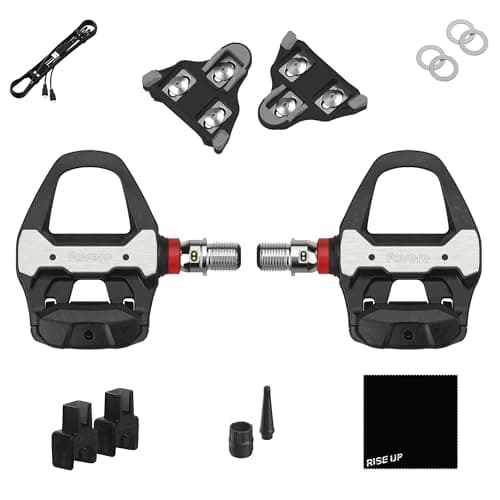 Favero Assioma Pro RS-2 If your shoes are drilled three-bolt and your cleats are Shimano, this is the pedal the rest of the comparison is arguing about. | Best for Shimano SPD-SL cleats | 9.19.1 out of 10 | $809.99 · View on Amazon #ad We may earn a commission · Price as of October 21, 2026 |
| 2 | 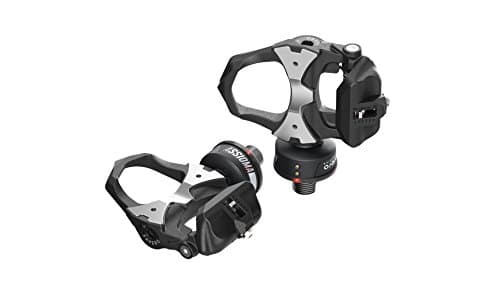 Favero Assioma Duo The default road power meter if you are already on Look Keo cleats, or if you are starting from scratch and can choose either. | Best for Look Keo cleats | 9.09.0 out of 10 | $539.93 · View on Amazon #ad We may earn a commission · Price as of October 21, 2026 |
| 3 | 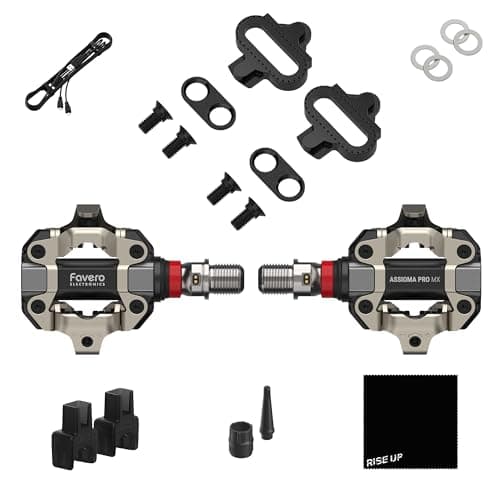 Favero Assioma Pro MX-2 The SPD answer: if your shoes have two bolt holes and recessed cleats, this is the pedal power meter built for them. | Best for Shimano SPD (two-bolt) cleats | 8.98.9 out of 10 | $804.99 · View on Amazon #ad We may earn a commission · Price as of October 21, 2026 |
| 4 | 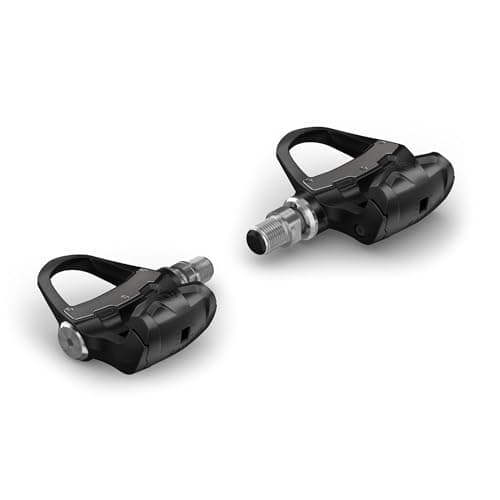 Garmin Rally RK200 The insurance policy: if you think you might change cleat system in the next few years, Garmin is the only system that lets you keep the power meter. | Best if you want to change cleat system later | 8.98.9 out of 10 | $649.99 · View on Amazon #ad We may earn a commission · Price as of October 21, 2026 |
What about Speedplay?
Speedplay riders have one option rather than a choice: Wahoo's Powrlink Zero is the Speedplay-pattern power meter pedal. There is no Favero or Garmin equivalent, so if you ride Speedplay and want power in the pedal, that is the product.
If you ride flat pedals — and plenty of indoor riders do — no pedal power meter applies at all, and the answer is a crank-based meter instead. Our best crank power meters page ranks those, and pedals vs cranks works through the format argument.
Three practical notes before you order
Stack height changes your saddle height.A thicker pedal raises your foot, which effectively lowers your saddle. Favero's Pro RS-2 is 10.5 mm and the MX pedals are 11.2 mm, both low, but if you are coming off a very thin pedal it is worth checking your position after fitting.
Crank thickness and accessories.Favero publishes a hard restriction: no pedal extenders, no crank shorteners, and no cranks thicker than 15 mm at the pedal thread. If any of those apply to your bike, a pedal meter is not an option at all.
Cleats are usually included, but check. Pedals in this category normally ship with a set of cleats. If you are converting a Garmin Rally to a different body, the kit is the thing to check — and the cleats you already own may not be the float you want.
If you only ride indoors
Then the cleat question is less binding, because you are not walking anywhere and you can keep a dedicated pair of shoes for the trainer bike. It is also worth asking whether you need a power meter at all: a smart trainer already reports power, and smart trainer vs power meter covers which to buy first.
Know your cleat?
See every power meter pedal rankedThe full reviews
Every pick, in detail
Best for Shimano SPD-SL cleats
Favero Assioma Pro RS-2
9.19.1 out of 10#ad We may earn a commission · Price as of October 21, 2026
If your shoes are drilled three-bolt and your cleats are Shimano, this is the pedal the rest of the comparison is arguing about.
- Cleat system
- Shimano SPD-SL (three-bolt road)
- Type
- Pedal-based, dual-sided
- Claimed accuracy
- ±1% (IAV Power System)
- Battery
- Up to 160 hours, 15-minute fast charge
- Weight / stack
- 124.8 g per pedal, 10.5 mm stack
- Rider limit
- 120 kg (Favero manual)
What we'd praise
- The answer for the biggest cleat population on the road: Shimano SPD-SL
- 10.5 mm stack is the lowest of any pedal here, so it changes your fit the least
- Up to 160 hours per charge with a 15-minute fast charge — the longest runtime in the family
- Dual-sided ±1% from the same IAV system as every other Assioma
What we'd flag
- The most expensive Assioma road pedal
- The body is SPD-SL and not convertible — the cleat decides the model, not an accessory
- Rechargeable, so a long event needs planning
Favero's Pro RS line exists because the original Assioma was a Look Keo pedal, and a very large share of road riders are on Shimano SPD-SL cleats and were not going to change shoes to get a power meter. The RS-2 fixes that with a native SPD-SL body.
The specification that matters beyond the cleat is the 10.5 mm stack — the lowest here — which means less change to your effective saddle height when you fit it. See our Pro RS review for the full picture and Duo vs Pro RS-2 for the generation question.
Best for Look Keo cleats
Favero Assioma Duo
9.09.0 out of 10#ad We may earn a commission · Price as of October 21, 2026
The default road power meter if you are already on Look Keo cleats, or if you are starting from scratch and can choose either.
- Cleat system
- Look Keo compatible
- Type
- Dual-sided power meter pedals
- Claimed accuracy
- ±1%
- Power
- Rechargeable, magnetic charging
- Connectivity
- Bluetooth and ANT+
- Install time
- Minutes, with a pedal wrench
What we'd praise
- The most widely independently tested power meter pedal at this price
- Look Keo cleats are cheap, widely stocked and available in three float options
- Dual-sided ±1% for less than most single-sided alternatives from the big brands
- Swaps between bikes in minutes with nothing but a pedal wrench
What we'd flag
- Look Keo only — a Shimano SPD-SL rider needs the Pro RS or new shoes
- Not convertible to another cleat system
- A rechargeable pedal needs charging before a long day
If your shoes are already set up with Look Keo cleats, this is the obvious buy, and it is usually cheaper than the SPD-SL equivalent. If you are buying shoes and pedals at the same time, the Keo route is the cheaper of the two paths overall.
Our Assioma Duo review covers the measurement side, and best power meter pedals ranks the whole category.
Best for Shimano SPD (two-bolt) cleats
Favero Assioma Pro MX-2
8.98.9 out of 10#ad We may earn a commission · Price as of October 21, 2026
The SPD answer: if your shoes have two bolt holes and recessed cleats, this is the pedal power meter built for them.
- Cleat system
- Shimano SPD (two-bolt)
- Type
- Pedal-based, dual-sided
- Claimed accuracy
- ±1% (IAV Power System)
- Weight
- 199 g per pedal with sensor
- Stack height
- 11.2 mm
- Q-factor
- 54 mm
What we'd praise
- The two-bolt SPD answer, which covers mountain bike, gravel and most commuting shoes
- 11.2 mm stack and 54 mm Q-factor — low and narrow for an off-road pedal
- Recessed cleats mean you can walk in the shoes, which road cleats make unpleasant
- Dual-sided ±1% on a cleat system no other major power meter pedal serves this well
What we'd flag
- Favero quotes at least 60 hours per charge, the shortest runtime in the Assioma family
- Not compatible with pedal extenders, crank shorteners, or cranks thicker than 15 mm
- A pedal on an off-road bike is the component most likely to meet a rock
Two-bolt SPD is the cleat system of mountain biking, gravel, commuting and indoor spin classes, and until recently it was badly served by power meters. The MX line is the fix, and the MX-2 is the dual-sided version.
It is also the quiet answer for indoor riders who prefer walking in their cycling shoes: recessed cleats make a stair trip survivable, which three-bolt road cleats do not. Our best power meters for mountain bikes page covers the off-road case, and MX-1 vs MX-2 covers the sidedness choice.
Best if you want to change cleat system later
Garmin Rally RK200
8.98.9 out of 10#ad We may earn a commission · Price as of October 21, 2026
The insurance policy: if you think you might change cleat system in the next few years, Garmin is the only system that lets you keep the power meter.
- Cleat system
- Look Keo (RK body)
- Sided
- Dual-sided
- Claimed accuracy
- ±1%
- Battery
- Coin cell (LR44)
- Connectivity
- BT, ANT+
- Convertible
- To SPD-SL or SPD via a body kit
What we'd praise
- The only system here where the cleat is a replaceable body rather than a permanent choice
- Buy a conversion kit and the same spindles become SPD-SL or SPD pedals
- Dual-sided ±1% with full Garmin Connect and cycling dynamics support
- Coin cells rather than a charger, so nothing to plug in before a long ride
What we'd flag
- Costs more than the Favero equivalents to start with, and a body kit is another purchase
- Coin cell (LR44) rather than rechargeable, which some riders prefer and some do not
- Conversion is a workshop job rather than a five-minute swap
Garmin's Rally system is designed around a swappable pedal body. The measurement lives in the spindle, and the body that holds the cleat can be changed — RK for Look Keo, RS for Shimano SPD-SL, XC for two-bolt SPD.
That is genuinely unique in this field, and it is the one real argument for paying the Garmin premium. If you ride road now but suspect a gravel bike in your future, the conversion kit costs far less than a second power meter. Our Rally RK200 review and Favero Assioma vs Garmin Rally cover the trade in full.
Good questions
Frequently asked questions
Do power meter pedals work with Shimano cleats?
Some do. The Favero Assioma Pro RS-2 has a native Shimano SPD-SL body for three-bolt road cleats, and the Assioma Pro MX-2 takes two-bolt Shimano SPD cleats. The standard Assioma Duo is a Look Keo pedal and will not take Shimano SPD-SL cleats. Garmin's Rally can be converted to an SPD-SL body.
Can you change the cleat system on a power meter pedal?
Only on Garmin's Rally. The measurement lives in the spindle and the pedal body bolts on, so an RK (Look Keo) can become an RS (SPD-SL) or an XC (two-bolt SPD) with a conversion kit. Favero's pedals are built around one cleat system each and cannot be converted.
How do I know if my shoes are three-bolt or two-bolt?
Turn a shoe over. Three bolt holes arranged in a triangle is the road standard and takes Shimano SPD-SL or Look Keo cleats. Two bolt holes in a line, usually set into a recess so you can walk, is SPD - mountain bike, gravel, commuting and most indoor cycling shoes.
Is there a power meter pedal for Speedplay cleats?
Wahoo's Powrlink Zero is the Speedplay-pattern power meter pedal. Neither Favero nor Garmin makes a Speedplay-compatible body, so if you ride Speedplay and want power in the pedal, that is the one product available.
Do power meter pedals come with cleats?
Normally yes - pedals in this category usually ship with a set of cleats matched to their body. Check the specific listing before ordering, and note that the included float may not be the float you prefer, which is a cheap thing to change separately.
Can I use power meter pedals with flat pedals or pedal extenders?
No. A pedal power meter is the pedal, so flat-pedal riders need a crank-based meter instead. Favero also publishes a hard restriction against pedal extenders, crank shorteners and cranks thicker than 15 mm at the pedal thread - if any of those apply, no pedal meter will fit your bike.
How we sourced this
Keep going
Read these next
- Power MetersThe Best Power Meter Pedals
- Power MetersPower Meter Pedals vs Cranks
- Power MetersThe Best Power Meters for Shimano
- Power MetersFavero Assioma vs Garmin Rally
- Power MetersThe Best Power Meters for Mountain Bikes
- Power MetersWahoo Powrlink Zero Review
- Power MetersAssioma Pro MX-1 vs MX-2
- GuidesAre Power Meter Pedals Worth It?