Power Meter Review
Wahoo Powrlink Zero Review
The only power meter built into a Speedplay pedal. Excellent measurement, an unusually low stack height, and a cleat system that decides the whole purchase for you.
The short answer
Quick picks
| # | Product | Best for | Score | Price |
|---|---|---|---|---|
| 1 | 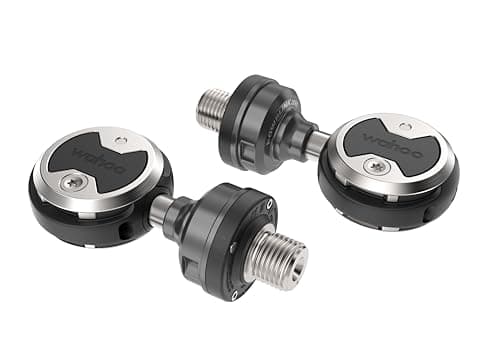 Wahoo Powrlink Zero (dual-sided) The right answer for a committed Speedplay rider and a hard sell for anyone else — excellent measurement wrapped in a cleat system you have to want. | Best for Speedplay riders | 8.28.2 out of 10 | $790.41 · View on Amazon #ad We may earn a commission · Price as of October 20, 2026 |
| 2 | 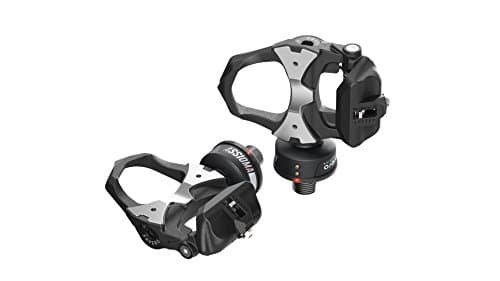 Favero Assioma Duo The default recommendation in pedal power meters: the same accuracy claim, a mainstream cleat, and less money. | The pedal to beat | 9.29.2 out of 10 | $539.93 · View on Amazon #ad We may earn a commission · Price as of October 20, 2026 |
Pedal power meters solved cycling's most annoying problem: you can move them between bikes in five minutes, they measure both legs independently, and nothing about your drivetrain has to change. What they never solved was Speedplay. If you rode the round, dual-entry pedals with the adjustable float, your options were to switch cleat systems or go without power at the pedal.
Wahoo owns Speedplay now, and the Powrlink Zero is the obvious consequence: a Speedplay Zero pedal on a stainless spindle with strain gauges inside and a claimed ±1%. For the rider it was built for, it is the answer to a long-standing problem. For everyone else, the question is whether a cleat system is worth adopting to get a number two other companies also sell.
One naming note before anything else, because it causes real confusion when shopping: Wahoo now markets these pedals as Speedplay Power. Powrlink Zero is the original name and it is still how most retailers, reviews and search results refer to them. Same pedal, same specification.
What Speedplay actually gets you
Speedplay is a genuinely different pedal system and it has a devoted following for four specific reasons, all of which carry into the Powrlink Zero.
Adjustable float, 0 to 15 degrees. Most systems give you a float value chosen by which color cleat you bought. Speedplay lets you set the inward and outward rotation limits independently, which is a real tool if you have knee issues or an asymmetric fit.
Dual-sided entry. The pedal is engageable from either face, so there is no flipping it with your toe at a set of lights. On a trainer this matters less; on the road it is the feature people miss most when they leave.
A very low stack height.Wahoo quotes 13 mm, the lowest in the category. Stack is the distance between the pedal axle and the sole of your shoe, and a lower figure puts your foot closer to the axle — a small but real fit variable, and one that a rider with a carefully set saddle height will notice if it changes.
A narrow Q-factor option.Wahoo publishes 55 mm, which is at the narrow end and suits riders who want their feet closer together than a standard road pedal allows.
The costs are equally real: the cleat is a four-bolt design that mounts through an adapter plate on a standard three-bolt shoe, cleats cost more than Look Keo or SPD-SL equivalents, they wear faster, and they want periodic lubrication. That is the trade, and it existed before the power meter did.
| Powrlink Zero | Favero Assioma Duo | Garmin Rally RS200 | |
|---|---|---|---|
| Claimed accuracy | ±1% | ±1% | ±1% |
| Sided | Dual | Dual | Dual |
| Cleat system | Speedplay | Look Keo compatible | Shimano SPD-SL |
| Battery | 75 hours, rechargeable | Rechargeable | Replaceable coin cells |
| Stack height | 13 mm | Higher | Higher |
| Q-factor | 55 mm | Standard road | Standard road |
| Adjustable float | 0–15 degrees | By cleat choice | By cleat choice |
| Temperature compensation | Active | Active | Active |
| Connectivity | ANT+, Bluetooth | ANT+, Bluetooth | ANT+, Bluetooth |
The measurement: genuinely dual-sided, and that matters
The Powrlink Zero measures each leg independently. That is worth stating plainly, because a large share of the power meter market does not: single-sided units measure your left leg and double the number, which is fine if your legs are symmetric and quietly wrong if they are not. Our single vs dual-sided guide covers exactly how much that costs you in practice.
Wahoo claims ±1%, matching Favero and Garmin at the top of the pedal market. Active temperature compensation handles the drift that comes from riding out of a warm house into a cold morning, and auto-zero means you are not expected to run a manual calibration before every ride — though doing one occasionally is still good practice, and our calibration guide explains when it actually matters.
The battery is the honest weak point
Seventy-five hours is fine and it is not impressive. Favero's rechargeable pedals run longer between charges, and Garmin's Rally uses replaceable coin cells that go for many hundreds of hours before you think about them at all.
In practice, seventy-five hours is somewhere between four and eight weeks of riding for most people, which means charging is a routine rather than an afterthought. It also means a proprietary magnetic charging clip lives in a drawer, and if you lose it on a training camp your power meter is decoration. This is not a reason to reject the pedals; it is a reason to have a charging habit.
Fitting them, and the one thing to get right
Installation is a pedal wrench and nothing else — no crank removal, no torque sequence, no bottom-bracket question, which is the whole appeal of pedal power meters over crank-based systems. Ten minutes and they are on a different bike.
The thing to get right is the cleat adapter. Speedplay uses a four-bolt cleat that mounts to a three-bolt shoe through a base plate, and getting the stack of shims and plates correct matters more here than with a simpler system. Set the float limits deliberately rather than leaving them wide open, and expect to re-check the position after a couple of rides.
Once fitted, they behave like any modern pedal meter: ANT+ and Bluetooth simultaneously, so a head unit and a phone can both see them, and they will feed Zwift as a power source while a smart trainer handles control — which, incidentally, is the tidiest way to run an indoor setup when you own both.
Who should buy it
Buy the Powrlink Zero if you are a Speedplay rider. That sentence is nearly the whole review. The measurement is as good as the category offers, the stack height is a genuine advantage, and there is no alternative that lets you keep your cleats.
Buy something else if you are not. The Assioma Duo is cheaper with the same ±1% claim on a mainstream cleat; the Garmin Rally RS200 is the answer if you ride SPD-SL and want replaceable batteries; and if the budget is the constraint, a single-sided crank meter gets you training-grade data for a fraction of the money. Our pedal roundup ranks the whole field.
Not sold on Speedplay?
Compare every power meter pedalThe full reviews
Every pick, in detail
#1 · Best for Speedplay riders
Wahoo Powrlink Zero (dual-sided)
8.28.2 out of 10#ad We may earn a commission · Price as of October 20, 2026
The right answer for a committed Speedplay rider and a hard sell for anyone else — excellent measurement wrapped in a cleat system you have to want.
- Type
- Pedal-based, dual-sided
- Claimed accuracy
- ±1%
- Cleat system
- Speedplay, standard cleats
- Battery
- 75 hours, rechargeable
- Weight
- 138 g per pedal (claimed)
- Connectivity
- ANT+, Bluetooth
What we'd praise
- The only pedal power meter built on Speedplay, so Speedplay riders finally get one without changing systems
- True dual-sided measurement with proper left/right balance, not a doubled left leg
- 0–15 degrees of adjustable float, which is the reason people ride Speedplay in the first place
- 13 mm stack height — the lowest of any power meter pedal, which matters if your fit is dialed
- Active temperature compensation and auto-zero, so calibration is largely automatic
What we'd flag
- Locked to the Speedplay cleat system — dual-sided entry, four bolts, and cleats that need maintenance
- 75 hours of battery is short next to Favero's rechargeable pedals and very short next to a coin cell
- Rechargeable means a proprietary charging clip you will eventually lose
- Priced against the best pedals in the category without a decisive advantage over them
- Speedplay cleats are more expensive and wear faster than SPD-SL or Look Keo
Wahoo bought Speedplay and then did the obvious thing with it: built the pedal body around a strain gauge and shipped a ±1% dual-sided power meter on the one cleat system nobody else measures. If you ride Speedplay, this ends a long wait.
If you do not, the calculus is different, because you would be adopting a cleat standard to get a power figure you can also buy from Favero or Garmin.
#2 · The pedal to beat
Favero Assioma Duo
9.29.2 out of 10#ad We may earn a commission · Price as of October 20, 2026
The default recommendation in pedal power meters: the same accuracy claim, a mainstream cleat, and less money.
- Type
- Pedal-based, dual-sided
- Claimed accuracy
- ±1%
- Cleat system
- Look Keo compatible
- Battery
- Rechargeable, long runtime
- Installation
- Pedal wrench, no torque procedure
- Connectivity
- ANT+, Bluetooth
What we'd praise
- The same ±1% dual-sided claim on the mainstream Look Keo cleat standard
- IAV power measurement handles irregular pedaling and oval rings without penalty
- Cheaper than the Powrlink Zero and cheaper than Garmin's Rally
- Cleats are inexpensive and available everywhere
What we'd flag
- Larger pods on the spindle than the Powrlink's fully integrated body
- Look Keo float is fixed by cleat choice rather than adjustable on the pedal
- Not an option if you are committed to Speedplay
Every pedal power meter is measured against the Assioma, and the Powrlink Zero is no exception. Unless Speedplay is a requirement, this is the pedal that makes the strongest case — full detail in our Assioma Duo review.
Good questions
Frequently asked questions
Is the Wahoo Powrlink Zero accurate?
Wahoo claims ±1%, which matches Favero and Garmin at the top of the pedal market, and the measurement is genuinely dual-sided rather than a doubled left leg. Active temperature compensation and auto-zero handle most of the drift that would otherwise need manual calibration.
Do the Powrlink Zero pedals use standard Speedplay cleats?
Yes. The Powrlink Zero is built on the Speedplay Zero pedal with a stainless steel spindle and takes standard Speedplay cleats, with the usual 0 to 15 degrees of independently adjustable float. That also means the usual Speedplay costs: a four-bolt cleat on an adapter plate, faster wear and periodic lubrication.
How long does the Powrlink Zero battery last?
Wahoo claims 75 hours of ride time from the rechargeable battery. That is roughly four to eight weeks of riding for most people, shorter than Favero's rechargeable pedals and much shorter than Garmin's replaceable coin cells. It charges via a proprietary clip, which is worth keeping somewhere you will not lose it.
How much do the Powrlink Zero pedals weigh?
Wahoo claims 138 g per pedal, with the cleat and its hardware adding roughly another 74 g. Stack height is 13 mm, the lowest of any power meter pedal, and Q-factor is 55 mm, which is at the narrow end of road pedals.
Powrlink Zero or Favero Assioma Duo?
Assioma, unless you ride Speedplay. Both claim ±1% dual-sided, both do ANT+ and Bluetooth, and the Assioma costs less on a mainstream Look Keo cleat that is cheaper to replace. The Powrlink's case is Speedplay itself, plus the low stack height and adjustable float that come with it.
Can you use the Powrlink Zero indoors with a smart trainer?
Yes, and it is a sensible arrangement. Most platforms let you select the pedals as the power source while the trainer handles resistance control, which means the same measurement follows you indoors and out. It also removes any argument about why your trainer and your outdoor power meter disagree.
How we sourced this
- Wahoo Powrlink Zero power meter pedals, specifications (manufacturer)
- Wahoo POWRLINK ZERO Speedplay power meter in-depth review (DC Rainmaker)
- Wahoo Powrlink Zero dual-sided pedals long-term review (Cycling Weekly)
- Wahoo Powrlink Zero power meter pedals review (BikeRadar)
- Favero Assioma road power meter pedals, specifications (manufacturer)
Keep going