Start Here
Are Power Meter Pedals Worth It?
They install in five minutes, move between bikes, and cost considerably more than a crank meter with the same accuracy claim. Whether that is a good trade depends on three questions.
The short answer
Quick picks
| # | Product | Best for | Score | Price |
|---|---|---|---|---|
| 1 | 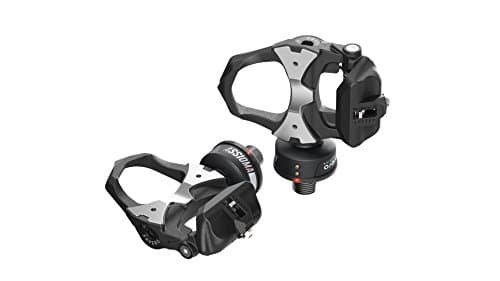 Favero Assioma Duo The reason people buy power pedals: five-minute installation, measured balance, and a number that follows you to whichever bike you are riding. | Best pedal-based power meter | 9.29.2 out of 10 | |
| 2 | 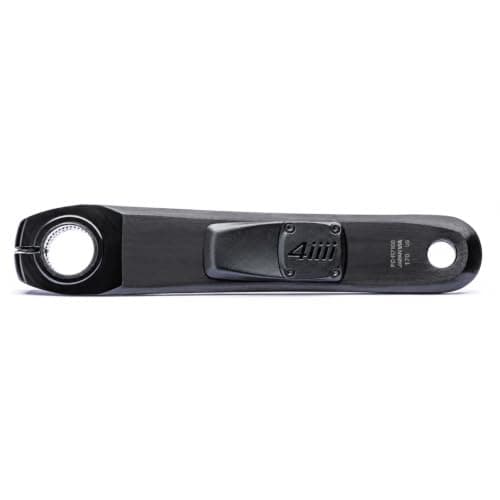 4iiii Precision 3+ The honest alternative: the same accuracy claim on one bike, at a price that makes the pedal premium hard to justify for a single-bike rider. | The cheaper alternative to pedals | 8.48.4 out of 10 | $437.49 · View on Amazon #ad We may earn a commission · Price as of October 22, 2026 |
This question gets asked as though it were about measurement quality, and it is not. The best pedal-based meters and the best crank-based meters publish the same accuracy claim. What separates them is where the sensor lives, and that determines cost, portability, exposure to damage and installation difficulty — not how many watts it says you did.
So the honest way to answer it is to work out which of those four things you actually care about.
What you are really paying for
Portability.This is the headline and the genuine advantage. A pedal wrench and five minutes moves your power meter to any bike. Winter bike, travel bike, a new frame in two years, a friend's bike for a weekend — the meter follows you. A crank meter is fixed to the bike it was bought for.
Installation simplicity. Pedals thread in. That is the entire process. A crank meter means matching a specific crank model and arm length, and a crankset-based unit means matching a bottom bracket standard as well. Plenty of people get that wrong and end up returning parts.
Dual-sided measurement without a crankset. Both pedals contain their own strain gauges, so balance is measured rather than inferred. The equivalent in the crank world usually means a full dual-sided crankset at a much higher price.
Fitting whatever bike you own. Every bike takes pedals. Not every bike takes a given crank arm.
| Power meter pedals | Crank power meter | |
|---|---|---|
| Typical accuracy claim | ±1% | ±1% for the best |
| Installation | Pedal wrench, minutes | Crank matching, sometimes a bottom bracket |
| Moves between bikes | Yes, in minutes | No, in practice |
| Dual-sided available | Yes, common | Usually only on full cranksets |
| Exposed to pedal strikes | Yes | No |
| Adds weight | Replaces your pedals | Around 9 g |
| Locks you to a cleat system | Yes | No |
| Price | Higher | Lower |
Three questions that decide it
1. How many bikes do you own, honestly? Not how many you might own — how many you ride. If the answer is one, the entire portability argument collapses and you are paying a premium for a feature you will not use. If the answer is two or three, the pedals are cheaper than instrumenting each bike and you should buy them.
2. Do you need measured balance? There are four real reasons to: single-leg injury rehabilitation, active bike-fit work, needing your numbers to line up closely with another device, or a known significant asymmetry. If none apply, single-sided is fine and much cheaper. We work through this properly in single vs dual-sided power meters.
3. What is your riding like? Road riding on tarmac exposes pedals to very little risk. Gravel, technical terrain, criterium racing with contact, or a bike that gets transported in a car trunk regularly all raise the odds of the one failure mode cranks do not have.
The pedal-strike problem, stated fairly
Your pedals are the closest part of the bike to the ground, at the widest point, with nothing protecting them. A crank power meter is tucked inside the crank arm and is essentially immune to impact. A pedal meter is not.
For most road riders this is a low-probability event and should not drive the decision. For anyone whose riding includes rough surfaces or bunch racing, it is a genuine consideration — replacing an expensive pedal after a curb strike is a bad afternoon. Weigh it honestly against how you actually ride rather than how you plan to.
The cleat system you inherit
This one catches people out. Power meter pedals come as a specific pedal system, which means buying them may mean changing the cleats on your shoes — and if you have multiple pairs of shoes, all of them.
Favero's Assioma uses Look Keo compatible bodies. Garmin's Rally range is sold in Shimano SPD-SL, Look Keo and SPD variants, which is a genuine advantage if you are attached to your current cleats — our RS200 vs RK200 comparison covers that choice. A crank meter avoids the question entirely, because you keep the pedals you already have.
Do you need a power meter at all if you own a smart trainer?
Worth asking before you spend anything. Your smart trainer already measures your power indoors, accurately, with no additional purchase. A power meter earns its place the moment you want the same measurement outdoors — for consistent zones across indoor and outdoor rides, for pacing a climb, for racing.
If you genuinely only ride indoors, the trainer may be enough for now and the money is better spent on the room. Our smart trainer vs power meter guide settles which to buy first, and cadence sensor vs power meter covers the cheaper sensor question underneath it.
The verdict
Buy pedals if you ride more than one bike, if you replace bikes often, if you want measured balance without a crankset, or if the idea of researching crank compatibility is the thing stopping you from owning a power meter at all. The convenience is real and people who buy them rarely regret it.
Buy a crank meter if you own one bike, do not need balance data, and would rather have the difference in your pocket or in the rest of your setup. You get the same accuracy claim, better protection from damage, and years of battery life from a coin cell.
Either way, the worst outcome is not choosing wrong — it is spending so long deciding that you train another season without any power data at all. Both options measure well. Pick the one that matches how you ride and get on with it. The full field is ranked in best power meters.
Made your decision?
See the best power meters, rankedIf the answer is yes, the next question is which cleat system you are tied to — power meter pedals and cleat compatibility covers that, including the one system that lets you change your mind later. If the answer is no because you never want to charge anything, how long power meter batteries last has the published figures.
The full reviews
Every pick, in detail
#1 · Best pedal-based power meter
Favero Assioma Duo
9.29.2 out of 10The reason people buy power pedals: five-minute installation, measured balance, and a number that follows you to whichever bike you are riding.
- Type
- Dual-sided power meter pedals
- Claimed accuracy
- ±1%
- Cleat system
- Look Keo compatible
- Power
- Rechargeable, magnetic charging
- Connectivity
- Bluetooth and ANT+
- Install time
- Minutes, with a pedal wrench
What we'd praise
- Fits with a pedal wrench in minutes and moves between bikes just as fast
- Dual-sided measurement, so left/right balance is measured rather than assumed
- ±1% claimed accuracy matches anything at any price
- Rechargeable rather than coin cells, with no battery doors to damage
- Works indoors and outdoors with one consistent number
What we'd flag
- Costs considerably more than a crank power meter reporting the same wattage
- Pedals are the most exposed part of the bike — a hard strike can end them
- You inherit the Keo cleat system whether or not it is what your shoes use
- Rechargeable means a charging routine, and a flat pedal on race morning is a real scenario
The case for power pedals is portability and simplicity, and the Assioma Duo makes it about as well as it can be made. You need a pedal wrench and about five minutes. There is no crank compatibility to research, no bottom bracket standard to check, no drivetrain to disturb, and moving the whole power meter to the winter bike, the travel bike or the next frame is the same five minutes again.
What you pay for that is real. A crank meter reporting a comparable number costs substantially less. If you own one bike and expect to for years, the honest answer is that you may be paying for flexibility you will never use — which is exactly the argument we work through below. The full field is ranked in best power meter pedals.
#2 · The cheaper alternative to pedals
4iiii Precision 3+
8.48.4 out of 10#ad We may earn a commission · Price as of October 22, 2026
The honest alternative: the same accuracy claim on one bike, at a price that makes the pedal premium hard to justify for a single-bike rider.
- Type
- Non-drive-side crank arm
- Claimed accuracy
- ±1%
- Battery
- CR2032, up to 800 hours claimed
- Weight added
- 9 g
- Power range
- 0 - 4,000 W
- Connectivity
- ANT+ and Bluetooth Smart
What we'd praise
- Same ±1% accuracy claim as the pedals, for a fraction of the price
- Up to 800 hours from a coin cell — years between battery changes and nothing to charge
- Protected inside the crank, so a pedal strike cannot destroy it
- Adds 9 g and sits 5.5 mm proud, so it disappears on the bike
- Lets you keep whatever pedals and cleats you already use
What we'd flag
- Single-sided: it measures your left leg and doubles it, so there is no true balance data
- Must match your specific crank model and length — order the wrong one and it will not fit
- Effectively permanent on that bike; moving it is not a five-minute job
- No pedal upgrade included, so budget separately if your pedals are worn
This is the product that makes the pedal question interesting. 4iiii publish ±1% accuracy, up to 800 hours of battery from a CR2032, a 0-4,000 W power range, a 30-170 rpm cadence range and IPX7 water resistance — specifications that stand comparison with anything — on a pod weighing 9 g bonded to a crank arm.
What it does not do is move. Once it is on a bike, it is on that bike, and it measures one leg and doubles it. If neither of those matters to you, the pedal premium becomes very hard to defend. Our crank power meters roundup ranks this category properly.
Good questions
Frequently asked questions
Are power meter pedals as accurate as crank power meters?
The best of both claim ±1%, so accuracy is not the deciding factor. What differs is where the sensor sits, which determines portability, exposure to damage, installation difficulty and price. Choose on those grounds rather than on accuracy claims.
Is it worth buying power meter pedals for one bike?
Usually not. The main advantage of pedals is that they move between bikes in minutes, and with one bike that benefit never materializes. A crank power meter with the same accuracy claim costs considerably less and is better protected from impact damage.
Can power meter pedals be damaged easily?
They are the most exposed sensor position on a bike — closest to the ground, at the widest point, with no protection. For road riding on tarmac the risk is low. For gravel, technical terrain or bunch racing with contact, it is a genuine consideration that crank meters avoid entirely.
Do power meter pedals mean changing my cleats?
Often yes. Power pedals come as a specific pedal system, so you may need to refit cleats on every pair of cycling shoes you own. Garmin's Rally range is sold in Shimano SPD-SL, Look Keo and SPD variants, which helps; Favero's Assioma uses Look Keo compatible bodies.
Do I need power meter pedals if I have a smart trainer?
Only if you ride outdoors. A smart trainer already measures power accurately indoors, so a power meter earns its place when you want the same measurement on the road — for consistent zones across both, for pacing climbs, or for racing. If you only ride indoors, spend the money on the room instead.
Are single-sided power meter pedals worth considering?
Yes, and they keep the portability advantage at a lower price. You lose measured left/right balance, which matters for injury rehabilitation, bike-fit work and cross-device comparison. For ordinary training, a single-sided meter reads consistently and tracks your fitness perfectly well.
How we sourced this
Keep going