Power Meters
The Best Budget Power Meters, Ranked
The cheapest honest route to measured watts. Where single-sided stops costing you anything real, and the price point below which the accuracy claims stop being claims at all.
The short answer
Quick picks
| # | Product | Best for | Score | Price |
|---|---|---|---|---|
| 1 | 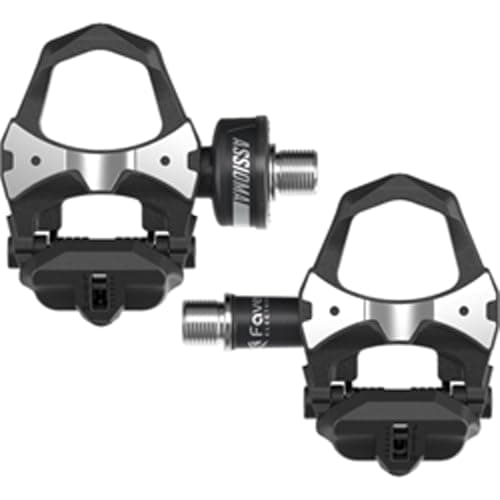 Favero Assioma Uno The budget power meter to beat: flagship-grade accuracy claims, pedal-easy installation, and a genuine upgrade path to dual-sided. | Best budget power meter overall | 9.29.2 out of 10 | $381.22 · View on Amazon #ad We may earn a commission · Price as of October 21, 2026 |
| 2 | 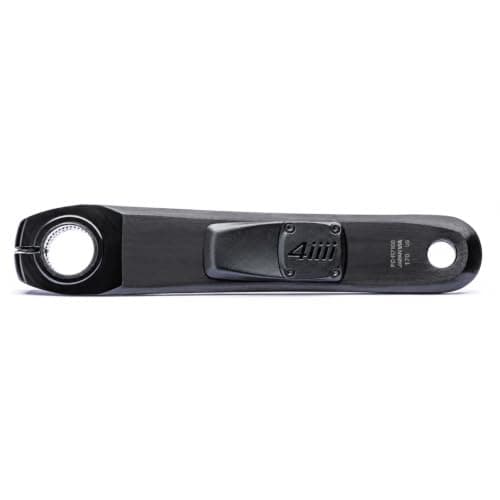 4iiii Precision 3+ The crank-arm route: the same ±1% claim as the pedal picks, no cleat compromise, and a proper installation job in exchange. | Best budget crank arm | 8.48.4 out of 10 | $437.49 · View on Amazon #ad We may earn a commission · Price as of October 21, 2026 |
| 3 | 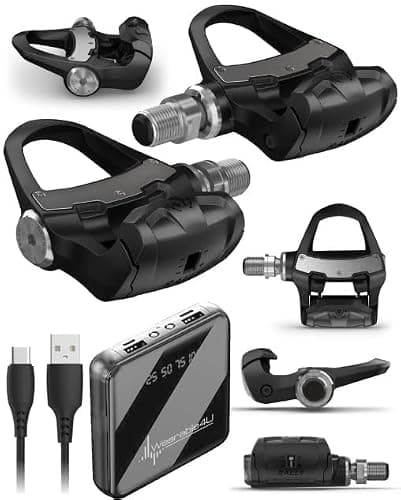 Garmin Rally RK100 The safe major-brand pick: same ±1% claim, swappable pedal bodies, and seamless behavior with Garmin head units. | Best from a major brand | 8.58.5 out of 10 | $499.99 · View on Amazon #ad We may earn a commission · Price as of October 21, 2026 |
| 4 | 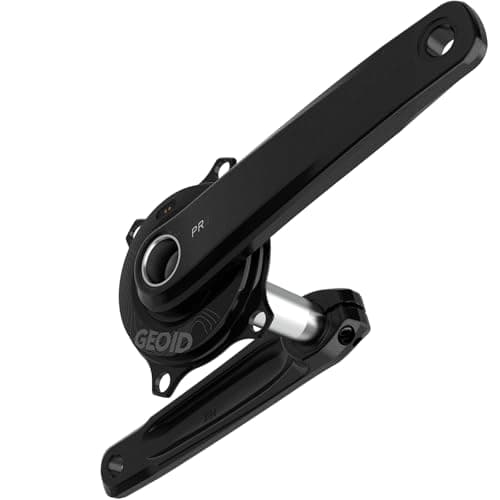 GEOID PM500 Power Meter Crankset A lot of hardware for very little money, with a wider accuracy claim and no track record to lean on. | Cheapest complete crankset | 6.96.9 out of 10 | |
| 5 | 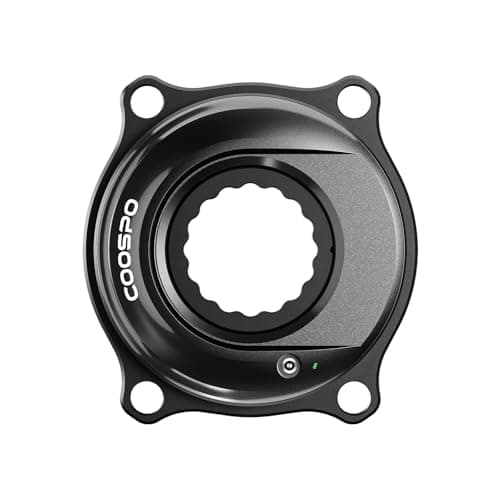 CooSpo S10 Power Meter Crankset The floor of the category: real watts for very little money, with no published tolerance to hold anyone to. | Cheapest way to see watts | 6.26.2 out of 10 |
A budget power meter is not a compromised power meter. The cheapest picks on this list claim the same ±1% accuracy as the dual-sided flagships, because the thing you give up at this end of the market is usually not precision — it is a second sensor, or installation convenience, or the ability to move the meter between bikes. Understand which of those three you are trading and the budget tier becomes genuinely good value. Ignore it and you will pay twice. If you want the full field rather than the budget end, start with our best power meters roundup.
Single-sided is the trade, and it is a small one
Nearly every budget power meter measures one leg and doubles the result. That sounds like an approximation because it is one — but it matters far less than people expect. Most riders have a left/right imbalance in the low single digits, and, crucially, that imbalance is fairly stable. A meter that reads 3% high every single ride still shows your threshold rising over a training block, because training reads change, not absolutes.
Where single-sided genuinely falls short is narrower than the marketing suggests: you are returning from a single-leg injury and need to see the asymmetry; you have a known, large imbalance; or you specifically want pedaling-dynamics data. Outside those cases, spending the dual-sided premium buys you a number you will look at twice and never act on. We work through the decision in detail in Assioma Duo vs Uno.
Pedals or crank: the real budget decision
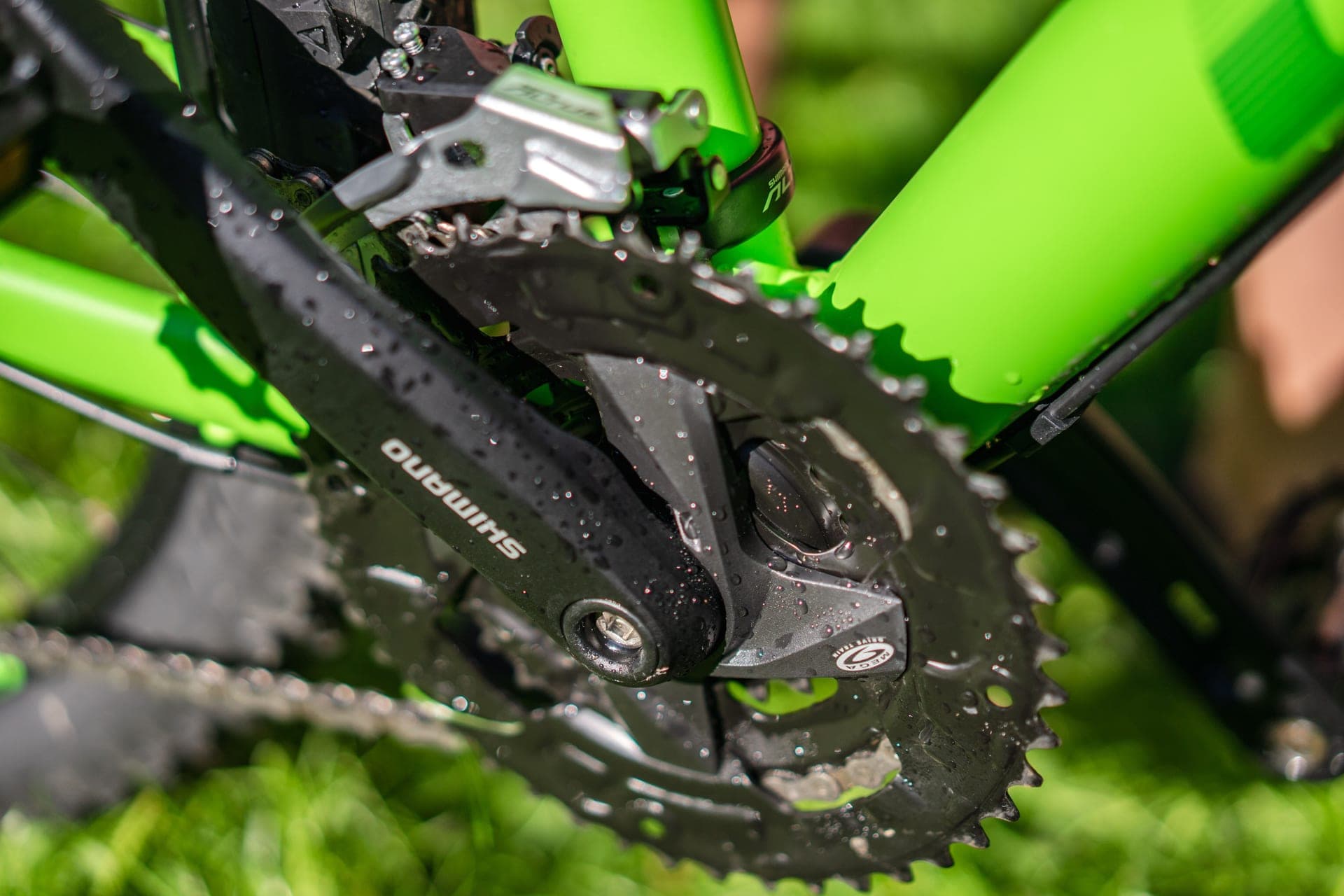
Pedal-based meters fit with a pedal wrench in minutes and move between bikes just as fast. That flexibility is worth a lot if you own a summer bike and a winter bike, or if you travel with a meter. The cost is that you inherit a cleat system: the budget pedal picks here are Look Keo compatible, so Shimano SPD-SL riders are changing cleats or shoes.
Crank-based meters — a left arm or a complete crankset — leave your pedals alone entirely, which is the deciding factor for riders with a shoe and cleat setup they will not change. They add almost no weight and disappear into the bike. In exchange, installation is real drivetrain work with real compatibility questions, and the meter lives on that bike permanently.
How we ranked them
We do not run a test lab, and we say so on our how we choose our pickspage. What we did instead: pulled the manufacturer specification for each meter, recorded the published accuracy tolerance, battery type and claimed life, mounting type and cleat system, then scored each on accuracy, value, ease of install and portability. Where a manufacturer does not publish a tolerance, we say so on the page and score the accuracy column down — an unstated tolerance is not a neutral fact, it is missing information you are entitled to have. Prices come live from Amazon and change constantly, so you will see today's number or "Check price."
| Power meter | Type | Sides | Claimed accuracy | Battery | Moves between bikes |
|---|---|---|---|---|---|
| Favero Assioma Uno | Pedal | Single | ±1% | Rechargeable | Yes, minutes |
| 4iiii Precision 3+ | Crank arm | Single | ±1% | Coin cell | No |
| Garmin Rally RK100 | Pedal | Single | ±1% | Replaceable cells | Yes, minutes |
| GEOID PM500 | Crankset | Single | ±1.5% | Rechargeable | No |
| CooSpo S10 | Crankset | Single | Not published | Rechargeable | No |
What separates a $130 power meter from a $400 one
Three things, and none of them is the strain gauge itself. The first is the published tolerance and the record behind it. Favero, Garmin and 4iiii all publish ±1% and have years of public scrutiny behind those numbers. A no-name crankset that publishes ±1.5% or nothing at all may be perfectly good, but you are taking the claim on trust with no way to check it.
The second is temperature compensation and calibration behavior. Good power meters zero themselves reliably and handle the drift that comes from a metal part warming up over a two-hour ride. Cheap ones vary, and the failure mode is not obvious — you get numbers that look plausible and drift slowly. The third is support and firmware: an established brand fixes bugs and honors warranties years later.
Should you buy a power meter or a smart trainer first?
If you ride outdoors at all, a power meter is the more useful purchase, because it measures you everywhere rather than only in one room. If you ride almost exclusively indoors, a smart trainer already gives you power and controllable resistance for one price, which is better value. We settle the argument properly in smart trainer vs power meter, and if you are wondering whether a cadence sensor would do instead, the honest answer is in cadence sensor vs power meter.
One last piece of practical advice: whatever you buy, keep using the same meter for the numbers that matter. Mixing a trainer's power with a pedal meter's power inside one training block will make you think you got faster or slower when all that changed was the sensor.
The cheapest honest route into power is usually a single-sided meter rather than a cut-price dual-sided one, and the best single-sided power meters ranks that field specifically. Running costs matter at this end too: how long power meter batteries last compares the published coin-cell and rechargeable figures.
The full reviews
Every pick, in detail
#1 · Best budget power meter overall
Favero Assioma Uno
9.29.2 out of 10#ad We may earn a commission · Price as of October 21, 2026
The budget power meter to beat: flagship-grade accuracy claims, pedal-easy installation, and a genuine upgrade path to dual-sided.
- Type
- Single-sided pedal
- Claimed accuracy
- ±1%
- Battery
- Rechargeable, ~50 hours
- Cleat system
- Look Keo compatible
- Install
- Pedal wrench, minutes
- Connectivity
- BT, ANT+
What we'd praise
- ±1% claimed accuracy at a price where most rivals claim ±2% or say nothing at all
- Moves between bikes in the time it takes to swap pedals — no drivetrain work
- Rechargeable rather than coin-cell, so no scrabbling for a CR2032 mid-block
- Upgradeable: Favero sells a second pedal to convert it to dual-sided later
What we'd flag
- Measures your left leg and doubles it — no true left/right balance data
- Look Keo cleats only, so Shimano SPD-SL riders need to change shoes or cleats
The Assioma Uno is the answer to "what is the cheapest power meter I will not regret?" It claims ±1% accuracy — the same figure Favero quotes for the dual-sided Duo and for meters costing far more — and it installs with a pedal wrench in the time it takes to make coffee. Nothing to match to your drivetrain, nothing to torque to spec, nothing to send away.
The compromise is that it reads one leg and doubles it. For nearly everyone that is fine, because training tracks change over time and a consistent single-sided reading tracks change perfectly well. If you later decide you want true balance, Favero sells the second pedal as an upgrade. Full detail on that decision is in Assioma Duo vs Uno.
#2 · Best budget crank arm
4iiii Precision 3+
8.48.4 out of 10#ad We may earn a commission · Price as of October 21, 2026
The crank-arm route: the same ±1% claim as the pedal picks, no cleat compromise, and a proper installation job in exchange.
- Type
- Left crank arm
- Claimed accuracy
- ±1%
- Battery
- Coin cell, hundreds of hours
- Added weight
- Around 9 g
- Install
- Crank swap — drivetrain work
- Connectivity
- BT, ANT+
What we'd praise
- Claims ±1% accuracy from an established power-meter specialist
- Adds almost no weight — around 9 g over a standard crank arm
- Nothing to charge; a coin cell runs for hundreds of hours
- Invisible in use: no pedal system change, no cleat compromise
What we'd flag
- Fitting means swapping a crank arm, which is real drivetrain work and needs a matching arm
- Single-sided, so no left/right balance data
- Stays with the bike — moving it to a second bike is a workshop job, not a pedal swap
If you love your pedals and refuse to change cleat systems for a power meter, the crank-arm route is yours. The Precision 3+ is a left crank arm with strain gauges bonded to it, claiming ±1% accuracy, adding around 9 g and running on a coin cell for hundreds of hours. Once fitted, you forget it exists — which is exactly the point.
The catch is fitting it. You need the correct crank arm for your drivetrain, and installing it means pulling a crank, which is a job with real tools or a shop visit. It also stays on that bike; there is no swapping it to the winter bike in five minutes. If flexibility matters more than pedal loyalty, take a pedal-based meter instead. Our best power meters roundup covers the full field.
#3 · Best from a major brand
Garmin Rally RK100
8.58.5 out of 10#ad We may earn a commission · Price as of October 21, 2026
The safe major-brand pick: same ±1% claim, swappable pedal bodies, and seamless behavior with Garmin head units.
- Type
- Single-sided pedal
- Claimed accuracy
- ±1%
- Battery
- Replaceable cells, ~120 hours
- Cleat system
- Look Keo compatible
- Install
- Pedal wrench, minutes
- Connectivity
- BT, ANT+
What we'd praise
- Garmin's ecosystem integration is the smoothest if you already ride an Edge or a Forerunner
- Swappable pedal bodies let you change cleat system later without replacing the meter
- ±1% claimed accuracy and full cycling-dynamics support on the dual-sensing upgrade path
What we'd flag
- Costs noticeably more than the Assioma Uno for the same single-sided data
- Replaceable coin cells rather than a rechargeable pack
The RK100 is the single-sensing, Look Keo version of Garmin's Rally platform. Its case rests on two things: if your head unit, watch and training log are already Garmin, everything simply appears where you expect it; and the Rally system's swappable pedal bodies mean a switch from Keo to SPD-SL or SPD later does not mean buying a new power meter.
Against the Assioma Uno it costs more for the same single-sided information, which is the honest reason it sits third here rather than first. If you want the dual-sided version and the full cycling-dynamics data, that is the Rally RS200 territory, and we compare the platforms in Assioma vs Rally.
#4 · Cheapest complete crankset
GEOID PM500 Power Meter Crankset
6.96.9 out of 10A lot of hardware for very little money, with a wider accuracy claim and no track record to lean on.
- Type
- Crankset with integrated meter
- Claimed accuracy
- ±1.5% (manufacturer)
- Battery
- Rechargeable, ~300 hours claimed
- Weight
- Around 680 g
- Install
- Full crankset swap
- Connectivity
- BT, ANT+
What we'd praise
- A complete crankset rather than a single arm, so there is nothing to match to your existing crank
- Long claimed battery life on a rechargeable cell
- By far the cheapest way to get a crank-based power number
What we'd flag
- ±1.5% claim is wider than the established brands, and there is no third-party verification we can cite
- A direct-mount crankset has to match your bottom bracket standard — check before you buy
- Little long-term reliability record compared with Favero, Garmin or 4iiii
The PM500 is a complete crankset with the strain gauges built in, which removes the biggest headache of the crank-arm route — finding an arm that matches your existing crank. It claims ±1.5% accuracy and a rechargeable battery good for around 300 hours, and it costs a fraction of what an established brand charges.
We rank it fourth and score its accuracy conservatively for a reason we will state plainly: the ±1.5% figure is the manufacturer's, and unlike Favero, Garmin and 4iiii there is no long public record of independent verification we can point you to. That does not make it wrong — it makes it unproven. Check your bottom bracket standard before ordering, and treat the number it gives you as a training reference rather than a benchmark.
#5 · Cheapest way to see watts
CooSpo S10 Power Meter Crankset
6.26.2 out of 10The floor of the category: real watts for very little money, with no published tolerance to hold anyone to.
- Type
- Crankset with integrated meter
- Claimed accuracy
- Not clearly published
- Chainring fitment
- 110 BCD, 4-bolt
- Crank lengths
- 160 - 172.5 mm
- Install
- Full crankset swap
- Connectivity
- BT, ANT+
What we'd praise
- The lowest price at which a genuine strain-gauge power number is available at all
- Standard 110 BCD four-bolt fitment covers a lot of modern road cranks
- Broad crank-length range including shorter 160 mm options
What we'd flag
- We could not find a clearly published accuracy tolerance, which is a real reason for caution
- No independent verification record we can cite
- Crankset swap means bottom bracket compatibility must be checked carefully
The S10 exists to answer one question: what is the least you can spend and still see a measured power number instead of an estimate? It is a complete 110 BCD four-bolt crankset with the electronics built in, broadcasting over Bluetooth and ANT+ to anything that reads power.
We are including it because it is real hardware at a real price, and excluding it would be pretending the bottom of the market does not exist. We are ranking it last because we could not find a clearly published accuracy tolerance for it, and a power meter with no stated tolerance is a number without a contract behind it. Buy it if the alternative is no power meter at all; do not buy it expecting to compare your numbers with anyone else's.
Good questions
Frequently asked questions
Is a single-sided power meter accurate enough for training?
Yes, for almost everyone. It measures one leg and doubles it, so the absolute number carries whatever imbalance you have. Because that imbalance is usually small and stable, the meter still tracks change over time accurately, which is what training plans actually respond to.
What is the cheapest power meter worth buying?
The Favero Assioma Uno is the cheapest meter we would recommend without caveats, because it claims the same ±1% accuracy as far more expensive meters, installs with a pedal wrench and can be upgraded to dual-sided. Cheaper cranksets exist, but their accuracy claims are wider or unpublished.
Pedal or crank power meter on a budget?
Pedals if you want to move the meter between bikes or install it yourself in minutes, accepting that you inherit a cleat system. Crank-based if you refuse to change pedals and cleats, accepting a proper installation job and a meter that stays on one bike permanently.
Do budget power meters work with Zwift?
Yes. Every meter here broadcasts over Bluetooth and ANT+, so Zwift, TrainerRoad and bike computers can all read it. If you also own a smart trainer, you can use the power meter as the power source and let the trainer handle resistance control.
Should I trust a power meter that does not publish an accuracy figure?
Treat it with caution. An unpublished tolerance means there is no stated standard to hold the product to, so you cannot know whether a reading is within 1% or 5%. Such a meter can still be useful for tracking your own trends, but its numbers should not be compared against other riders or other devices.
Do I need a power meter if I already have a smart trainer?
Only if you ride outdoors. A smart trainer already measures power indoors, so a second meter adds nothing in that room. A power meter earns its price by measuring the rides your trainer cannot see, and by keeping one consistent power source across indoor and outdoor training.
How we sourced this
Keep going