Head to Head
Favero Assioma Duo vs Pro RS-2
Same company, same accuracy claim, two different cleat systems and a 100-hour gap in battery life. Here is which Assioma to buy, and the two versions in the middle that most comparisons leave out.
The short answer
Quick picks
| # | Product | Best for | Score | Price |
|---|---|---|---|---|
| 1 | 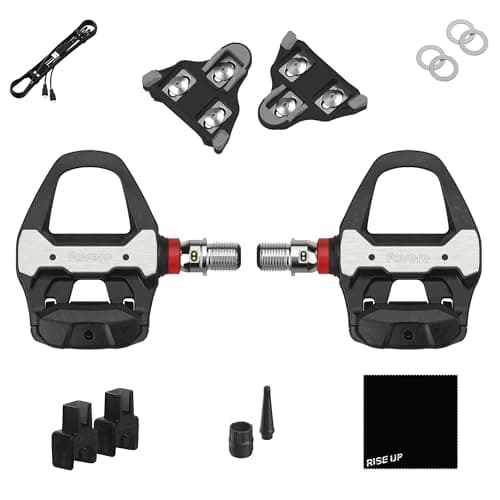 Favero Assioma Pro RS-2 The current-generation Assioma, and the clear buy if your shoes take Shimano SPD-SL cleats. | Best if your shoes are SPD-SL | 9.09.0 out of 10 | $809.99 · View on Amazon #ad We may earn a commission · Price as of October 21, 2026 |
| 2 | 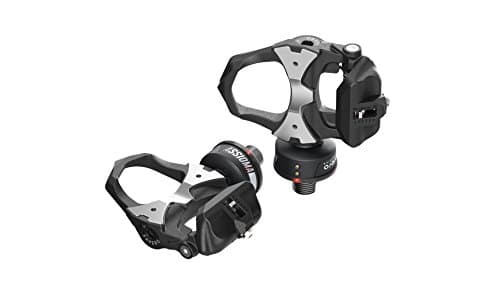 Favero Assioma Duo Still the value pick: the same accuracy claim and the deepest testing record, with older hardware and a shorter battery figure. | Best value if you ride Look Keo | 8.88.8 out of 10 | $539.93 · View on Amazon #ad We may earn a commission · Price as of October 21, 2026 |
| 3 | 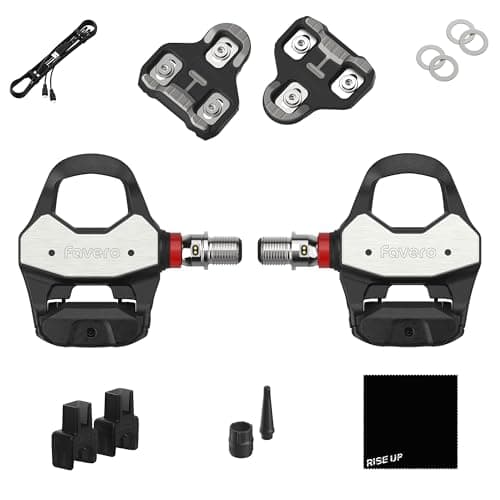 Favero Assioma Pro RL-2 The answer to the question this page is really about: how a Duo owner gets the new platform without buying new shoes. | The new platform on a Look Keo cleat | 8.98.9 out of 10 | $819.99 · View on Amazon #ad We may earn a commission · Price as of October 21, 2026 |
| 4 | 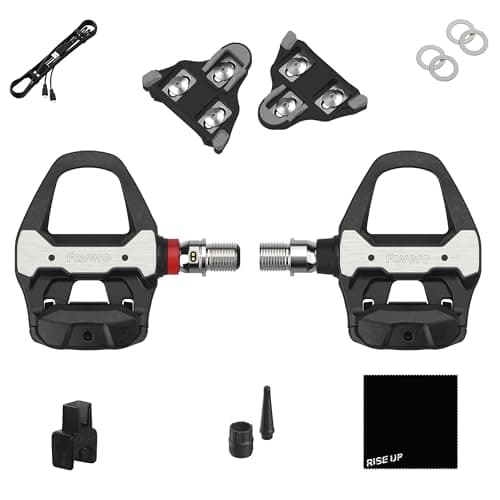 Favero Assioma Pro RS-1 The bridge between the two: current-generation SPD-SL hardware at near-Duo money, as long as one-sided measurement is acceptable. | Cheapest way onto the Pro platform | 8.78.7 out of 10 | $494.99 · View on Amazon #ad We may earn a commission · Price as of October 21, 2026 |
This comparison gets searched a lot and answered badly, because the two products are usually framed as old versus new when the real difference is the cleat. The Assioma Duo is a Look Keo pedal. The Assioma Pro RS is Favero's Shimano SPD-SL pedal. For most riders, that is the entire decision, and everything else — grams, stack, battery hours — is refinement on top of it.
What changed with the Pro platform
Weight and stack.Favero publishes 124.8 g per pedal and a 10.5 mm stack height for the RS-2, and 130 g with the same 10.5 mm stack for the Look Keo RL-2. Both are lighter and lower than the Duo. Stack height matters more than weight here, because stack changes your effective saddle height and a power meter that alters your fit has cost you something to gain a number.
Battery. The Pro range is quoted at up to 160 hours per charge following the firmware update DC Rainmaker reported in February 2026, with a 15-minute fast charge. The Duo is the shortest-running pedal in the line-up. For indoor training this is a convenience rather than a constraint; for long outdoor days and multi-day trips it is the headline improvement.
Measurement range.Favero specifies 0 to 3,000 W and 10 to 250 rpm for the RS-2, plus a 120 kg rider limit in the manual. The accuracy claim itself is unchanged at ±1% from the IAV Power System, which measures real angular velocity through the stroke rather than assuming a constant one.
| Version | Cleat | Sided | Weight per pedal | Stack | Battery claim | Claimed accuracy |
|---|---|---|---|---|---|---|
| Assioma Pro RS-2 | Shimano SPD-SL | Dual-sided | 124.8 g | 10.5 mm | Up to 160 h, 15-min fast charge | ±1% (IAV) |
| Assioma Pro RL-2 | Look Keo | Dual-sensing | 130 g | 10.5 mm | Up to 160 h | ±1% (IAV) |
| Assioma Pro RS-1 | Shimano SPD-SL | Single (left), doubled | Same body as RS-2 | 10.5 mm | Up to 160 h | ±1% (IAV) |
| Assioma Duo | Look Keo | Dual-sided | Not published as a single figure | Taller than Pro | Shortest in the range | ±1% |
What did not change: the watts
Both platforms claim ±1% and both use the same measurement principle, so nobody should expect a meaningfully different power number from the upgrade. That is worth saying plainly, because the most common reason people consider this upgrade — "will my data be better" — is the reason least supported by the specifications.
Independent testing of the Pro RS is good but not unanimous. DC Rainmaker found it within a few watts of an Elite Justo 2, around 2 W from a Muov and half a watt apart on a roughly 700 W sprint. road.cc recorded it reading about 5.5% under a SRAM Rival meter across a test period, with steady-state agreement nearer 1.5%. Both findings are real, and together they describe a good meter rather than a perfect one. How accurate are power meters explains why two honest devices never match exactly.
Who should upgrade, and who should not
Upgrade if you are changing cleat system anyway. New shoes, or a move from Keo to SPD-SL, makes the RS-2 the obvious purchase rather than a luxury.
Upgrade if battery format is a real constraint. Long unsupported rides, back-to-back race weekends, or a habit of forgetting to charge things: the 160-hour figure and the 15-minute top-up genuinely change behavior.
Do not upgrade for accuracy. There is no published or independently measured basis for expecting better numbers from the Pro platform than from a healthy Duo.
Do not upgrade for stack height aloneunless you are prepared to re-check your saddle height afterwards — a 2 to 3 mm change at the pedal is a fit change, and treating it as free is how people end up with a new knee niggle and a new power meter in the same month.
If you are cross-shopping outside Favero
The two comparisons worth reading next are Magene P715 vs Favero Assioma, which is the price argument, and Favero Assioma vs Garmin Rally, which is the ecosystem argument. If you are buying mainly for indoor use, our best power meters for Zwift page ranks the whole category on connectivity instead of cleat.
Still not sure which pedal?
See every pedal meter rankedThe full reviews
Head to head
#1 · Best if your shoes are SPD-SL
Favero Assioma Pro RS-2
9.09.0 out of 10#ad We may earn a commission · Price as of October 21, 2026
The current-generation Assioma, and the clear buy if your shoes take Shimano SPD-SL cleats.
- Type
- Pedal-based, dual-sided
- Claimed accuracy
- ±1% (IAV Power System)
- Battery
- Up to 160 hours, 15-minute fast charge
- Weight / stack
- 124.8 g per pedal, 10.5 mm stack
- Power / cadence range
- 0 - 3,000 W, 10 - 250 rpm
- Rider limit
- 120 kg (Favero manual)
What we'd praise
- The only one of these pedals that uses Shimano SPD-SL cleats, which settles the decision outright for a lot of riders
- 124.8 g per pedal and a 10.5 mm stack — lighter and lower than the Duo
- Up to 160 hours per charge after Favero's firmware update, plus a 15-minute fast charge
- Measures 0 to 3,000 W and 10 to 250 rpm, a wider range than most riders will ever reach
What we'd flag
- The most expensive pedal in the Assioma range
- road.cc measured it reading around 5.5% under a SRAM Rival meter overall, though steady-state agreement was much closer
- If your shoes are set up for Look Keo, this is the wrong body and the RL-2 is the right one
The Pro RS is the generation change, not a facelift. Favero publishes 124.8 g per pedal against a visibly chunkier Duo, a 10.5 mm stack height, 0 to 3,000 W, 10 to 250 rpm and a 120 kg rider limit, with up to 160 hours per charge after the firmware update DC Rainmaker reported in February 2026 and a 15-minute fast charge on top. The ±1% claim and the IAV Power System carry over.
The headline reason to buy it, though, is the cleat. The Duo has only ever been Look Keo. The Pro RS is Favero's first SPD-SL pedal, and for a rider whose shoes and cleats are already Shimano, that single fact ends the comparison. Independent findings are strong but not unanimous — DC Rainmaker had it within a few watts of a Justo 2 and half a watt apart on a roughly 700 W sprint; road.cc recorded it about 5.5% under a SRAM Rival meter overall. Our Assioma Pro RS review goes through all of it.
#2 · Best value if you ride Look Keo
Favero Assioma Duo
8.88.8 out of 10#ad We may earn a commission · Price as of October 21, 2026
Still the value pick: the same accuracy claim and the deepest testing record, with older hardware and a shorter battery figure.
- Type
- Dual-sided power meter pedals
- Claimed accuracy
- ±1%
- Cleat system
- Look Keo compatible
- Power
- Rechargeable, magnetic charging
- Connectivity
- Bluetooth and ANT+
- Install time
- Minutes, with a pedal wrench
What we'd praise
- The same ±1% dual-sided claim as the Pro RS for substantially less money
- The longest independent review record of any pedal meter at this price
- Still the most-recommended first dual-sided power meter in the category
- Fits in minutes and transfers between bikes with a pedal wrench
What we'd flag
- Look Keo only
- Heavier and taller at the pedal than either Pro version
- The shortest claimed runtime in the current Assioma line-up
- No fast-charge feature
The honest case for the Duo in 2026 is that nothing about it has got worse. It is the same dual-sided ±1% instrument it always was, with the longest independent record in the category and a five-minute installation. What the Pro RS buys you over it is grams, stack height, battery hours and a fast charge — all real, none of which changes the watts.
Where that calculation flips is the cleat. If your shoes are SPD-SL, buying a Duo means buying new cleats or new shoes as well, and the saving shrinks fast. If you are already on Look Keo, the Duo remains the sensible purchase and the rest is refinement. Our Assioma Duo review covers it on its own, and Duo vs Uno handles the single-sided saving.
#3 · The new platform on a Look Keo cleat
Favero Assioma Pro RL-2
8.98.9 out of 10#ad We may earn a commission · Price as of October 21, 2026
The answer to the question this page is really about: how a Duo owner gets the new platform without buying new shoes.
- Type
- Pedal-based, dual-sensing
- Cleat system
- Look Keo compatible
- Claimed accuracy
- ±1% (IAV Power System)
- Weight
- 130 g per pedal (Favero)
- Stack / Q-factor
- 10.5 mm / +53 mm
- Battery
- Sealed rechargeable, up to 160 h
What we'd praise
- All of the Pro platform's gains — 130 g per pedal, a 10.5 mm stack, up to 160 hours — without changing cleat system
- The direct upgrade path for an existing Duo owner who likes Look Keo
- A +53 mm Q-factor, which is narrower than the budget Keo competition
- Same ±1% IAV claim as the RS
What we'd flag
- Priced like the RS-2 rather than like the Duo, so the saving over the SPD-SL version is small
- Newer, so there is less third-party testing specific to this body than to the RS
- A sealed battery, like the rest of the Pro range
A lot of riders searching for "Duo vs Pro RS" are really asking a different question: can I have the new pedal without leaving Look Keo? The RL-2 is the answer. Favero publishes 130 g per pedal, a 10.5 mm stack, a +53 mm Q-factor, up to 160 hours and the same ±1% IAV claim — the Pro hardware with the Duo's cleat.
The catch is the price: it sits with the RS-2 rather than with the Duo, so if the reason you were considering the Duo was budget, the RL-2 does not solve that. It solves the upgrade problem, not the money problem.
#4 · Cheapest way onto the Pro platform
Favero Assioma Pro RS-1
8.78.7 out of 10#ad We may earn a commission · Price as of October 21, 2026
The bridge between the two: current-generation SPD-SL hardware at near-Duo money, as long as one-sided measurement is acceptable.
- Type
- Pedal-based, single-sensing (left, doubled)
- Claimed accuracy
- ±1% (IAV Power System)
- Cleat system
- Shimano SPD-SL
- Battery
- Sealed rechargeable, up to 160 h
- Upgrade path
- Add a right sensor pedal (RS-UP) later
- Connectivity
- ANT+, Bluetooth
What we'd praise
- The Pro platform's pedal, cleat, stack and battery figure at close to Duo money
- Upgradeable: Favero sells the right-hand sensor pedal separately as the RS-UP
- SPD-SL, so no new shoes
- Same ±1% claim on the leg it reads
What we'd flag
- Single-sensing: left leg doubled, so no measured balance and no smoothness data
- Buying the RS-1 and upgrading later costs more in total than buying the RS-2 outright
- Harder to justify for a racer than for a rider tracking FTP
If this comparison is really a budget argument, the RS-1 is the pick nobody mentions. You get the Pro body, the SPD-SL cleat, the 10.5 mm stack and the up-to-160-hour battery for close to what a Duo costs, because only one pedal carries a sensor. It measures the left leg and doubles it.
Favero sells the right sensor pedal separately as the RS-UP, so this is a genuine upgrade path rather than a dead end — though buying in two steps costs more than buying the RS-2 at once. Single vs dual-sided power meters is the decision in full.
Good questions
Frequently asked questions
Is the Favero Assioma Pro RS-2 worth the upgrade from a Duo?
If you are moving to Shimano SPD-SL cleats, yes, because the Duo has never been offered in that cleat. If you ride Look Keo, the upgrade buys lighter pedals, a 10.5 mm stack height, up to 160 hours of battery and a 15-minute fast charge. It does not buy a better power number: both claim plus/minus 1% from the same IAV measurement principle.
What is the difference between the Assioma Duo and the Assioma Pro RS-2?
Cleat system first: the Duo is Look Keo, the Pro RS-2 is Shimano SPD-SL. Then hardware: the RS-2 is 124.8 g per pedal with a 10.5 mm stack, measures 0 to 3,000 W and 10 to 250 rpm, and runs up to 160 hours per charge with a 15-minute fast charge. The Duo is heavier, taller at the pedal, has the shortest runtime in the range, and costs considerably less.
Is there a Look Keo version of the Assioma Pro?
Yes, the Assioma Pro RL-2. Favero publishes 130 g per pedal, a 10.5 mm stack, a +53 mm Q-factor and up to 160 hours, with the same plus/minus 1% IAV claim. It is the right answer for an existing Duo owner who wants the new platform without changing shoes, but it is priced with the RS-2 rather than with the Duo.
What is the Assioma Pro RS-1?
The single-sensing version of the Pro RS: the same body, cleat, stack height and up-to-160-hour battery, with a sensor in one pedal only, so it measures the left leg and doubles it. Favero sells the right-hand sensor pedal separately as the RS-UP, so it upgrades to an RS-2 later, although buying in two stages costs more in total.
Do the Assioma Duo and Pro RS use the same cleats?
No. The Duo and the Pro RL-2 are Look Keo compatible; the Pro RS-1 and RS-2 use Shimano SPD-SL. This is the single most important difference between them, because changing cleat system means new cleats and often new shoes, which changes the real price of the decision.
How long does the Favero Assioma Pro RS battery last?
Favero quotes up to 160 hours per charge for the Pro range following a firmware update that DC Rainmaker reported in February 2026, with a 15-minute fast charge available on top. The older Assioma Duo has the shortest claimed runtime in the current line-up.
How we sourced this
- Favero — Assioma PRO RS product page (manufacturer)
- Favero — Assioma PRO RS-2 technical sheet, art. 773-20-02 (manufacturer)
- Favero — Assioma PRO RS user manual (manufacturer document)
- Favero — Assioma PRO RL product page (manufacturer)
- Favero — Assioma DUO specifications (manufacturer)
- Favero — Assioma road range: DUO, UNO and DUO-Shi (manufacturer)
- Favero Assioma Pro RS in-depth review (DC Rainmaker)
- Favero doubles power meter pedal battery life via firmware update (DC Rainmaker)
- Favero Assioma Pro RS-2 review (road.cc)
- Favero Assioma PRO RS review (BikeRadar)
Keep going
Read these next
- ReviewFavero Assioma Pro RS Review
- ReviewFavero Assioma Duo Review
- ComparisonFavero Assioma Duo vs Uno
- ComparisonMagene P715 vs Favero Assioma
- ComparisonFavero Assioma vs Garmin Rally
- Power MetersThe Best Power Meter Pedals, Compared
- Power MetersSingle vs Dual-Sided Power Meters
- Power MetersThe Best Power Meters for Zwift