Power Meters
The Best Power Meters for Zwift
Your trainer already reports watts, so the reason to add a power meter is one number that follows you indoors and out. Ranked on what actually decides it inside Zwift: sidedness, broadcast protocol, connection limits and battery format.
The short answer
Quick picks
| # | Product | Best for | Score | Price |
|---|---|---|---|---|
| 1 | 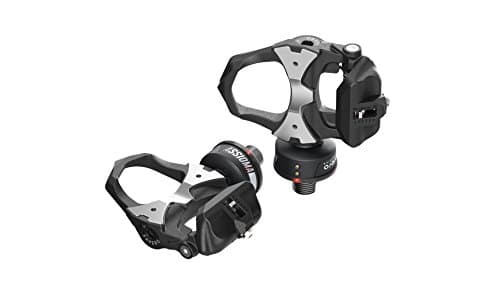 Favero Assioma Duo The default Zwift power meter: dual-sided ±1%, dual-protocol broadcast, and it follows you outdoors on a pedal wrench. | Best for most Zwift riders | 9.29.2 out of 10 | $539.93 · View on Amazon #ad We may earn a commission · Price as of October 21, 2026 |
| 2 | 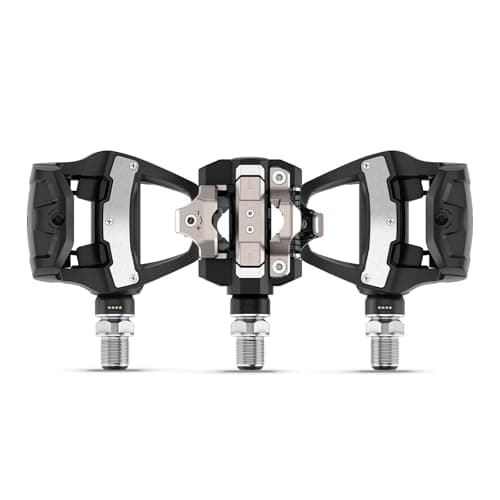 Garmin Rally RS210 The pick if your shoes are SPD-SL and your outdoor rides already live in Garmin Connect, at a real price premium. | Best for SPD-SL shoes and a Garmin head unit | 8.88.8 out of 10 | $899.99 · View on Amazon $1,199.99Save 25% #ad We may earn a commission · Price as of October 21, 2026 |
| 3 | 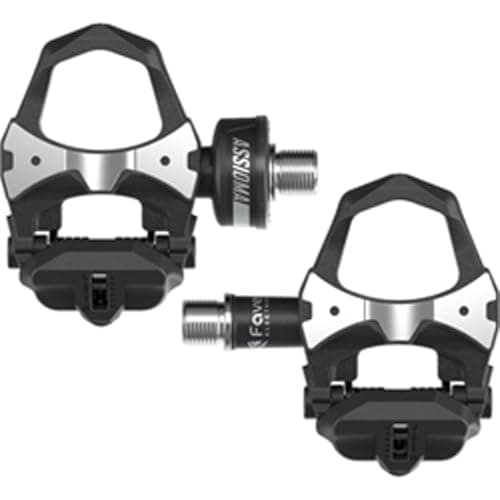 Favero Assioma Uno The sensible first power meter for a Zwift rider who is not sure balance data matters, with the second pedal available later. | The entry point with a real upgrade path | 8.68.6 out of 10 | $381.22 · View on Amazon #ad We may earn a commission · Price as of October 21, 2026 |
| 4 | 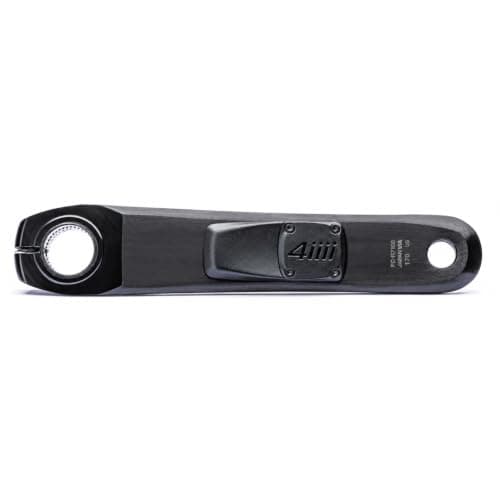 4iiii Precision 3+ The right answer when your pedals are already settled and the trainer bike is the only bike the meter needs to live on. | Cheapest power without changing your pedals | 8.58.5 out of 10 | $437.49 · View on Amazon #ad We may earn a commission · Price as of October 21, 2026 |
| 5 | 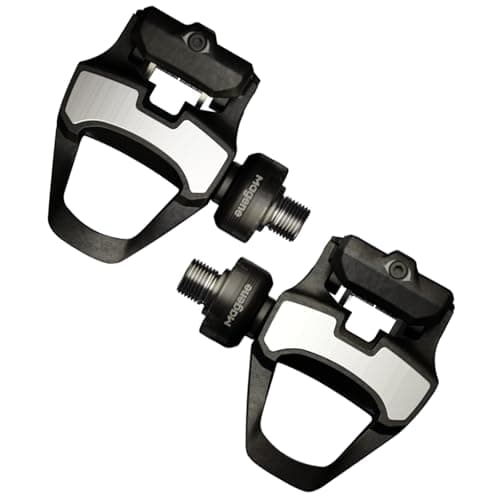 Magene P715 S The value dual-sided SPD-SL option: excellent on a PC with an ANT+ stick, awkward on an Apple TV because it supports a single Bluetooth link. | Cheapest dual-sided meter that keeps SPD-SL cleats | 8.48.4 out of 10 | $499.99 · View on Amazon #ad We may earn a commission · Price as of October 21, 2026 |
Every other power meter buying guide starts from accuracy. For a Zwift rider that is the wrong starting point, because you already have a power number: your smart trainer produces one, and on a decent direct-drive unit it is good enough to train and race on. So the first honest question is whether you need a power meter at all.
Do you actually need one?
If you only ever ride indoors, probably not. A good smart trainer measures power at ±1 to ±2%, holds a target in ERG mode and needs nothing else. Smart trainer vs power meter is the long version of that argument and it reaches the same conclusion: buy the trainer first.
A power meter earns its place when one of three things is true. You ride outdoors too and want one consistent number across both, because a trainer and a meter never agree exactly and two devices means two FTPs. You race on Zwift and want a second, independent power source to dual-record against. Or your setup is a wheel-on or roller trainer whose power figure is an estimate rather than a measurement — in which case the meter is not a luxury, it is the measurement.
What actually matters inside Zwift
Your connection budget. This is the specification nobody reads and everybody hits. On a PC or Mac with an ANT+ adapteryou can pair effectively unlimited ANT+ sensors and the question disappears. On an Apple TV, Zwift is Bluetooth-only and the game accepts two Bluetooth connections, with the Apple TV remote occupying one of them, per Zwift Insider's documentation of the limit. Zwift Companion can bridge additional Bluetooth sensors, but it does not bridge ANT+, and native and Companion pairing cannot be mixed in the same session. A meter that broadcasts on both protocols, or one that supports multiple Bluetooth links, is worth more on Apple TV than one extra percent of accuracy. ANT+ vs Bluetooth for Zwift covers the whole picture.
Which device Zwift listens to. In the pairing screen your power meter goes in the Power Source slot and the trainer stays as Controllable. That gets you the meter's watts with the trainer's resistance control, which is the configuration most riders actually want and the one most commonly set up backwards. Our guide to connecting a power meter to Zwift walks through it.
Sidedness, if you race. A single-sided meter doubles your left leg. That is fine for tracking fitness and perfectly honest, but in a race it hides a developing imbalance and reports no left/right or smoothness data at all. If you are buying a meter mainly to race Zwift, dual-sided is the configuration to buy.
Battery format over battery life.A coin-cell meter runs for hundreds of hours and never cancels a session. A rechargeable meter is a thing you have to remember. Garmin's 15-minute fast charge is a real answer to that problem; a CR2032 is a better one.
Your cleats. Two of the five picks here are Look Keo, two are SPD-SL, and the 4iiii lets you keep whatever you already ride. Decide the cleat first and the shortlist shortens itself.
| Power meter | Sided | Cleat / fitment | Claimed accuracy | Battery | Broadcast |
|---|---|---|---|---|---|
| Favero Assioma Duo | Dual-sided | Look Keo; any pedal thread | ±1% | Rechargeable, magnetic | ANT+ and Bluetooth |
| Garmin Rally RS210 | Dual-sensing | Shimano SPD-SL; any pedal thread | ±1% | Rechargeable, up to 90 h, 15-min fast charge | ANT+, Bluetooth, Secure Bluetooth |
| Favero Assioma Uno | Single (left), doubled | Look Keo; any pedal thread | ±1% | Rechargeable, longer than the Duo | ANT+ and Bluetooth |
| 4iiii Precision 3+ | Single (left), doubled | Must match your crankset and length | ±1% of measured torque | CR2032, up to 800 h | ANT+ and Bluetooth Smart |
| Magene P715 S | Dual-sided | Shimano SPD-SL; any pedal thread | ±1% | Rechargeable, 120 h claimed | Unlimited ANT+, one Bluetooth |
Trainer watts and meter watts will not match, and that is normal
The first thing almost everybody does after fitting a power meter is put both numbers on screen at once and get worried. A few percent of consistent offset between two honest devices is the expected result, not a fault: different measurement points, different drivetrain losses, different calibration routines. How accurate are power meters and how accurate are smart trainers explain why, and the practical rule is simple: pick one device as your reference, train to that, and do not chase the gap.
What you should chase is consistency. A meter that reads three percent high every single ride is more useful than one that is right on average and wanders, because every number you care about — interval targets, FTP, season-on-season progress — is a measure of change. Keep the habit of a zero-offset before hard sessions; how to calibrate a power meter is the two-minute version that keeps the data trustworthy.
Want the format-agnostic ranking instead?
See the full power meter rankingsThe full reviews
Every pick, in detail
#1 · Best for most Zwift riders
Favero Assioma Duo
9.29.2 out of 10#ad We may earn a commission · Price as of October 21, 2026
The default Zwift power meter: dual-sided ±1%, dual-protocol broadcast, and it follows you outdoors on a pedal wrench.
- Type
- Dual-sided power meter pedals
- Claimed accuracy
- ±1%
- Cleat system
- Look Keo compatible
- Power
- Rechargeable, magnetic charging
- Connectivity
- Bluetooth and ANT+
- Install time
- Minutes, with a pedal wrench
What we'd praise
- Dual-sided ±1% measurement, the only configuration that reports a real left/right balance inside a Zwift race
- Broadcasts on both ANT+ and Bluetooth, so it pairs to a PC with an ANT+ stick, to a tablet, or to an Apple TV
- Moves between your trainer bike and your outdoor bike with a pedal wrench, so indoor and outdoor watts come from the same instrument
- Fits in minutes with no drivetrain compatibility question to answer
What we'd flag
- Look Keo cleats, so SPD-SL riders have to change shoes or change pedals
- Rechargeable rather than coin cell, so it joins the charging pile
- The pedal body is visibly chunkier than a plain road pedal
Inside Zwift, the question a power meter answers is not how many watts you are producing — your smart trainer already has an opinion about that. It is whether the number you train to indoors is the same number you race to outdoors. A pedal-based meter is the only format that makes those two numbers come from the same strain gauges, and the Assioma Duo is the cheapest dual-sided ±1% pedal meter with a long independent track record.
For Zwift specifically, the thing that matters as much as accuracy is that it broadcasts on both ANT+ and Bluetooth. A PC with an ANT+ stick can take an effectively unlimited number of ANT+ sensors; an Apple TV accepts only two Bluetooth connections in the game, and the Apple TV remote takes one of them. A meter that speaks both protocols never meets that wall. Our Assioma Duo review covers the product on its own terms.
#2 · Best for SPD-SL shoes and a Garmin head unit
Garmin Rally RS210
8.88.8 out of 10$1,199.99Save 25%
#ad We may earn a commission · Price as of October 21, 2026
The pick if your shoes are SPD-SL and your outdoor rides already live in Garmin Connect, at a real price premium.
- Type
- Dual-sensing pedal power meter
- Claimed accuracy
- ±1%
- Battery
- Rechargeable lithium-ion, up to 90 hours
- Quick charge
- 15 minutes for about 12 hours of riding
- Cleat system
- Shimano SPD-SL (RS body)
- Weight
- 312 g the pair
- Connectivity
- ANT+, Bluetooth, Secure Bluetooth
- Water rating
- IPX7
What we'd praise
- Keeps Shimano SPD-SL cleats, the cleat most riders coming from a stock road bike already own
- A 15-minute charge is claimed to return about 12 hours of riding, so a flat battery does not cancel tonight's race
- Swaps between RS, RK and XC bodies on the same spindle if your bikes use different cleats
- Three broadcast modes including Secure Bluetooth, and files land natively in Garmin Connect beside your outdoor rides
What we'd flag
- The most expensive pedal meter on this page by a clear margin
- The spindle-and-body system is more parts to understand than a sealed pedal
- Pairing it to Zwift and to a Garmin Edge at the same time still spends your connection budget
The Rally exists for riders who do not want to change cleats. Garmin publishes ±1% with up to 90 hours per charge, IPX7 water resistance and 312 g for the road pair, and the 15-minute fast charge is the specification that matters most to someone who rides Zwift on a schedule: plug the pedals in while you change, and the session still happens.
The second reason to buy it is data continuity. If your outdoor rides already upload to Garmin Connect, a Rally keeps indoor and outdoor power in one place with no third-party sync in the middle. Our Rally RS210 review covers the whole 210 and 110 generation, and Favero vs Garmin Rally is the direct head-to-head.
#3 · The entry point with a real upgrade path
Favero Assioma Uno
8.68.6 out of 10#ad We may earn a commission · Price as of October 21, 2026
The sensible first power meter for a Zwift rider who is not sure balance data matters, with the second pedal available later.
- Type
- Pedal-based, single-sided
- Claimed accuracy
- ±1%
- Fitting
- Pedal wrench, five minutes
- Cleat system
- Look Keo compatible
- Upgrade path
- Add the second pedal for dual-sided
- Connectivity
- ANT+, Bluetooth
What we'd praise
- The same pedal body, the same ±1% claim and the same dual-protocol broadcast as the Duo, for less
- Add the right-hand sensor pedal later and it becomes a Duo without replacing anything
- Still transfers between bikes on a pedal wrench
- Longer runtime than the Duo, because only one pedal carries a sensor
What we'd flag
- Single-sided, so no balance data and no pedaling-smoothness figures
- Look Keo cleats again
- Buying the Uno and upgrading later costs more in total than buying the Duo outright
The Uno and the Duo are the same product with a different number of sensors: identical bodies, identical ±1% claim, identical ANT+ and Bluetooth broadcast, identical five-minute fit. The Uno measures the left leg and doubles it. For Zwift group rides, structured intervals and FTP tracking that is an honest instrument. What you lose is the balance number, and the ability to watch one leg fade in the last ten minutes of a race.
Its advantage over every other cheap option here is the upgrade path: Favero sells the second sensor pedal separately, so an Uno becomes a Duo later. Assioma Duo vs Uno works through that decision properly.
#4 · Cheapest power without changing your pedals
4iiii Precision 3+
8.58.5 out of 10#ad We may earn a commission · Price as of October 21, 2026
The right answer when your pedals are already settled and the trainer bike is the only bike the meter needs to live on.
- Type
- Non-drive-side crank arm
- Claimed accuracy
- ±1%
- Battery
- CR2032, up to 800 hours claimed
- Weight added
- 9 g
- Power range
- 0 - 4,000 W
- Connectivity
- ANT+ and Bluetooth Smart
What we'd praise
- Your pedals, cleats and shoes stay exactly as they are
- Up to 800 claimed hours on a coin cell, so there is nothing to remember to charge before a Zwift race
- Adds 9 g and hides inside the crank arm
- The cheapest credible route to power on this page
What we'd flag
- Single-sided: your left leg doubled, so there is no balance figure and any imbalance is baked into the number
- Must be the right arm for your exact crankset and crank length
- Bonded to that crankset, so it does not move to a second bike
Plenty of Zwift riders have a dedicated trainer bike whose pedals they have no intention of changing. For them a crank-arm meter is simply the better-shaped product: 4iiii bonds a strain gauge to the inside of a non-drive-side arm, adds 9 g, reads 0 to 4,000 W and claims up to 800 hours on a CR2032. A coin cell is a genuine Zwift advantage, because a rechargeable meter that is flat at seven in the evening cancels the session.
The compatibility exercise is the whole job: order the arm that matches your crankset model and crank length. Get it right and installation is a ten-minute hex-key job. See our 4iiii Precision review, and single vs dual-sided power meters for what you give up by doubling one leg.
#5 · Cheapest dual-sided meter that keeps SPD-SL cleats
Magene P715 S
8.48.4 out of 10#ad We may earn a commission · Price as of October 21, 2026
The value dual-sided SPD-SL option: excellent on a PC with an ANT+ stick, awkward on an Apple TV because it supports a single Bluetooth link.
- Type
- Pedal-based, dual-sided
- Cleat system
- Shimano SPD-SL (S version)
- Claimed accuracy
- ±1%
- Weight / stack
- 159 g per pedal, 13 mm stack
- Battery
- 120 hours claimed, magnetic charge in about 3 hours
- Connectivity
- One Bluetooth connection plus unlimited ANT+, IPX7
What we'd praise
- Dual-sided measurement on an SPD-SL cleat for well under what the Rally costs
- 120 claimed hours per charge, more than double the Assioma Duo's figure
- Unlimited ANT+ connections, so on a PC with an ANT+ stick it can feed Zwift and a head unit at once
- Light for a dual-sided pedal at 159 g per side
What we'd flag
- Only ONE Bluetooth connection, which is the specification that bites on an Apple TV or a tablet
- Independent reviewers do not agree on how closely it tracks reference meters
- A newer brand with a shorter record than Favero or Garmin
The P715 S is this page's clearest illustration of why the Zwift question is a connectivity question. Magene publishes ±1%, 159 g per pedal, a 13 mm stack, 120 hours per charge and IPX7 — and then, in the same specification list, one Bluetooth connection alongside unlimited ANT+. On a Windows or macOS machine with an ANT+ stick that limit is invisible. On an Apple TV, where Zwift is Bluetooth-only and the remote occupies one of two available slots, a single-Bluetooth sensor is a real constraint to plan around.
On accuracy, independent findings diverge rather than converge: GPLama reported the pedals inside their claimed specification, Cyclists Hub measured averages roughly 2 to 3% under a Kickr v5 with wider gaps at the peaks, and the5krunner saw differences of several percent against a 4iiii and a Magene P505. We report that spread rather than pick a winner from it — the detail is in our Magene P715 review.
Good questions
Frequently asked questions
Do you need a power meter for Zwift?
No. Zwift reads power from your smart trainer, and a good direct-drive trainer measures it to within about 1 to 2%. A power meter is worth adding when you also ride outdoors and want one consistent number across both, when you race and want an independent second power source to dual-record against, or when your indoor setup estimates power rather than measuring it, as wheel-on and roller trainers do.
What is the best power meter for Zwift?
The Favero Assioma Duo for most riders: dual-sided plus/minus 1% measurement, broadcast on both ANT+ and Bluetooth so it pairs to any Zwift device, and it transfers to an outdoor bike with a pedal wrench. If your shoes use Shimano SPD-SL cleats, the Garmin Rally RS210 is the equivalent at a higher price, and the Magene P715 S is the cheapest dual-sided SPD-SL option if you run Zwift on a PC with an ANT+ stick.
Should Zwift use my power meter or my trainer for power?
Pair the power meter in the Power Source slot and leave the trainer as Controllable. Zwift then uses the meter's watts while the trainer continues to apply resistance and hold ERG targets. If you pair the trainer as the power source instead, you get the trainer's number, which is the most common pairing mistake.
Will a power meter work with Zwift on an Apple TV?
Yes, if it broadcasts Bluetooth, but the connection budget is tight. Zwift Insider documents that the game accepts two Bluetooth connections on Apple TV and the remote takes one of them. Zwift Companion can bridge extra Bluetooth sensors but cannot bridge ANT+, and native and Companion pairing cannot be mixed in one session. A sensor that supports only a single Bluetooth link, like the Magene P715, is the hardest case on that platform.
Why does my power meter read differently from my smart trainer?
Because they measure in different places. A pedal or crank meter measures what your legs put in; a trainer measures what arrives at the resistance unit after drivetrain losses, and applies its own calibration. A consistent offset of a few percent between two honest devices is the normal outcome. Choose one as your reference, set your FTP from that device, and track change rather than the gap.
Is a single-sided power meter good enough for Zwift racing?
It is honest and it is consistent, which is most of what racing needs, but it doubles one leg, so it reports no left/right balance and will not show an imbalance developing late in a hard effort. If the main reason you are buying a meter is to race, buy dual-sided. If it is to pace workouts and track FTP, single-sided is a reasonable saving.
Can I use a power meter instead of a smart trainer on Zwift?
You can ride Zwift with a power meter and a plain dumb trainer: Zwift reads your watts and moves your avatar. What you lose is resistance control, so hills do not get harder and ERG workouts cannot hold a target. That setup works, but most riders find the trainer is the better first purchase and the meter the better second one.
How we sourced this
- Favero — Assioma DUO specifications (manufacturer)
- Favero — Assioma road range: DUO, UNO and DUO-Shi (manufacturer)
- Garmin — Rally RS210 product page and specifications (manufacturer)
- Magene — P715 pedal-based power meter specifications (manufacturer)
- 4iiii — PRECISION 3+ powermeter specifications (manufacturer)
- Zwift Insider — Zwift on Apple TV: pros, cons and quirks (two Bluetooth connections in the game, remote uses one, Companion as the workaround)
- Zwift Insider — Apple TV connection limit
- Zwift — support: pairing devices, ANT+ and Bluetooth
- Magene P715 SPD-SL pedal power meter review (GPLama)
- Magene P715 review: a worthy power meter? (Cyclists Hub)
- Magene P715S power meter pedals first look review (the5krunner)
Keep going
Read these next
- GuidesHow to Connect a Power Meter to Zwift
- GuidesSmart Trainer vs Power Meter: Which First?
- Power MetersThe Best Power Meters, Ranked
- Power MetersThe Best Power Meter Pedals, Compared
- GuidesANT+ vs Bluetooth for Zwift
- Power MetersSingle vs Dual-Sided Power Meters
- GuidesHow Accurate Are Power Meters?
- Indoor SetupThe Best Trainer for Zwift