Start Here
How Accurate Are Smart Trainers?
Manufacturers quote power accuracy to a decimal point. For actual training, the number that matters is whether the trainer reads the same today as it did last Tuesday.
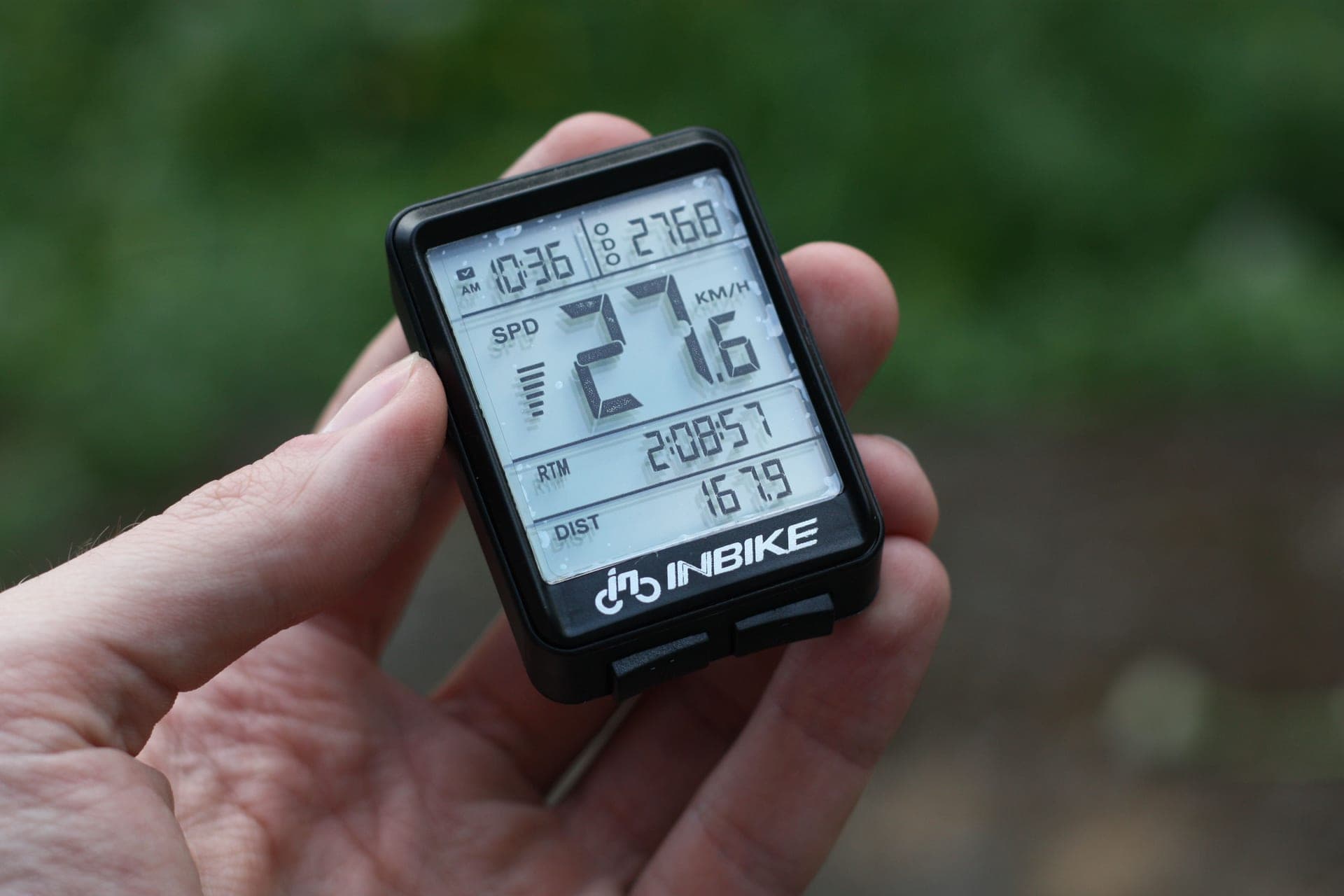
±2% sounds precise until you realize what it's promising and what it isn't. A claimed accuracy figure is a manufacturer's statement about how far the reported power can sit from your true power at any given moment. At a 250 W threshold effort, ±2% is a ±5 W window; ±1% halves that to ±2.5 W. That is the entire difference the marketing is shouting about, and for most riders following a structured plan it changes almost nothing. What changes your training is whether the trainer is consistent with itself and with the other power sources you already trust.
What "accuracy" actually means on a spec sheet
Every direct-drive trainer estimates power the same broad way: it measures the load its resistance unit is applying and reports the wattage that implies. The claimed accuracy is the manufacturer's stated tolerance on that estimate under their test conditions. It is apublished claim, not an independent certification — which is exactly why we frame every figure below as claimed, and why our how we review page is blunt about the fact that we compiled published specs and did the math rather than running units on a bench.
| Tier | Claimed accuracy | Example models | What it buys you |
|---|---|---|---|
| Flagship | ±1% | Wahoo Kickr v6, Tacx Neo 2T | Tightest claimed tolerance; often auto-calibration |
| Mid direct-drive | ±2% | Wahoo Kickr Core, Saris H3 | Plenty for training by power; occasional spindown |
| Budget direct-drive | ±2.5% | Zwift Hub One, Elite Suito-T | Real direct-drive resistance; widest claimed window |
Read that table as a ladder of claims, not a ladder of training quality. A ±2.5% trainer that reads the same every session will serve a structured plan better than a ±1% trainer you never calibrate. The tier you need depends far more on what you do with the number than on the number itself — which is the same argument we make in smart trainer vs power meter.
Why repeatability beats the last percent
Training by power works because you compare like with like: this week's intervals against last week's, today's FTP estimate against the one from six weeks ago. That comparison only holds if your measuring stick doesn't move. A trainer that consistently reads 2% high is, for training purposes, almost harmless — every workout, every test and every zone is scaled by the same amount, so the relationshipbetween your efforts stays true. Your 300 W looks like 306 W, but so does everyone's, including the past version of you that set the zones.
A trainer that wanders — dead-on when cold, reading high once the resistance unit warms, low again after a firmware update — is the real problem, even if its claimed accuracy is tighter. That is why we weight consistency heavily and treat the headline ±% as a tiebreaker. The one place repeatability quietly fails is cross-device comparison: if you ride your trainer indoors and a power meter outdoors, two accurate-but-independent devices can legitimately disagree by a few percent, and neither is broken.
What makes a trainer's power reading drift
Temperatureis the big one. A resistance unit and its belt behave differently cold than they do twenty minutes into a hard session, and on trainers that estimate power from the load, that thermal change can nudge the reported wattage. It's why so many trainers ask for a warm-up before a spindown calibration — you're calibrating the trainer in the state it'll actually be ridden in.
Calibration driftis the other. Belt tension settles, parts wear a hair, and the reference the trainer uses slowly shifts. Mid-tier and budget units generally want a periodic manual spindown to reset that reference; several flagships auto-calibrate so you never think about it, which is a real part of what the top tier is selling. Beyond those two, the usual suspects apply: a loose cassette or skewer, an under-tensioned belt, or simply comparing two devices that were never going to agree to the watt. None of this makes a good trainer "inaccurate" — it makes calibration a habit worth keeping.
The place accuracy stops being abstract is the FTP test, because every workout afterward is scaled from that one number. Our FTP test guide explains why a measured power source is the only real equipment requirement, and Elite Avanti vs Elite Rivo is the cleanest example of measured versus estimated power at two prices on one platform.
When ±1% is actually worth paying for
There are riders for whom the flagship tolerance earns its premium. If you run formal FTP test protocolswhere a two- or three-watt shift moves your training zones, if you race indoors on a platform where power is adjudicated and a couple of percent is the margin, or if you need your indoor numbers to line up as closely as possible with an outdoor power meter for a single continuous training record, the tightest claimed accuracy plus auto-calibration is worth it. The Kickr v6 and Tacx Neo 2T both claim ±1%, and the choice between them comes down to road feel far more than to the accuracy figure — we settle that one in Kickr vs Tacx Neo 2T.
For everyone else — riders following a plan, chasing consistency, and comparing this month to last — a well-calibrated ±2% or ±2.5% trainer is genuinely enough, and the money saved is better spent on a fan, a screen and a mat. If you're still deciding whether a controllable trainer earns its place at all, start with do I need a smart trainer. And if raw measurement precision is the actual goal, a dedicated power meter that travels with your bike may be the smarter buy.
The other half of this question is the device you are comparing your trainer against. How accurate are power meters covers the published tolerances, what independent reviewers have actually measured between correctly working units, and — most usefully — why a consistent few percent of difference between a good trainer and a good power meter is physics rather than a fault in either.
Ready to pick one?
See our best smart trainers, ranked on the specsGood questions
Frequently asked questions
How accurate do smart trainers need to be for training?
For training by power and following structured workouts, a claimed accuracy of plus or minus 2% is plenty. What matters more is repeatability — the trainer reading the same for the same effort session after session — because your zones and progress are all measured on that one device. Chase plus or minus 1% only if you run formal FTP protocols or race indoors where a couple of watts changes the outcome.
What does plus or minus 1% accuracy actually mean?
It is the manufacturer's claimed tolerance on the reported power. At 250 W, plus or minus 1% is a window of about plus or minus 2.5 W, while plus or minus 2% is about plus or minus 5 W. It is a published claim under the maker's own test conditions, not an independent certification, which is why we always describe these figures as manufacturer-claimed.
Why does my trainer read differently from my outdoor power meter?
Two accurate but independent devices can legitimately disagree by a few percent, and neither is faulty. They measure at different points in the drivetrain, use different methods, and each carries its own tolerance. If you want indoor and outdoor numbers to line up closely, use the same power meter both places, or pick a flagship trainer and calibrate it regularly.
How often should I calibrate a smart trainer?
For trainers that use a manual spindown, calibrate after any big temperature change, after moving the trainer, and every couple of weeks as a habit — always after a short warm-up so the unit is at riding temperature. Several flagship trainers auto-calibrate and need no manual routine, which is part of what the top tier is selling.
Does temperature really affect trainer accuracy?
Yes. A resistance unit behaves differently cold than it does once it warms up mid-session, and on trainers that estimate power from load, that thermal change can nudge the reported wattage. It is the main reason a warm-up before calibration is recommended — you are setting the trainer in the state it will actually be ridden in.
Is a budget trainer's claimed accuracy good enough?
For most riders, yes. A budget direct-drive trainer claiming plus or minus 2.5% that is kept calibrated will support a structured plan perfectly well, because consistency matters more than the last percentage point. Spend up to plus or minus 1% only if formal testing, indoor racing, or close cross-device matching is a specific need.
How we sourced this
Keep going
Read these next
- GuidesHow Accurate Are Power Meters?
- GuidesHow to Do an FTP Test
- TrainersElite Avanti vs Elite Rivo
- ReviewWahoo Kickr v6 Review
- GuideCadence Sensor vs Power Meter
- TrainersThe Best Smart Trainers, Compared
- ComparisonWahoo Kickr vs Tacx Neo 2T
- GuideSmart Trainer vs Power Meter
- GuideDo I Need a Smart Trainer?
- GuidesHow to Calibrate a Smart Trainer
- Power MetersHow to Calibrate a Power Meter